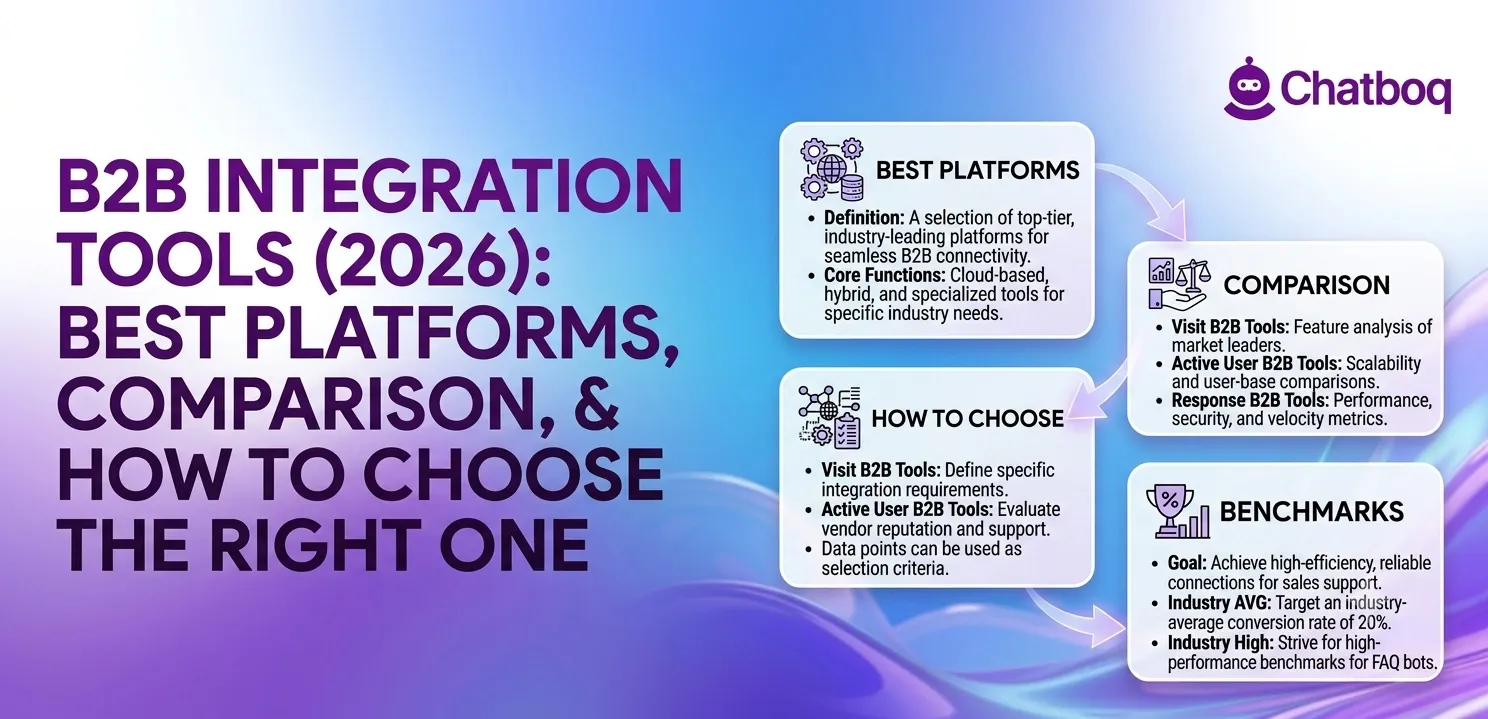
MuleSoft, Boomi, Workato, Merge, Paragon, Prismatic, IBM Sterling, and Cleo are among the leading B2B integration tools. The best choice depends on whether the goal is enterprise integration, workflow automation, embedded integrations, unified APIs, or EDI compliance.
MuleSoft Anypoint Platform (Enterprise Control Plane)
MuleSoft exists to enforce central governance across large, distributed API ecosystems. Its hidden strength is policy enforcement: rate limits, security policies, and data governance rules apply uniformly across all integrations managed through the Anypoint Platform.
Its hidden weakness is the same mechanism. For a SaaS product manager looking to embed integrations into their application, MuleSoft is the wrong tool. Teams that need autonomous integration deployment find MuleSoft's governance layer creates bottlenecks. Every new integration requires platform team approval. Product teams moving quickly cannot wait for central approval cycles. Failure mode: slows product teams in fast-moving organizations. Best when integration is a regulated internal infrastructure problem, not a product feature.
|
Factor
|
Detail
|
|
Pricing
|
Median enterprise quote $210,000/year
|
|
Best for
|
Enterprises with Salesforce ecosystem, regulated industries
|
|
Avoid when
|
Teams need autonomous integration deployment
|
|
Failure mode
|
Governance overhead slowing product teams
|
Boomi (Mid-Market Orchestration Layer)
Boomi is a popular iPaaS solution that provides a user-friendly, low-code environment for integrating diverse applications, managing APIs, automating workflows, and synchronizing data across on-premises and cloud systems. Its hidden strength is breadth: 200+ connector variations across SaaS, ERP, databases, files, B2B partners, and APIs.
Its hidden weakness is schema stability dependency. Boomi performs well when connected systems maintain consistent schemas. When schema volatility is high, field mapping rules break and require manual maintenance. The median Boomi quote was $95,000 per year for 15 to 20 integration processes. Failure mode: breaks when schema volatility is high across connected systems. Best when systems are stable but expanding in connection count.
|
Factor
|
Detail
|
|
Pricing
|
Median enterprise quote $95,000/year
|
|
Best for
|
Mid-to-large enterprises with stable schemas, hybrid cloud
|
|
Avoid when
|
Rapid schema change across connected systems
|
|
Failure mode
|
Schema drift producing silent field mapping failures
|
Workato (Automation-First Integration Layer)
Workato wins for business-users plus IT type scenarios. Recipe-based design, drag-and-drop, many pre-built connectors, good for teams where you may not have full-time integration developers. Its hidden insight is that Workato is an automation platform first and an integration platform second. It is not built for deep data modeling or high-throughput event pipelines.
Failure mode: complexity collapses under high-volume event systems where transformation logic is complex and data integrity guarantees are strict. Best when business workflow automation speed matters more than data pipeline integrity.
|
Factor
|
Detail
|
|
Pricing
|
Enterprise contracts typically $50,000 to $150,000/year
|
|
Best for
|
Business automation, SaaS workflow automation, mid-market
|
|
Avoid when
|
High-volume event pipelines, strict data integrity required
|
|
Failure mode
|
Event volume and transformation complexity exceed platform design
|
Merge / Unified APIs (Developer Acceleration Plane)
Merge takes a different approach. It consolidates 200+ integrations across HR, ATS, CRM, accounting, and ticketing systems into one standardized API. Developers integrate with Merge once to read and write data across multiple systems.
Hidden value: the schema abstraction layer eliminates per-integration transformation work for standard data categories. Hidden tradeoff: the abstraction layer reduces flexibility for enterprise customers with non-standard field structures. Merge excels at breadth, providing unified APIs that quickly cover 50+ apps with standardized schemas, ideal for SMB customers with standard integration needs. Failure mode: complex enterprise custom logic becomes painful because the unified data model does not accommodate custom objects without workarounds. Best when shipping integrations is a product feature, not internal infrastructure.
Embedded iPaaS: Paragon and Prismatic (Product Plane)
Paragon offers a clean, developer-friendly experience with 130+ built-in connectors and a low-code orchestration builder for creating workflows. Prismatic provides purpose-built tooling with better versioning and self-service capabilities.
Hidden insight: embedded iPaaS shifts integration build and maintenance burden partially to customers through self-service configuration UIs. Hidden tradeoff: as customer count grows, the number of unique integration configurations grows proportionally. UI complexity and support burden scale with integration count. For maximum developer control, Paragon or Prismatic provide the deepest customization options with full SDK access and code-level integration management. Failure mode: support overhead grows as customer-configured integrations multiply. Best when a SaaS company needs to scale integrations across customer accounts without proportional engineering growth.
|
Factor
|
Paragon
|
Prismatic
|
|
Connectors
|
130+
|
200+
|
|
Strength
|
Rapid deployment, AI-native workflows (MCP support)
|
Enterprise versioning, self-service depth
|
|
Pricing
|
Custom enterprise
|
~$18,000 to $50,000+/year
|
|
Failure mode
|
Support load grows with integration count
|
UI complexity at high integration volume
|
EDI Systems: IBM Sterling and Cleo (Compliance Plane)
EDI systems handle deterministic, compliance-driven B2B data exchange for supply chain, retail, healthcare, and financial services. General-purpose iPaaS platforms include Boomi, MuleSoft, and Workato. EDI capability in these platforms is less deep and less self-service than EDI-specialist platforms. Trading-partner onboarding workflows are not purpose-built for EDI volume.
IBM Sterling and Cleo are purpose-built for EDI at scale. Hidden insight: they are optimized for compliance-driven deterministic flows where partner SLAs and audit requirements demand proof of delivery, acknowledgment tracking, and non-repudiation. Failure mode: slow iteration cycles make these platforms unsuitable for fast-moving product integration requirements. Best when partner compliance and regulatory audit requirements exceed flexibility needs.
B2B Integration Tools Comparison
|
Tool
|
Schema Volatility Tolerance
|
Event Throughput
|
Ownership Model
|
Multi-Tenant Support
|
Failure Recovery
|
|
MuleSoft
|
Low (governance overhead slows schema change)
|
High
|
IT/central team
|
Moderate
|
Advanced (policy-driven)
|
|
Boomi
|
Medium (stable schemas only)
|
High
|
IT/ops team
|
Moderate
|
Good (built-in retry)
|
|
Workato
|
Medium
|
Medium
|
Business/IT hybrid
|
Limited
|
Moderate (recipe-based)
|
|
Merge
|
Low (standard schemas only)
|
Medium
|
Developer
|
Strong (by design)
|
Limited (abstraction layer)
|
|
Paragon
|
Medium
|
Medium
|
Developer/product
|
Strong
|
Good
|
|
Prismatic
|
Medium-High
|
Medium
|
Developer
|
Strong
|
Good (versioning)
|
|
EDI (IBM/Cleo)
|
Very low
|
High (batch)
|
IT/compliance
|
Limited
|
Strong (deterministic)
|

 ChatGPT
 Perplexity
 Claude




Leave a Comment
Your email address will not be published. Required fields are marked *
By submitting, you agree to receive helpful messages from Chatboq about your request. We do not sell data.