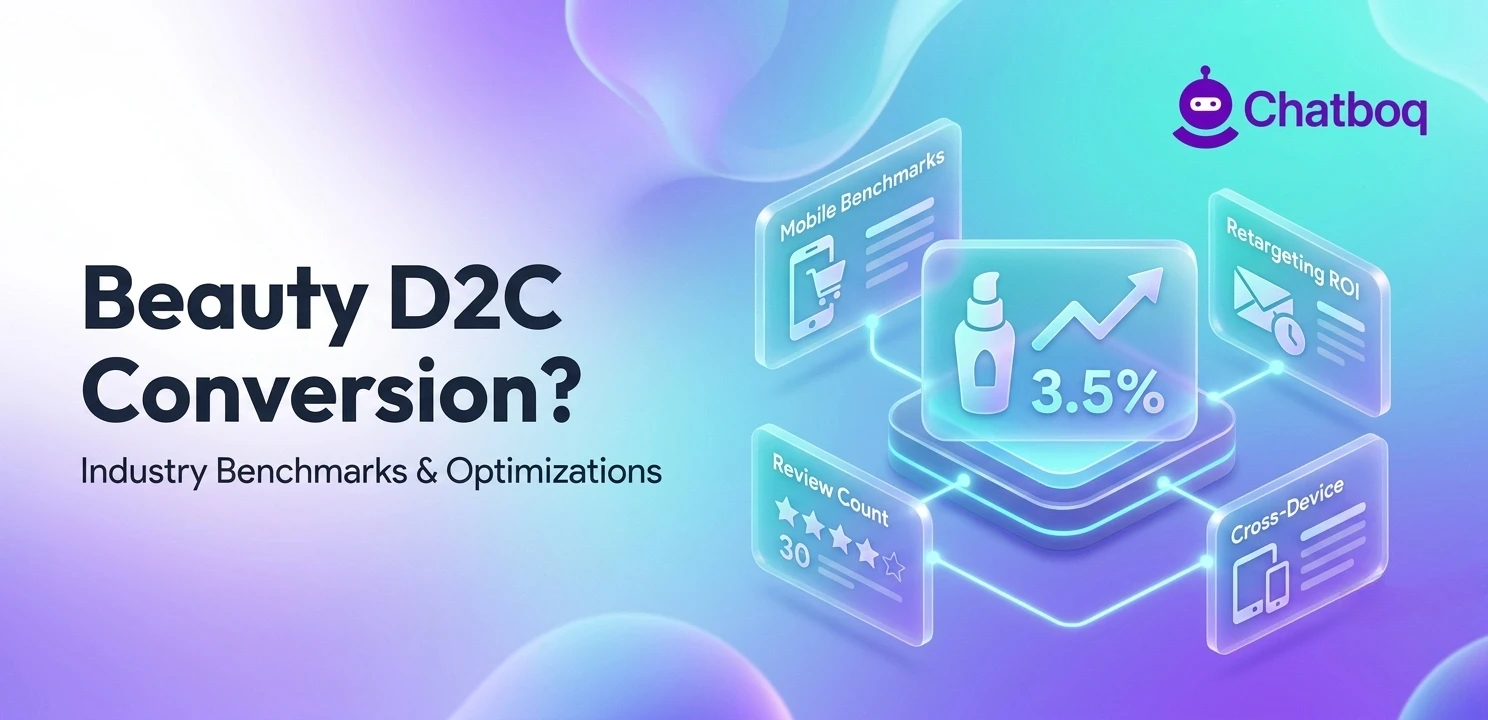
The average beauty D2C conversion rate in 2025 ranges from 1.2% to 3.5% across all traffic sources, with top-performing brands in the top 10% achieving 3.5% to 5% or higher and underperforming stores falling below 1%. These ranges vary significantly by traffic source, device type, product category, and brand trust level.
Beauty ecommerce conversion benchmarks in 2025 reflect the continued pressure from rising paid media costs, increased consumer skepticism toward unfamiliar brands, and growing competition from established retailers offering D2C purchasing options. The median beauty D2C conversion rate sits near 1.8% to 2.2% for brands with established organic and email channels supplementing paid acquisition.
What Is the Average Conversion Rate for Beauty Ecommerce in 2025?
The average beauty ecommerce conversion rate in 2025 is approximately 1.8% to 2.5% across all traffic sources combined. This sits below the broader ecommerce average of 2% to 4% because beauty purchases involve higher consideration cycles and stronger trust requirements.
New brands without established social proof typically perform in the 1% to 1.5% range. Brands with strong review profiles and multi-channel presence perform closer to 2.5% to 3.5% on average.
What Is the Conversion Rate Range for Top-Performing Beauty Brands?
Top-performing beauty D2C brands typically achieve conversion rates in the 3.5% to 5%+ range, depending on traffic mix, retention strength, and brand equity. These brands combine strong brand recognition, dense customer review profiles, optimized product pages with UGC integration, and highly segmented email marketing driving returning customer traffic.
Brands at this performance level have a higher proportion of repeat purchase traffic, which converts at significantly higher rates than cold acquisition traffic.
How Does Conversion Rate Differ by Traffic Source?
Traffic source is the largest single variable in beauty ecommerce conversion performance. Email marketing in beauty ecommerce conversion rate benchmarks typically converts at 3% to 8% from warm, previously engaged audiences, especially when segmentation and lifecycle automation are implemented properly. Organic search converts at 2% to 5% from purchase-intent-driven searchers.
Paid advertising in beauty ecommerce typically converts at 0.8% to 2% from cold audiences with no prior brand exposure, depending on ad creative quality, landing page trust signals, and targeting precision. Influencer traffic converts at 1.5% to 4% depending on audience trust alignment. Social media converts at 0.5% to 2.5%, reflecting discovery-mode browsing behavior.
How Does Mobile vs Desktop Affect Conversion Rates?
Mobile conversion rates in beauty ecommerce are 30% to 60% lower than desktop conversion rates. The majority of beauty brand traffic arrives on mobile, but most completed purchases still happen on desktop or through low-friction mobile experiences.
Mobile users browse and research on their devices but frequently abandon checkout due to form complexity and payment entry friction. Brands implementing Shop Pay and Apple Pay report significantly narrower mobile-to-desktop conversion gaps.
Why Do Conversion Rates Vary Across Beauty Stores?
Conversion rates vary due to five primary factors: brand trust level, product price positioning, review density, traffic source mix, and funnel optimization quality. An established brand with 10,000 product reviews converts higher than a new brand with 50 reviews because social proof reduces hesitation.
Premium pricing reduces conversion volume while increasing AOV. A store driving 60% of traffic through email converts at a higher blended rate than one driving 60% through cold paid advertising.

 ChatGPT
 Perplexity
 Claude





Leave a Comment
Your email address will not be published. Required fields are marked *
By submitting, you agree to receive helpful messages from Chatboq about your request. We do not sell data.