
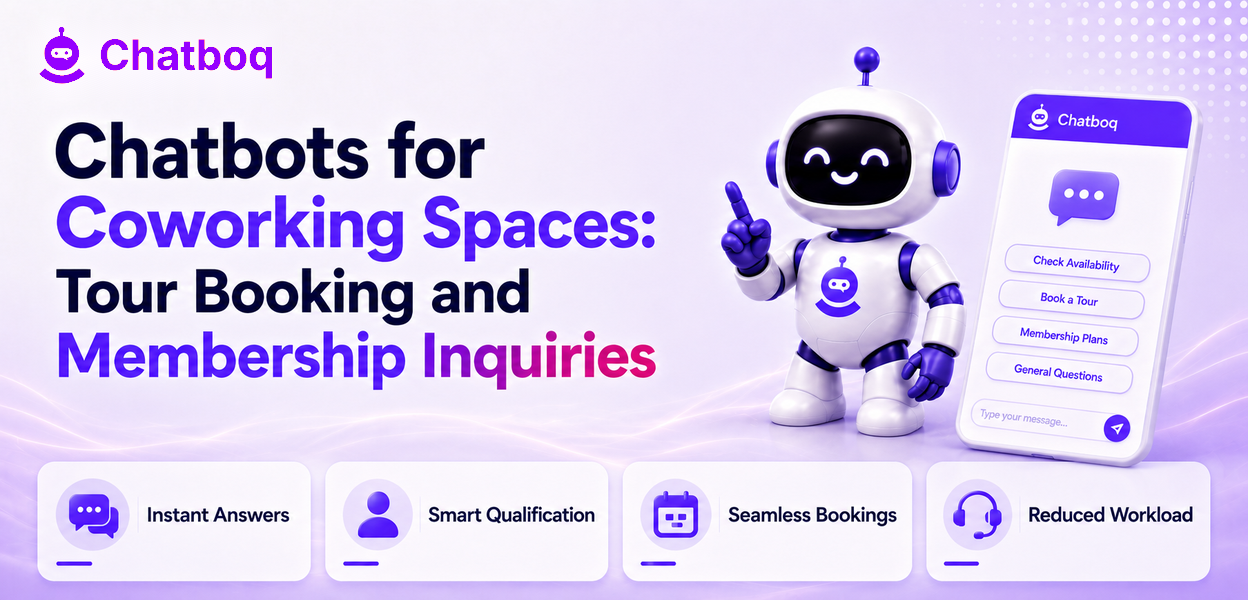
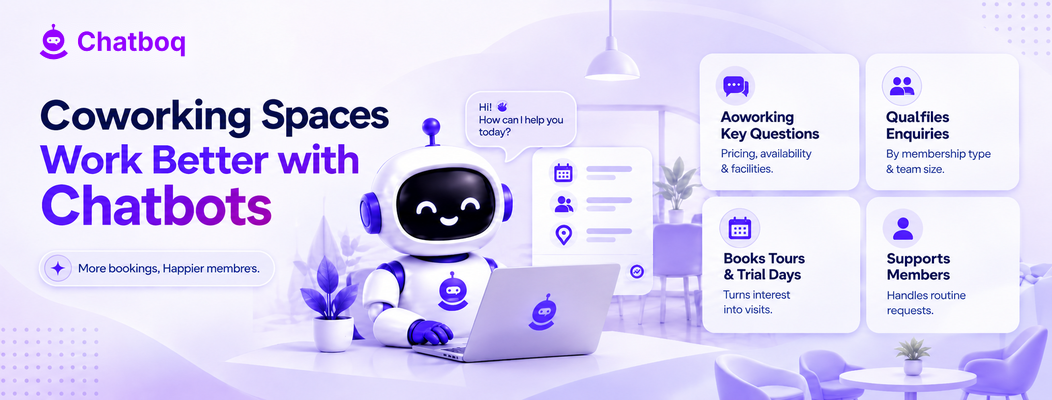
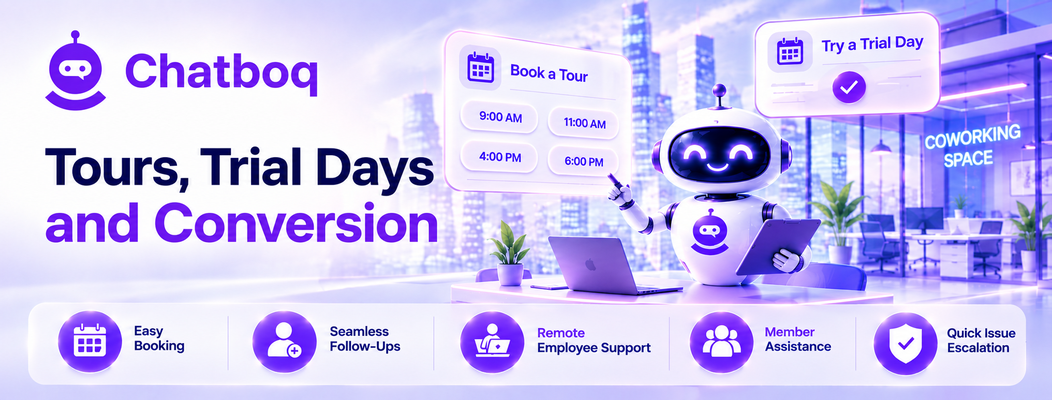
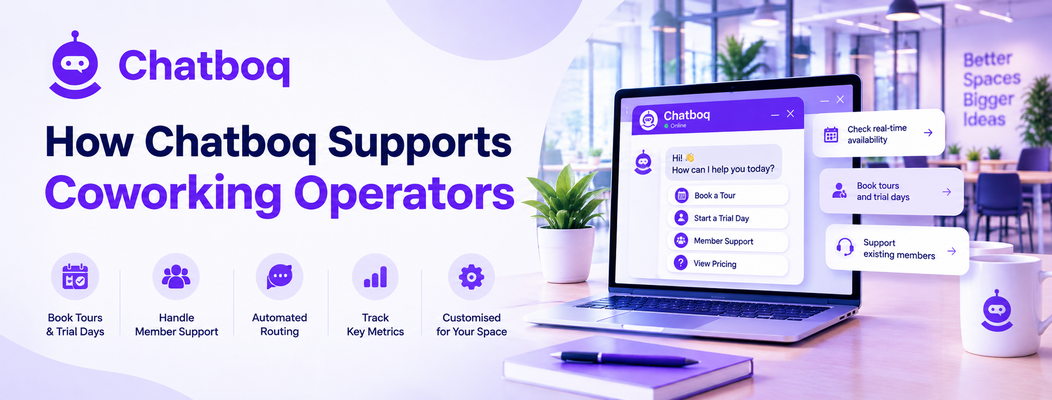
 It answers pricing, availability and facility questions, routes enquiries by membership type and team size, books tours and trial days, and supports existing members with routine requests.
Separating sales enquiries from member support
A coworking chat handles two distinct audiences through one widget, with prospective members asking about price and availability while current members ask about meeting rooms, guests and printing.
Recognising which audience is speaking within the first exchange is the single most valuable configuration decision, because the two need entirely different information and routing.
Answering while the community manager is on the floor
The person best placed to answer is almost always physically somewhere in the building doing something else, which is the nature of a role built around presence rather than a desk.
Automation covers that gap without adding a second salary, which matters in a business model where fixed costs are already the dominant constraint.
Capturing enquiries outside opening hours
Freelancers and remote workers research workspace options in the evening, and an enquiry answered the next afternoon reaches someone who has already toured a competitor at lunchtime.
Confirming desk availability and offering a specific tour slot at nine in the evening frequently ends the search there, because the visitor stops comparing once one option feels settled.
Answering the facilities questions that decide fit
Meeting room availability, phone booth access, printing costs, parking and whether guests can be brought in are the details that determine whether a space works for someone's actual routine.
Answering them precisely rather than generically prevents the tour that ends in disappointment when a visitor discovers the space lacks something they needed all along.
 ChatGPT
 Perplexity
 Claude



Leave a Comment
Your email address will not be published. Required fields are marked *
By submitting, you agree to receive helpful messages from Chatboq about your request. We do not sell data.