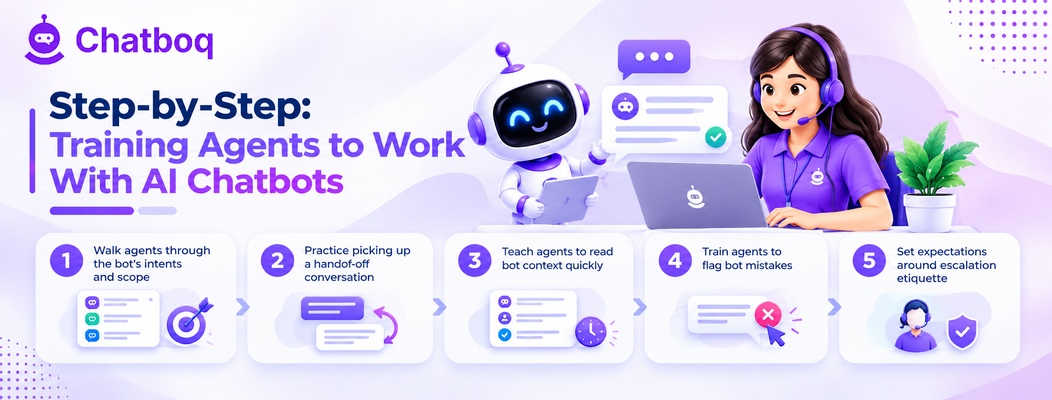
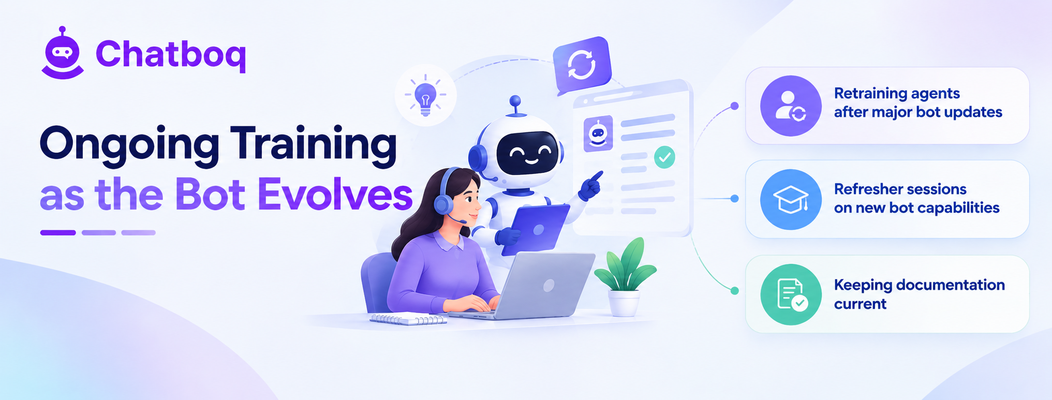
Effective training covers five steps: walking agents through the bot's full set of intents and scope, practicing picking up a handed-off conversation in a low-stakes setting, teaching agents to quickly read bot-provided context, training them to flag bot mistakes constructively, and setting clear expectations around escalation etiquette.
Step 1: Walk agents through the bot's intents and scope
A structured walkthrough of every request type the bot is designed to handle, ideally with real example conversations, gives agents a concrete reference point rather than a vague, abstract sense of what the bot is supposed to do.
Step 2: Practice picking up a handed-off conversation
Role-playing or shadowing real handoffs, in a low-stakes training environment before going live, builds the specific skill of quickly absorbing context and responding naturally rather than restarting the conversation from scratch.
Step 3: Teach agents to read bot conversation context quickly
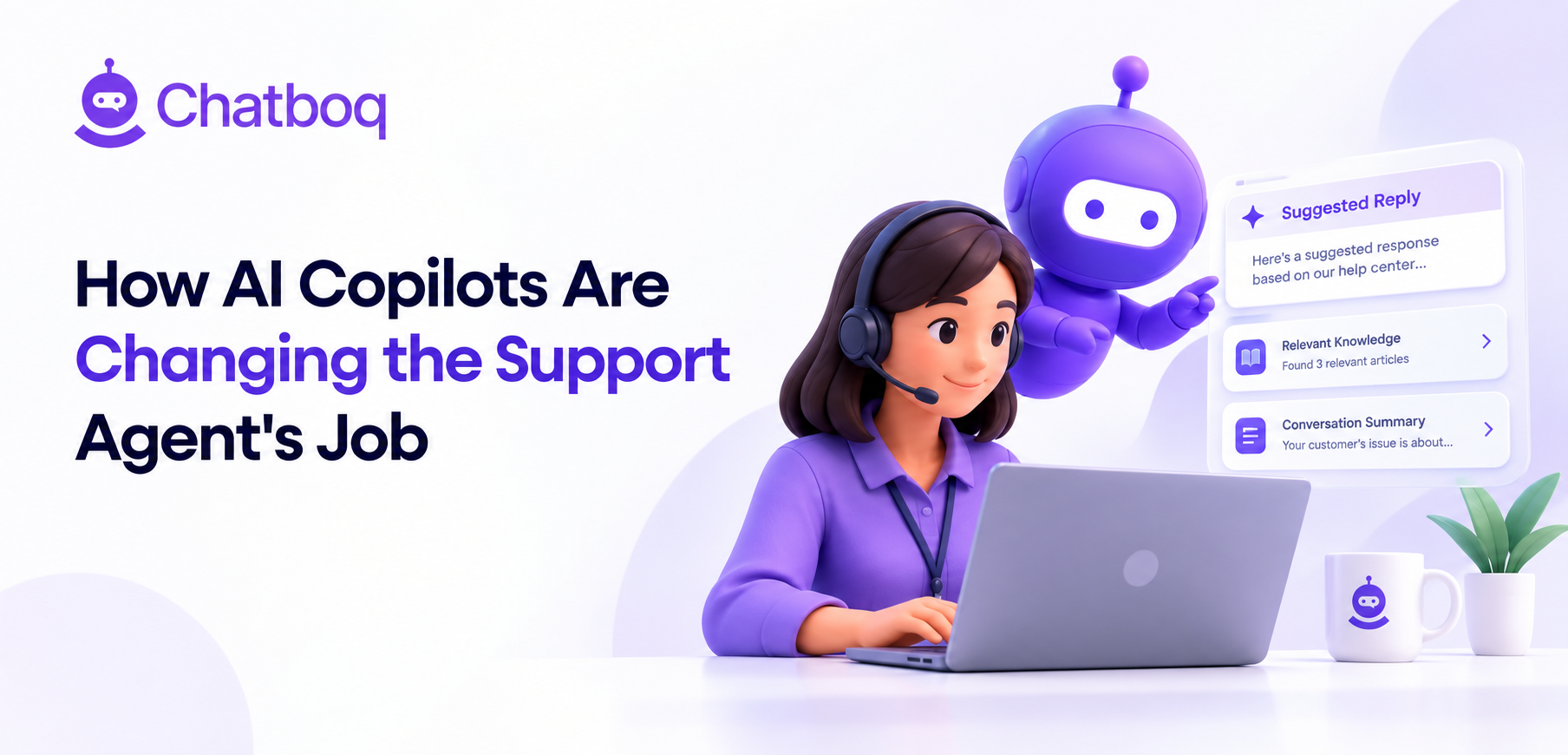
A brief, structured method for scanning a bot's prior messages, what intent it detected, what information it collected, what it attempted, speeds up how quickly an agent can orient themselves in a conversation they didn't start.
Step 4: Train agents to flag bot mistakes
Giving agents a simple, low-friction way to flag a bot mistake they notice, without it feeling like extra unpaid work, turns the frontline team into an ongoing source of bot improvement data rather than a group that simply works around the bot's flaws silently.
Step 5: Set expectations around escalation etiquette
Clear guidance on how agents should acknowledge a handoff to the customer, without either blaming the bot or pretending the earlier conversation didn't happen, keeps the transition feeling smooth rather than awkward or defensive.

 ChatGPT
 Perplexity
 Claude




Leave a Comment
Your email address will not be published. Required fields are marked *
By submitting, you agree to receive helpful messages from Chatboq about your request. We do not sell data.