
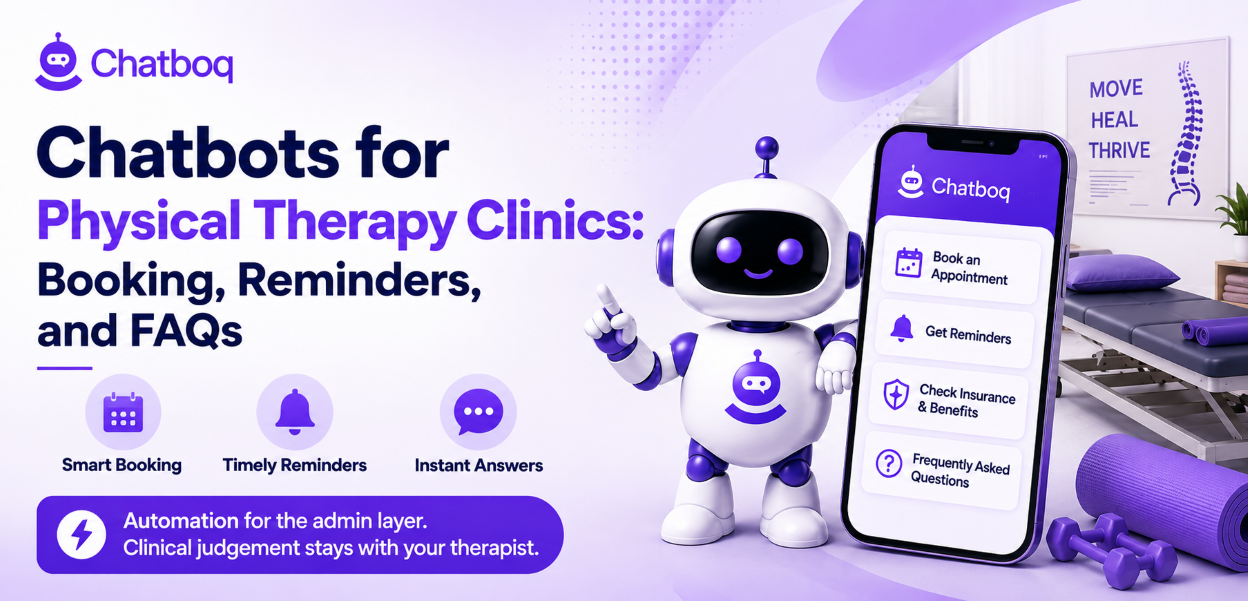
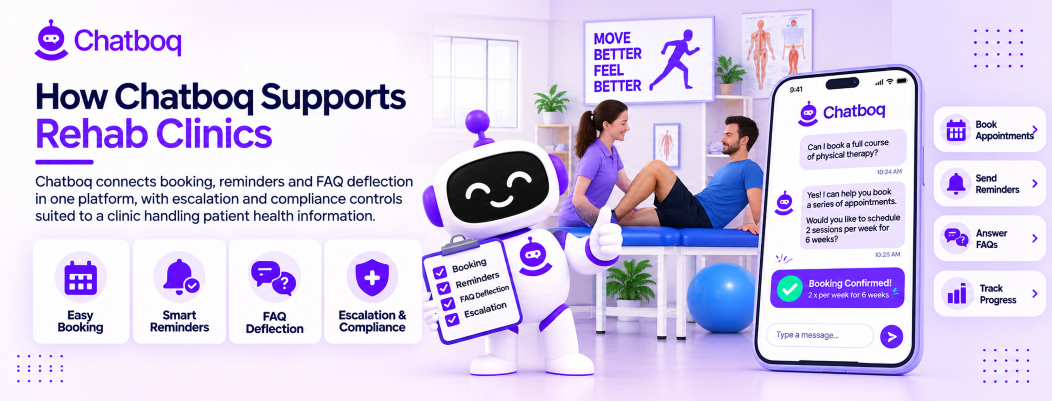
It is a conversational assistant configured around rehab workflows, covering multi-visit scheduling, therapist matching, referral and insurance triage, reminder sequences and self-service answers to plan-of-care questions.
Where the value concentrates
The return is concentrated in repetition, because a physical therapy clinic answers the same twenty questions hundreds of times a month and books the same recurring visit patterns for every new patient it takes on.
That volume is exactly what automation handles reliably and exactly what burns out front desk staff, which is why most clinics notice the difference first in reception capacity rather than in new patient numbers.
Reducing the documentation burden
Structured answers captured in chat can populate intake fields directly, which cuts the administrative load therapists carry after hours and is one of the strongest contributors to burnout in the profession.
A therapist who opens a first appointment with the history already recorded spends that time treating rather than transcribing, which improves both the visit and the clinician's day.
What it is explicitly not
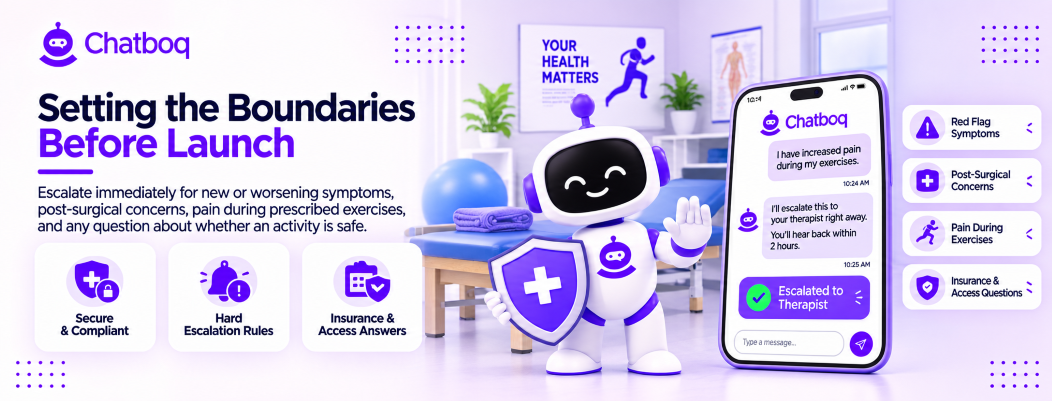
A physical therapy chatbot is not a clinical tool, and it should not assess injuries, prescribe exercises or judge whether symptoms warrant urgent review, since those decisions belong with licensed therapists.
Setting that boundary clearly in configuration is what makes the rest of the automation trustworthy, and patients notice when a system knows the limits of what it should answer.
 ChatGPT
 Perplexity
 Claude



Leave a Comment
Your email address will not be published. Required fields are marked *
By submitting, you agree to receive helpful messages from Chatboq about your request. We do not sell data.