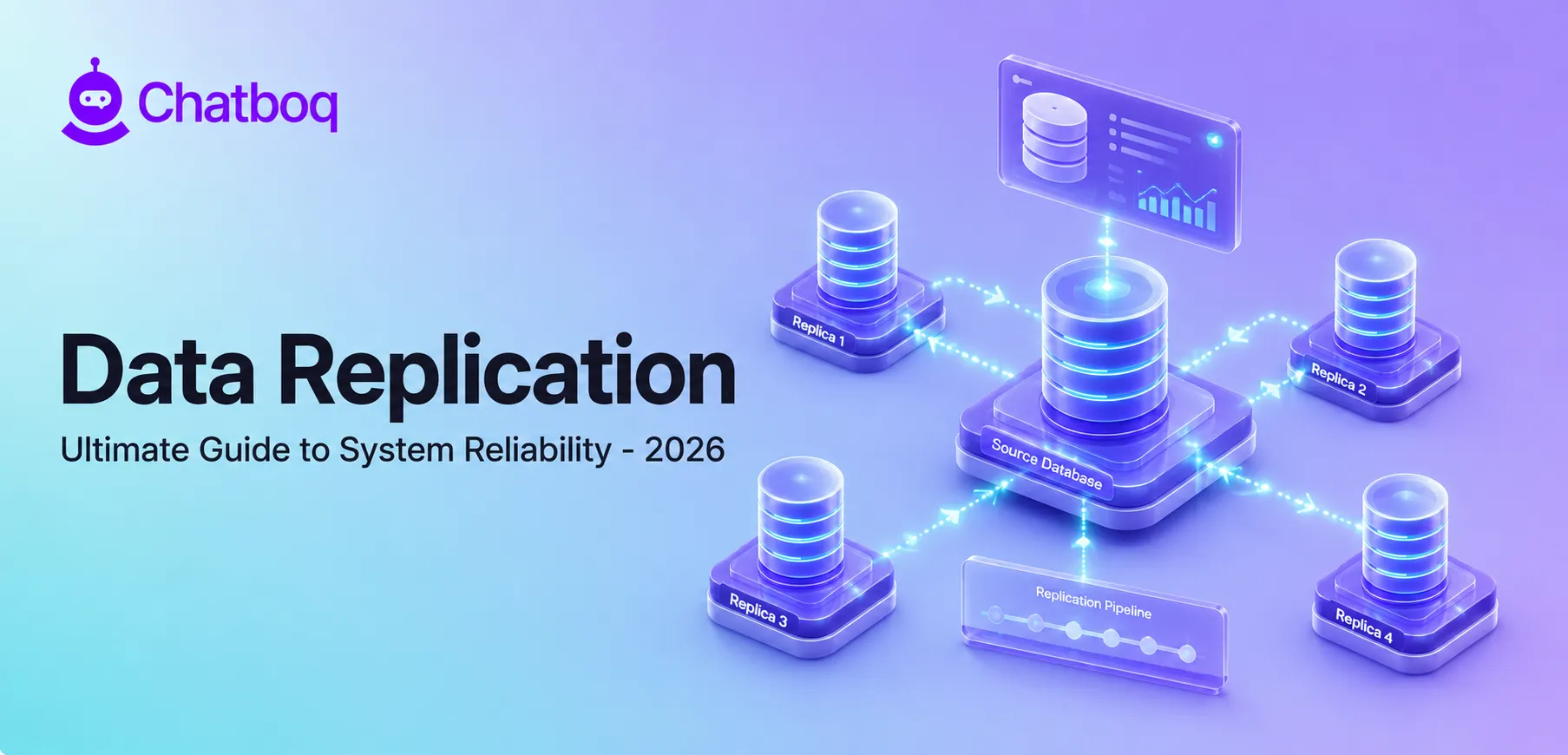
The five primary types of data replication are full replication, incremental replication, snapshot replication, transactional replication, and merge replication. Each type differs in the scope of data transferred, the frequency of synchronization, and the consistency guarantees provided.
Full Replication
Full replication copies the complete dataset from the source database to each replica on every replication cycle. Every record in every table transfers regardless of whether it changed since the last replication. It produces perfectly consistent replicas at the end of each cycle but consumes maximum network bandwidth and processing time during transfer.
Full replication suits small datasets where the transfer time is short relative to the replication frequency. It fails when dataset size exceeds the available transfer capacity within the required replication window, causing replicas to lag continuously behind the source. It is rarely used in production distributed systems handling large or frequently changing datasets.
Incremental Replication
Incremental replication transfers only the records that changed since the last successful replication cycle. Change detection uses timestamps, sequence numbers, or CDC log reading to identify modified records. It reduces network bandwidth consumption and processing time proportionally to the volume of changes relative to total dataset size. A database with 10 million records that receives 5,000 changes per replication cycle transfers 5,000 records rather than 10 million.
Incremental replication requires reliable change tracking at the source. Gaps in change detection produce replicas with missing updates that diverge silently from the source without triggering an error. It is the standard approach for production database replication across distributed systems handling large, high-velocity datasets.
Snapshot Replication
Snapshot replication captures the complete state of the source database at a specific point in time and distributes that snapshot to replica nodes. The snapshot represents a consistent view of the data at the capture moment, without ongoing change tracking between snapshots.
Snapshot replication suits data warehouses, reporting systems, and analytics platforms that require a stable, point-in-time consistent dataset rather than continuous real-time synchronization. Replication frequency determines data freshness: hourly snapshots produce replicas up to 60 minutes behind the source. It does not support real-time data consistency requirements. It provides a defined recovery point for replicas that need periodic refresh rather than continuous update.
Transactional Replication
Transactional replication propagates individual database transactions from the source to replicas in the exact order they were committed. Each transaction (insert, update, delete) replicates as a discrete unit, preserving the transactional integrity of the data across all nodes. Replicas apply transactions in the same sequence as the source, maintaining a consistent data state.
Transactional replication supports real-time data consistency requirements where replicas must reflect source changes within milliseconds to seconds. It is the standard replication method for operational databases supporting live applications, CRM systems, and financial transaction systems that require consistent data across distributed nodes. Transactional replication requires a reliable replication log and a low-latency network connection between source and replica nodes.
Merge Replication
Merge replication enables multiple nodes to accept write operations independently and synchronize changes bidirectionally. Each node operates as both a source and a target, publishing its local changes and subscribing to changes from other nodes. It requires a conflict resolution mechanism to handle cases where the same record is modified on two or more nodes between synchronization cycles. Conflict resolution rules define which version of a conflicted record takes precedence: last-write-wins, source-priority, or custom business logic.
Merge replication suits distributed applications where nodes operate with intermittent connectivity (mobile field applications, edge deployments) and cannot rely on a continuous connection to a central primary node. It introduces complexity that synchronous and asynchronous replication topologies avoid.

 ChatGPT
 Perplexity
 Claude




Leave a Comment
Your email address will not be published. Required fields are marked *
By submitting, you agree to receive helpful messages from Chatboq about your request. We do not sell data.