
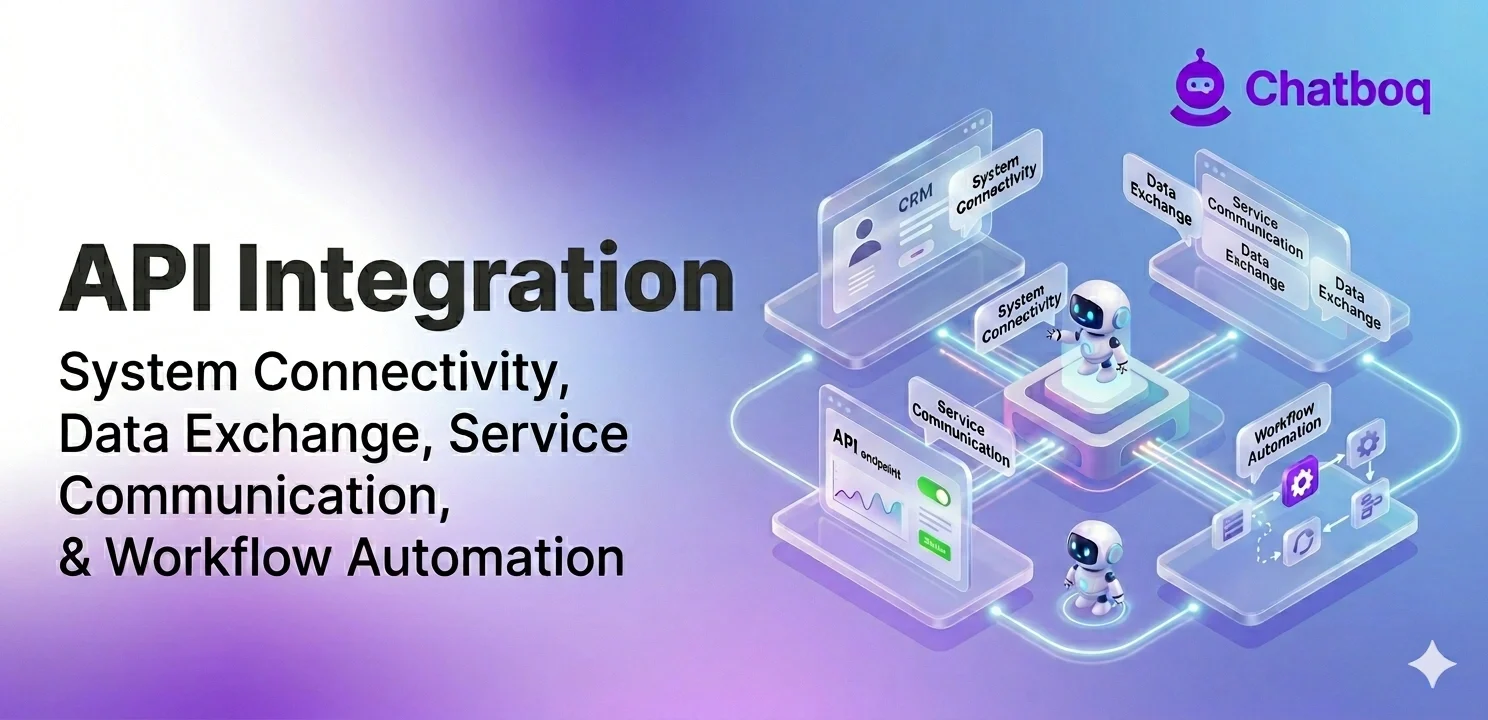
API integration is the process of connecting different software systems through application programming interfaces to enable automated data exchange and service communication. Cross-platform integration enables software systems and SaaS platforms to exchange operational data continuously. They need to talk to each other. APIs provide standardized application connectivity for service communication and data exchange between software systems. Through APIs, systems request and receive data automatically.
Businesses use dozens of software tools. CRM systems track customers. Accounting systems track money. Marketing automation platforms track campaigns. These systems contain related operational data that requires system synchronization across connected services. Manual copying is slow and error-prone. API integration automates this synchronization.
Workflow automation systems represent one of the primary operational advantages of API integration because they synchronize service communication and API workflows across connected applications. Instead of manual handoffs between systems, automation handles transitions. When a customer is added to CRM, marketing automation automatically creates a record. When payment is made, accounting automatically records it. Workflows that took minutes now take seconds.
Service communication through APIs enables real-time operations. Systems no longer wait for end-of-day batch processes. They communicate instantly. Real-time integration infrastructure maintains synchronized operational data across enterprise software systems. Decisions are made on current information. Real-time integration systems improve operational responsiveness by synchronizing service communication and data exchange continuously across software systems.
 ChatGPT
 Perplexity
 Claude



Leave a Comment
Your email address will not be published. Required fields are marked *
By submitting, you agree to receive helpful messages from Chatboq about your request. We do not sell data.