
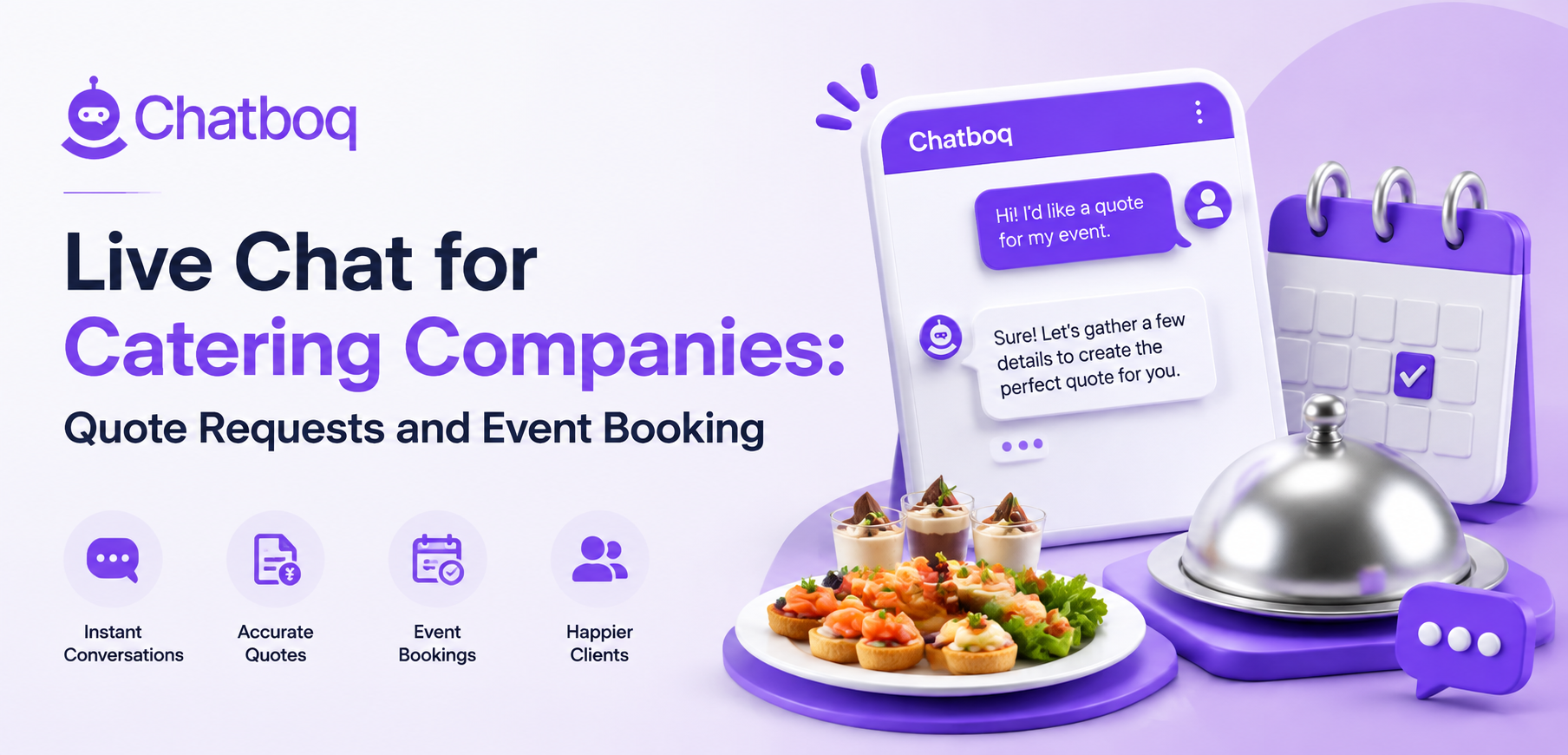
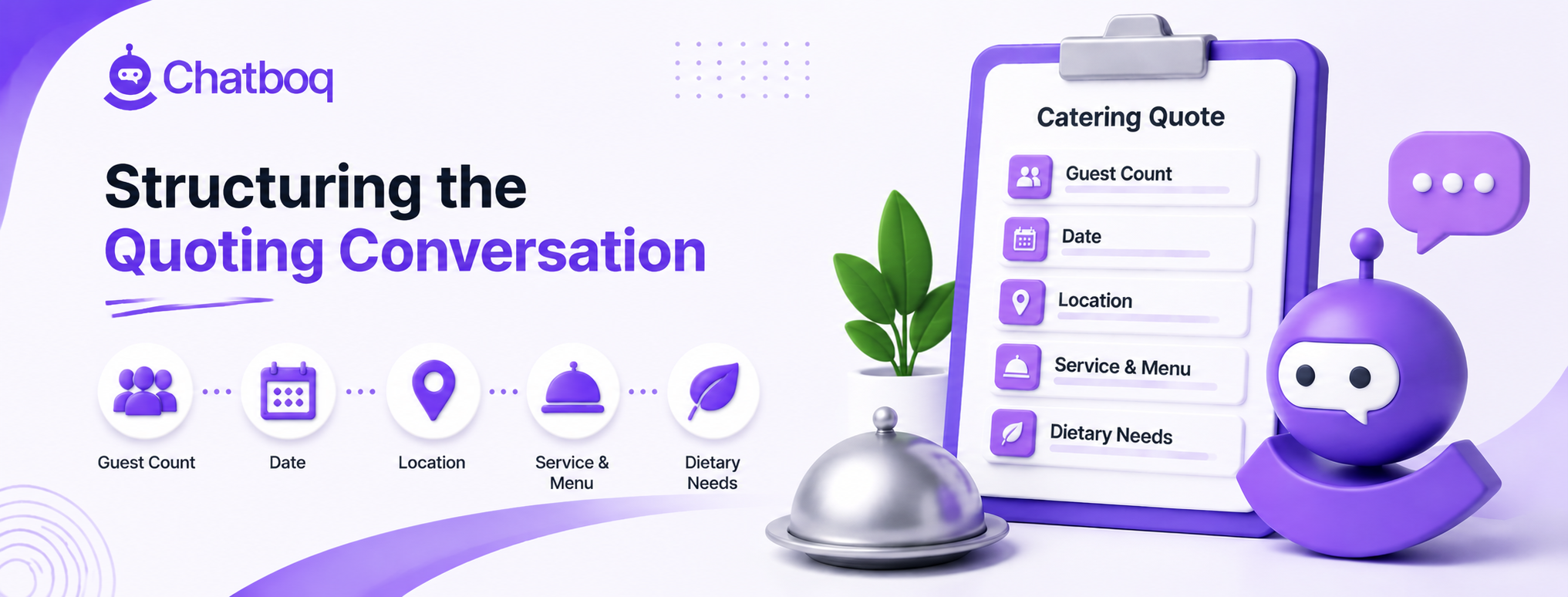
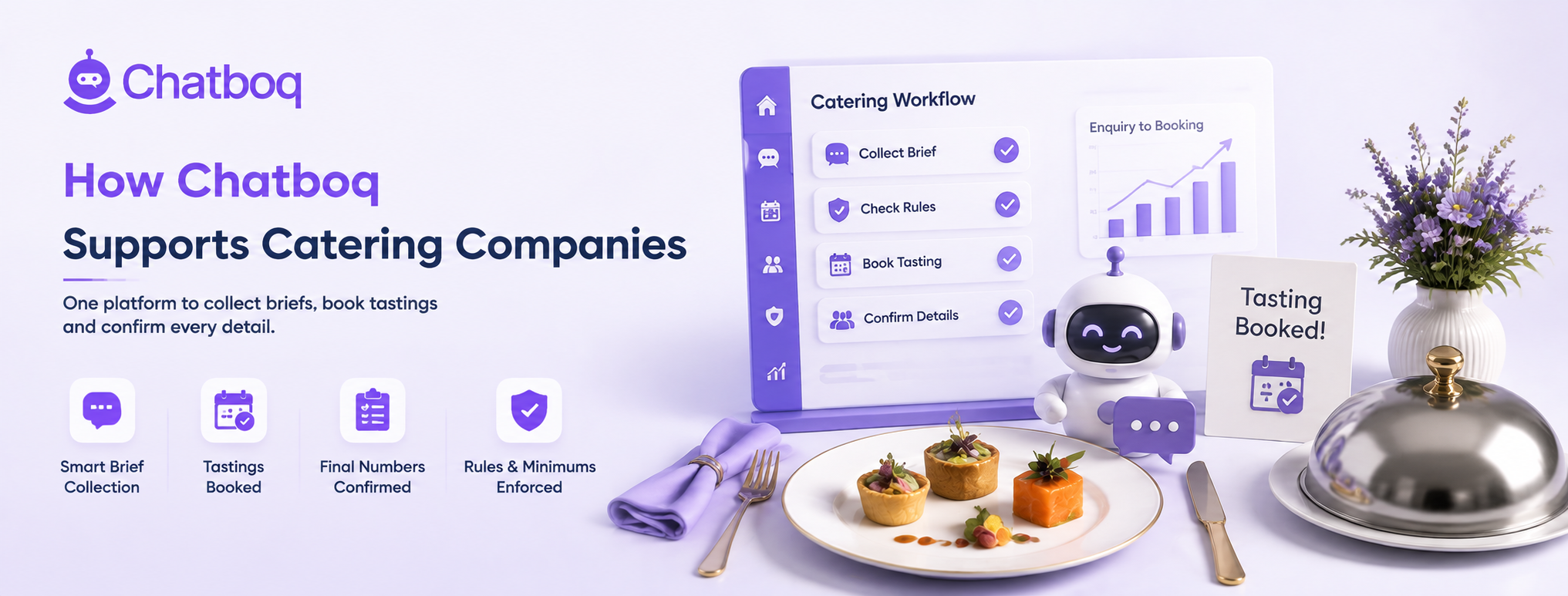
It gathers the full quoting brief in a single conversation, applies minimum order and delivery rules automatically, and either returns a price range or books the next step.
Replacing the multi-day email exchange
A typical catering enquiry arrives with a date and a vague description, then takes three emails to establish guest count, service style and venue before a quote can even be started.
Collecting all of it conversationally at the moment of enquiry compresses days into minutes, and the client experiences a business that is organised rather than one that is slow.
Filtering enquiries the business cannot serve
Minimum order values, delivery radius, lead time requirements and kitchen capacity on a given date all rule out a share of enquiries, and none of those checks require a person.
Applying them automatically means the catering manager never spends an hour on a quote for an event outside the delivery area or below the minimum spend.
Covering enquiries while the kitchen is running
Catering teams are frequently on site delivering events precisely when new enquiries arrive, particularly at weekends when private clients are planning and comparing options.
Automation covers the hours where the business is least reachable and most in demand, which is where the recoverable revenue in this category sits.
Standardising what clients are told
When enquiries are handled by whoever is free, clients receive slightly different answers about minimums, service charges and staffing, which creates disputes at the invoicing stage.
A single knowledge base means every enquiry receives the same figures, and updating a price or a policy becomes one edit rather than a briefing for the whole team.
 ChatGPT
 Perplexity
 Claude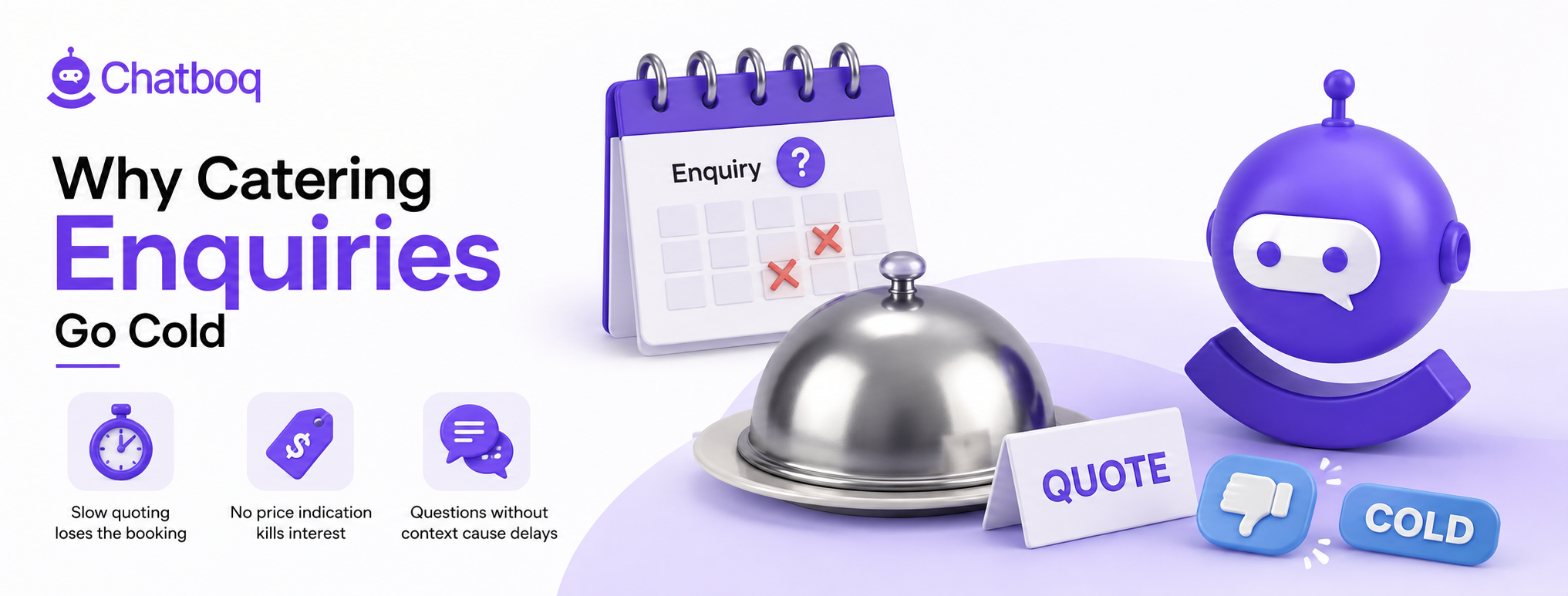


Leave a Comment
Your email address will not be published. Required fields are marked *
By submitting, you agree to receive helpful messages from Chatboq about your request. We do not sell data.