
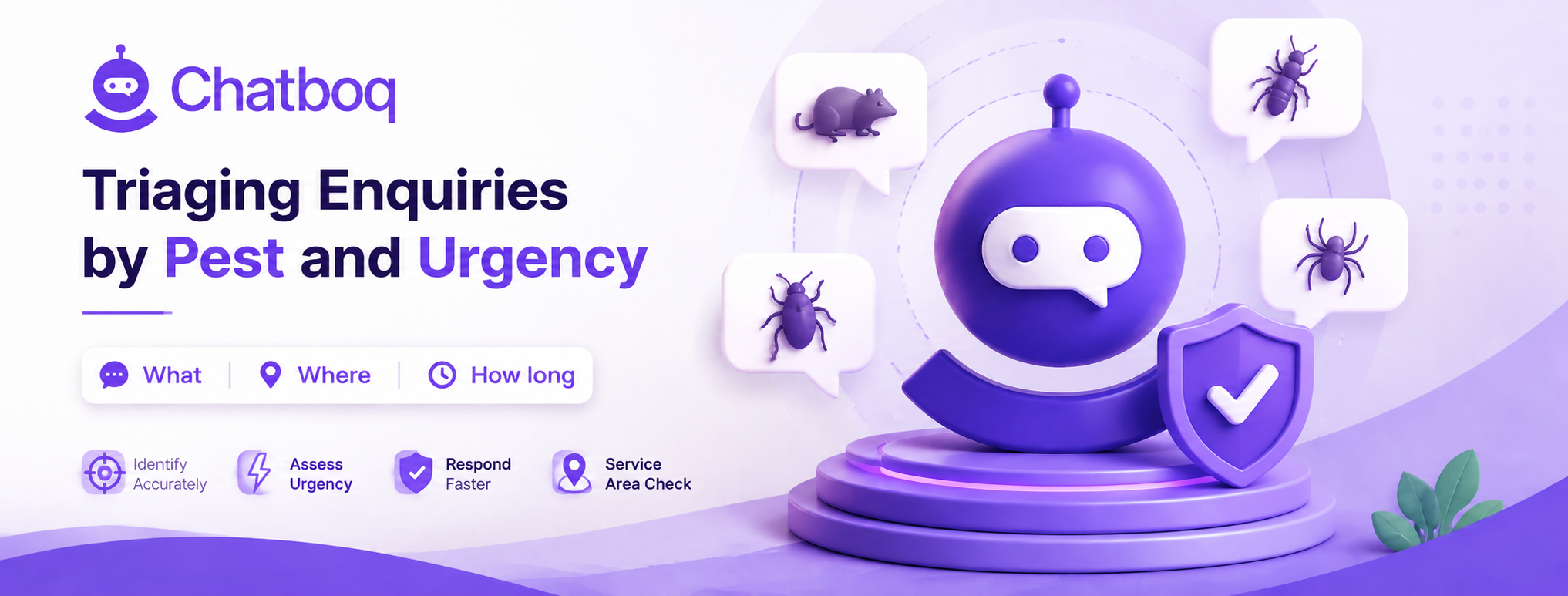
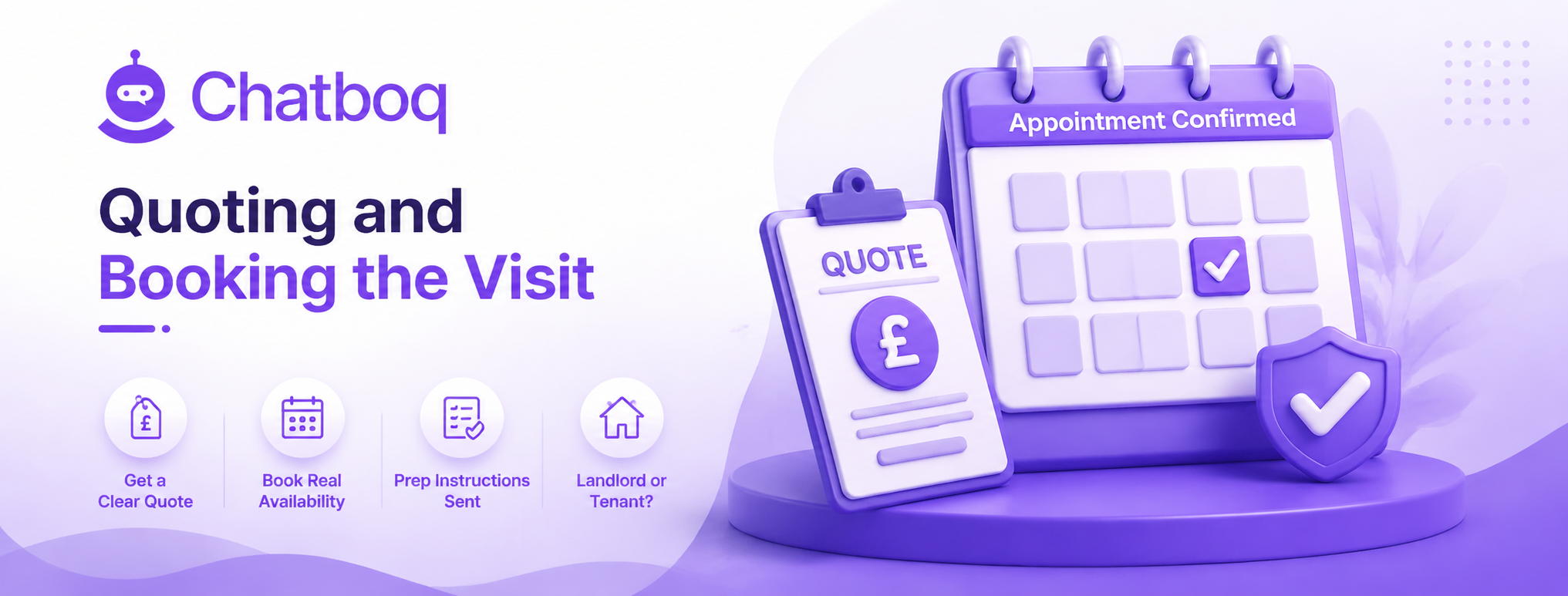
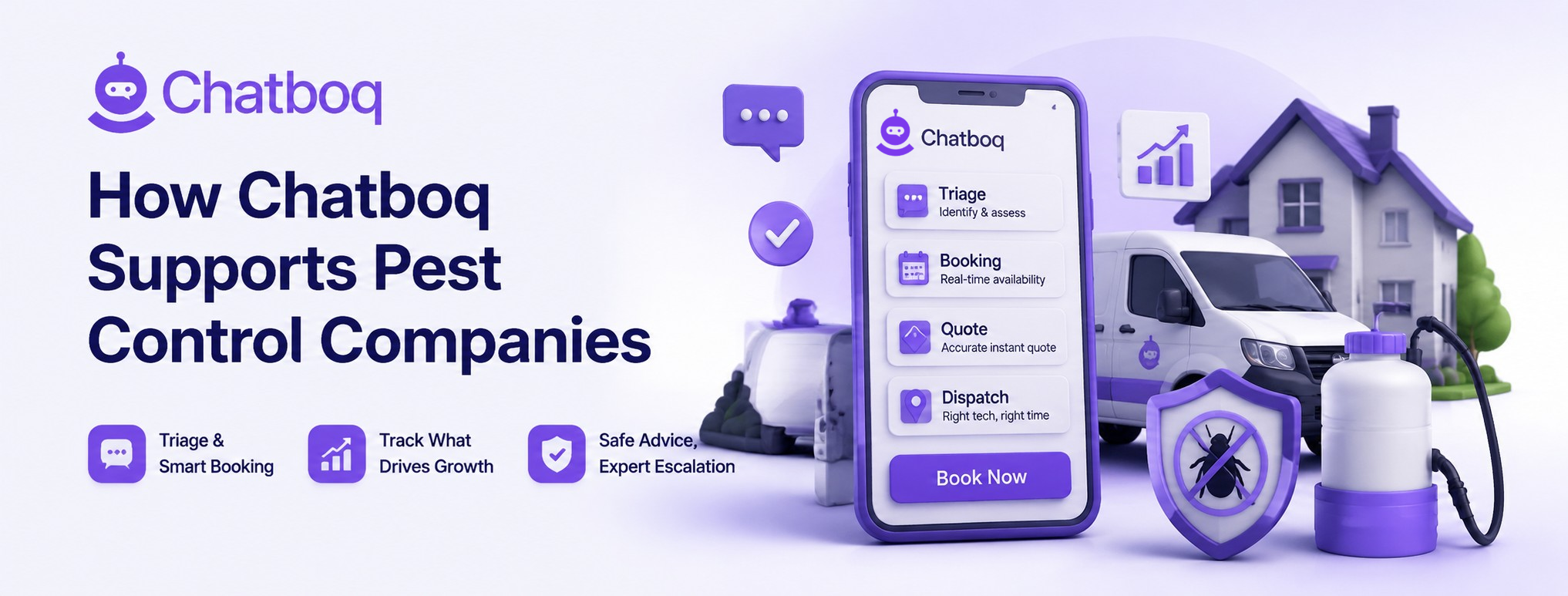
It identifies the pest and the urgency, confirms the property is in the service area, gives a price where treatment is standardised, and books the visit without waiting for a dispatcher.
Capturing the enquiry at the moment of discovery
Pest problems are discovered at inconvenient hours, and the enquiry follows within minutes because the situation is unpleasant enough that nobody waits until morning to act.
A company able to confirm availability and book a visit at that moment converts an enquiry that would otherwise be one of five voicemails answered in whatever order they were left.
Triaging urgency before dispatch sees it
A wasp nest by a front door, bed bugs in a rental and ants in a garden are three completely different levels of urgency, and treating them identically wastes same-day capacity.
Automated triage lets genuinely urgent jobs reach dispatch immediately while routine enquiries book into normal scheduling, which protects the emergency slots for the cases that need them.
Reducing the volume reaching dispatch
Dispatchers spend a large share of their day answering questions about pricing, timing, preparation and whether a property is covered, none of which requires their expertise.
Removing that volume lets dispatch concentrate on routing, which is where the operational efficiency of a pest control business is actually determined.
Answering the questions that delay a booking
Customers want to know whether treatments are safe around children and pets, how long they must stay out and whether the problem will return, before they commit to an appointment.
Answering these clearly and consistently removes the hesitation that otherwise turns an urgent enquiry into a decision postponed until the following week.
 ChatGPT
 Perplexity
 Claude



Leave a Comment
Your email address will not be published. Required fields are marked *
By submitting, you agree to receive helpful messages from Chatboq about your request. We do not sell data.