
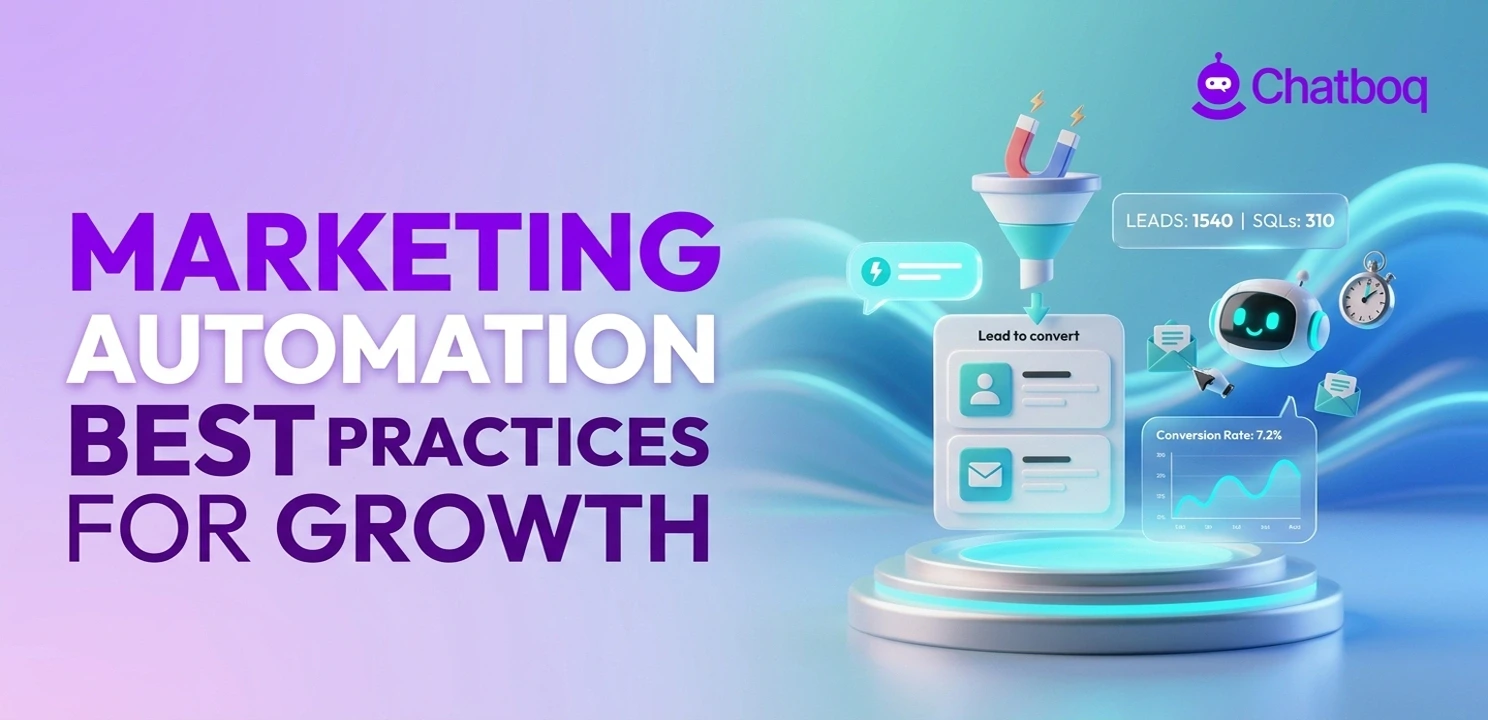
Marketing automation best practices are the operational standards and workflow strategies that improve email campaign performance, lead conversion, customer retention, and automation efficiency across digital marketing systems.
Effective marketing automation depends on accurate audience segmentation, behavioral trigger-based workflows, personalization, conversion tracking, and CRM integration that connects customer data across marketing and sales systems in real time. High-performing automation programs use customer behavior, purchase history, and engagement signals to deliver relevant emails automatically instead of sending the same message to every contact through marketing automation, email automation, and customer segmentation workflows.
The highest-ROI marketing automation workflows include abandoned cart emails, SaaS onboarding sequences, B2B lead nurturing campaigns, customer retention automation, and win-back workflows using email automation, workflow optimization, and conversion optimization. Platforms including HubSpot, Klaviyo, ActiveCampaign, Mailchimp, and Salesforce Marketing Cloud provide workflow automation infrastructure for these use cases, while Chatboq supports omnichannel customer communication and automated engagement workflows.
Marketing automation performance declines when segmentation is inaccurate, workflows are not updated, deliverability practices are ignored, or automation sequences launch without conversion tracking and optimization processes. Businesses generating the strongest automation ROI continuously test, analyze, and refine workflows based on customer behavior and campaign performance data.
 ChatGPT
 Perplexity
 Claude


Leave a Comment
Your email address will not be published. Required fields are marked *
By submitting, you agree to receive helpful messages from Chatboq about your request. We do not sell data.