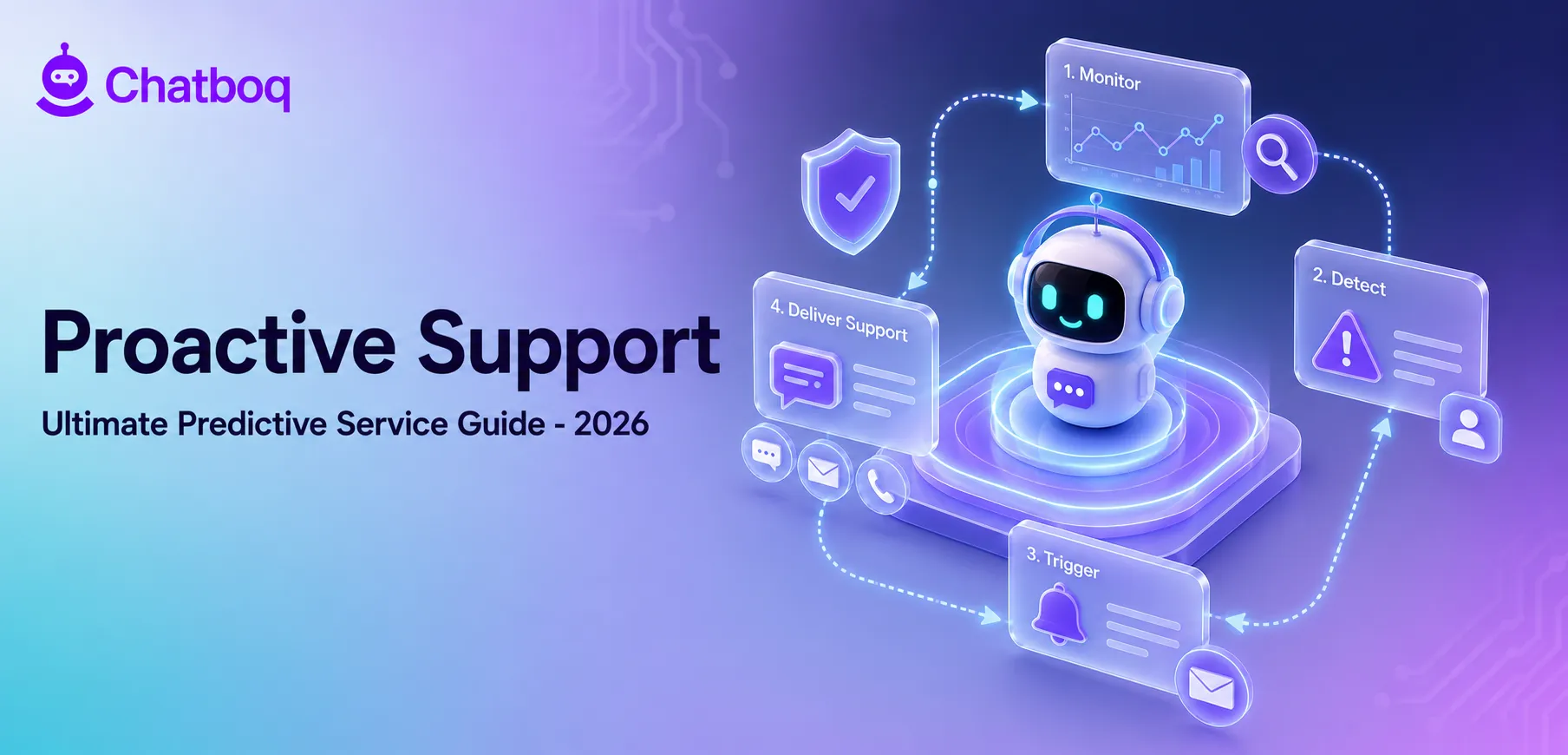
Proactive support operates through a 4-stage workflow: monitoring customer behavior and operational signals, detecting risks and friction before escalation, triggering automated outreach workflows, and delivering support across the customer's preferred channels.
Monitoring Customer Behavior and Operational Signals
Proactive support starts with continuous monitoring of 2 signal categories. Customer behavior signals include product usage data (feature adoption rate, session frequency, navigation patterns), inactivity indicators (missed logins, incomplete onboarding steps, abandoned workflows), and engagement data (email open rates, in-app click behavior).
Operational signals include system performance data (error rates, latency thresholds, uptime monitoring), billing events (failed payments, approaching plan limits), and infrastructure alerts (service degradation, API failures). CRM integration connects behavioral and operational signals to individual customer records, enabling workflows to trigger with full customer context. Monitoring systems without CRM integration can identify behavioral and operational signal patterns but cannot deliver personalized outreach because they lack customer-level identity mapping required for targeted communication.
Detecting Risks, Issues, and Friction Before Escalation Occurs
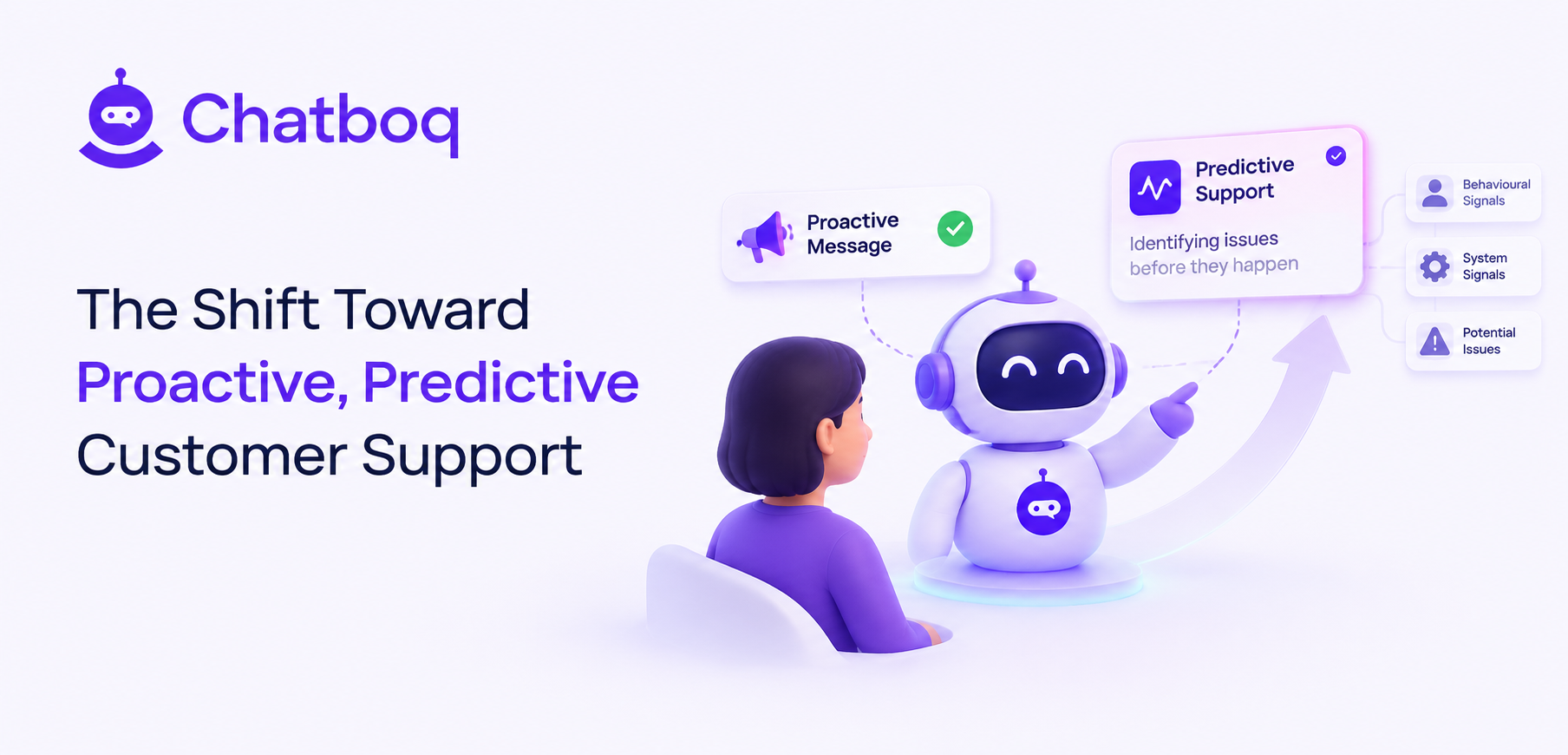
Issue detection converts raw monitoring data into actionable support signals. Behavioral analytics apply defined thresholds to identify friction: 3 failed login attempts within 10 minutes triggers a password assistance workflow, 7 consecutive days without product login triggers a re-engagement outreach, and a payment decline triggers an account status notification. Predictive analytics extend detection beyond threshold-based rules by identifying behavioral patterns that historically precede churn. A customer who reduces session frequency by 40% over 30 days while increasing time on the pricing page exhibits a churn signal that no single threshold catches but a predictive model identifies accurately. NLP intent detection analyzes customer communication for frustration and cancellation signals before they become formal complaints.
Triggering Proactive Outreach and Support Workflows Automatically
Trigger-based automation converts detected signals into support actions without human intervention. An event-driven workflow activates the appropriate response when a signal condition is met: a system outage alert triggers a mass customer notification, a failed onboarding step triggers an in-app guidance message, and a billing failure triggers a payment assistance email.
Automation rules engines evaluate conditions and select the appropriate response template, channel, and timing. Overly sensitive triggers generate irrelevant outreach that customers ignore. Undertriggered workflows miss the issues they were designed to prevent. Trigger calibration requires ongoing monitoring of activation rates and customer response rates.
Delivering Support Across Chat, Email, SMS, and In-App Messaging
Proactive support delivers assistance through the channel most likely to reach the customer at the relevant moment. In-app messaging delivers guidance within the product interface during active sessions. Email delivers notifications and proactive guidance for issues that develop outside the product session. SMS delivers time-sensitive alerts (payment failures, service disruptions) through a channel with higher immediate open rates than email.
Conversational AI delivers real-time assistance for customers actively engaged on the website or in the product, typically operating alongside predefined workflows and escalation rules rather than fully autonomous decision-making. Omnichannel coordination ensures the same customer does not receive the same proactive message across multiple channels simultaneously, which produces communication fatigue rather than effective assistance.

 ChatGPT
 Perplexity
 Claude


Leave a Comment
Your email address will not be published. Required fields are marked *
By submitting, you agree to receive helpful messages from Chatboq about your request. We do not sell data.