
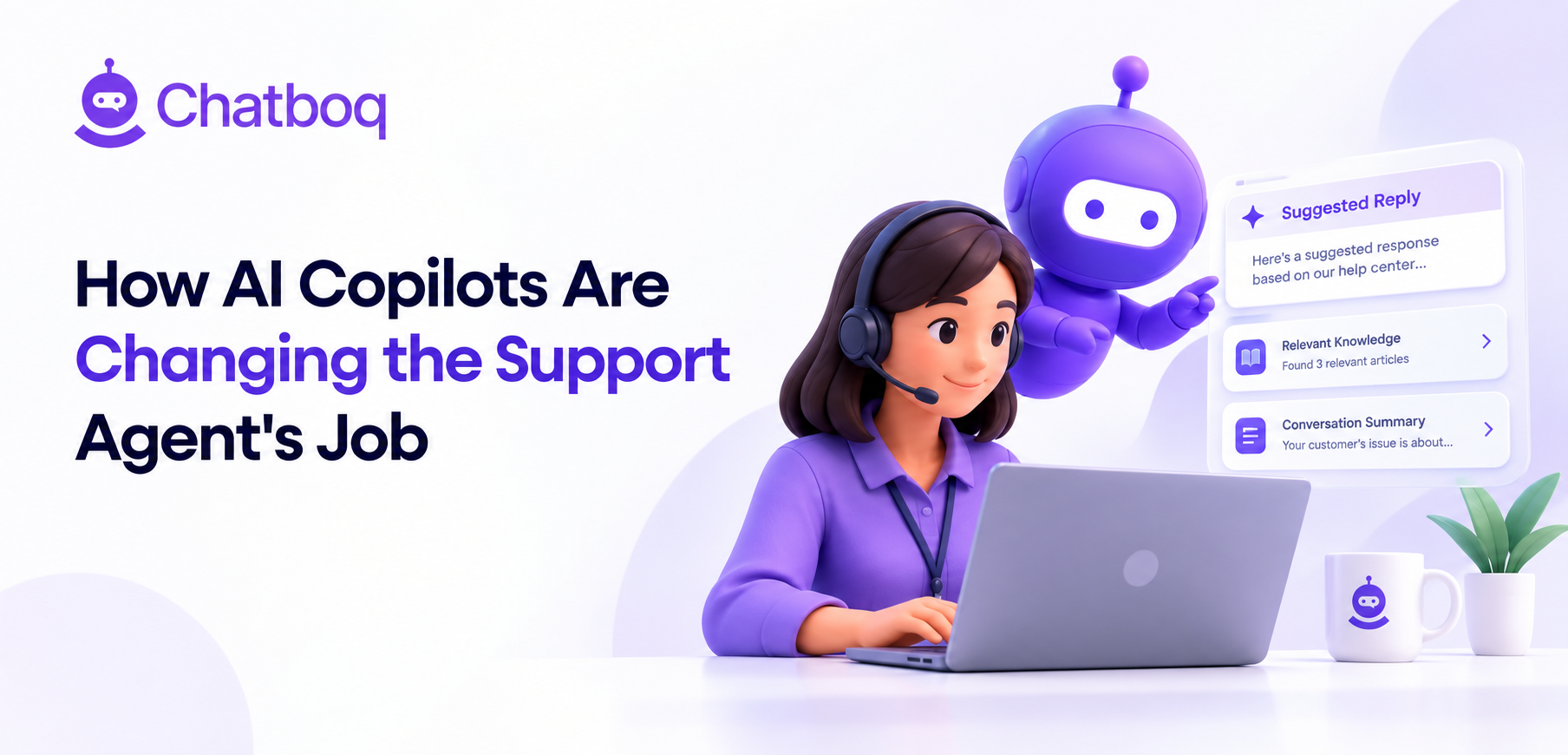
Four functions account for most of the value: suggesting replies, surfacing knowledge, summarising and prompting next actions.
Suggested replies
Drafting a response the agent edits and sends removes most of the typing, which is where the time saving is most visible.
Whether agents edit or accept unchanged is the variable that determines whether this improves or degrades quality.
Knowledge surfacing
Bringing the relevant article or policy into the conversation without the agent searching removes the context switch that fragments attention.
This is arguably more valuable than reply suggestion and receives considerably less attention.
Summarisation
Summarising a long conversation for a colleague, or at handover, removes work agents dislike and do inconsistently.
It also improves handovers, since a generated summary is more complete than one written under queue pressure.
Next action prompts
Suggesting what to check or offer next, based on the situation, is closer to coaching than to assistance and helps less experienced agents most.
It is also where a wrong suggestion is most consequential, since the agent may not know it is wrong.
Translation and tone
Adjusting register for a frustrated customer, or handling a language the agent does not speak, extends what an individual agent can cover.
This is genuinely additive rather than only faster, since the agent could not have done it alone.
 ChatGPT
 Perplexity
 Claude




Leave a Comment
Your email address will not be published. Required fields are marked *
By submitting, you agree to receive helpful messages from Chatboq about your request. We do not sell data.