

The most substantive change is assistants that complete tasks rather than describing how to complete them.
Why this matters more than better answers
An assistant that explains how to change a booking is useful and an assistant that changes it is a different proposition entirely.
The value gap between the two is considerably larger than the gap between a good answer and a slightly better one.
What it requires
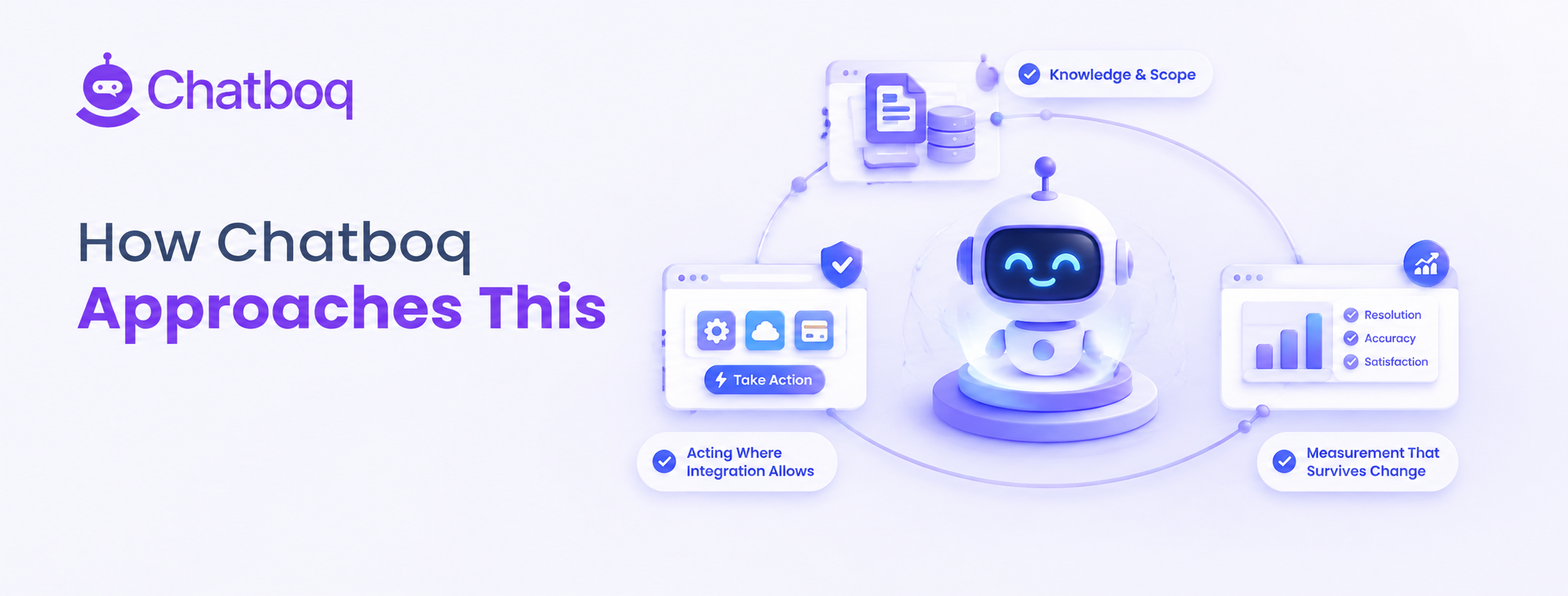
Acting requires integration, authorisation and confidence that the action was correct, which is why it lags answering by some distance.
The constraint is rarely the language capability and almost always the systems and the permissions.
The accountability question
An assistant taking actions raises questions about authorisation limits, reversibility and who is responsible when it acts wrongly.
These are organisational questions that mature more slowly than the technical capability.
Where it is already real
Bookings, order changes, refunds within limits and account updates are being handled autonomously today where integration and authority allow.
This is production reality rather than demonstration, which distinguishes it from most predictions in this space.
Reversibility as a design principle
Actions an assistant can take should be reversible where possible, which lowers the cost of an error substantially.
This shapes which actions are appropriate to automate more than capability does.
 ChatGPT
 Perplexity
 Claude




Leave a Comment
Your email address will not be published. Required fields are marked *
By submitting, you agree to receive helpful messages from Chatboq about your request. We do not sell data.