
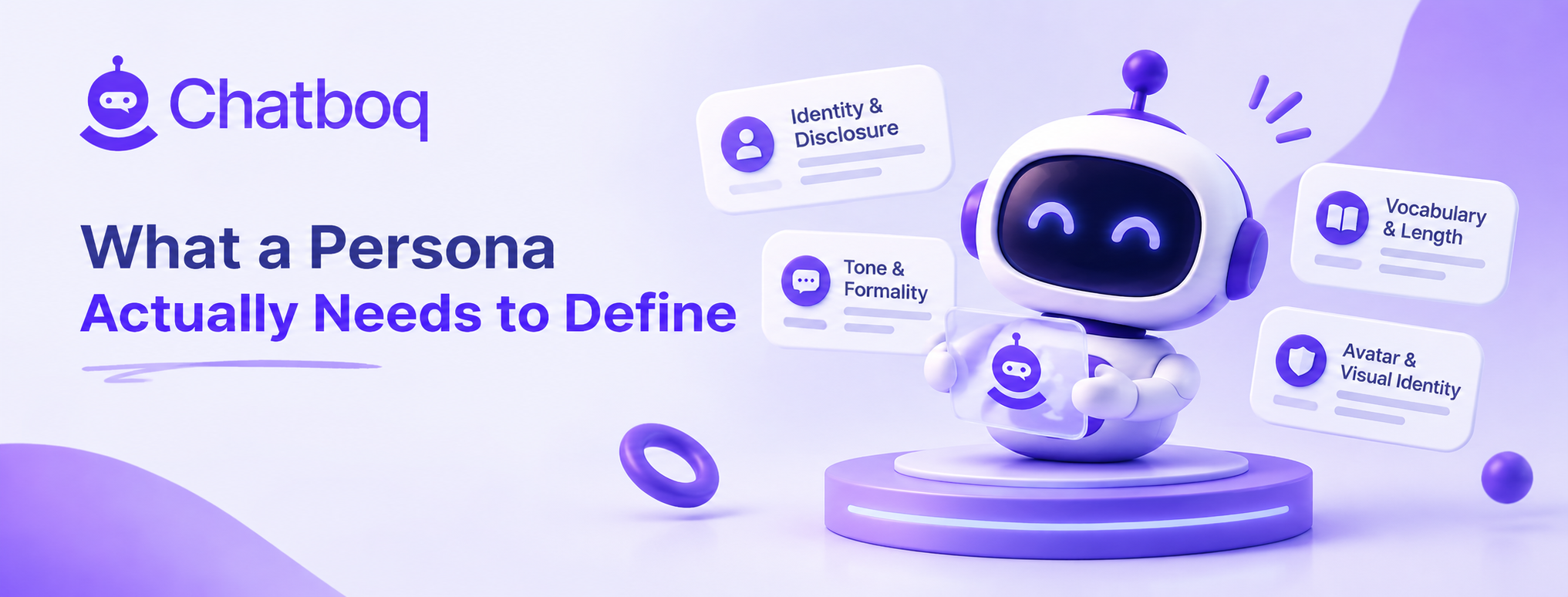
A workable persona covers identity and disclosure, tone and formality, vocabulary and length, and behaviour when things go wrong.
Identity and disclosure
Decide whether the assistant has a name, how it introduces itself and how it makes clear it is not a person, which is the most consequential decision in the whole exercise.
A name is optional and frequently unnecessary, while clear disclosure is not optional and should be handled in the first message.
Tone and formality
Formality should match the business and the audience rather than defaulting to friendly, since a legal practice and a skateboard retailer need very different registers.
The most useful reference point is how the best member of the support team writes, since that voice is already proven with these customers.
Vocabulary and length
Define which terms the assistant uses for products and processes, and set a default response length, since these two decisions shape output more than any personality description.
Consistent vocabulary also improves comprehension, particularly where customers are already confused about internal versus everyday terminology.
Avatar and visual identity
A visual identity should signal that the assistant is a tool rather than a person, which argues against photographic human avatars in almost every context.
An abstract mark or a simple illustration handles this without requiring a disclosure statement to do all the work.
 ChatGPT
 Perplexity
 Claude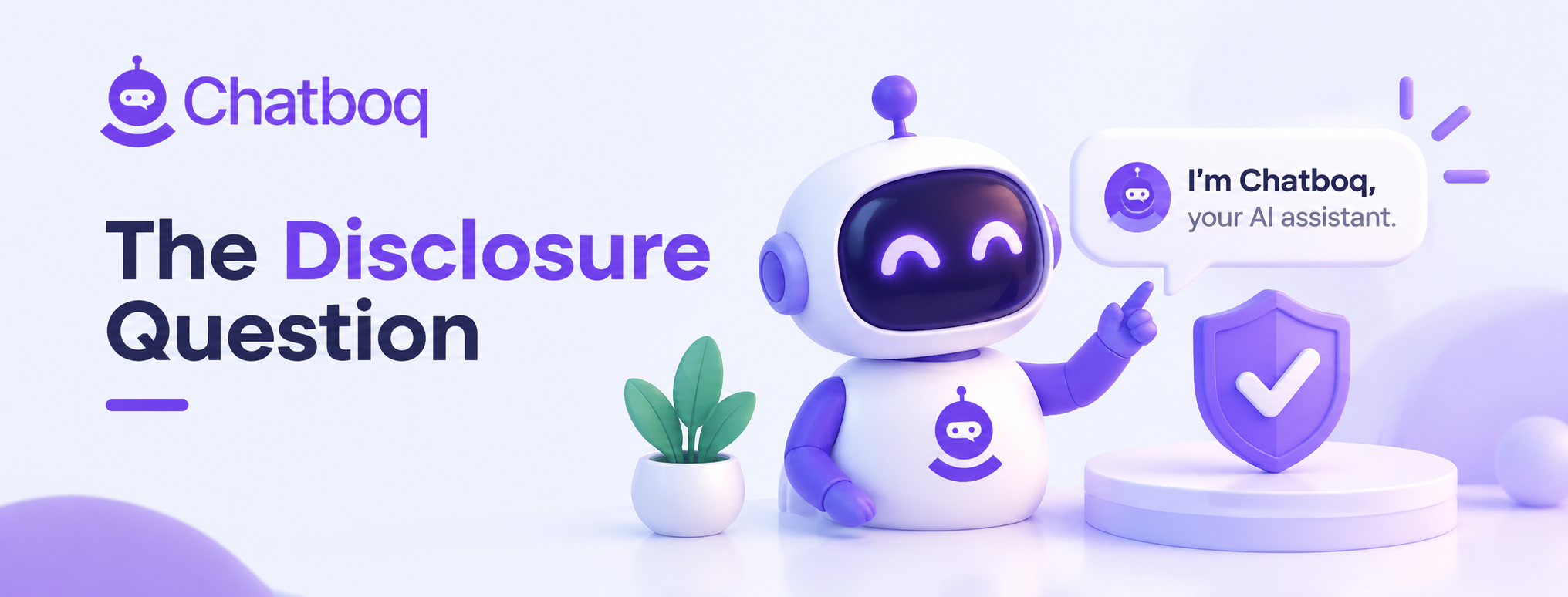



Leave a Comment
Your email address will not be published. Required fields are marked *
By submitting, you agree to receive helpful messages from Chatboq about your request. We do not sell data.