
Each additional turn multiplies the possible conversation states, and the system must interpret every message relative to everything already said.
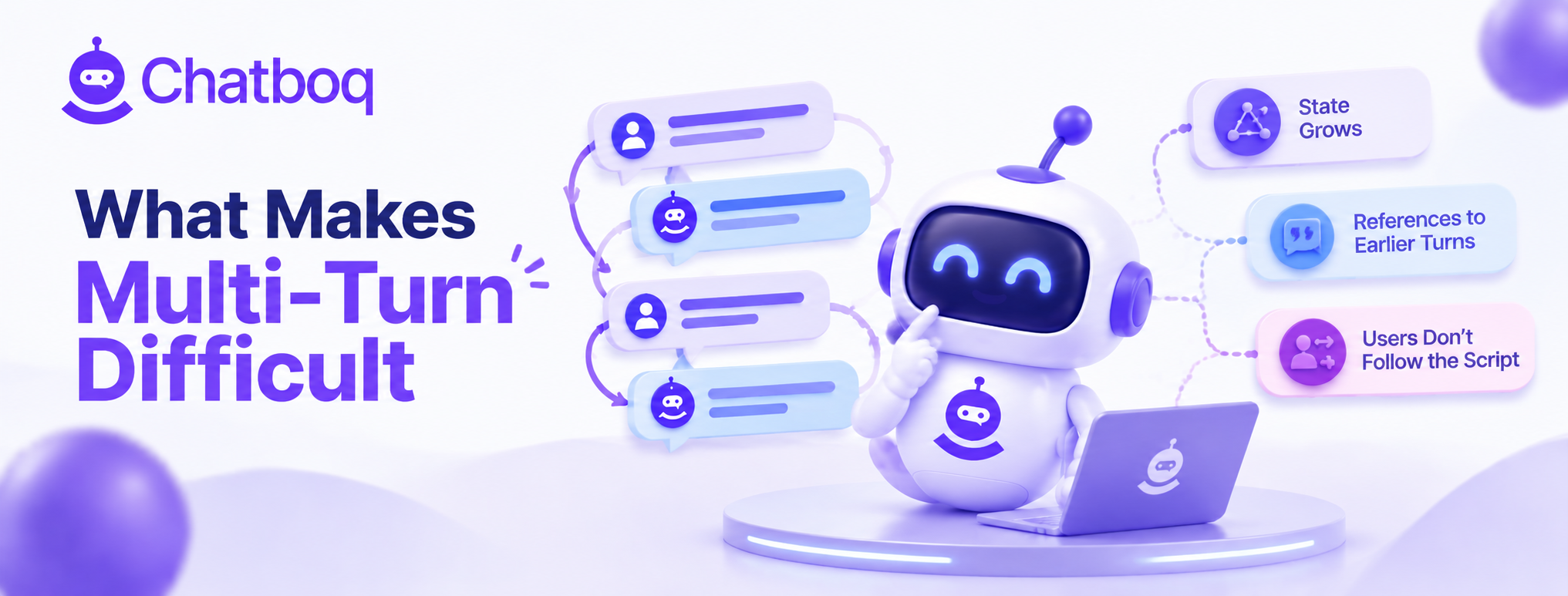
State grows with every exchange
A single-turn system only needs to understand one message, while a multi-turn system must understand a message given an arbitrary history of what preceded it.
That combinatorial growth is why multi-turn behaviour is where most conversational design effort concentrates and where most quality problems originate.
References to earlier turns
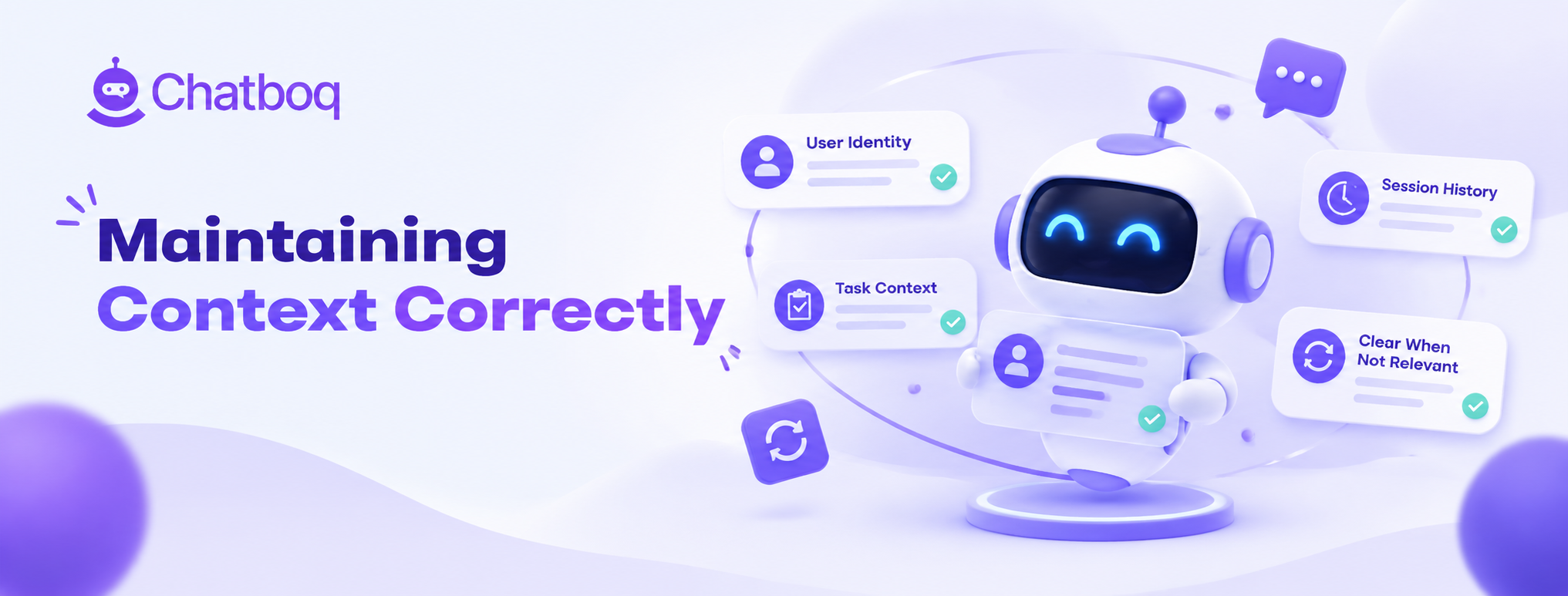
Users say the second one, that date or same as before, and resolving these requires knowing what was discussed rather than only what was just written.
Handling references well is one of the clearest markers of a competent conversational system and one of the most common gaps in a poor one.
Users who do not follow the script
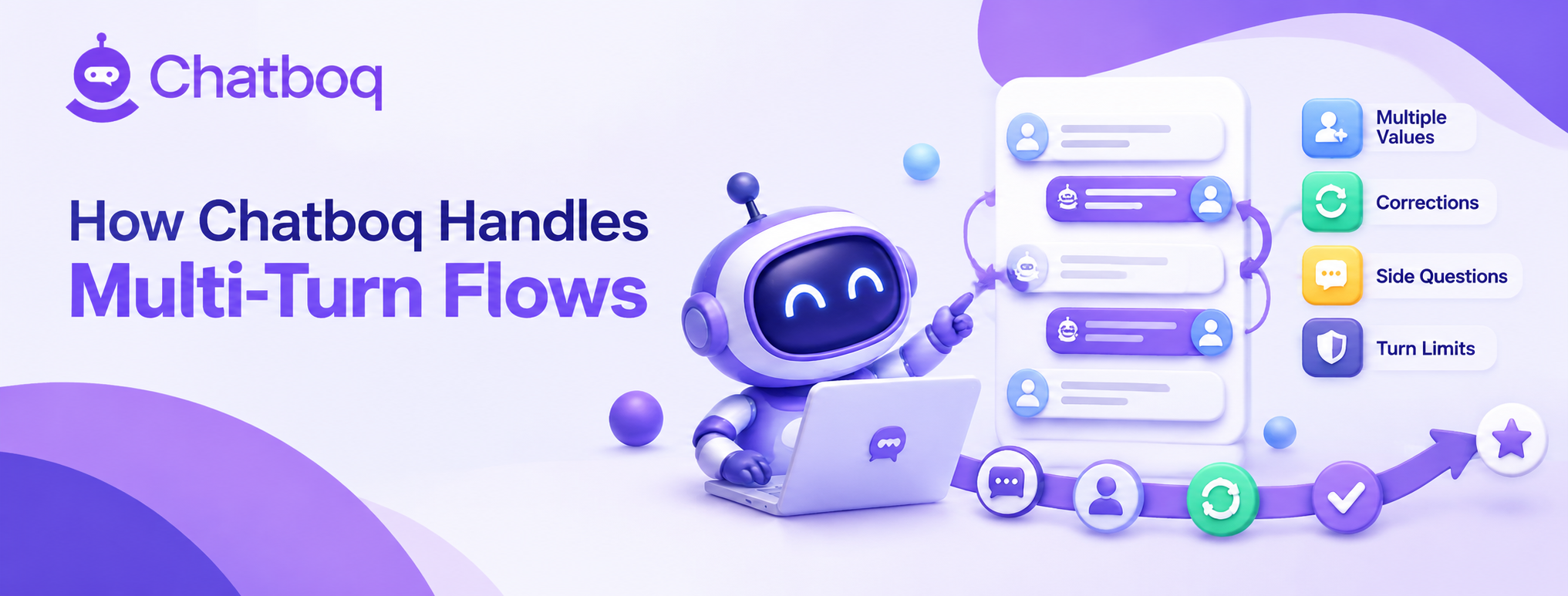
Real conversations include corrections, side questions and abrupt topic changes, none of which appear in the linear flow a designer originally sketched.
Designing for these deviations rather than treating them as edge cases is what determines whether a flow survives contact with real users.
 ChatGPT
 Perplexity
 Claude



Leave a Comment
Your email address will not be published. Required fields are marked *
By submitting, you agree to receive helpful messages from Chatboq about your request. We do not sell data.