

Suggestions are generated from the conversation so far, combined with knowledge sources and, in many systems, the patterns in how agents have answered similar questions before.
Conversation context as the starting point
The system reads what the customer wrote and what has already been established in the conversation, which is what allows a suggestion to be specific rather than generic.
This is also why suggestion quality degrades in long or messy conversations, since the relevant detail becomes harder to identify among everything else said.
Grounding in knowledge sources
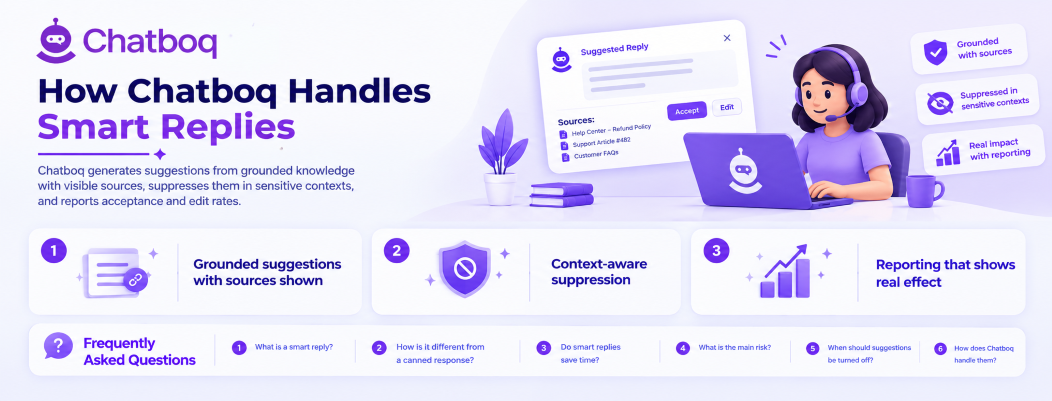
Drawing on documented answers rather than generating freely is what keeps suggestions factually reliable, particularly on pricing, policy and technical detail.
A suggestion that cites which article it came from also lets the agent verify it in seconds rather than trusting it blindly.
Learning from past agent responses
Systems trained on historical responses reproduce the team's existing phrasing, which improves consistency but also propagates whatever bad habits are present in the archive.
Reviewing what the historical data actually contains before using it as a source is worth doing, since most support archives include answers nobody would approve today.
Suggestion formats
Some systems offer short quick replies for simple exchanges, others draft full responses, and the useful ones offer both depending on what the situation calls for.
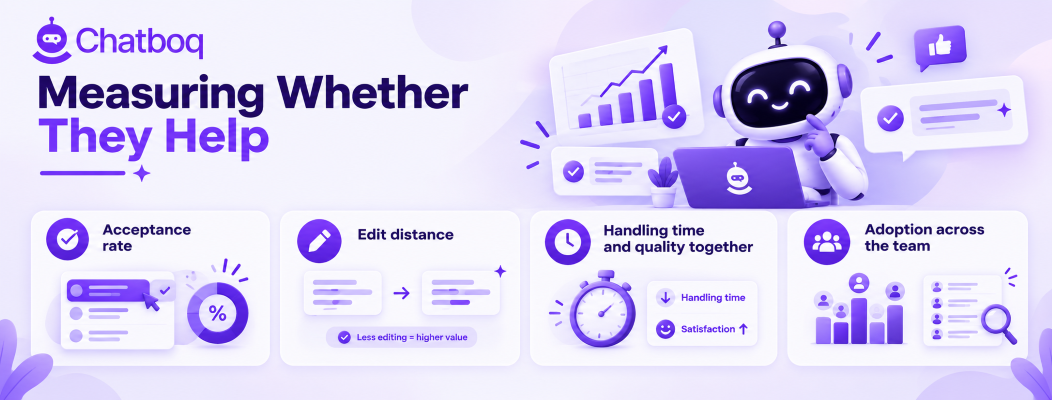
Short suggestions are accepted more often, while full drafts save more time when they are accepted, which is a trade-off worth measuring rather than assuming.
 ChatGPT
 Perplexity
 Claude







Leave a Comment
Your email address will not be published. Required fields are marked *
By submitting, you agree to receive helpful messages from Chatboq about your request. We do not sell data.