

Random sampling tells you how common something is, while targeted sampling finds specific problems, and confusing the two produces false conclusions.
What random sampling gives you
A genuinely random sample supports statements about the whole population, such as what proportion of conversations meet the standard.
This is the only sampling that supports a quality percentage, and it must be random rather than convenient to do so.
What targeted sampling gives you
Selecting escalated, low-scored or long conversations finds problems efficiently but says nothing about how frequently they occur.
Reporting a quality figure from a targeted sample is a common and serious error, since it describes the selection rather than the service.
Using both deliberately
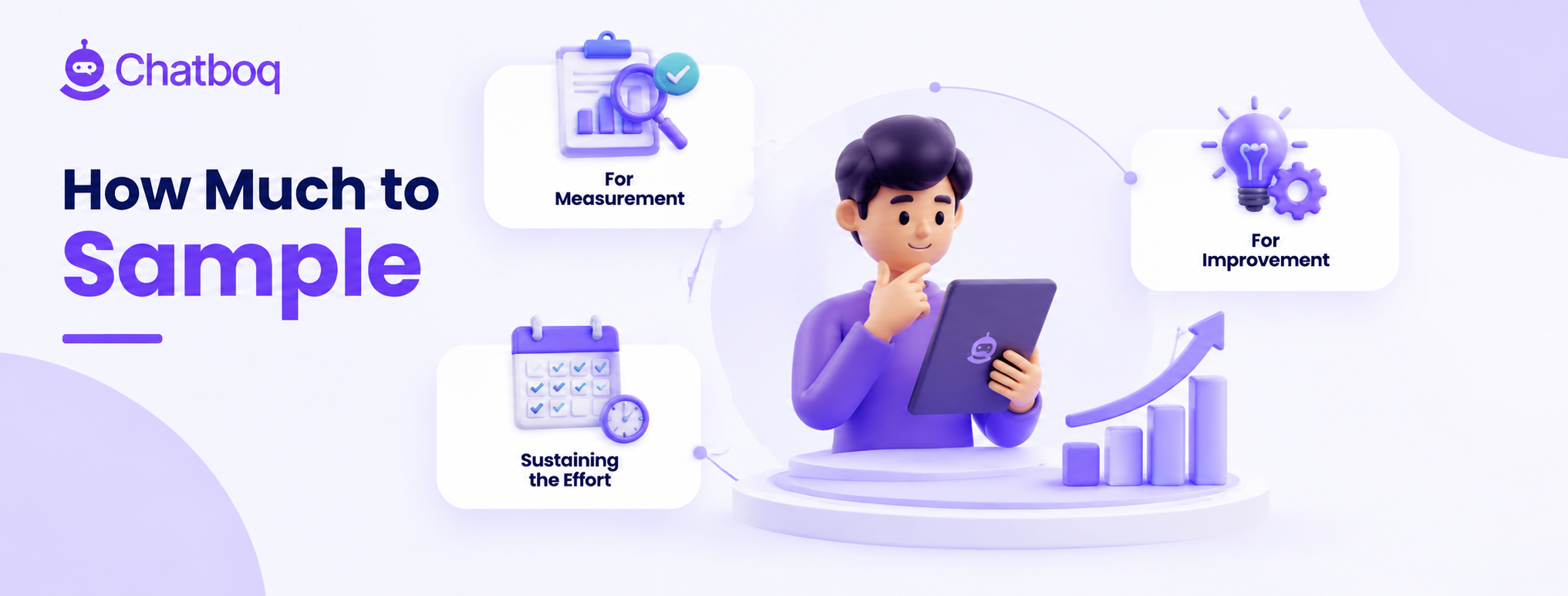
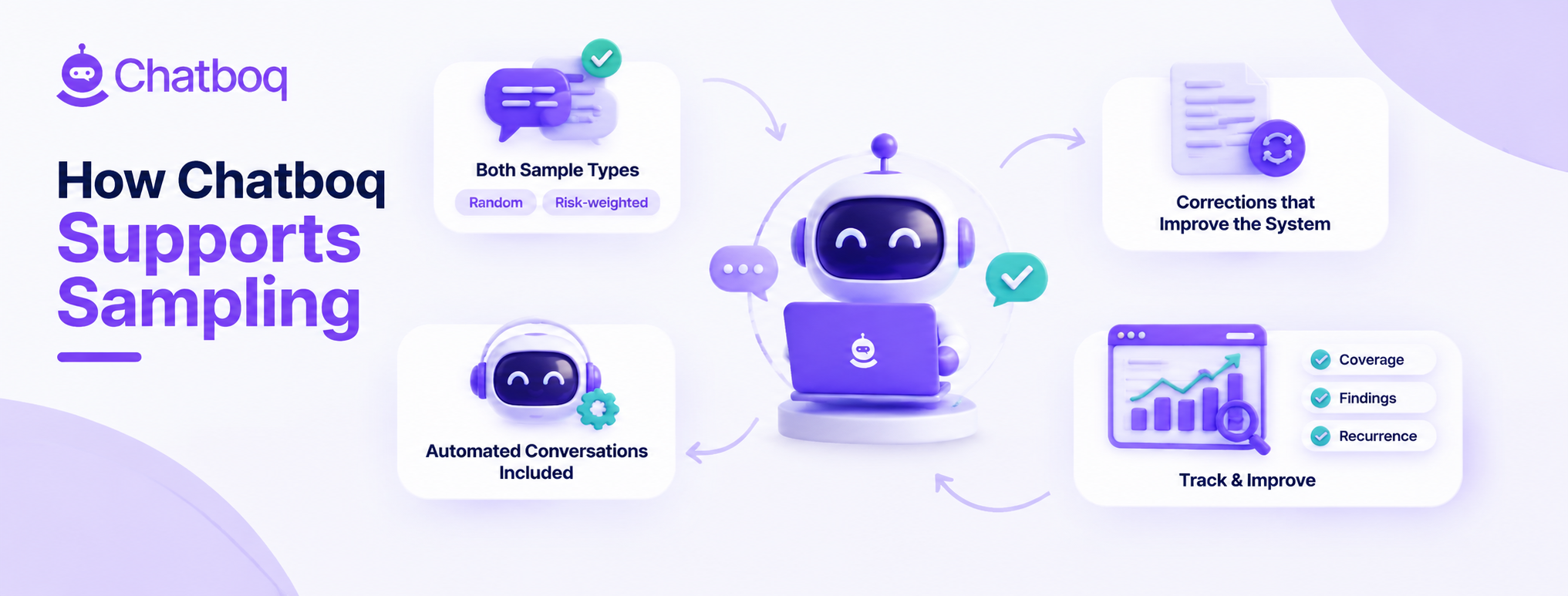
A small random sample for measurement plus targeted sampling for improvement covers both purposes and keeps the conclusions separable.
Recording which sample a finding came from is what prevents them being conflated later.
Stratified sampling
Sampling proportionally across channels, topics and agents ensures no area is missed while retaining the ability to generalise.
This is usually the practical middle ground for teams with several channels or queues.
 ChatGPT
 Perplexity
 Claude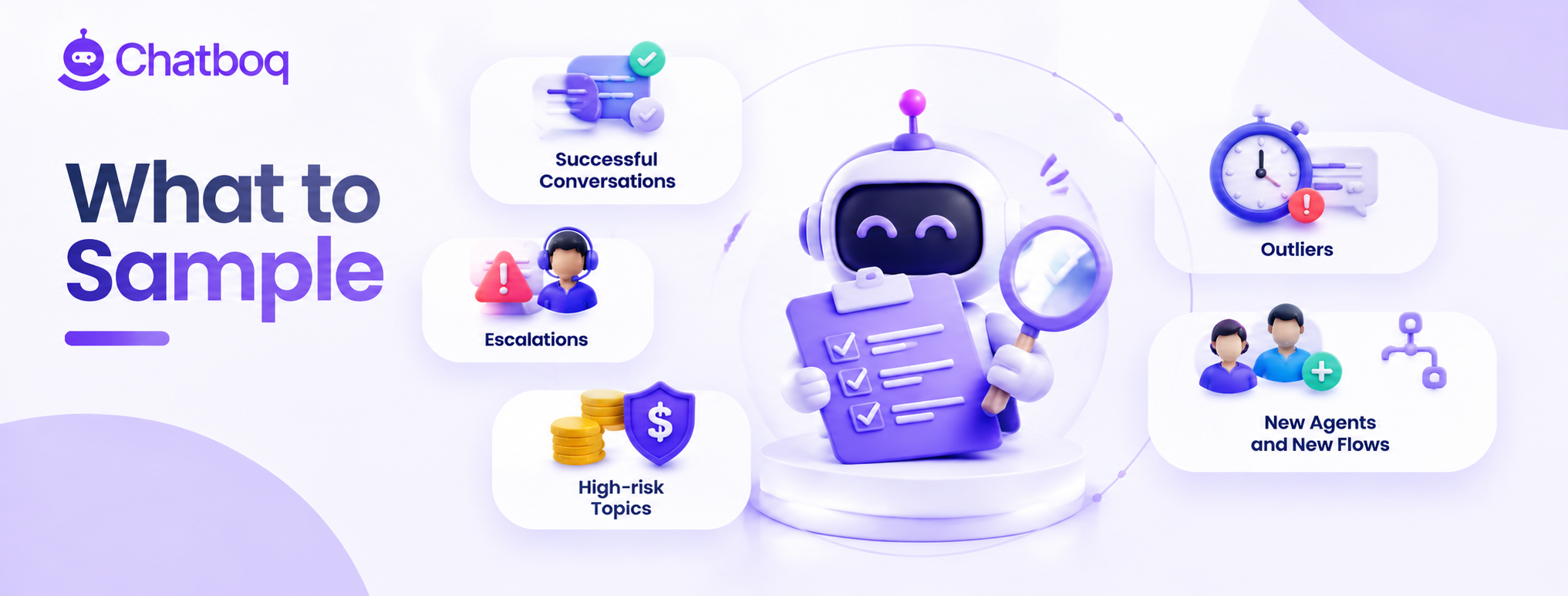






Leave a Comment
Your email address will not be published. Required fields are marked *
By submitting, you agree to receive helpful messages from Chatboq about your request. We do not sell data.