
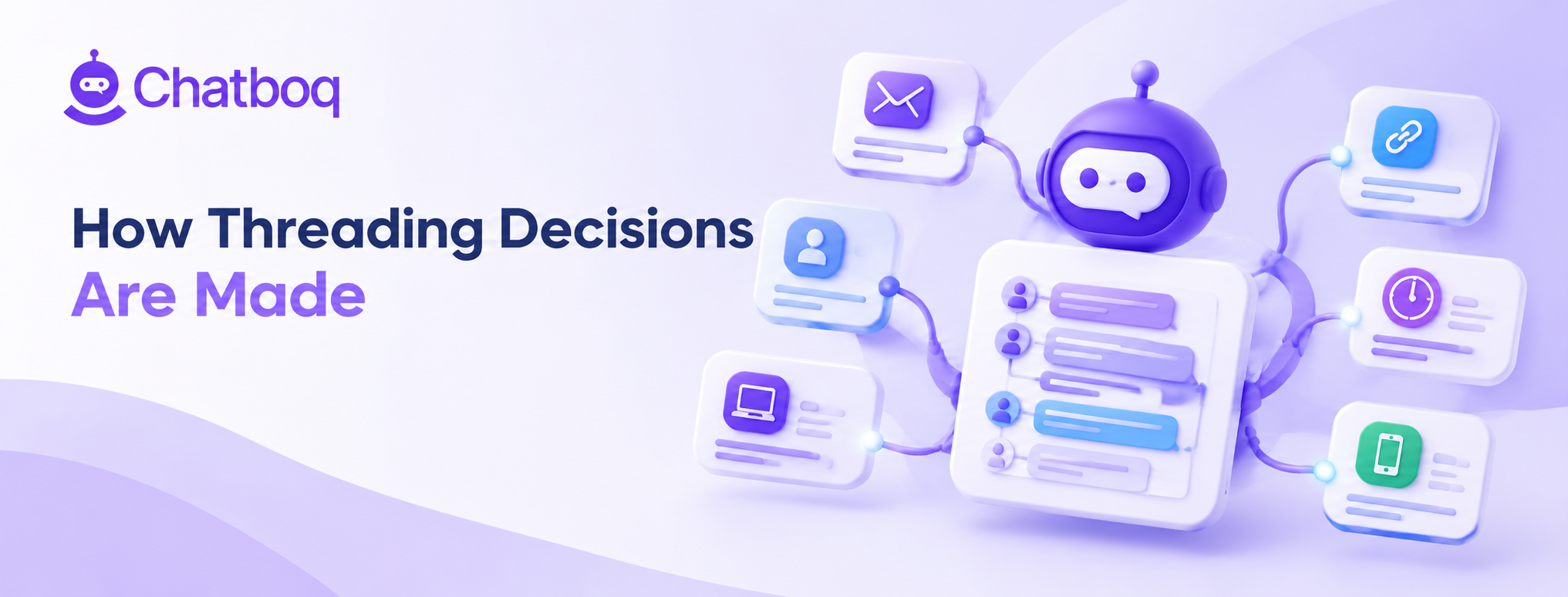
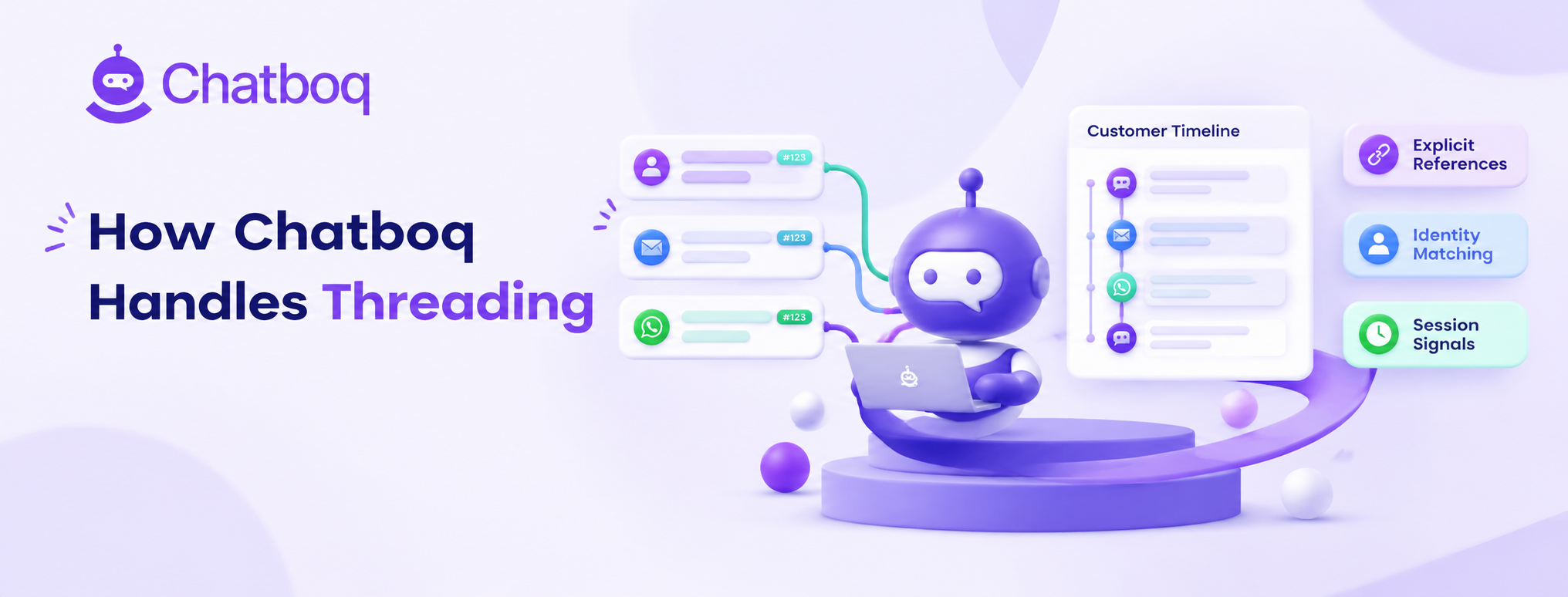
Systems thread by matching identifiers such as reply references, email headers, session tokens and authenticated customer records to an existing conversation.
Explicit references
Email reply headers and ticket references in a subject line are the most reliable signals available, since they were designed specifically to link messages.
They also fail predictably when a customer starts a fresh email rather than replying, which is common enough to require a secondary matching strategy.
Identity-based matching
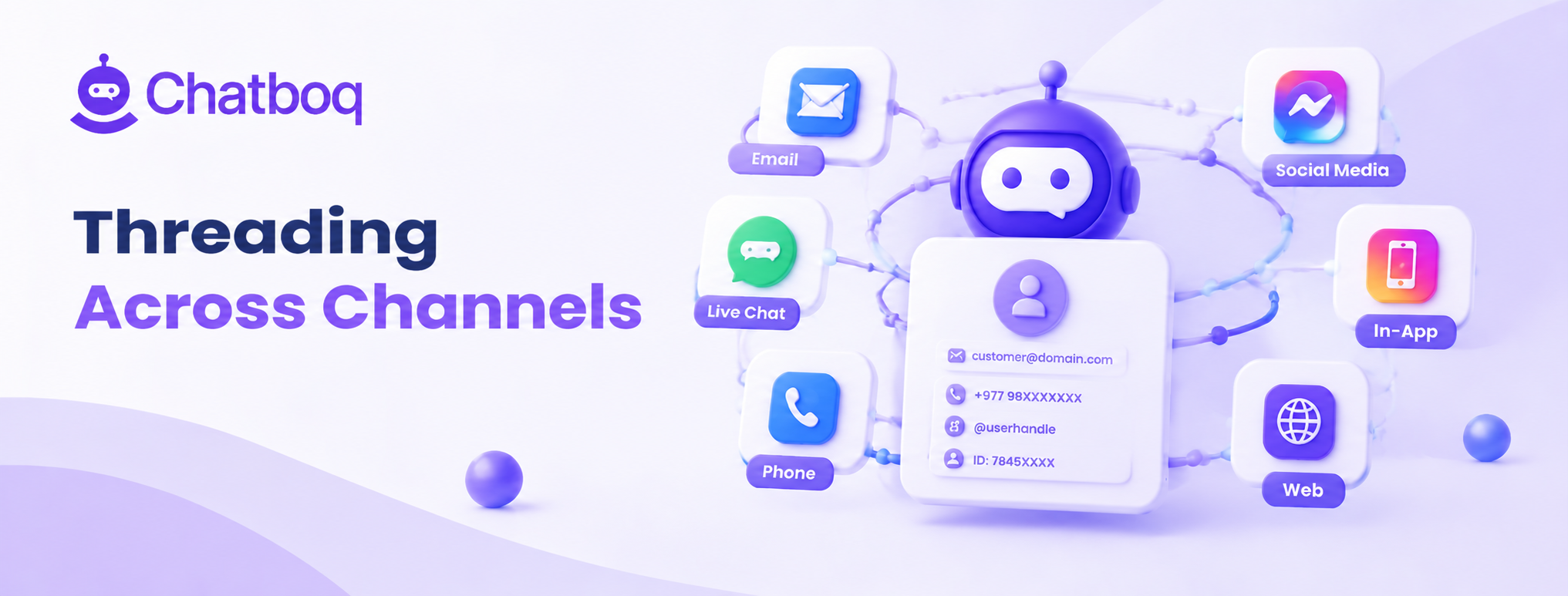
Where an explicit reference is absent, matching on the customer's email address, account login or phone number against recent open conversations is the usual fallback.
This requires a time window, since a message from the same customer three months later is almost certainly a new issue rather than a continuation.
Session and device signals
For anonymous web chat, a session token or persistent device identifier links a returning visitor to their earlier conversation without requiring them to log in.
These signals are weaker and should not be used to expose account information, but they are perfectly adequate for restoring conversational context.
Time windows and their trade-offs
A generous matching window catches genuine follow-ups but risks attaching an unrelated new issue to an old conversation, which is confusing for both customer and agent.
Most teams settle on a window measured in days rather than weeks, adjusted by how quickly their customers typically follow up on an open issue.
 ChatGPT
 Perplexity
 Claude




Leave a Comment
Your email address will not be published. Required fields are marked *
By submitting, you agree to receive helpful messages from Chatboq about your request. We do not sell data.