


Support systems generate text in three broad ways: fixed templates, composed responses assembled from structured data, and model-generated text.
Templates
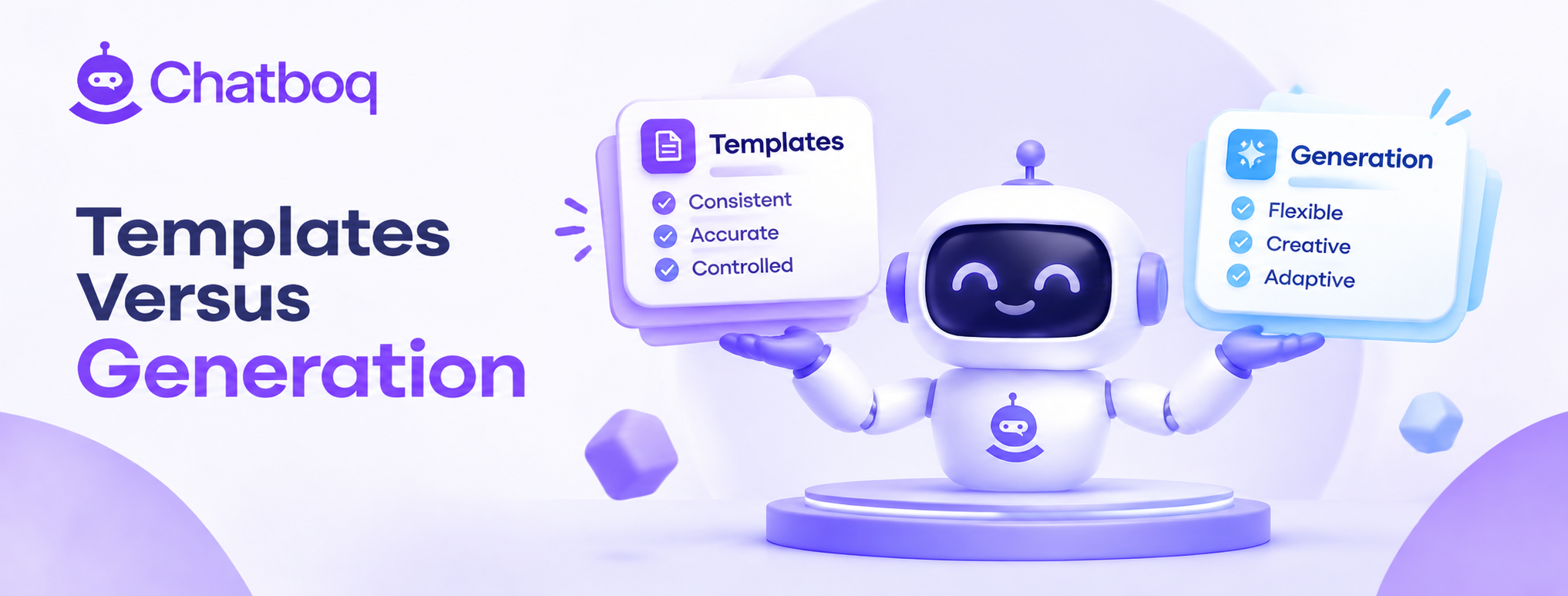
A template is a pre-written response with slots for variable values, producing consistent, predictable text that is straightforward to review and approve.
Templates remain the correct choice for anything where wording matters legally or commercially, since the output is known before anyone sees it.
Composed responses
Composition assembles a reply from structured data according to rules, such as building an order status message from the actual fields of that order.
This offers more flexibility than a fixed template while retaining full control over what can appear, which suits transactional messaging well.
Model generation
A language model produces text directly, which handles varied phrasing and unanticipated questions far better than either alternative.
It also introduces the possibility of fluent inaccuracy, which is the central trade-off that determines where generation belongs in a support system.
Where each method costs and saves
Templates cost writing and review time up front and almost nothing thereafter, while generation costs little to set up and requires ongoing review to remain trustworthy.
Choosing between them is therefore partly an operational question about which kind of ongoing effort a team can actually sustain.
 ChatGPT
 Perplexity
 Claude









Leave a Comment
Your email address will not be published. Required fields are marked *
By submitting, you agree to receive helpful messages from Chatboq about your request. We do not sell data.