

A ticket serves six purposes, and only some of them depend on the request not being resolved immediately.
A queue of work
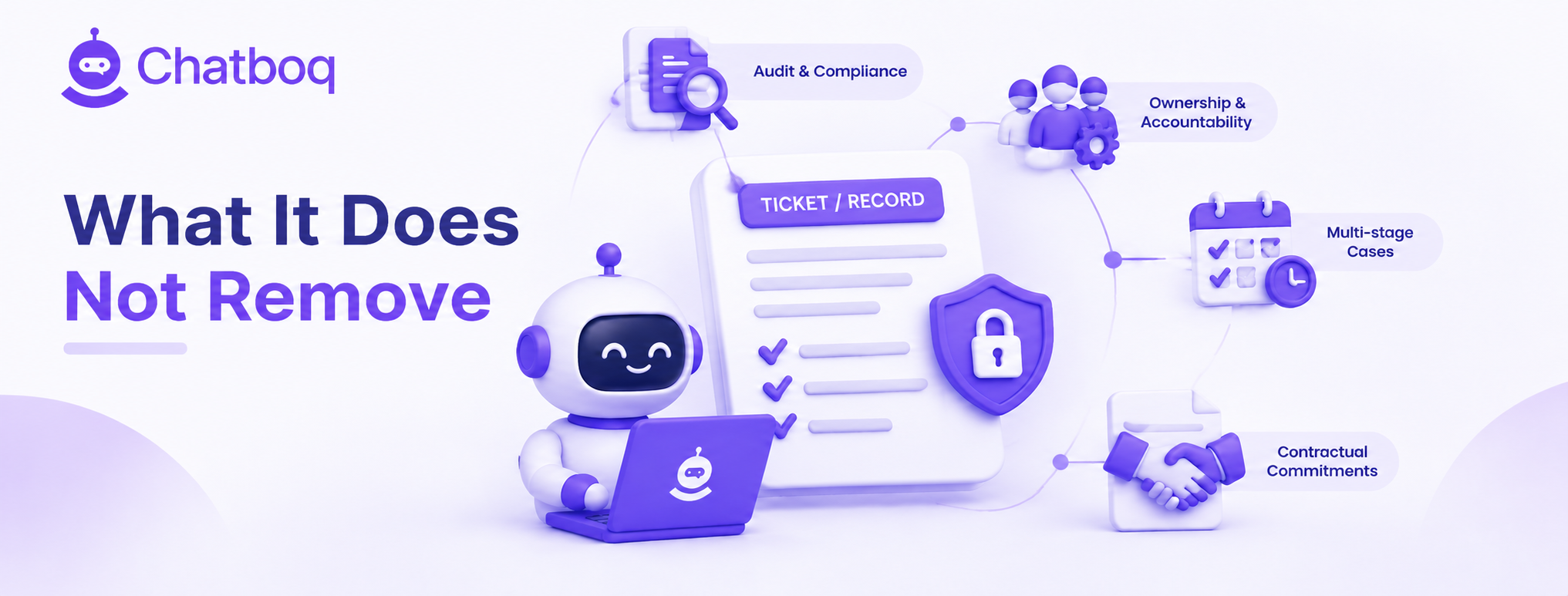
The primary function is holding requests that cannot be handled now so that they are handled eventually and in some order.
This function exists only because of the gap between arrival and capacity, and it disappears entirely where resolution is immediate.
An ownership record
Assigning a ticket makes someone responsible, which matters when work sits waiting and matters far less when it does not.
Ownership becomes relevant again the moment a request requires a person, which is why it does not disappear entirely.
An audit trail
What was asked, what was said and what was done is a record that serves compliance, dispute resolution and quality review.
This function is entirely independent of whether the request was resolved immediately and is the part most likely to persist.
A reporting unit
Almost every support metric is expressed per ticket, which makes the ticket the unit of measurement as much as the unit of work.
This creates a dependency that outlasts the operational need, since reporting continuity is what makes teams reluctant to change.
A shared object between teams
Tickets give other teams a thing to reference when support needs something from engineering, billing or fulfilment.
Whatever replaces them needs an equivalent, or cross-team requests lose the shared reference that made them trackable.
 ChatGPT
 Perplexity
 Claude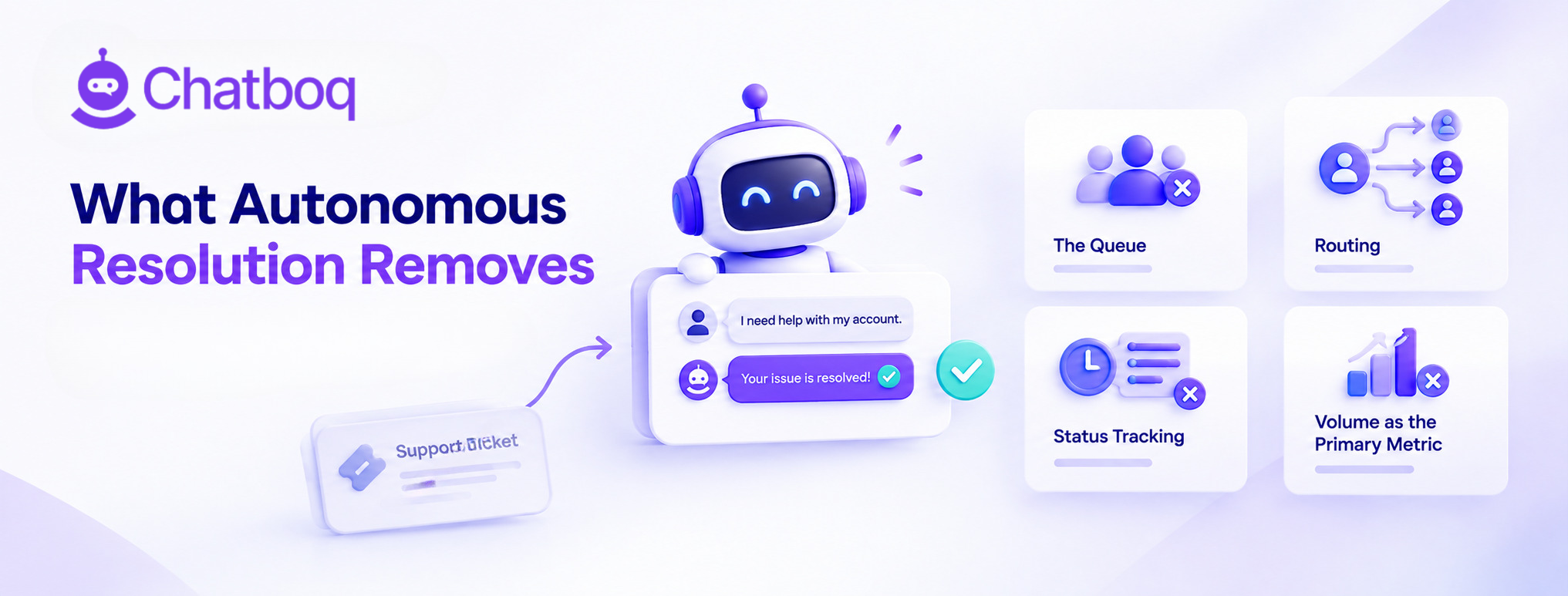






Leave a Comment
Your email address will not be published. Required fields are marked *
By submitting, you agree to receive helpful messages from Chatboq about your request. We do not sell data.