
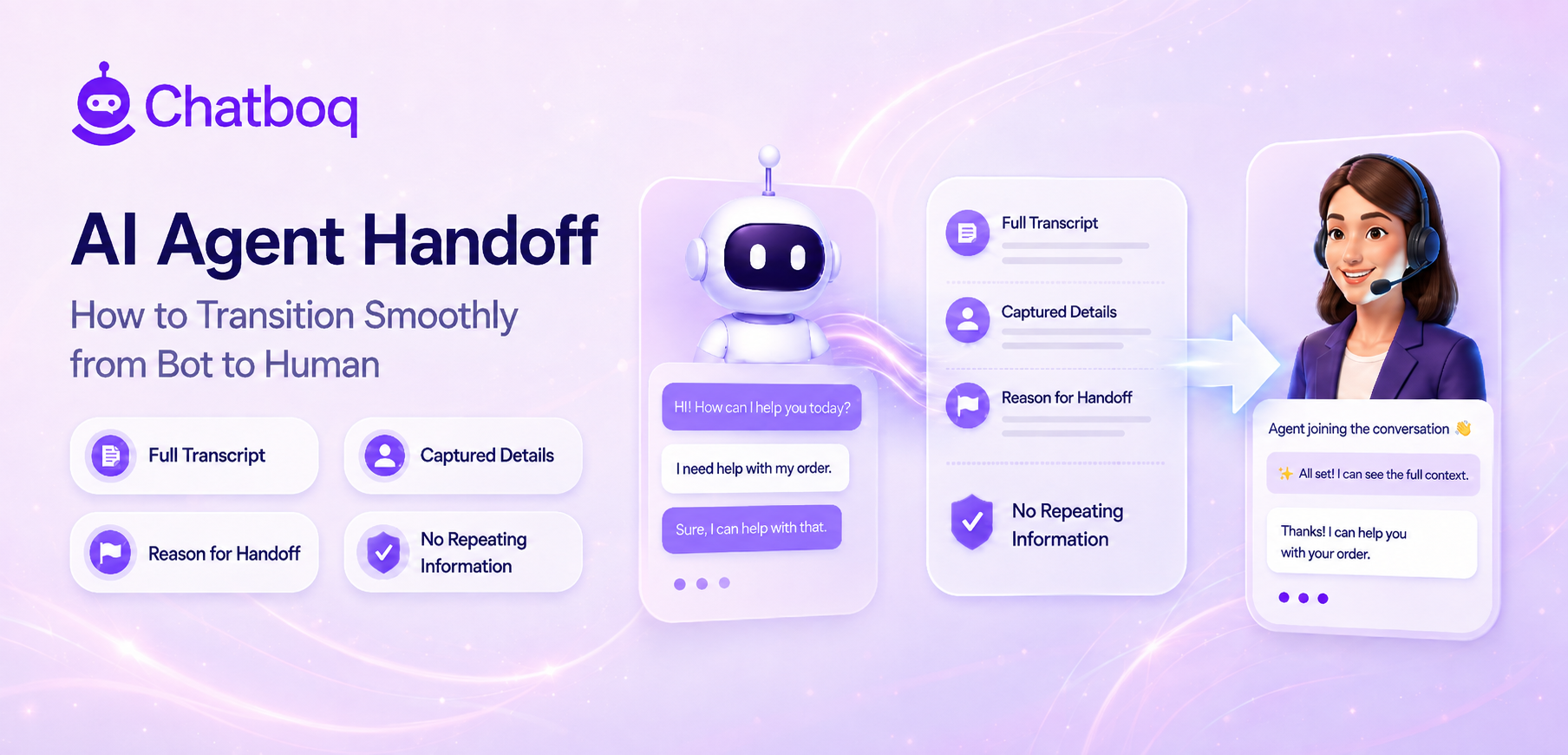
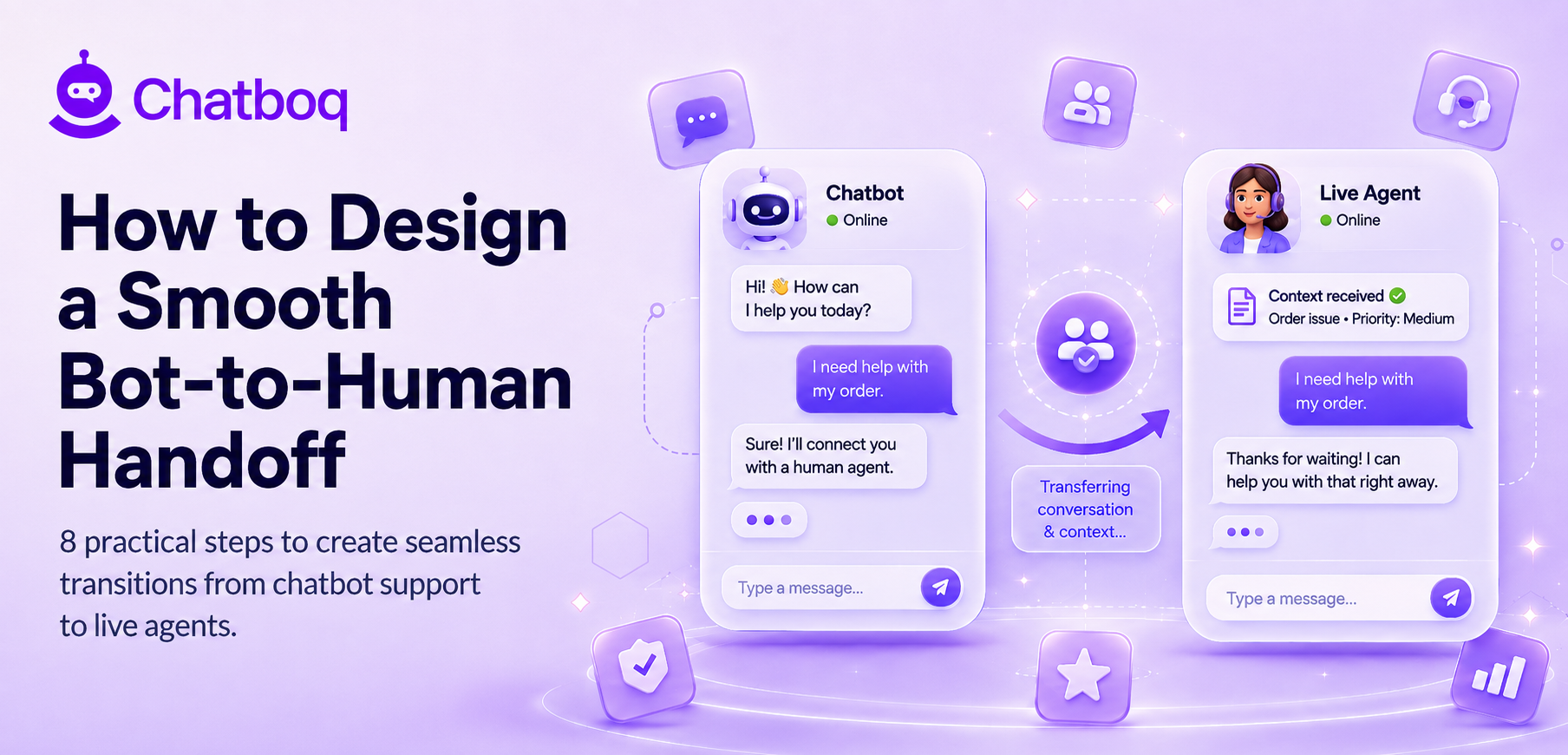
AI agent handoff is the process of transferring an in-progress conversation from a bot to a human agent, including the conversation history and any information the bot has already collected, so the human can continue the interaction without the customer starting over.
Simple definition
At its simplest, a handoff moves an active conversation from automated handling to a human, ideally carrying enough context that the transition is invisible in terms of effort required from the customer.
Handoff vs fallback vs escalation vs transfer
Fallback is what a bot does immediately after failing to understand a message, which may or may not lead to a handoff. Escalation typically refers to routing a conversation to a more senior or specialized resource, human or otherwise. Transfer is a broader term that can apply to moving a conversation between any two parties. Handoff, in the context of this guide, specifically means the bot-to-human transition itself, the mechanics of that specific moment.
Warm handoff vs cold handoff
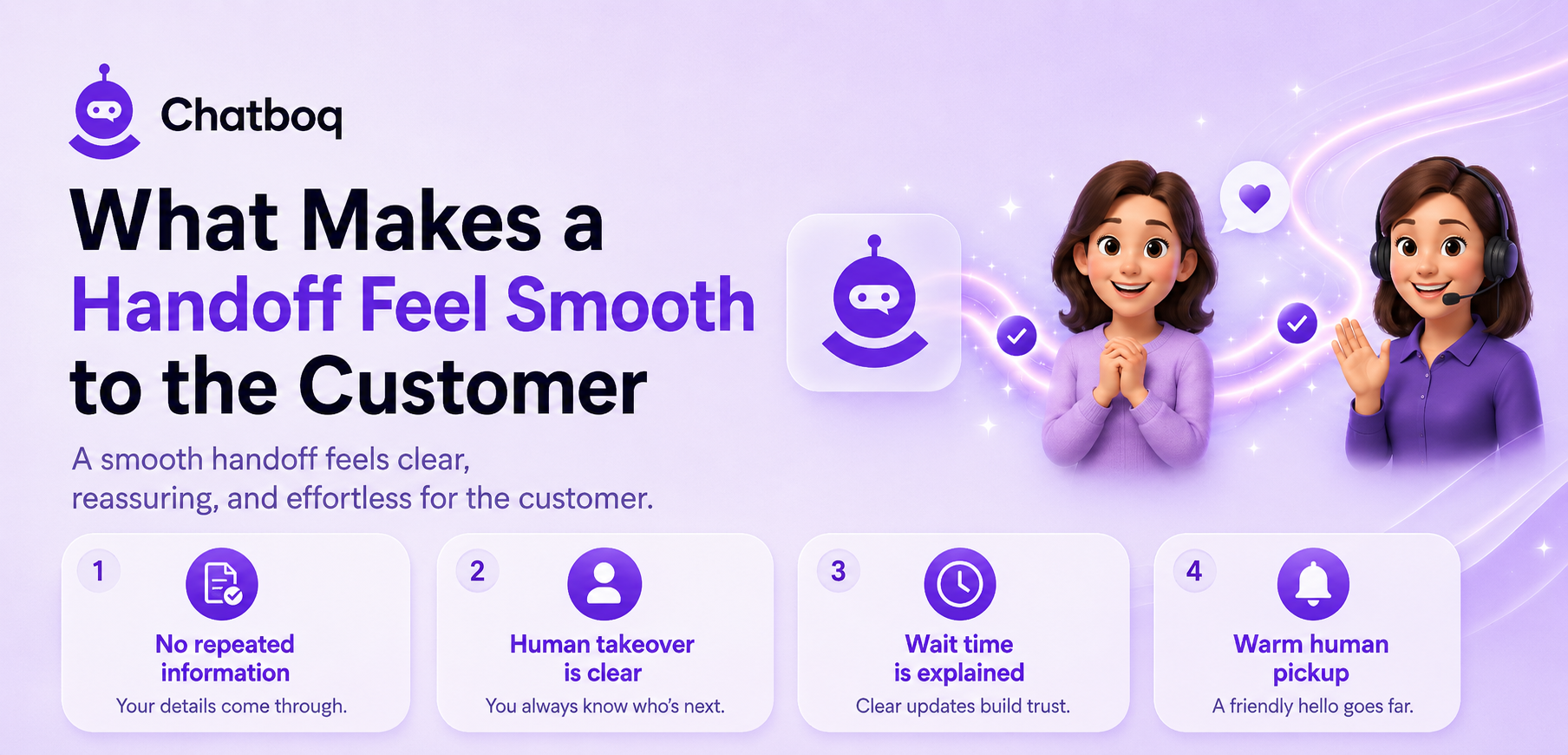
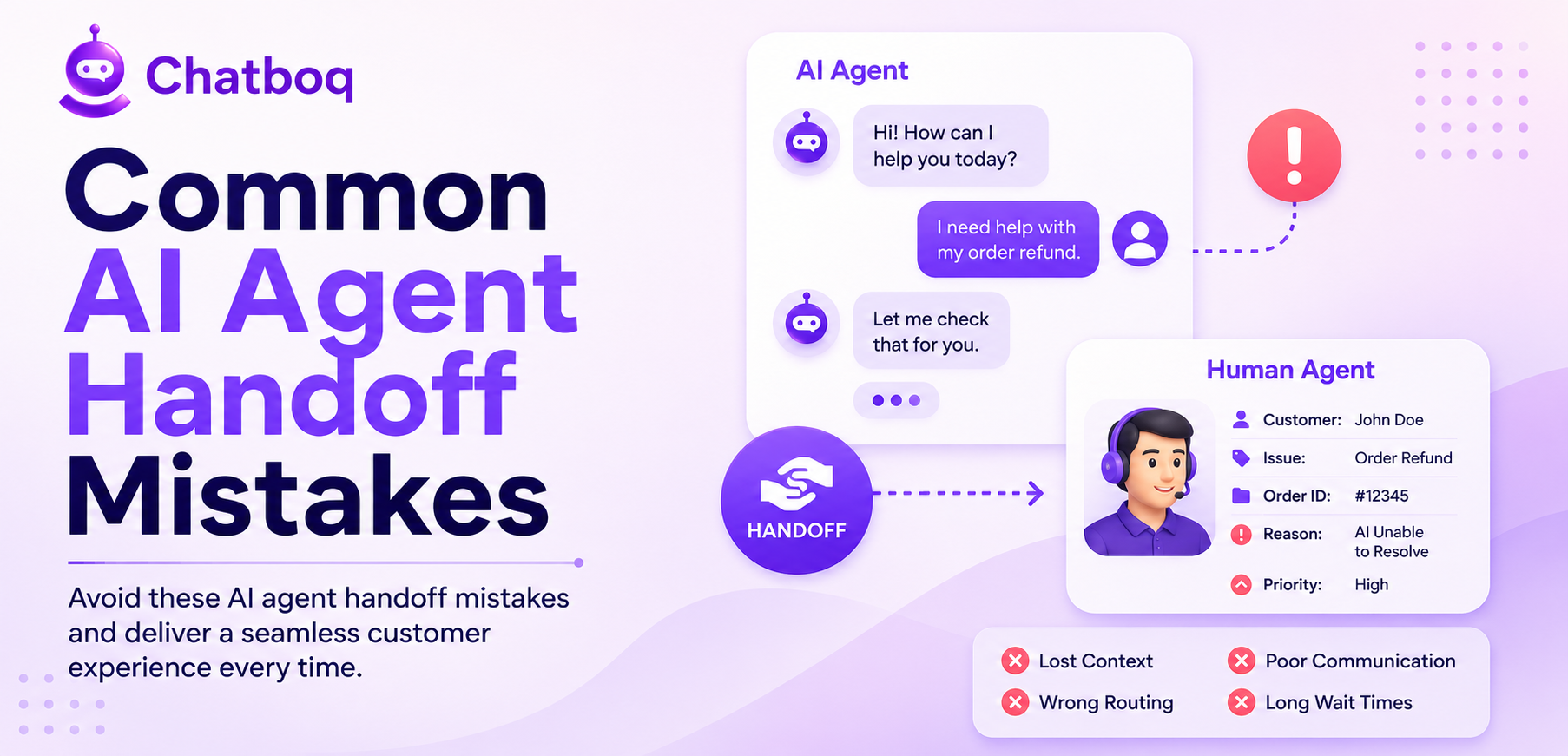
A warm handoff carries the full conversation context, transcript, captured data, and reason for escalation, to the receiving agent automatically. A cold handoff drops the customer into a new conversation with little or no context, forcing them to re-explain their situation, which is one of the most reliable ways to frustrate someone who was already dealing with a bot that couldn't help them.
Why handoff quality shapes the customer's entire impression of automation
Customers tend to judge an entire automated support experience by its worst moment, and a clumsy handoff often is that moment, since it happens precisely when the customer already needed more help than the bot alone could provide.
 ChatGPT
 Perplexity
 Claude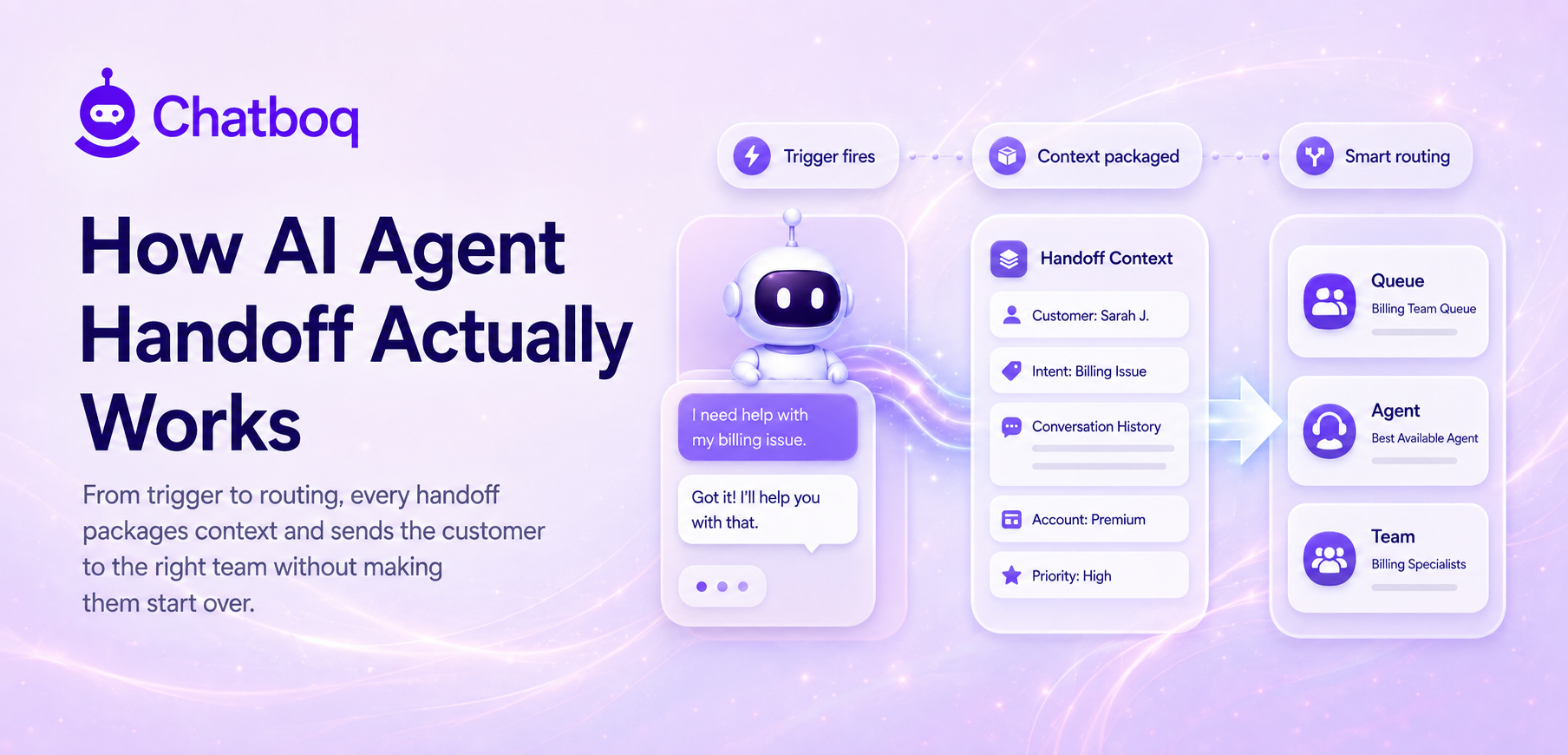






Leave a Comment
Your email address will not be published. Required fields are marked *
By submitting, you agree to receive helpful messages from Chatboq about your request. We do not sell data.