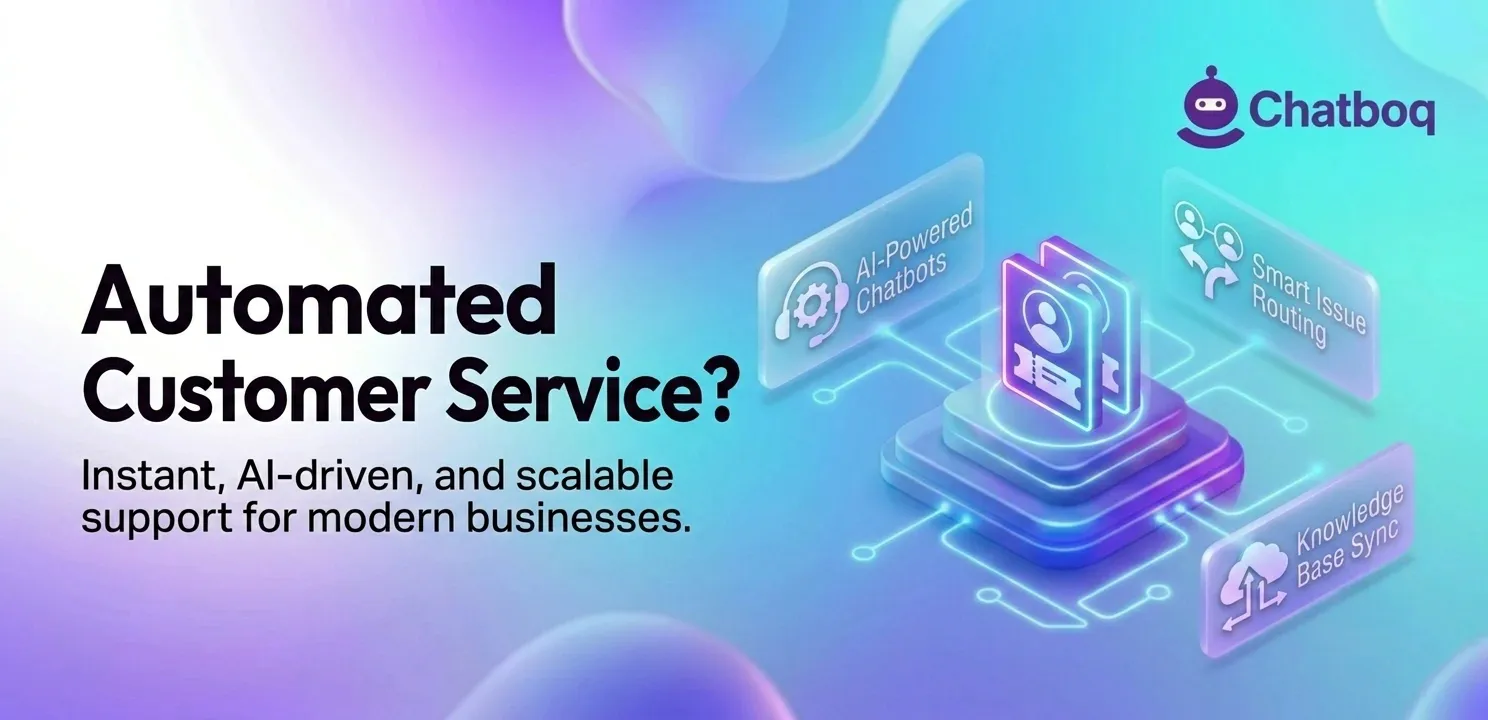
Nine customer service task categories automate reliably: FAQ responses, ticket creation and categorization, request routing, order status and account inquiries, appointment scheduling, customer onboarding workflows, feedback collection, escalation management, and conversation summarization.
Frequently asked questions
FAQ handling is the highest-volume automation use case in most support operations. Knowledge base retrieval connected to an AI response layer handles FAQ queries without agent involvement. Containment rates of 60 to 80 percent are achievable for operations with well-maintained knowledge bases and accurate intent classification.
Ticket creation and categorization
Automated ticket creation converts email, chat, and form submissions into structured ticket records. Categorization applies NLP classification to assign type, product area, and severity without manual review. Accurate categorization at intake reduces downstream routing errors and resolution delays.
Support request routing
Routing automation directs each ticket to the correct queue, agent skill group, or automated workflow based on category, customer tier, language, and channel. Intelligent routing uses customer history and agent performance data to match tickets to the agents most likely to resolve them quickly.
Order status and account inquiries
Order tracking, shipping status, subscription details, and account balance queries resolve through API-connected automation without agent involvement. The system retrieves the relevant data from the connected commerce or billing system and delivers it to the customer directly.
Appointment scheduling and reminders
Scheduling automation connects calendar availability with customer booking requests. Reminder workflows send confirmation and pre-appointment notifications automatically at defined intervals. These workflows reduce no-show rates and eliminate manual scheduling coordination.
Customer onboarding workflows
Onboarding automation delivers welcome emails, setup guides, feature introduction sequences, and check-in messages at predefined intervals after account creation. Automation ensures every new customer receives the same onboarding quality regardless of support team availability.
Feedback collection and surveys
Post-interaction CSAT surveys, NPS campaigns, and resolution feedback requests trigger automatically based on ticket closure or interaction completion events. Automated survey delivery captures feedback at higher rates than manual outreach because timing aligns with the interaction while it is still fresh.
Escalation management
Escalation automation monitors ticket age, SLA breach risk, and sentiment signals to trigger escalation workflows before service failures occur. When a ticket exceeds its target response time or sentiment analysis detects high frustration in the customer's messages, the system escalates to a senior agent or manager automatically.
Conversation summaries and documentation
AI-powered summarization generates structured case notes from completed conversations, reducing after-call work time for agents handling escalated cases. Summaries capture issue description, resolution steps, and outcome without manual documentation.

 ChatGPT
 Perplexity
 Claude


Leave a Comment
Your email address will not be published. Required fields are marked *
By submitting, you agree to receive helpful messages from Chatboq about your request. We do not sell data.