
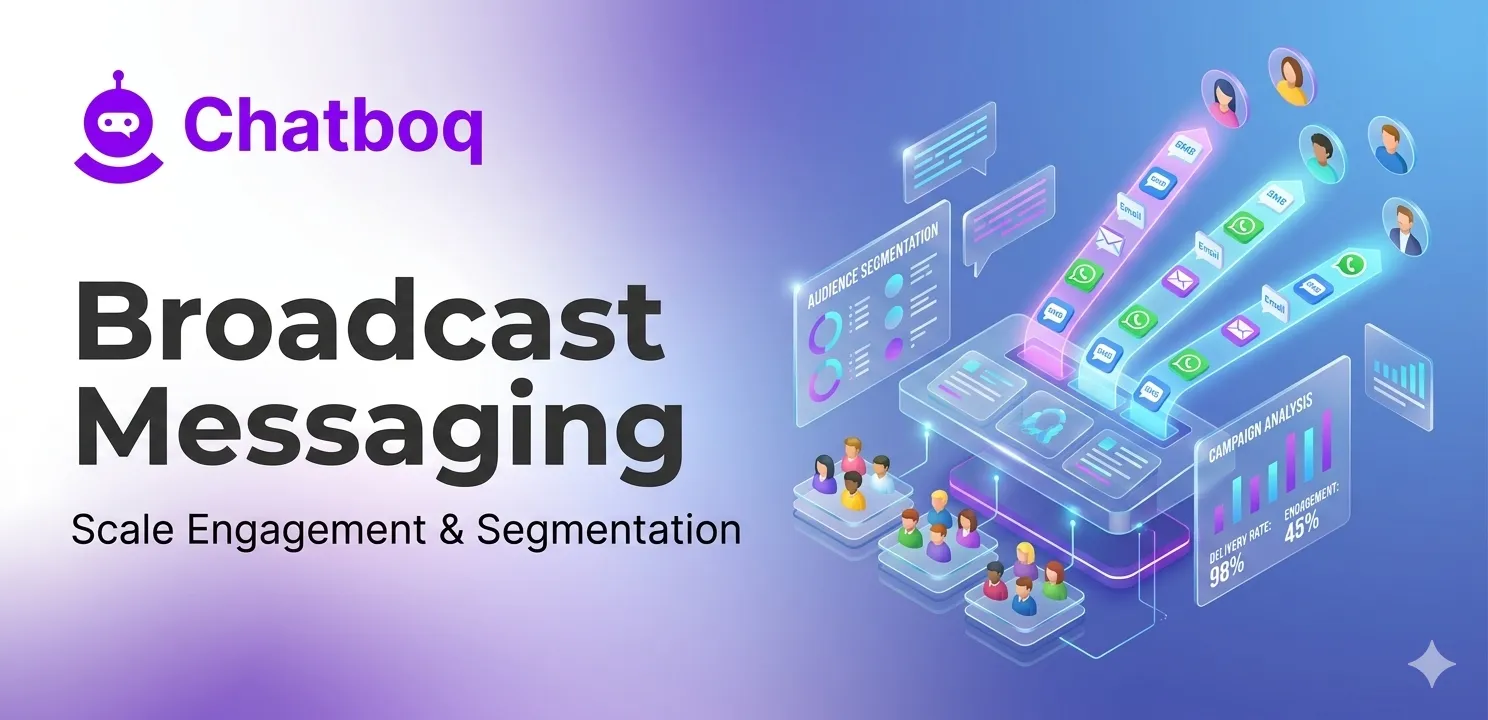
Broadcast messaging helps businesses distribute announcements, campaigns, updates, and promotional content to large audiences through channels like SMS, email, WhatsApp, push notifications, and in-app messaging. It is commonly used for marketing campaigns, customer communication, operational alerts, re-engagement efforts, event reminders, and audience-wide notifications where speed and scale matter.
Modern broadcast messaging systems use audience segmentation, campaign scheduling, CRM targeting, and delivery infrastructure to manage communication at scale. SMS gateways, email automation platforms, WhatsApp Business API integrations, push notification systems, and customer engagement platforms work together to handle message delivery, personalization, and campaign execution across multiple channels.
Campaign performance depends on audience targeting, timing, message relevance, and personalization quality. Metrics like delivery rate, open rate, click-through rate, conversion rate, bounce rate, and audience engagement help businesses understand how campaigns perform and where communication workflows need improvement. AI systems increasingly improve audience targeting, content personalization, and campaign optimization across broadcast messaging platforms.
As businesses scale broadcast communication systems, they also face challenges involving spam patterns, poor segmentation, delivery failures, and inconsistent customer experiences. Effective broadcast messaging strategies combine clear CTAs, value-driven messaging, compliance controls, omnichannel communication systems, analytics workflows, and continuous testing to maintain engagement without overwhelming recipients.
 ChatGPT
 Perplexity
 Claude


Leave a Comment
Your email address will not be published. Required fields are marked *
By submitting, you agree to receive helpful messages from Chatboq about your request. We do not sell data.