
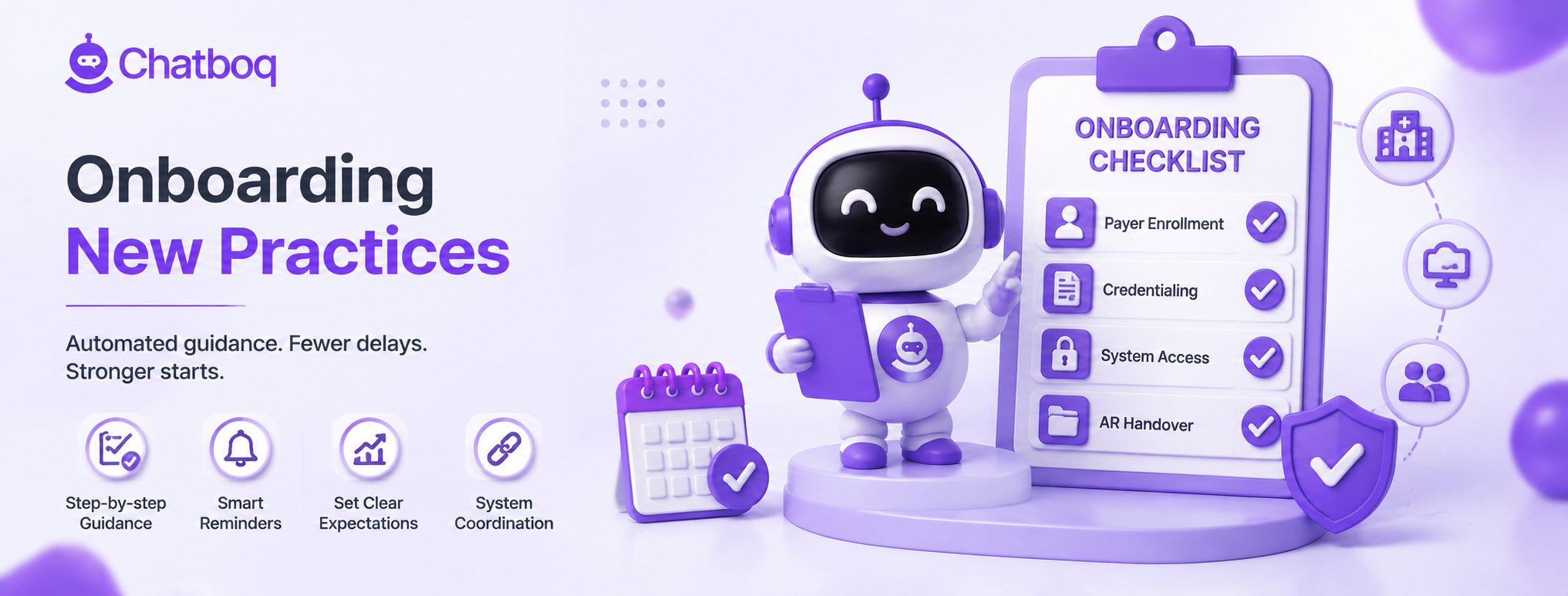
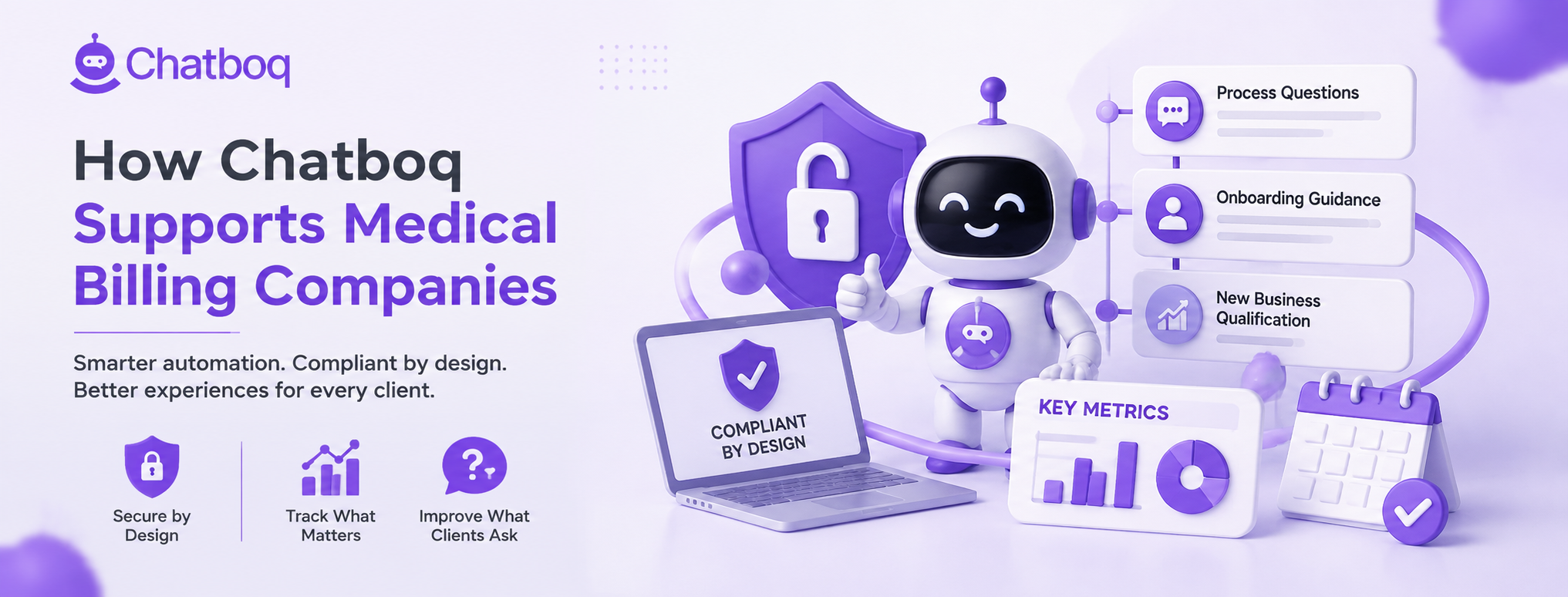
It answers process, timeline and report questions from client practices, guides new clients through onboarding steps, qualifies prospective clients, and escalates anything requiring patient data or coding judgement.
The questions that arrive every day
Practice managers ask repeatedly about submission timelines, when reports are available, how denials are worked, what the escalation path is and when month-end figures will be final.
None of these require an account manager's expertise, yet collectively they consume a substantial share of the time that expertise is being paid for.
Serving three audiences through one channel
A billing company website receives enquiries from existing clients, prospective practices evaluating services, and occasionally patients who have found the wrong contact details entirely.
Identifying which audience is speaking in the first exchange determines everything that follows, particularly for patient enquiries which must be redirected rather than answered.
Improving perceived responsiveness
Billing relationships are frequently lost not over collection rates but over the feeling that questions go unanswered, which is a perception problem as much as a capacity one.
Instant answers to routine questions change that perception immediately, even when the underlying account management workload has not changed at all.
Reducing the email volume account managers carry
Account managers in billing companies typically carry a heavy inbox where routine questions sit alongside genuine escalations, and the routine ones consistently arrive first.
Filtering that volume means the escalations surface immediately rather than being buried under process questions that could have been answered without anyone reading them.
 ChatGPT
 Perplexity
 Claude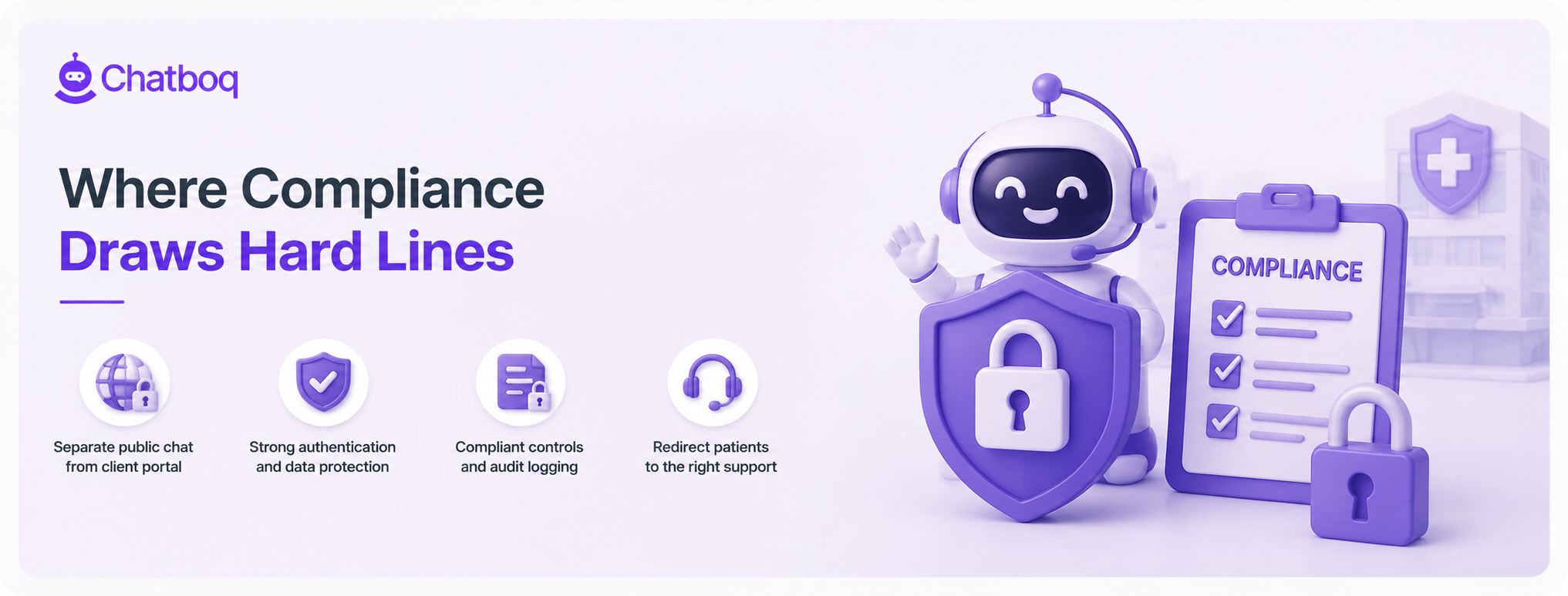



Leave a Comment
Your email address will not be published. Required fields are marked *
By submitting, you agree to receive helpful messages from Chatboq about your request. We do not sell data.