
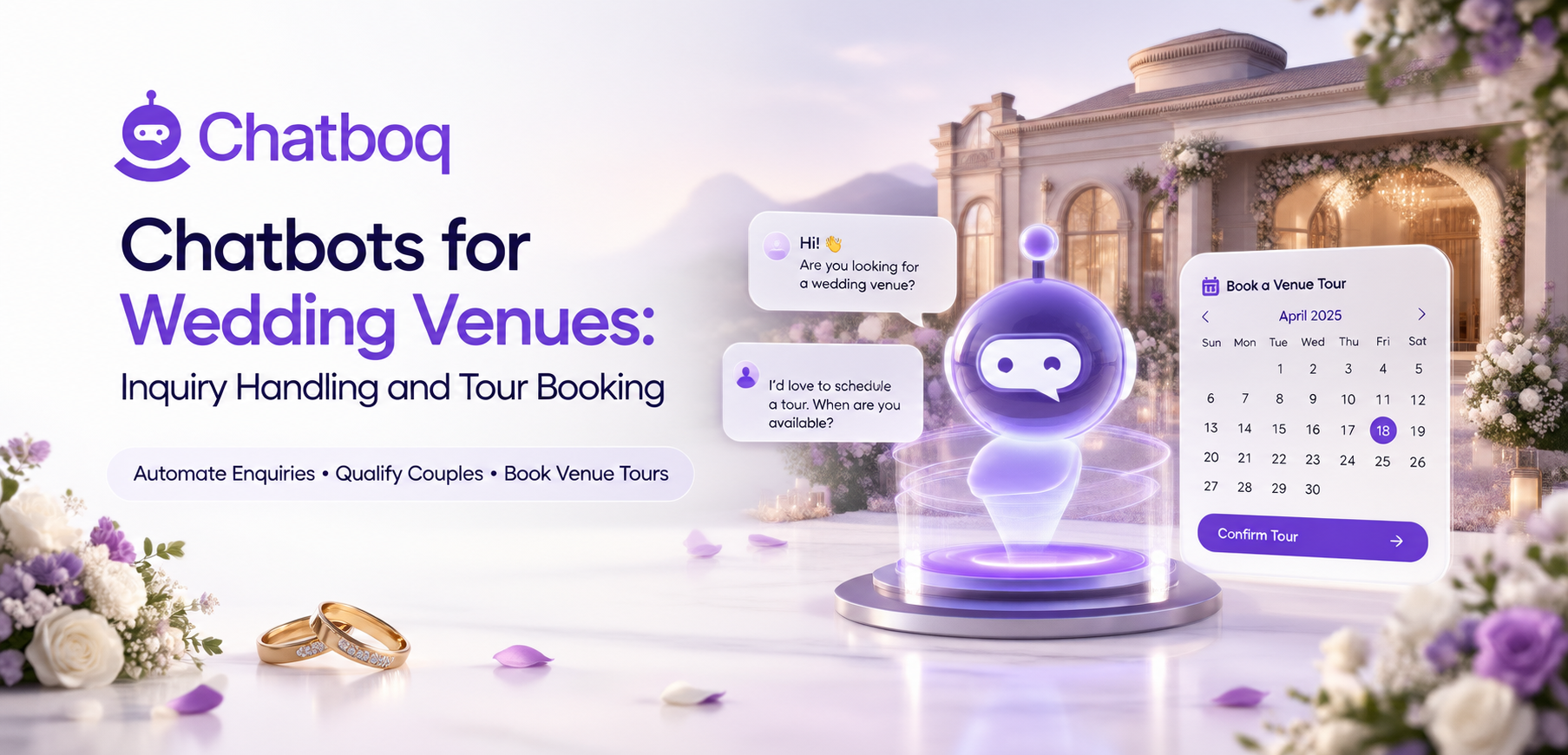
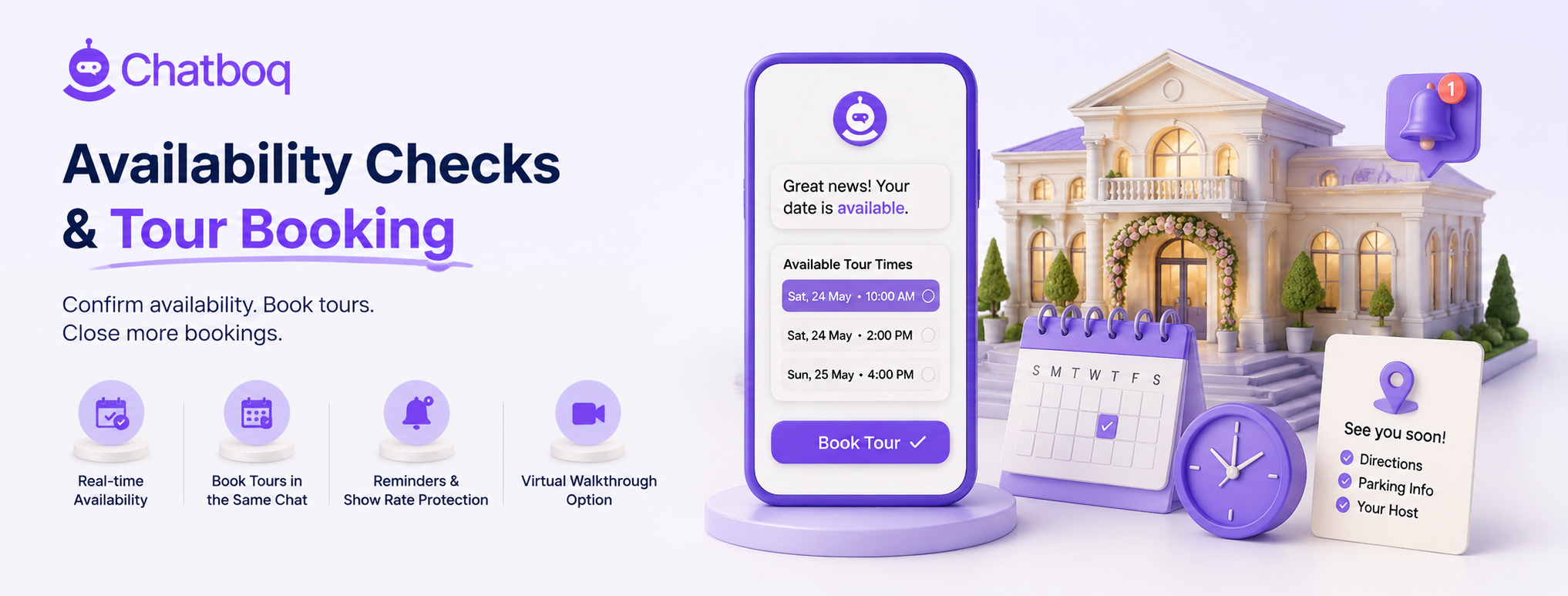
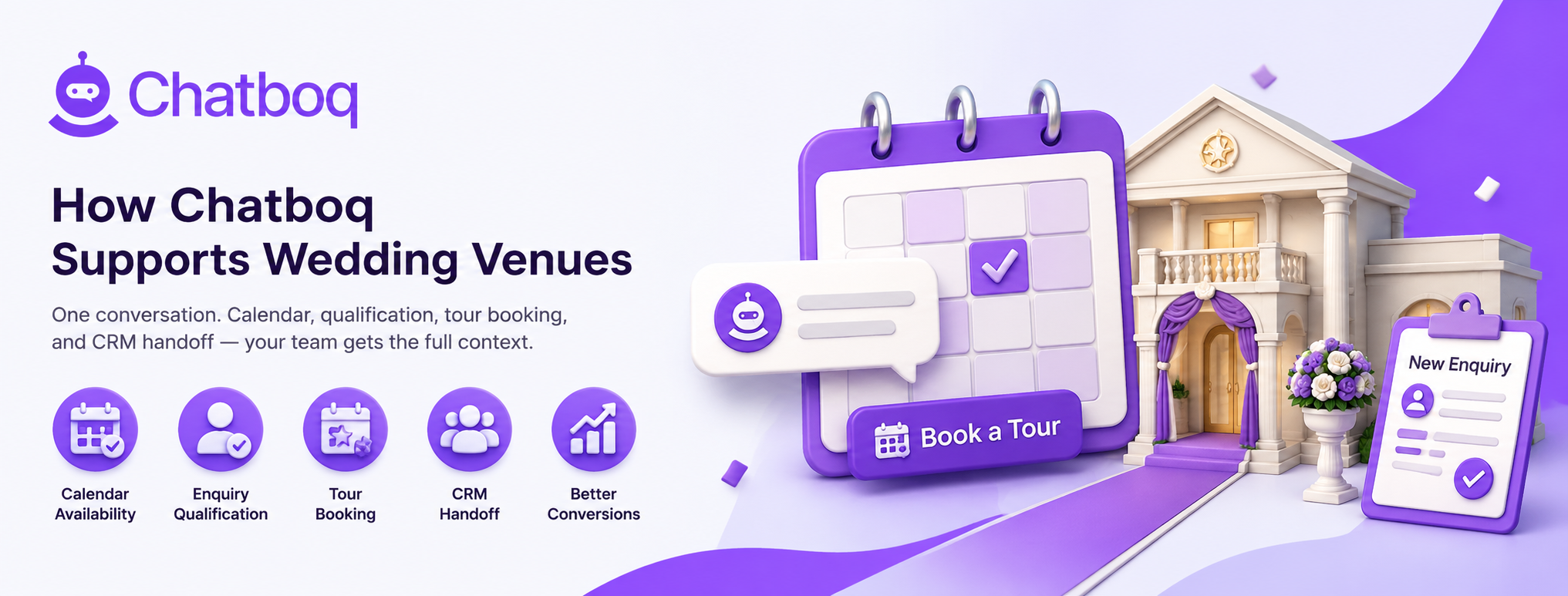
It answers capacity, pricing and availability questions, qualifies the enquiry by date, guest count and budget, and books a venue tour without waiting for the events team to be free.
Answering the three questions that decide the shortlist
Couples want to know whether their date is available, whether the venue holds their guest count and roughly what it costs, and a venue that answers all three immediately usually earns a visit.
Withholding any of the three forces a couple to invest effort before knowing whether the venue is even viable, which is precisely the friction that sends them to the next result in the search.
Working while the team is delivering weddings
An events team running a wedding on a Saturday cannot answer enquiries, yet Saturday evening is one of the heaviest windows for couples browsing venues after attending someone else's wedding.
Automation covers exactly the hours where the venue is most visible and least available, which is the single largest structural gain in this category.
Producing qualified leads rather than more of them
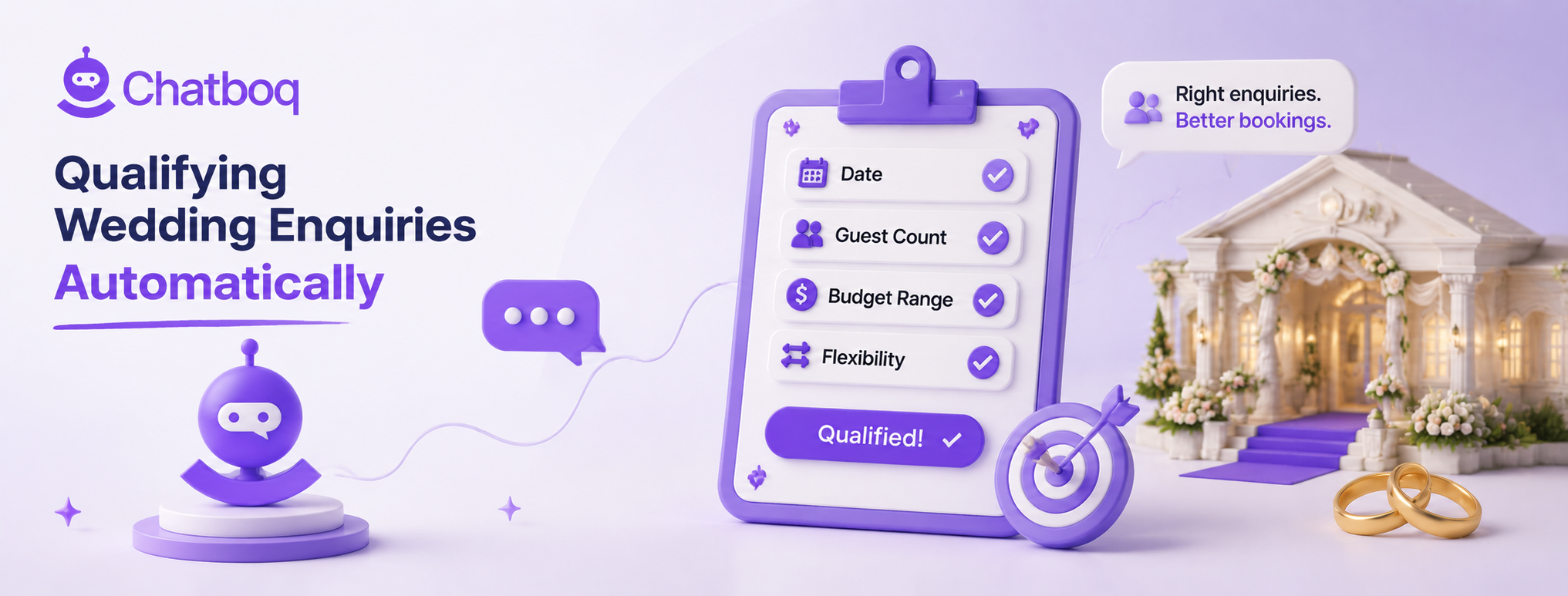
Venue enquiry forms typically capture a name, a date and a message, leaving the coordinator to establish guest count, budget and flexibility across two or three emails before knowing if the enquiry is viable.
Collecting those details conversationally at the point of enquiry means the first human contact is a genuine sales conversation rather than a discovery exercise.
Handling the questions couples forget to ask
Parking, accessibility, accommodation nearby, supplier restrictions and what happens if it rains are all questions that surface later and occasionally undo a booking that was otherwise agreed.
Answering them proactively in the enquiry conversation removes objections before they form and signals that the venue has run enough weddings to anticipate what matters.
 ChatGPT
 Perplexity
 Claude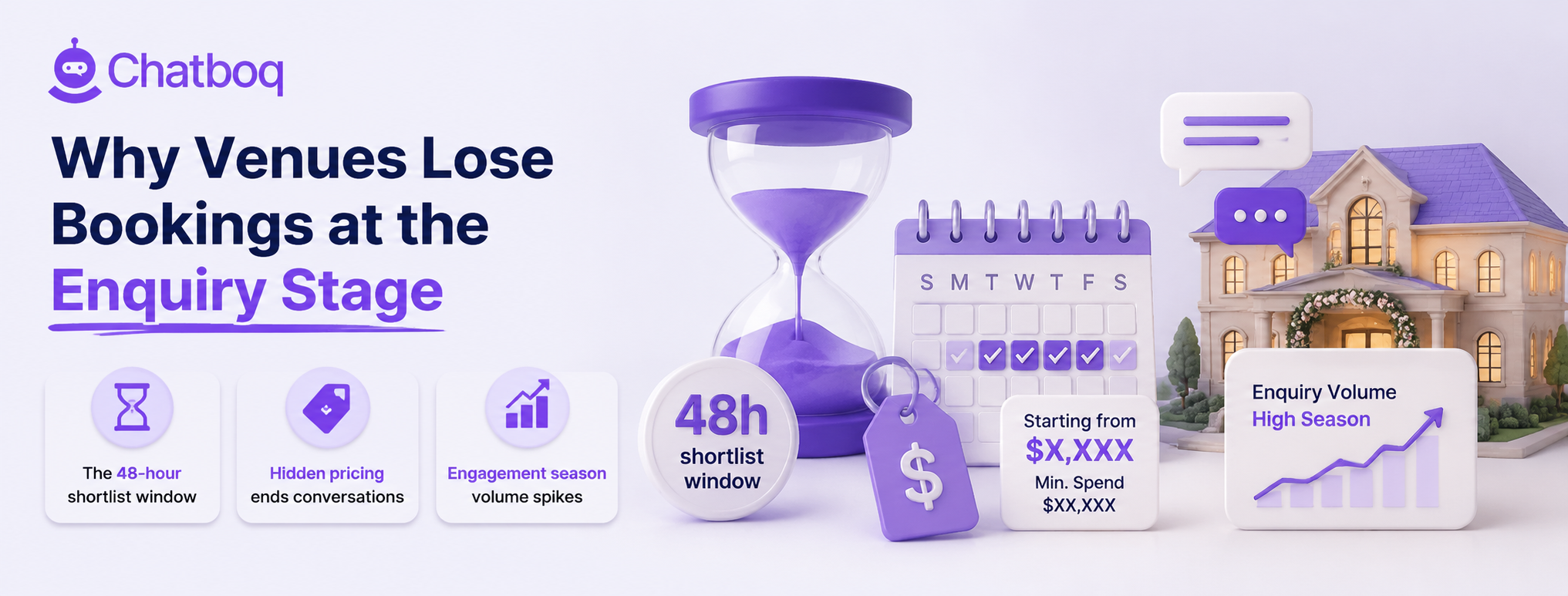



Leave a Comment
Your email address will not be published. Required fields are marked *
By submitting, you agree to receive helpful messages from Chatboq about your request. We do not sell data.