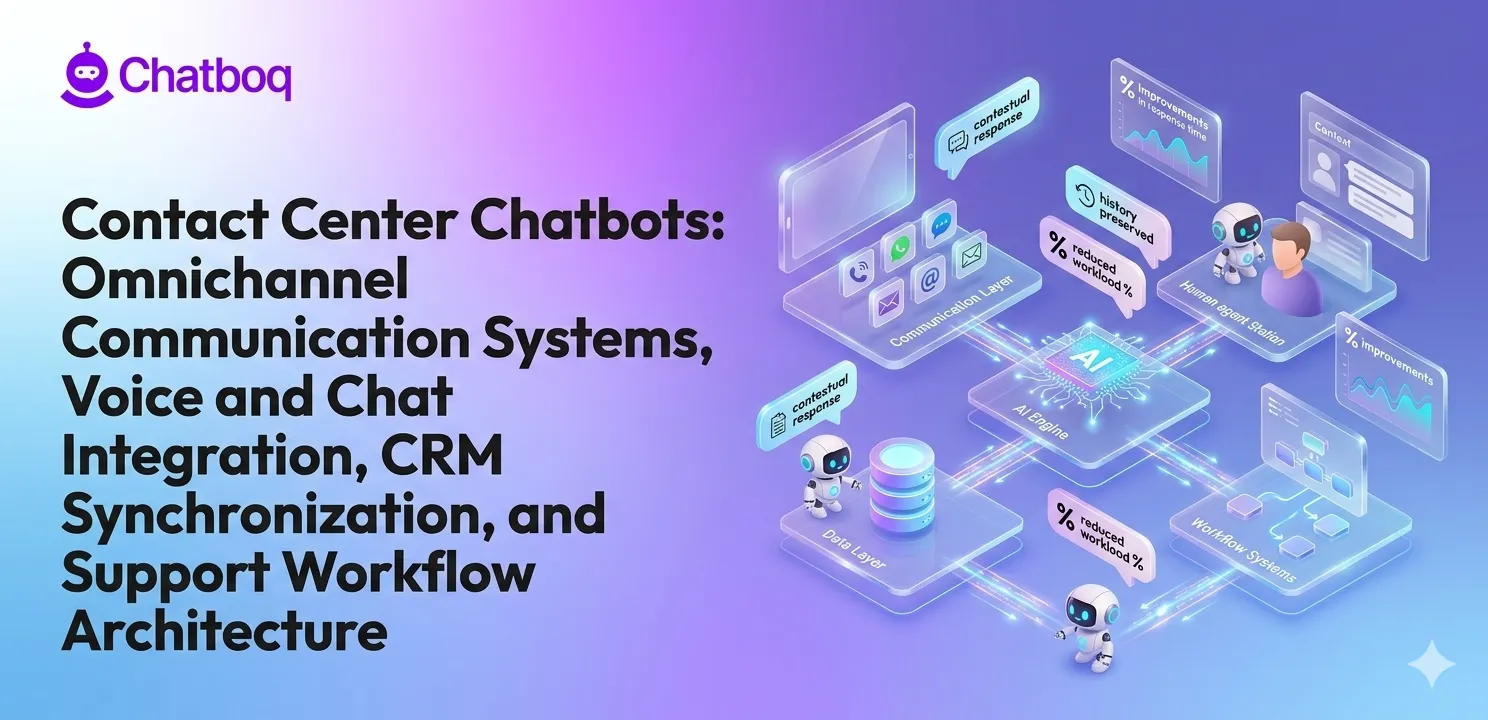
A contact center chatbot architecture typically includes four operational layers: the AI engine, communication systems, CRM-connected data infrastructure, and workflow orchestration systems.
Each layer is responsible for a different operational function, from processing intent and managing communication channels to storing customer data and controlling conversation flow across the support system.
AI engine (NLP, intent detection, automation)
The AI engine is the core logic that processes customer requests and generates responses. It uses natural language processing to understand customer intent, extract entities like names and order numbers, and classify questions.
Intent detection identifies what the customer wants to accomplish. The system recognizes requests like "check my order status," "reset my password," or "schedule a callback" and maps each to specific automation or escalation rules. The engine executes automation based on intent and context.
If intent matches a simple query with available data, the chatbot generates a response automatically. If intent requires human judgment, the system triggers escalation to an agent. Machine learning improves intent detection accuracy over time through resolved conversations and agent corrections.
Communication layer (chat, voice, messaging APIs)
The communication layer connects the chatbot to customer-facing channels. It includes APIs for web chat widgets, voice systems, SMS, email, and social messaging platforms. This layer handles protocol conversion between channels.
Messages from WhatsApp, Facebook Messenger, SMS, and voice calls all convert to a standardized internal format the AI engine processes. The communication layer manages message queuing and delivery.
If a channel becomes temporarily unavailable, the system queues messages and delivers them when the connection restores. Channel-specific capabilities integrate at this layer. Voice interactions include speech recognition and synthesis. Chat includes typing indicators and read receipts. Each channel's native features are preserved while underlying logic remains unified.
Data layer (CRM, databases, user context)
The data layer stores and provides access to all customer and operational data. It includes CRM databases, customer history, support tickets, and transaction records. This layer maintains real-time data synchronization. Every chatbot action updates relevant databases automatically. When a chatbot looks up an order, that access is logged.
When a customer confirms an address, the database updates immediately. The data layer enforces data security and compliance. Access controls ensure the chatbot retrieves only permitted data. Encryption protects sensitive information in transit and at rest.
Context storage enables conversation continuity. The system stores conversation state, customer sentiment, issue status, and interaction history. This context persists across channel switches and agent handoffs.
Workflow and routing systems
Workflow and routing systems govern how conversations flow through the contact center. These systems determine when chatbots handle conversations, when escalation occurs, and how to match customers with agents.
Routing rules decide which agent receives an escalated conversation based on agent skills, availability, current workload, and customer priority. The system matches complex issues with the most qualified available agent.
Workflow automation sequences actions based on conversation progress. If a customer confirms an order return, the workflow automatically generates a return label, sends it via the customer's preferred channel, and creates a tracking record. Load balancing distributes incoming conversations across agents and chatbot capacity. The system prevents agent overflow while ensuring customers receive responses within service level agreements.

 ChatGPT
 Perplexity
 Claude



Leave a Comment
Your email address will not be published. Required fields are marked *
By submitting, you agree to receive helpful messages from Chatboq about your request. We do not sell data.