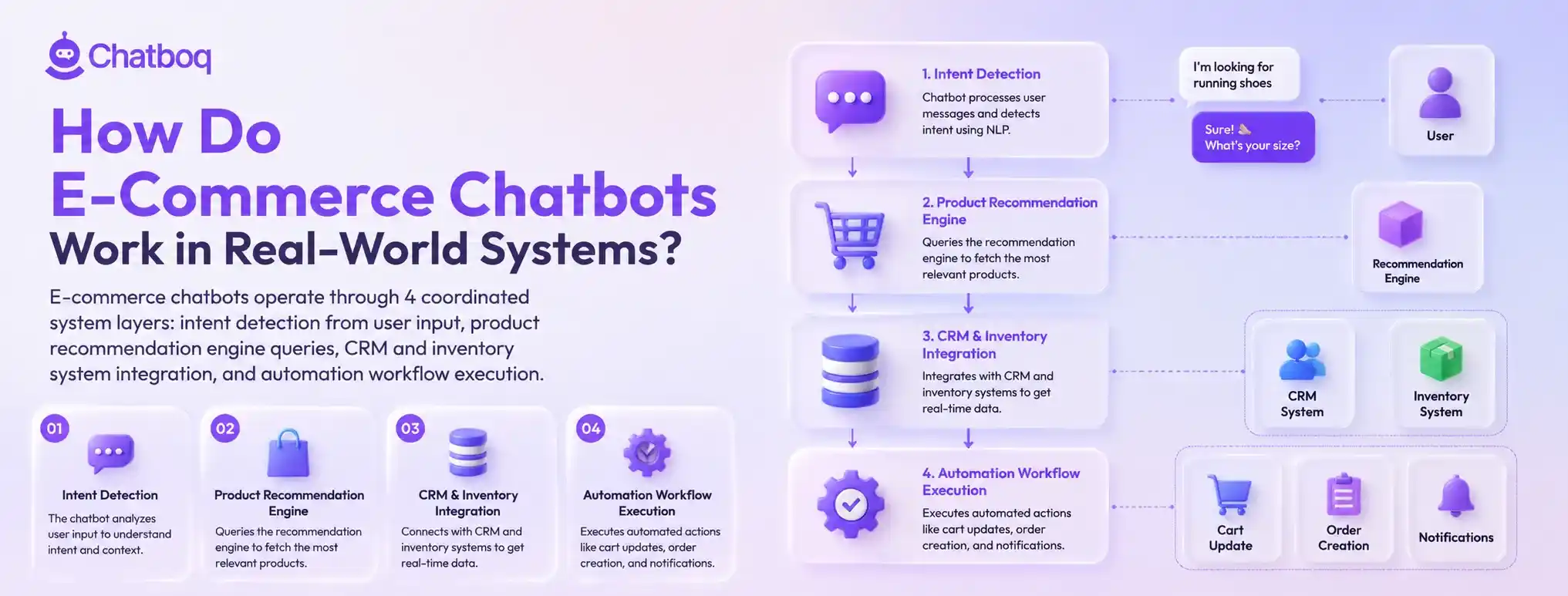
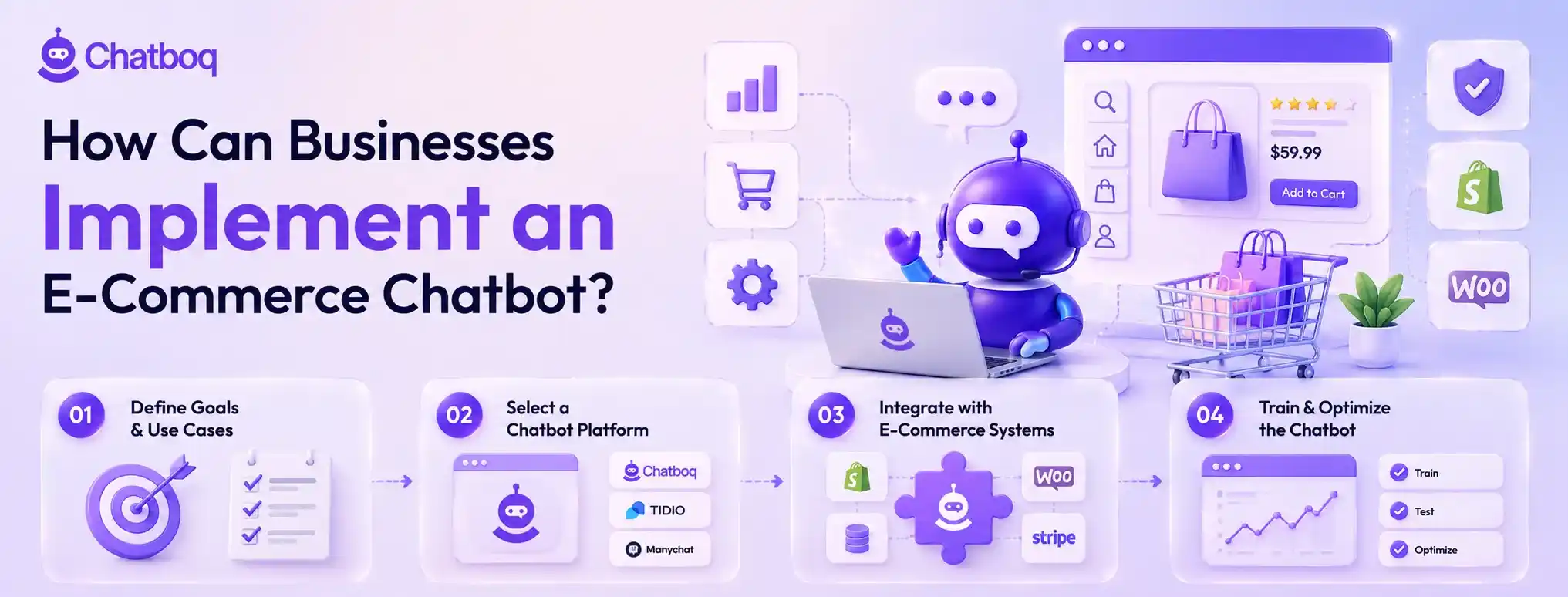
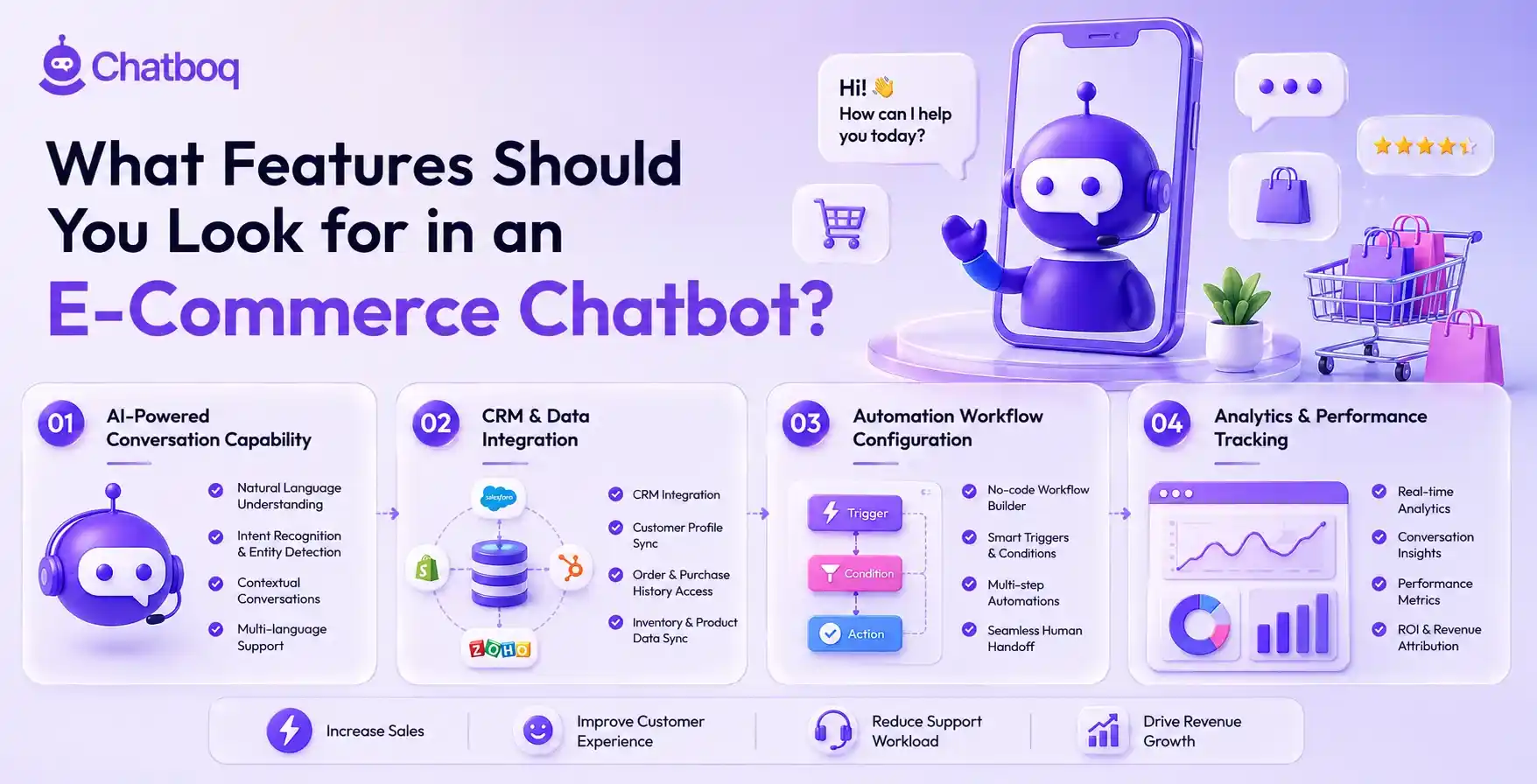
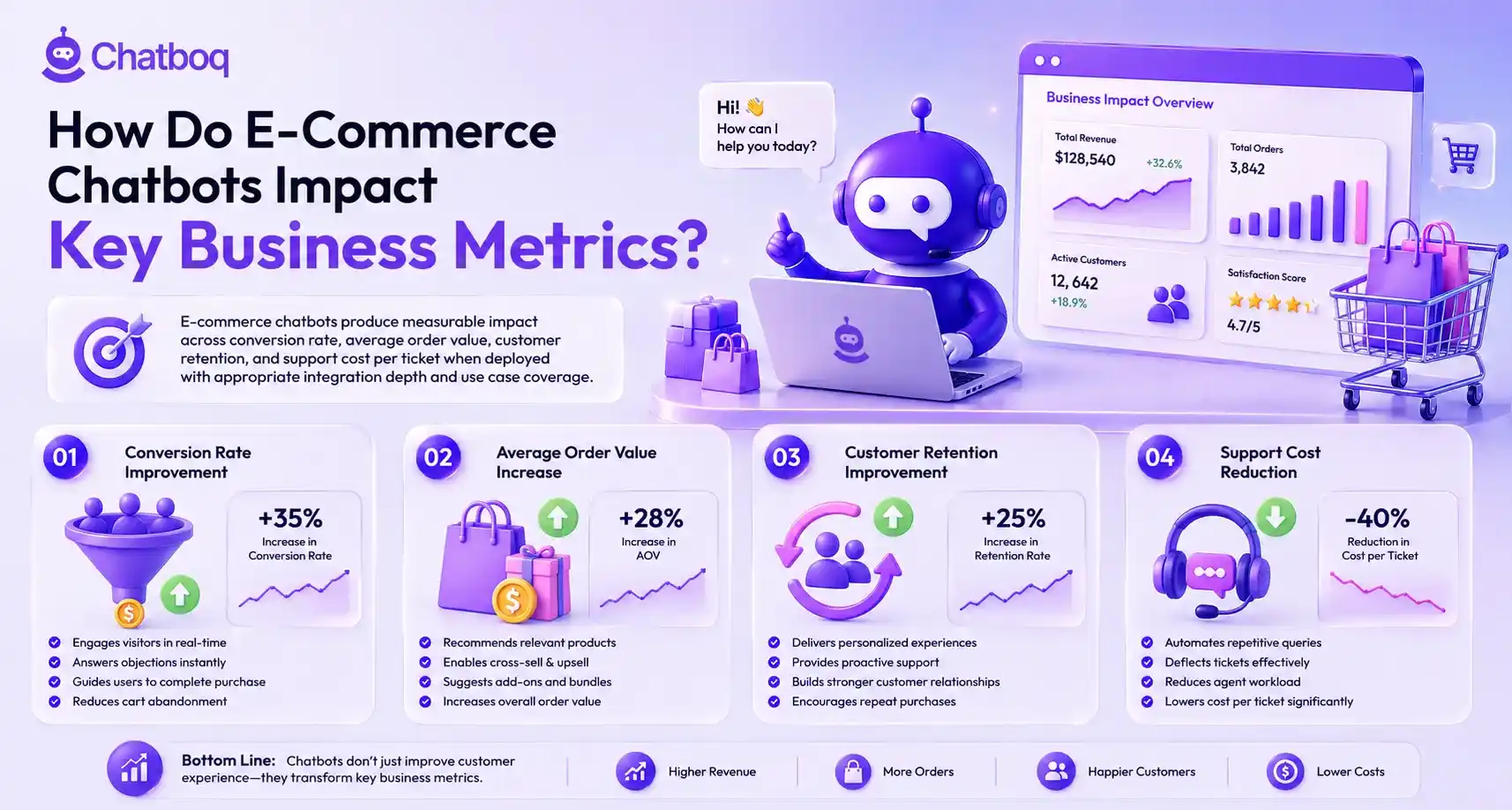
E-commerce chatbots operate through 4 coordinated system layers: intent detection from user input, product recommendation engine queries, CRM and inventory system integration, and automation workflow execution.
User Interaction and Intent Detection
When a shopper sends a message, the chatbot's NLP engine processes the text to identify intent: what the shopper is trying to accomplish. Intent classification categorizes the message into defined intents (product search, order inquiry, return request, discount inquiry, complaint) and extracts relevant entities (product name, order number, size, color, date). The intent and entity data route to the appropriate response workflow.
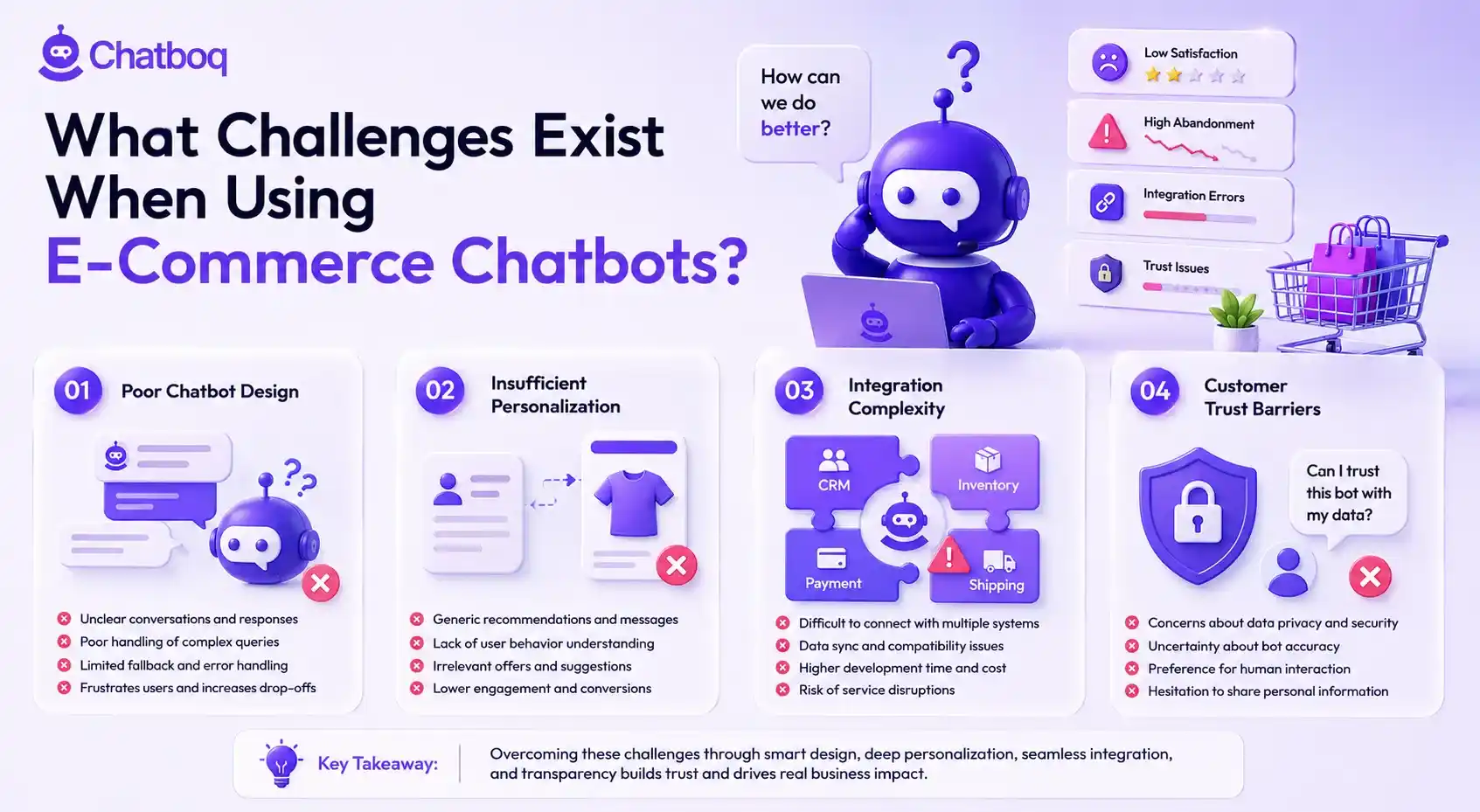
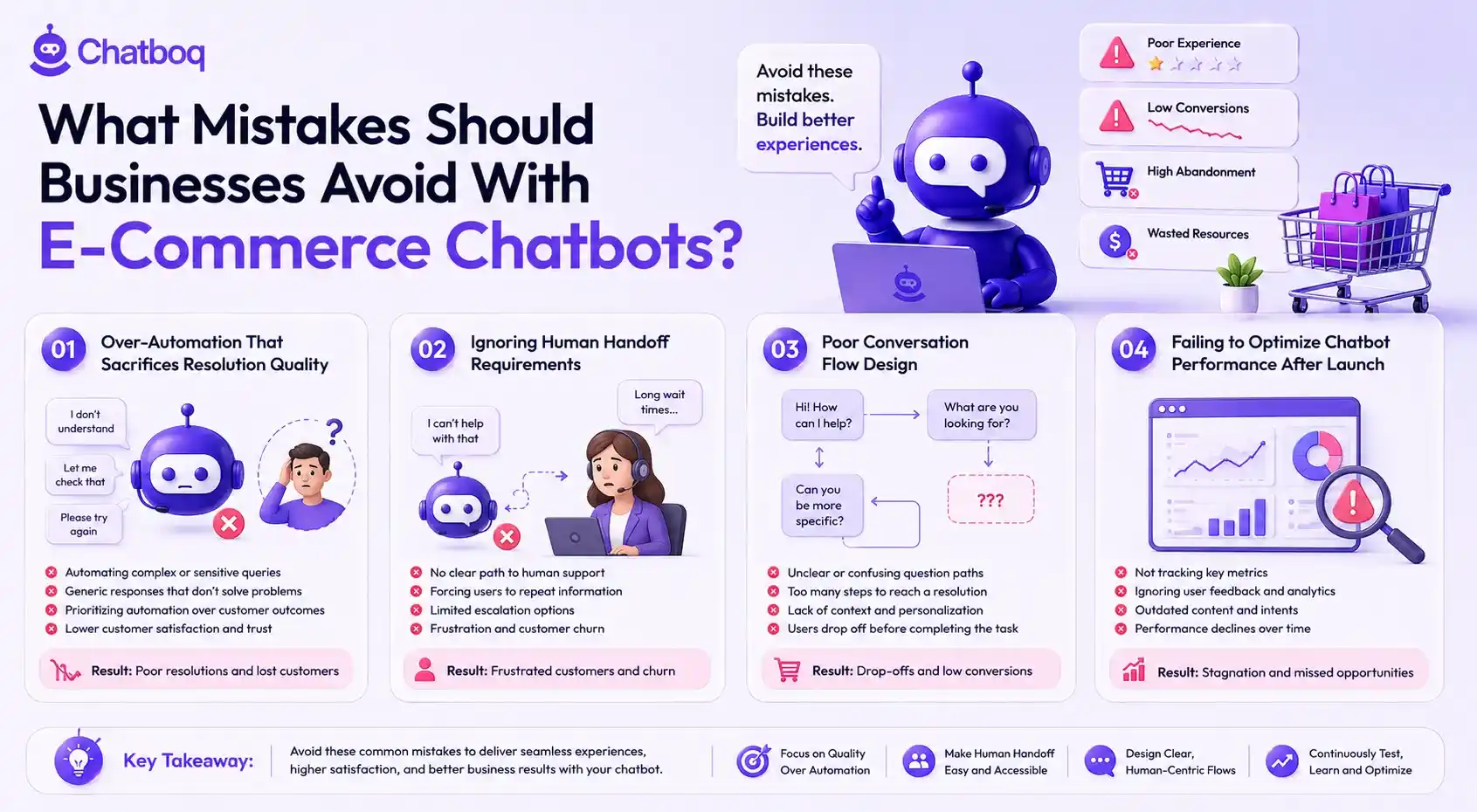
Rule-based chatbots match message patterns to scripted responses. AI-powered chatbots use machine learning models trained on historical conversation data to classify intent from conversational language that does not follow exact scripted patterns. Intent classification accuracy determines the chatbot's resolution rate: misclassified intents produce irrelevant responses that frustrate shoppers and generate escalation to human agents.
Product Recommendation Engines
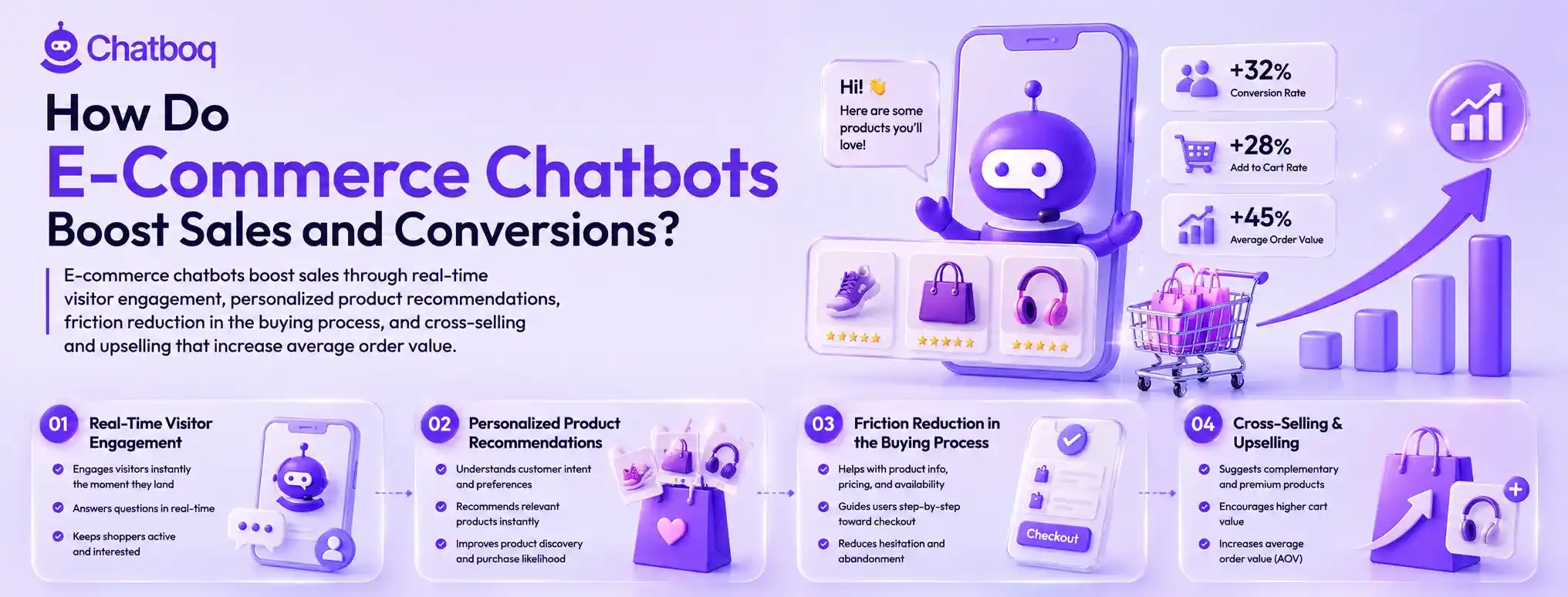
Product recommendation engines connect the chatbot and AI customer service systems to the store's product catalog and purchase history data to suggest relevant products based on the shopper's stated preferences, browsing history, and behavioral patterns, forming the basis of a shopping assistant chatbot. A shopper who asks "what are your best running shoes under $100?" triggers a recommendation engine query that evaluates product catalog data against the price constraint and category classification, returning the top matches based on ratings, stock availability, and conversion data.
Personalization engines extend basic recommendations by incorporating the shopper's prior purchase history: a returning customer who previously bought trail running shoes receives recommendations consistent with that preference rather than generic running shoe suggestions. Recommendation accuracy improves as the engine processes more behavioral data from each shopper's session and purchase history.
Integration with CRM and Inventory Systems
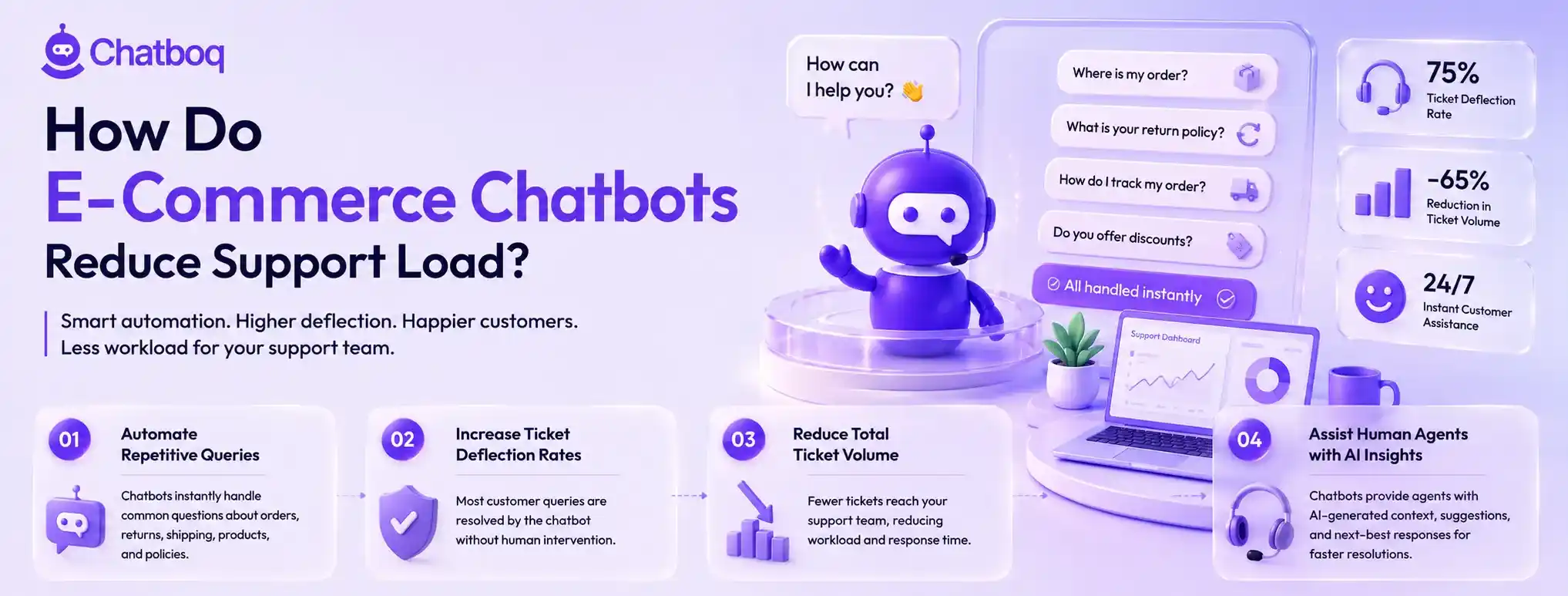
CRM integration connects the chatbot to customer account data (purchase history, loyalty points, saved addresses, communication preferences) enabling personalized responses that reference the individual shopper's relationship with the store. Inventory management system integration enables the chatbot to provide accurate stock availability, size availability, and delivery timeline information in real time.
An inventory-integrated chatbot tells a shopper "the medium in navy is in stock and ships within 2 business days" rather than directing them to the product page to check. Order management system integration enables the chatbot to retrieve current order status, tracking numbers, and estimated delivery dates for order inquiry responses. Integration failures that produce outdated inventory data or incorrect order status responses damage customer trust more severely than the absence of chatbot functionality.
Automation Workflows
Chatbot automation workflows define the sequence of actions the chatbot executes when specific intents or conditions are detected. A cart abandonment workflow triggers when a logged-in shopper leaves the checkout page: the workflow waits 15 minutes, sends a proactive message through the shopper's preferred channel, and includes a direct link to the abandoned cart.
An escalation workflow triggers when the chatbot fails to resolve an inquiry within 3 turns: the workflow transfers the conversation to a human agent with the full conversation transcript and the shopper's CRM data pre-populated in the agent dashboard. A post-purchase workflow triggers after order confirmation: the chatbot sends delivery updates, requests a product review at a defined interval post-delivery, and offers related product recommendations in the same message thread.

 ChatGPT
 Perplexity
 Claude



Leave a Comment
Your email address will not be published. Required fields are marked *
By submitting, you agree to receive helpful messages from Chatboq about your request. We do not sell data.