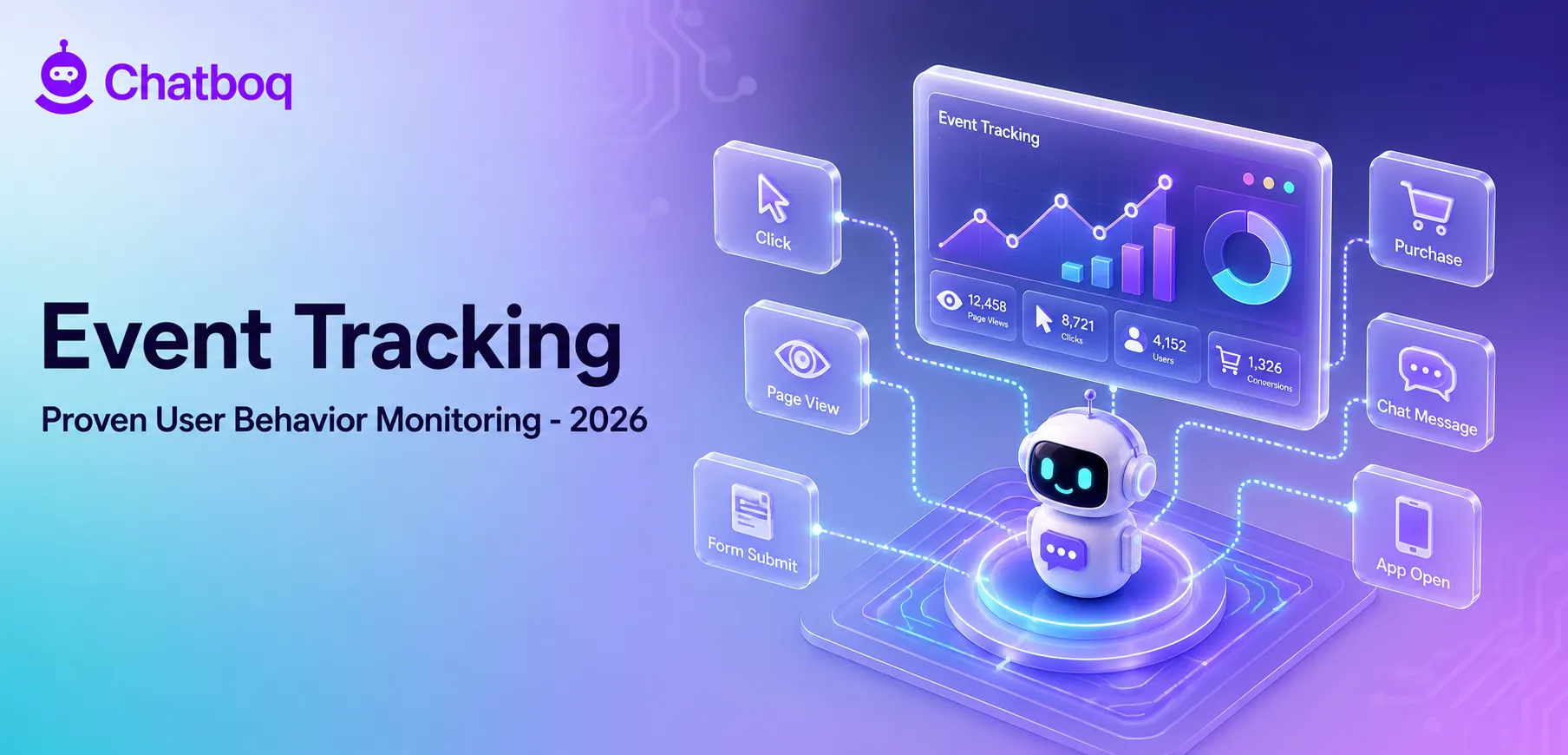
Trackable events include click events, page views, form submissions, chat interactions, and purchase completions across digital platforms.
Click events capturing user interaction
Page view events track when users load pages across digital platforms and form the base of navigation analytics. Navigation events capture page transitions, while scroll depth measures content engagement levels. Time-on-page reflects engagement duration, and entry and exit events show where users start and leave sessions. Page path, referrer, and device data add context for full journey analysis.
Page view tracking helps measure traffic quality, engagement behavior, and content relevance. Bounce rate, scroll behavior, and exit pages identify drop-off points, while landing pages evaluate campaign performance and UX effectiveness.
Page views and navigation events
Page view events track when users load pages across digital platforms, forming the base of behavioral analytics. Navigation events capture page transition sequences, while scroll depth and time-on-page measure engagement intensity and content consumption. Entry and exit events show user start and drop-off points, while page path, referrer, and device data provide context for complete journey analysis and segmentation.
Page view tracking helps measure traffic quality, engagement behavior, and content relevance across sessions. Bounce rate, time-on-page, and scroll metrics reveal engagement depth, while exit pages identify friction points. Landing page and referrer data evaluate campaign effectiveness, enabling UX optimization and data-driven improvements in navigation performance.
Form submissions and interactions
Form field interaction events track user engagement across input fields in digital forms. Form abandonment events identify problematic fields causing drop-offs, while submission events mark completion and conversion success. Field focus, changes, and progress events reveal user behavior during form filling, and validation or error events highlight issues in usability and structure. Form time-on-page also indicates completion difficulty and friction levels.
Form interaction tracking helps optimize conversion performance by identifying abandonment points and confusing fields. Field-level analysis reveals problematic requirements, while error patterns expose validation issues. Progress tracking shows completion flow, and simplification reduces friction and abandonment. These insights improve form design, enhance usability, and increase conversion rates through data-driven optimization.
Chat and interaction events
Message sent events track conversation activity across chat and support systems. User input events capture intent signals, while agent response events measure support interaction quality. Chat duration and resolution events indicate engagement length and completion success. Satisfaction, sentiment, and escalation events reveal experience quality, emotional tone, and support limitations, while bot interaction events measure automation performance.
Conversation events help analyze communication flow, message volume, and response time to evaluate support efficiency and service quality. Resolution and satisfaction metrics indicate overall effectiveness, while escalation and bot accuracy highlight system limitations. Chat analytics enable continuous improvement in customer support, automation performance, and user experience optimization.
Purchase and conversion events
Add-to-cart events track product interest across ecommerce platforms, while remove-from-cart events indicate purchase abandonment behavior. Checkout initiation and payment submission events signal purchase intent and transaction attempts. Purchase completion events mark conversions, and purchase value events measure revenue impact. Product views, category views, and search events reveal product discovery patterns and user intent signals for optimization.
Conversion events map the full purchase funnel from interest to transaction completion. Funnel stages identify progression and drop-off points, while abandonment events highlight friction in the buying journey. Revenue tracking and cart value analysis measure financial impact and purchase intent. Transaction success rates, payment preferences, and purchase data help optimize conversion rates, improve UX, and drive revenue growth.

 ChatGPT
 Perplexity
 Claude



Leave a Comment
Your email address will not be published. Required fields are marked *
By submitting, you agree to receive helpful messages from Chatboq about your request. We do not sell data.