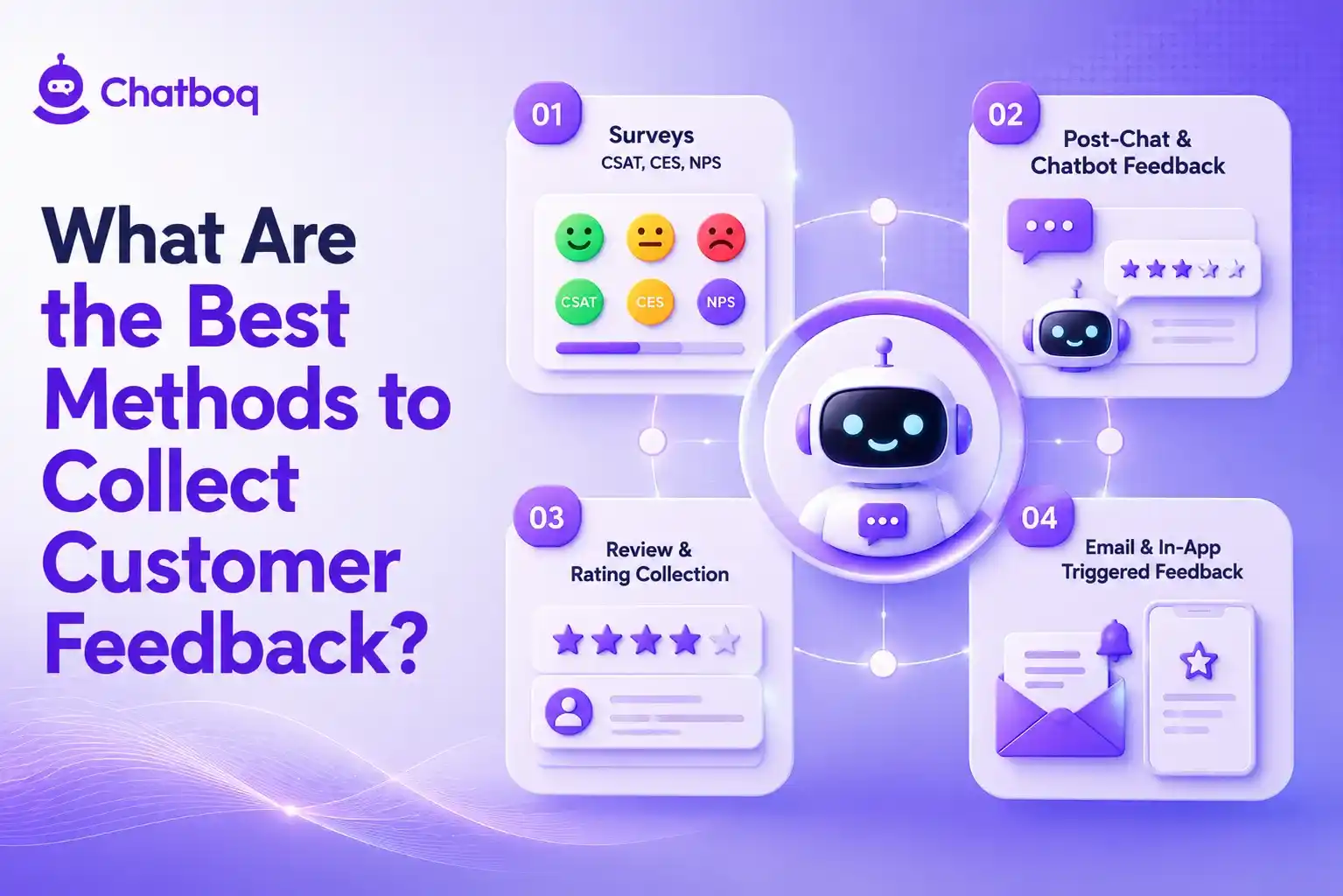
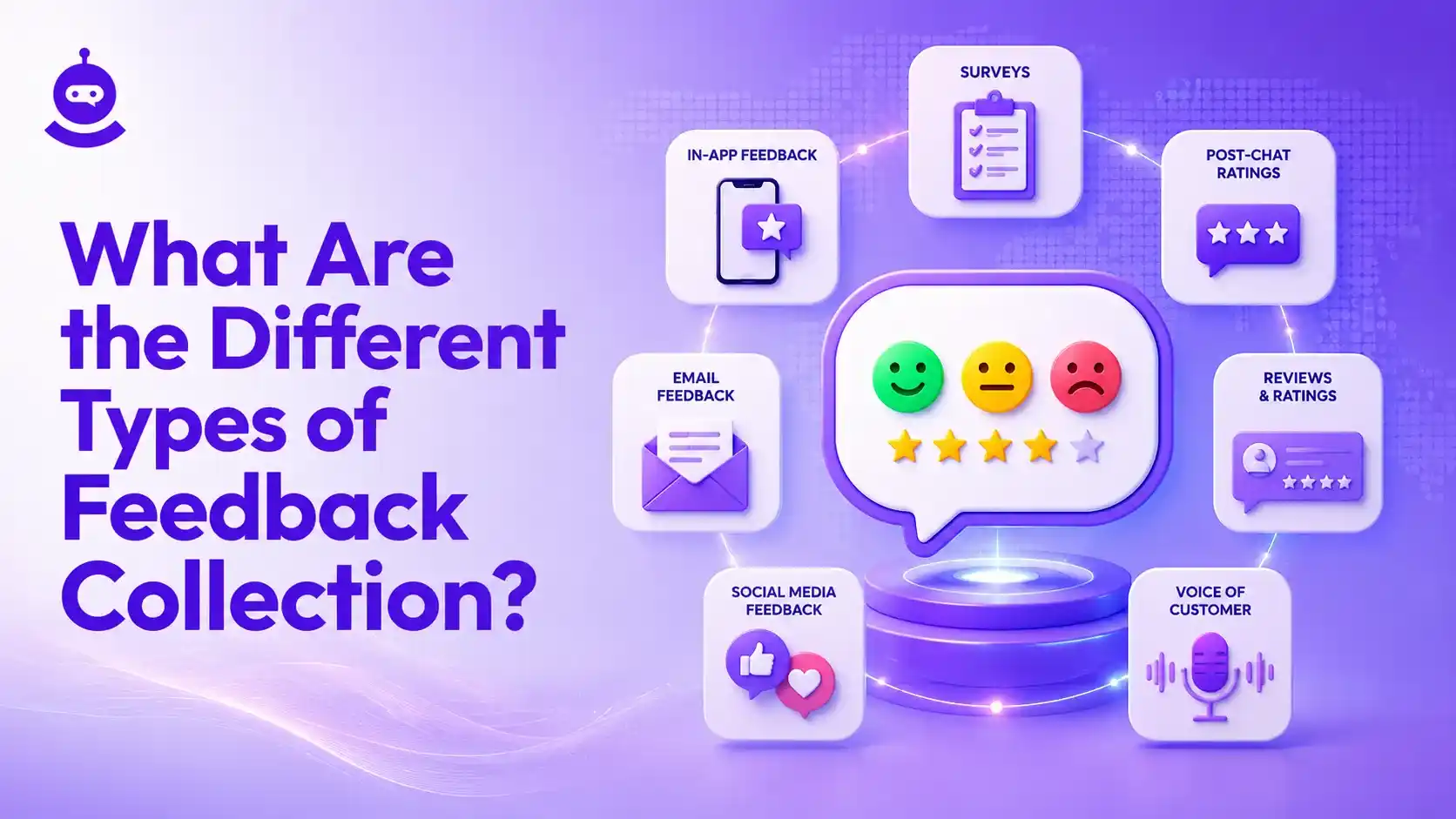
The 4 most effective customer feedback collection methods are surveys using CSAT, CES, and NPS metrics, post-chat and chatbot feedback, review and rating collection, and email and in-app triggered feedback. Each method suits different touchpoints and feedback objectives.
Surveys: CSAT, CES, and NPS
Customer Satisfaction Score (CSAT) surveys measure satisfaction with a specific interaction on a 1 to 5 scale. Customer Effort Score (CES) surveys measure how much effort a customer requires to complete a task on a 1 to 7 scale. Net Promoter Score (NPS) surveys measure overall loyalty by asking customers how likely they are to recommend the business on a 0 to 10 scale.
CSAT is most effective at individual touchpoints: after a support resolution, after a purchase, or after an onboarding session. CES identifies friction in specific processes: completing a return, setting up an integration, or resolving a billing issue. NPS measures relationship-level sentiment and is most effective as a periodic relationship survey rather than a transactional trigger.
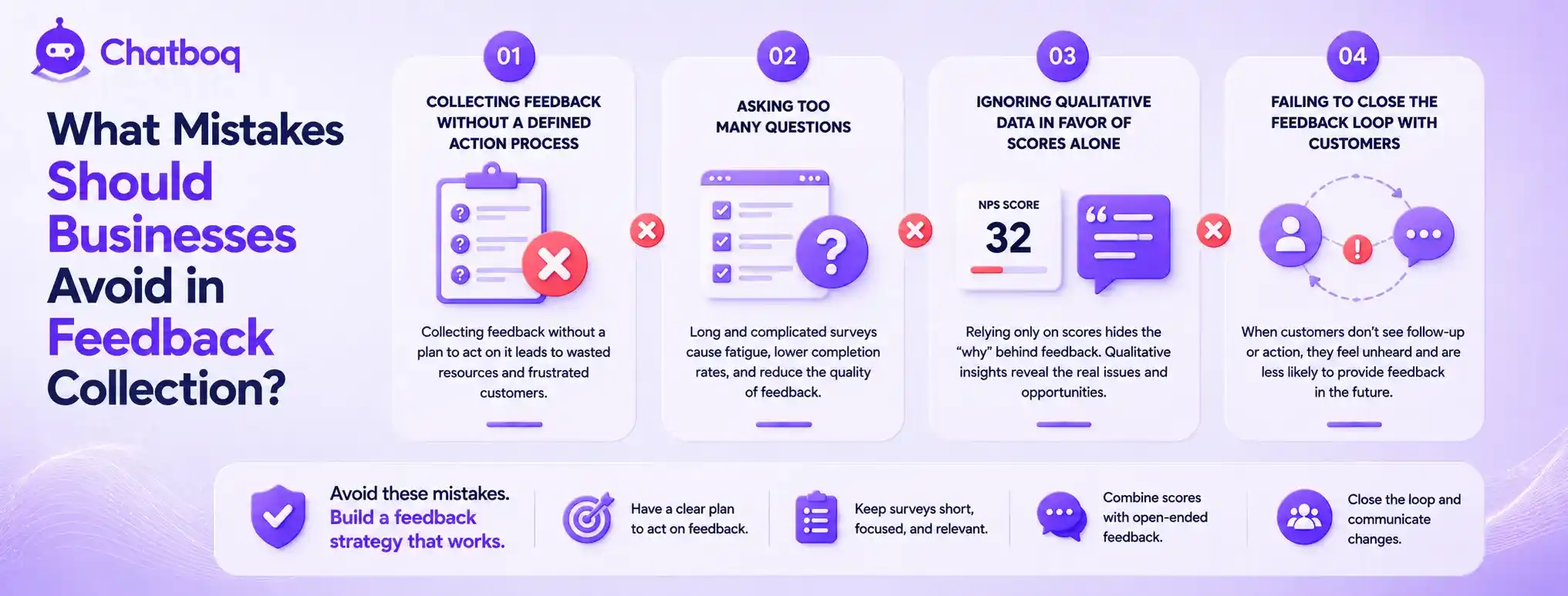
Survey forms should contain the minimum number of questions required to capture the needed data. Survey fatigue often increases when surveys exceed 5 questions for transactional feedback or around 10 questions for relationship surveys, depending on audience and context. Response rates drop as survey length increases.
Chat and Chatbot Feedback
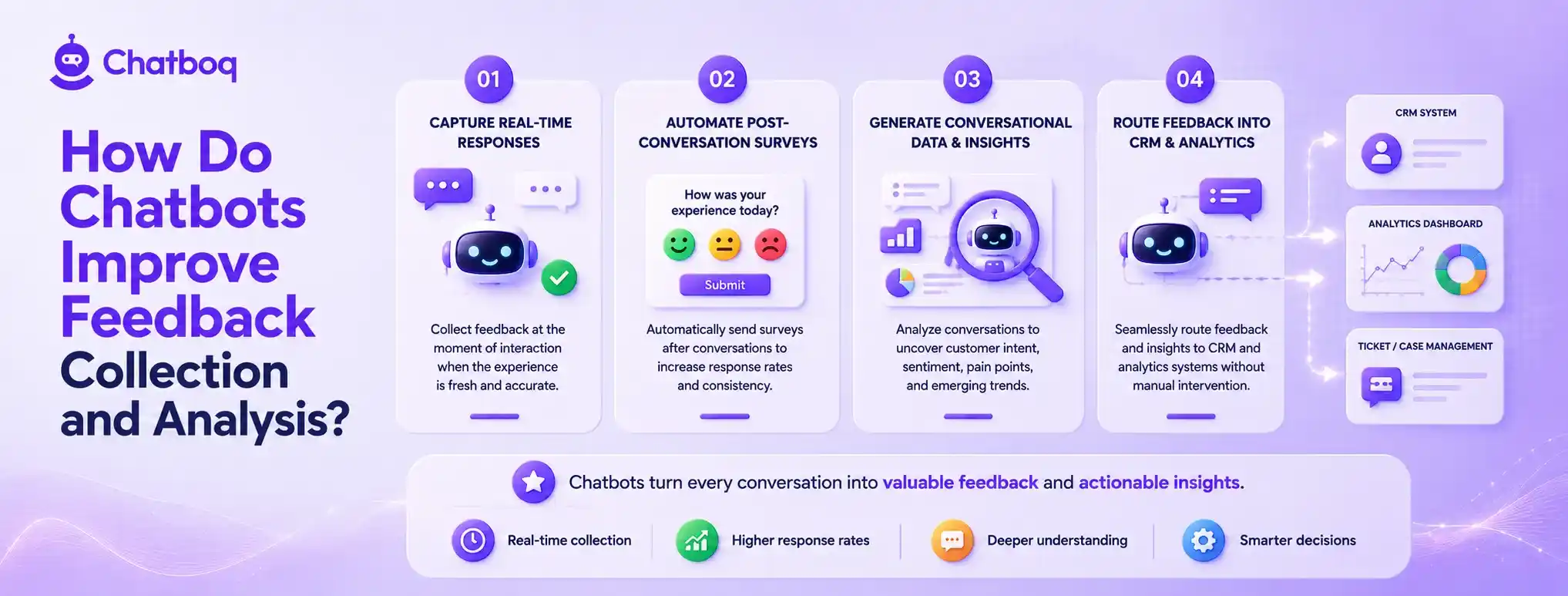
Post-chat surveys collect feedback immediately after a live chat or chatbot conversation closes. This timing captures satisfaction while the interaction is fresh, producing more accurate ratings than delayed follow-up surveys. Chatbot feedback collection also generates conversational data that reveals where automated flows succeed and where they fail.
Chat feedback captures 2 signals: interaction quality and resolution success. Separating them requires asking both a satisfaction question and a resolution question. Chatbot analytics track abandonment points and escalation triggers, identifying flow friction without requiring explicit customer ratings.
Reviews and Ratings
Public reviews on platforms including Google, G2, Trustpilot, and app stores generate unsolicited feedback that reflects authentic customer sentiment. Review monitoring captures this data and routes it into the feedback management system for analysis alongside solicited feedback.
Review text contains qualitative feedback about product experiences and value perceptions that structured surveys miss. A cluster of G2 reviews mentioning the same limitation signals a feature gap the product roadmap should address. Reputation management processes route this public feedback into internal insight pipelines.
Email and In-App Feedback
Email feedback surveys reach customers outside the product, making them suitable for post-purchase follow-up, renewal-stage relationship surveys, and churned customer exit interviews. In-app feedback widgets collect feedback from active users inside the product, capturing responses at the moment of highest contextual relevance.
Triggered email surveys activate on lifecycle events: 30 days after signup, 7 days after a support case closes, or 14 days before renewal. In-app widgets from tools like Intercom collect feedback from active users at the moment of highest contextual relevance, producing higher response rates than delayed email surveys.

 ChatGPT
 Perplexity
 Claude




Leave a Comment
Your email address will not be published. Required fields are marked *
By submitting, you agree to receive helpful messages from Chatboq about your request. We do not sell data.