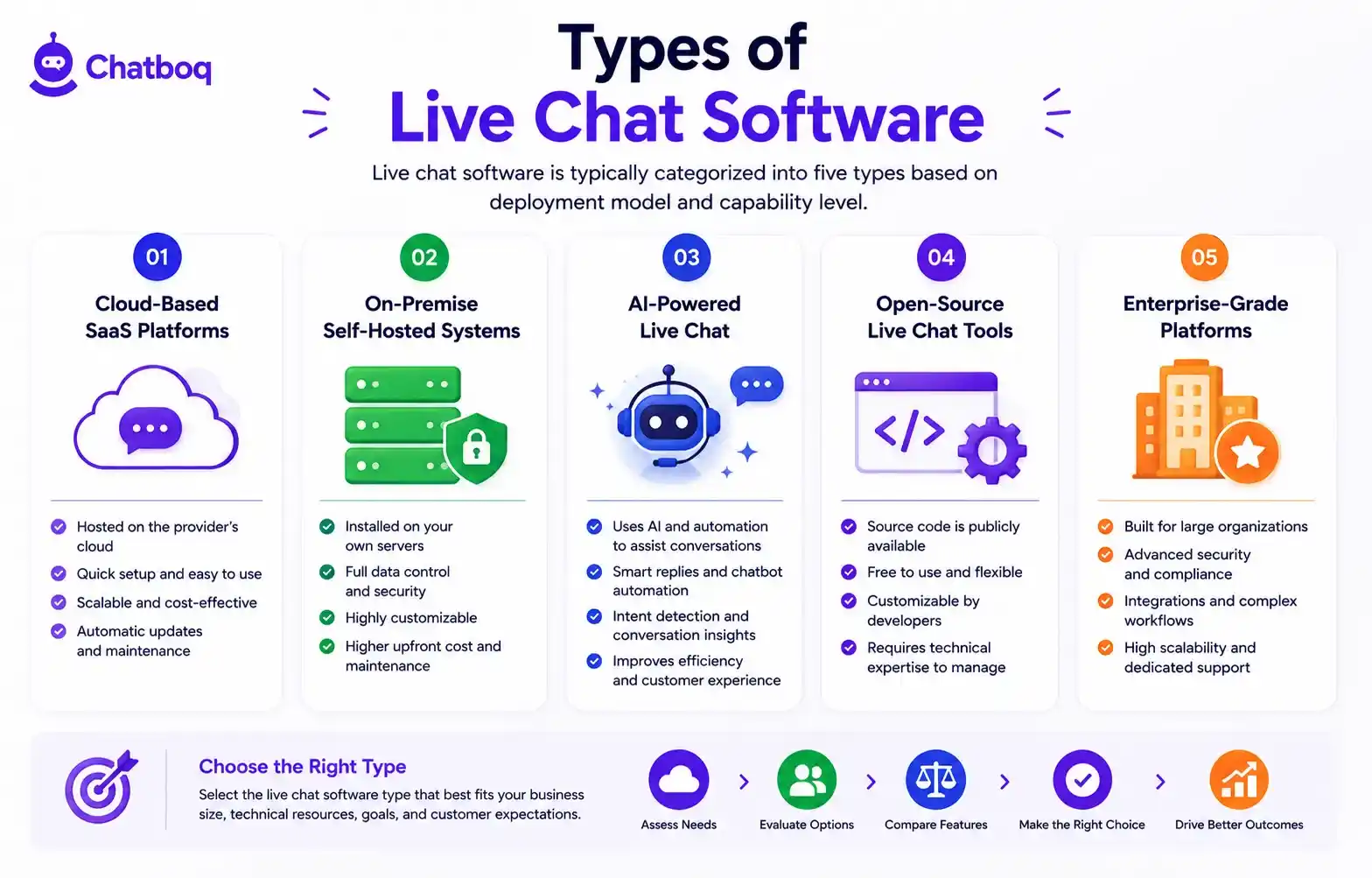
Selecting the right live chat software requires matching platform capabilities to operational needs such as team size, scalability requirements, automation depth, and integration flexibility. Modern tools range from lightweight SMB solutions to full enterprise-grade platforms with AI automation, advanced routing, and deep CRM connectivity.
Best Tools for Small Businesses
Small businesses typically prioritize ease of setup, affordability, and basic automation features over complex enterprise capabilities. Tools like Tidio and Freshchat are commonly used because they provide live chat, simple chatbot automation, and essential integrations without heavy configuration requirements.
Tidio offers a strong entry-level option with a free plan that includes live chat and basic chatbot workflows, making it suitable for startups and early-stage businesses. Freshchat extends this with AI-assisted chat capabilities and CRM integration, while maintaining a per-agent pricing structure that scales with team growth. HubSpot’s free live chat is also widely used, especially for businesses already operating within the HubSpot ecosystem.
For growing teams that need a more structured conversational layer, platforms like Chatboq also fit into this category by combining AI-driven chat automation with human agent handoff, helping small businesses handle both support and lead qualification without requiring a complex setup.
Enterprise Live Chat Platforms
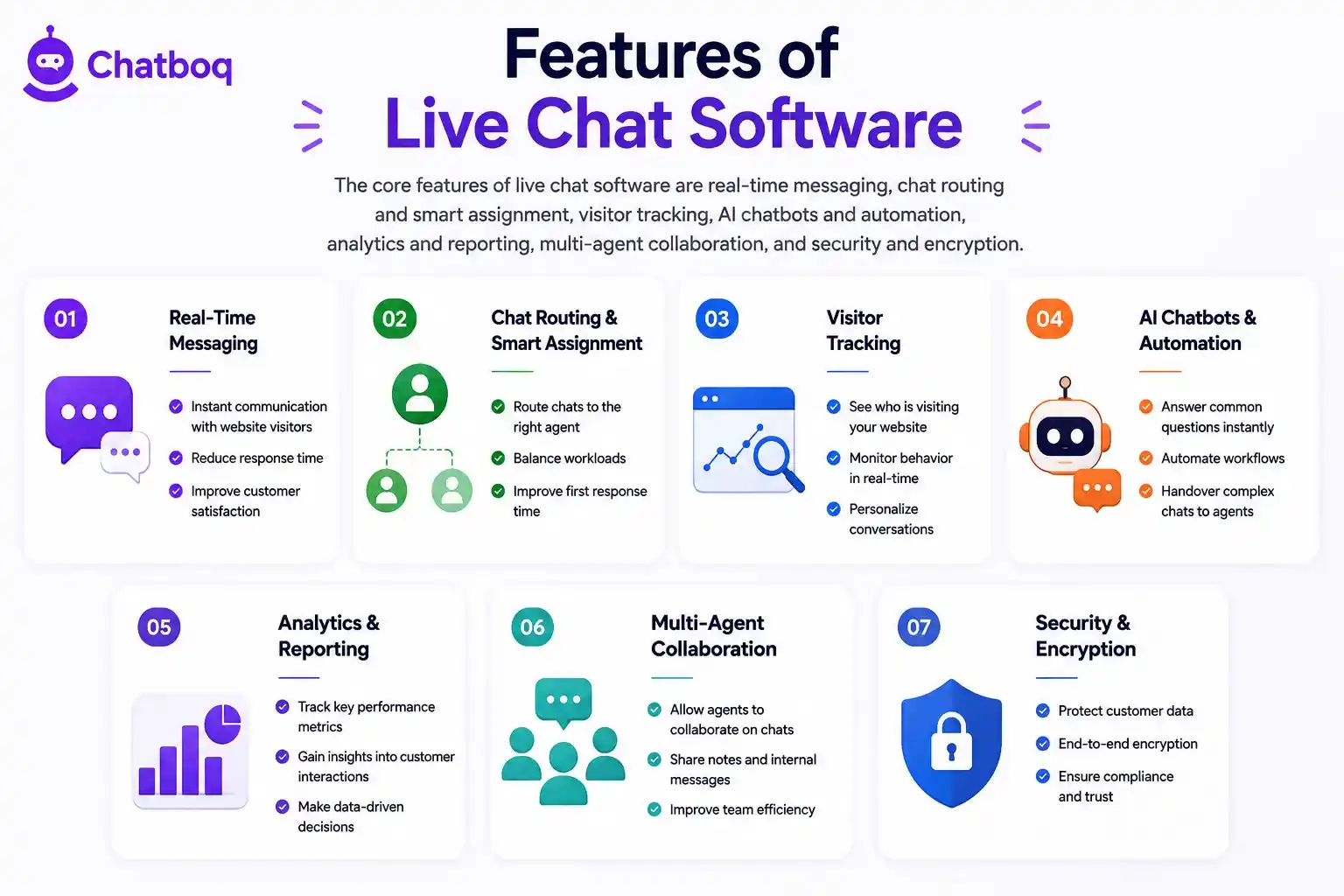
Enterprise live chat platforms are designed for large-scale operations that require advanced routing, compliance, multi-team collaboration, and high availability. Zendesk and Intercom are widely used because they combine omnichannel support, AI automation, and deep integration ecosystems.
Salesforce Service Cloud is preferred in enterprise environments already built around Salesforce, offering native CRM integration and end-to-end customer data synchronization without third-party connectors. These platforms also provide enterprise-grade capabilities such as SOC 2 compliance, SLA management, and advanced API scalability.
In enterprise-grade AI chat ecosystems, solutions like Chatboq can also be positioned as a complementary AI layer for conversational automation, especially where businesses want to reduce ticket load through intelligent chat deflection before escalation to human agents.
Free Live Chat Software
Free live chat tools are commonly used by startups and small websites that need basic real-time communication without upfront cost. Platforms like Tidio and HubSpot offer free tiers that include basic chat widgets, limited automation, and essential visitor engagement features.
These free tools typically support basic routing and simple chatbot flows but lack advanced analytics, deep CRM integrations, and complex automation logic. In many cases, businesses later upgrade to paid plans once chat volume increases or support workflows become more complex.
Lightweight AI-first tools such as Chatboq (where applicable in freemium or entry setups) are often positioned as an alternative layer that can provide automated responses and reduce manual support load even in early-stage deployments.
Pricing Models Comparison
Live chat software pricing varies based on deployment model, feature depth, and scale requirements. The most common pricing structures include per-agent pricing, per-seat pricing, and usage-based or flat-rate subscription models.
Per-agent pricing is common in tools like Freshchat and Intercom, where businesses pay for each support representative using the system. This model is predictable but becomes expensive as teams grow. Per-seat pricing often bundles additional features such as automation, analytics, and CRM integration into higher-tier plans.
Free plans provide limited functionality and are suitable for very small teams or early-stage websites, while paid plans unlock advanced routing, AI chatbots, reporting dashboards, and multi-channel support. Businesses typically transition when they need deeper analytics, higher chat volume handling, or advanced automation workflows.
Platforms like Chatboq often align with modern AI-driven pricing structures, where automation reduces dependency on per-agent scaling by handling a portion of conversations through AI, making cost scaling more efficient for growing support teams.

 ChatGPT
 Perplexity
 Claude


Leave a Comment
Your email address will not be published. Required fields are marked *
By submitting, you agree to receive helpful messages from Chatboq about your request. We do not sell data.