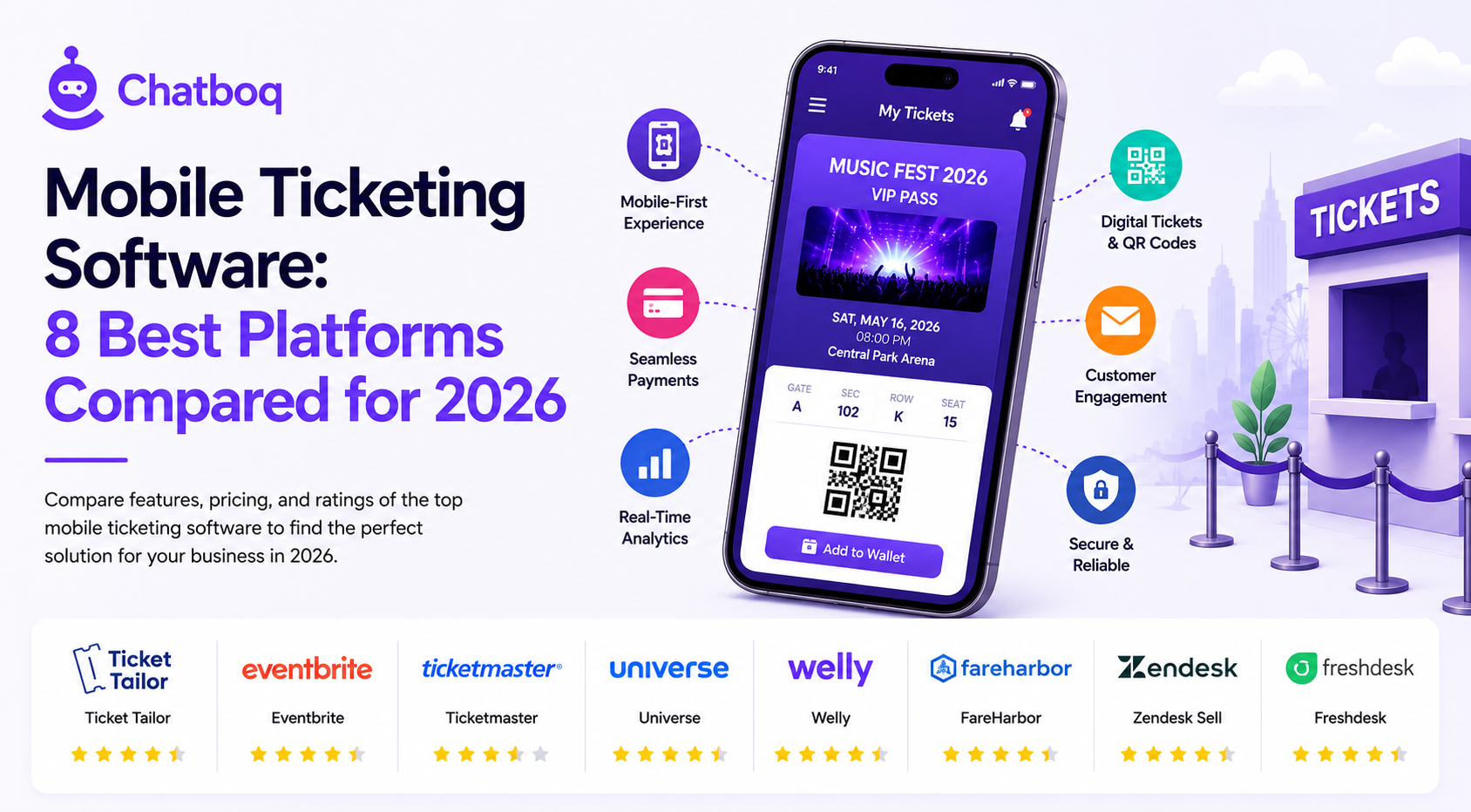
The best mobile ticketing software platforms include SECUTIX, TicketLeap, Seatlab, Eventbrite, Ticketmaster Presence, Universe, Humanitix, and Masabi, each designed for different industries, event sizes, and ticketing requirements.
1. SECUTIX
SECUTIX is an enterprise-grade ticketing and fan engagement platform built for professional sports clubs, major venues, and national sports federations, combining ticketing with CRM, loyalty, and access control in one unified system.
Best Suited For
Large sports organizations, national federations, and multi-venue operators that need advanced membership management, season ticket renewal workflows, and fan data integrated with their CRM and loyalty programs.
Who Should Avoid It
Small to mid-sized event organizers and nonprofits will find SECUTIX's enterprise implementation requirements and pricing structure disproportionate to their operational scale and budget.
Industries
Professional sports, Olympic and national sports bodies, large entertainment venues, and major cultural institutions requiring complex season pass, membership, and access control management.
Mobile Capabilities
SECUTIX supports mobile ticket delivery via dynamic QR codes and NFC, digital wallet integration with Apple Wallet and Google Wallet, and a white-label mobile app option for branded fan experiences.
Ticket Lifecycle
SECUTIX manages the complete ticket lifecycle from initial inventory creation through sale, delivery, access validation, post-event analytics, and membership renewal cycles tied to individual fan profiles.
Integrations
Integrations include CRM systems, payment gateways, access control hardware including turnstiles and NFC readers, and third-party data platforms supporting fan analytics and loyalty program management.
Implementation
Enterprise implementation typically requires dedicated onboarding support and configuration time measured in weeks to months, reflecting the platform's depth and the complexity of integrating with existing venue infrastructure.
Pricing
Enterprise licensing with pricing determined by contract negotiation rather than published tiers, generally suited to organizations with substantial ticket volume and complex multi-product requirements.
Limitations
SECUTIX's implementation complexity and cost make it impractical without a dedicated ticketing operations team, and its feature depth becomes overhead rather than value for simpler event formats.
2. TicketLeap
TicketLeap is a self-service event ticketing platform designed for small to mid-sized event organizers, offering straightforward online sales, QR-based mobile tickets, and a companion scanning app without enterprise complexity.
Best Suited For
Independent event organizers, community festivals, local venues, and small nonprofits that need reliable mobile ticketing without a complex implementation process or significant technical resources.
Who Should Avoid It
Large venues needing NFC validation, reserved seating with complex seat maps, or enterprise CRM integration will quickly outgrow TicketLeap's feature set.
Industries
Community events, local festivals, small concerts, charity fundraisers, and independent venue operators prioritizing simplicity over specialized feature depth.
Mobile Capabilities
TicketLeap generates QR code tickets delivered by email, supports a mobile scanning app for check-in staff, and offers basic digital wallet support, though NFC and advanced offline validation are limited.
Ticket Lifecycle
Organizers create events, set ticket types and capacity, buyers purchase online with tickets delivered via email QR code, and staff scan using the TicketLeap Check-In app at entry.
Integrations
TicketLeap integrates with Mailchimp, Zapier, and basic payment processing, though its integration ecosystem is narrower than enterprise platforms offering native Salesforce or HubSpot connectivity.
Implementation
Same-day self-service setup is realistic for standard event configurations, making it one of the fastest platforms to deploy for straightforward ticketing needs.
Pricing
Per-ticket fee model with fees applied to paid tickets, making it cost-effective for lower-volume events and free for free-ticket events.
Limitations
Limited reserved seating, no NFC support, and a narrower integration ecosystem restrict TicketLeap's suitability as event complexity increases.
3. Seatlab
Seatlab is a white-label ticketing platform built around reserved seating management, offering venues and promoters a fully branded ticketing experience with strong seat map customization and mobile validation.
Best Suited For
Mid-sized venues, sports clubs, and event promoters who need reserved seating with custom branding and want to retain ticket buyer data without sharing it with a marketplace platform.
Who Should Avoid It
General admission festivals and events without reserved seating needs will not leverage Seatlab's core differentiating capabilities.
Industries
Sports clubs, theaters, concert venues, and event promoters prioritizing white-label branding and reserved seating management over marketplace audience discovery.
Mobile Capabilities
Seatlab delivers QR code and NFC-compatible mobile tickets, supports Apple Wallet and Google Wallet integration, and provides a mobile scanning app for box office and entry staff.
Ticket Lifecycle
Event and seat map creation, tiered pricing setup, online sales through a branded interface, mobile ticket delivery, and NFC or QR validation at entry gates with real-time attendance reporting.
Integrations
API availability for custom integrations, with connectivity to payment gateways including Stripe and established integration paths for CRM and marketing platforms.
Implementation
Moderate implementation timeline, with seat map configuration and white-label setup requiring more configuration than general admission platforms, though typically achievable without enterprise-level professional services.
Pricing
Per-ticket fee structure, with white-label and enterprise options available for higher-volume organizations needing custom branding.
Limitations
Marketplace discovery is absent since Seatlab is a white-label platform, meaning organizers are responsible for driving their own audience traffic without the built-in discovery that marketplace platforms like Eventbrite offer.
4. Eventbrite
Eventbrite is the most widely adopted general-purpose event ticketing marketplace, combining online ticket sales with audience discovery through its consumer platform and supporting mobile tickets for a broad range of event types.
Best Suited For
Independent event organizers and promoters who benefit from Eventbrite's built-in audience discovery and trust as a recognized consumer ticketing destination.
Who Should Avoid It
Organizations requiring full white-label control, complex NFC validation, or deep enterprise CRM integration will find Eventbrite's customization depth and feature set limiting.
Industries
Festivals, conferences, workshops, community events, nightlife, and creative events where Eventbrite's consumer marketplace drives meaningful ticket discovery.
Mobile Capabilities
Eventbrite delivers mobile QR tickets, supports the Eventbrite Organizer app for check-in, and offers basic Apple Wallet integration, with NFC support limited compared to dedicated enterprise venues.
Ticket Lifecycle
Event creation, ticket type and pricing setup, embedded or hosted ticket purchase, QR code delivery, mobile check-in scanning, and post-event attendance reporting within the Eventbrite dashboard.
Integrations
Eventbrite integrates with Mailchimp, HubSpot, Salesforce, Zoom, and Zapier, with a public API enabling additional custom integration workflows.
Implementation
Self-service setup is fast for standard events, typically achievable within hours for general admission configurations without reserved seating complexity.
Pricing
Per-ticket fee model with fees applied to paid tickets and optional fee absorption by the organizer rather than the buyer.
Limitations
Eventbrite's marketplace model means buyer data and relationships are partially shared with the platform, and transaction fees add up meaningfully at scale compared to white-label alternatives.
5. Ticketmaster Presence
Ticketmaster Presence is the access control and mobile ticketing technology platform within the Ticketmaster ecosystem, providing enterprise-grade mobile entry solutions for major venues and live events.
Best Suited For
Large arenas, stadiums, major concert venues, and sports teams already operating within the Ticketmaster ecosystem that need robust entry control at scale.
Who Should Avoid It
Independent event organizers outside the Ticketmaster ecosystem will have limited access to Presence as a standalone product.
Industries
Major music venues, professional sports stadiums, arenas, and large-scale live entertainment operations within the Ticketmaster partner network.
Mobile Capabilities
Full mobile ticket delivery via dynamic QR codes and NFC, digital wallet integration, and anti-scalping controls including transfer limits and identity verification at point of entry.
Ticket Lifecycle
Inventory allocation within Ticketmaster's system, mobile delivery with rotating QR codes, NFC or QR validation at entry gates, and real-time attendance reporting within the Presence management interface.
Integrations
Deep integration within the broader Ticketmaster and Live Nation ecosystem, with enterprise integrations for access control hardware, CRM, and venue management systems.
Implementation
Enterprise implementation managed through Ticketmaster's venue partnership process, not available as self-service setup.
Pricing
Enterprise pricing negotiated through the Ticketmaster partner relationship rather than published standalone tiers.
Limitations
Availability is largely restricted to venues and organizations within the Ticketmaster partner ecosystem, limiting adoption by independent operators.
6. Universe
Universe is a self-service event ticketing platform with a strong focus on community and cause-driven events, offering mobile ticketing, recurring events, and free event support alongside paid ticket sales.
Best Suited For
Community organizations, nonprofits, recurring event organizers, and creators who want flexible ticketing without per-ticket fees for free events.
Who Should Avoid It
High-volume commercial events needing NFC validation, complex reserved seating, or enterprise analytics will find Universe's feature depth insufficient.
Industries
Community events, arts and culture, nonprofit fundraisers, fitness classes, and recurring community programming where flexible recurring event management matters.
Mobile Capabilities
Mobile QR ticket delivery, Apple Wallet integration, and a companion check-in app, with NFC and advanced offline validation currently limited.
Ticket Lifecycle
Event creation with recurring scheduling support, ticket type setup, mobile QR delivery, check-in app scanning, and basic attendance reporting post-event.
Integrations
Stripe payment integration, Zapier connectivity, and basic third-party connectivity, with a narrower native integration ecosystem than enterprise platforms.
Implementation
Self-service with fast setup for standard configurations, particularly straightforward for recurring event formats.
Pricing
Per-ticket fee on paid tickets, with free events available at no cost, making it cost-effective for mixed paid and free event programming.
Limitations
Limited NFC support, basic analytics, and a narrower integration ecosystem restrict Universe's suitability as event or organizational scale increases.
7. Humanitix
Humanitix is a nonprofit ticketing platform that donates booking fee revenue to charitable causes, providing full mobile ticketing functionality while differentiating through its social impact model.
Best Suited For
Nonprofits, charities, social enterprises, and cause-aligned event organizers who want a capable ticketing platform whose fees support charitable programs.
Who Should Avoid It
Commercial event organizers without a social impact alignment will find equivalent functionality at comparable pricing from platforms without the charitable model as a differentiating factor.
Industries
Nonprofit events, charity fundraisers, social enterprise conferences, community festivals, and education sector events.
Mobile Capabilities
QR code mobile tickets, Apple Wallet and Google Wallet integration, and a mobile check-in app for event staff, with capability broadly comparable to mid-tier platforms in this category.
Ticket Lifecycle
Event creation, ticket type and pricing setup, mobile QR delivery, check-in app scanning, and attendance reporting, with all surplus fees directed to partnered charitable programs.
Integrations
Stripe payment processing, Mailchimp, Salesforce, and Zapier connectivity, with a reasonable integration ecosystem for the nonprofit and social sector market.
Implementation
Self-service setup comparable to other mid-tier platforms, typically achievable same-day for standard general admission event configurations.
Pricing
Booking fees comparable to Eventbrite, with the surplus directed to charity rather than to platform profit, making the true cost to organizers similar while the social impact differs.
Limitations
Feature depth for enterprise venues and complex seating configurations is limited compared to dedicated venue-focused platforms, keeping Humanitix best suited to its core nonprofit and community market.
8. Masabi
Masabi is a Justride platform provider specializing in mobile ticketing for public transportation, offering account-based ticketing, barcode and NFC validation, and fare collection integration for transit agencies.
Best Suited For
Public transit agencies, rail operators, and mobility-as-a-service platforms needing certified account-based mobile ticketing with integration into existing fare collection infrastructure.
Who Should Avoid It
Event ticketing organizations have no use for Masabi's transit-specific account-based ticketing architecture and fare system integrations.
Industries
Urban transit agencies, commuter rail, bus rapid transit, metro systems, and multi-modal mobility operators in both established and emerging transit markets.
Mobile Capabilities
Barcode and NFC mobile ticket delivery, account-based ticketing allowing travel across services without pre-purchased tickets, and offline validation through cached fare data on handheld readers.
Ticket Lifecycle
Account creation, mobile pass purchase or auto-top-up, barcode or NFC presentation at validators, real-time fare deduction or pass validation, and ridership reporting for agency analytics.
Integrations
Integration with transit agency back-office systems, national rail networks, fare management platforms, and account-based ticketing infrastructure including ITSO and EMV standards where required.
Implementation
Enterprise implementation is managed through Masabi's agency partnership model, with timelines reflecting transit agency procurement and infrastructure integration complexity.
Pricing
Enterprise licensing negotiated through agency contracts, reflecting the scale and infrastructure integration requirements of public transit deployments.
Limitations
Masabi is exclusively built for transit, with no applicability to event, venue, or general admission ticketing use cases outside the transportation sector.

 ChatGPT
 Perplexity
 Claude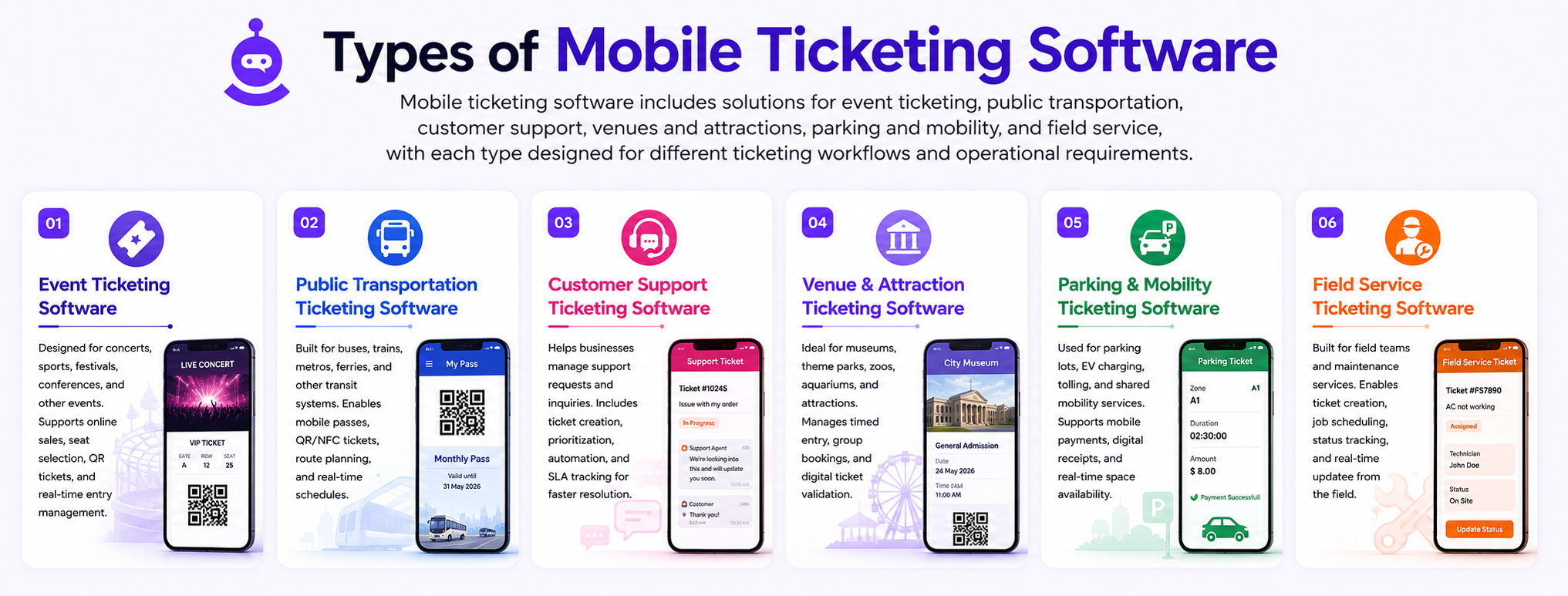



Leave a Comment
Your email address will not be published. Required fields are marked *
By submitting, you agree to receive helpful messages from Chatboq about your request. We do not sell data.