
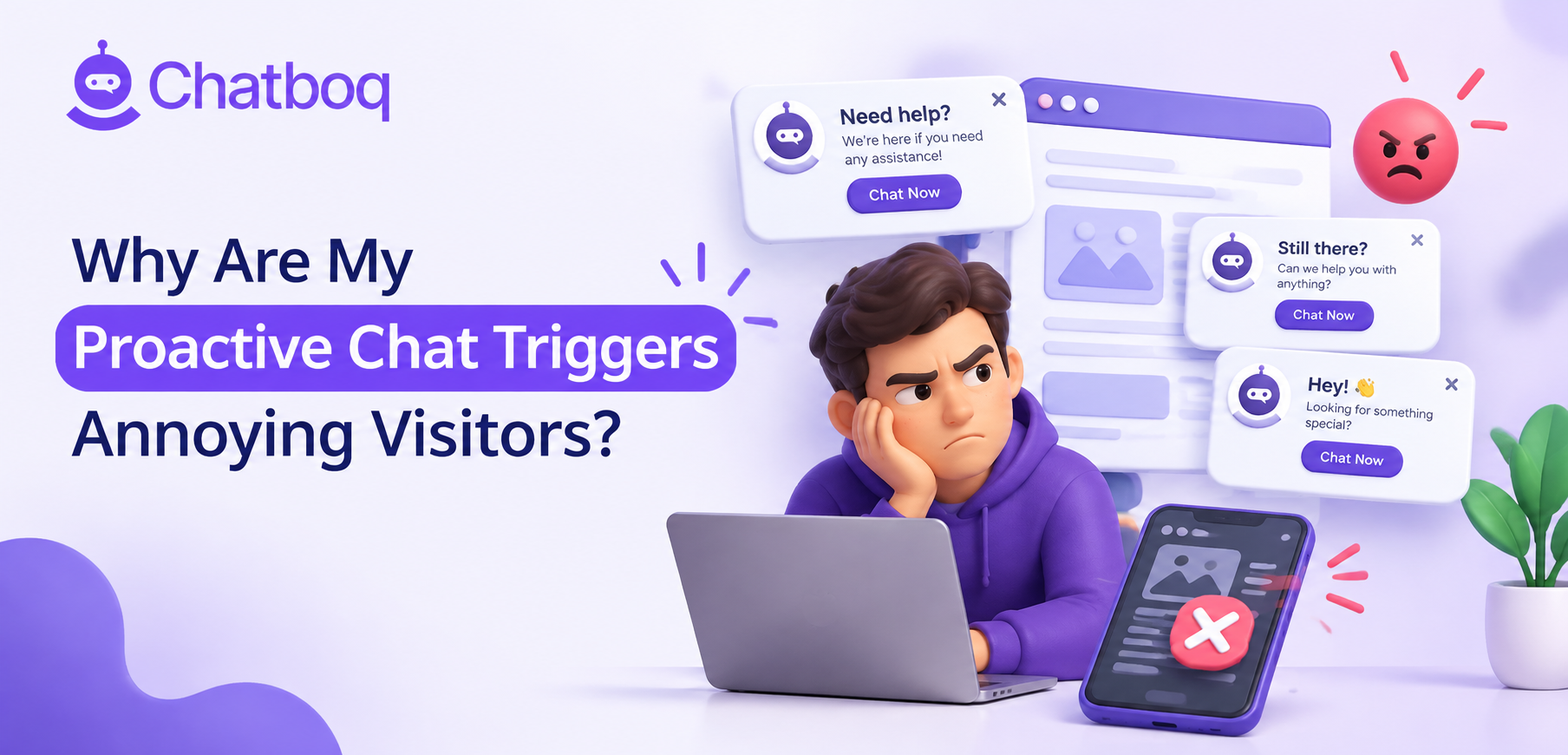
Dismissal rate, instant closes and falling acceptance on previously good triggers all indicate annoyance before anyone complains.
Dismissal rate
The proportion of invitations dismissed rather than engaged with is the direct measure, and a rising figure is the earliest available warning.
Most teams track acceptance and ignore dismissal, which means the cost side of the equation is invisible to them.
Instant closes
Invitations dismissed within a second or two were not read, which means the visitor is reacting to the interruption rather than to the message.
A high proportion of these is the clearest possible sign that the trigger itself is the problem rather than its wording.
Falling acceptance on good triggers
When a trigger that performed well declines without changing, the cause is usually other triggers teaching visitors to dismiss reflexively.
This spillover pattern distinguishes fatigue from a problem with any individual trigger.
The widget being ignored entirely
Falling interaction rate alongside high proactive volume indicates visitors have stopped seeing the widget as something worth engaging with.
At this point the proactive programme is costing more than it produces, which is worth establishing before defending it.
Listening to what customers say
Complaints about popups appear in support conversations and reviews well before anyone examines the dismissal data.
Searching transcripts for mentions of the widget is a quick check that occasionally settles the question immediately.
 ChatGPT
 Perplexity
 Claude





Leave a Comment
Your email address will not be published. Required fields are marked *
By submitting, you agree to receive helpful messages from Chatboq about your request. We do not sell data.