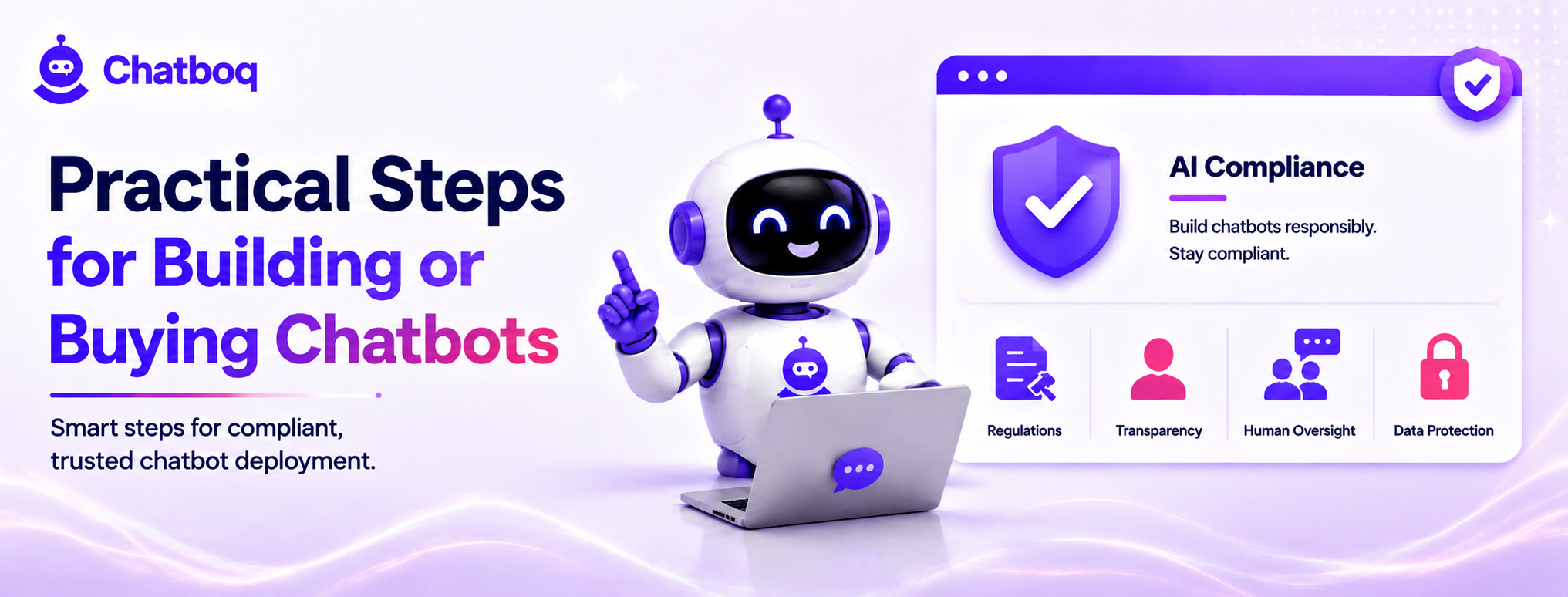
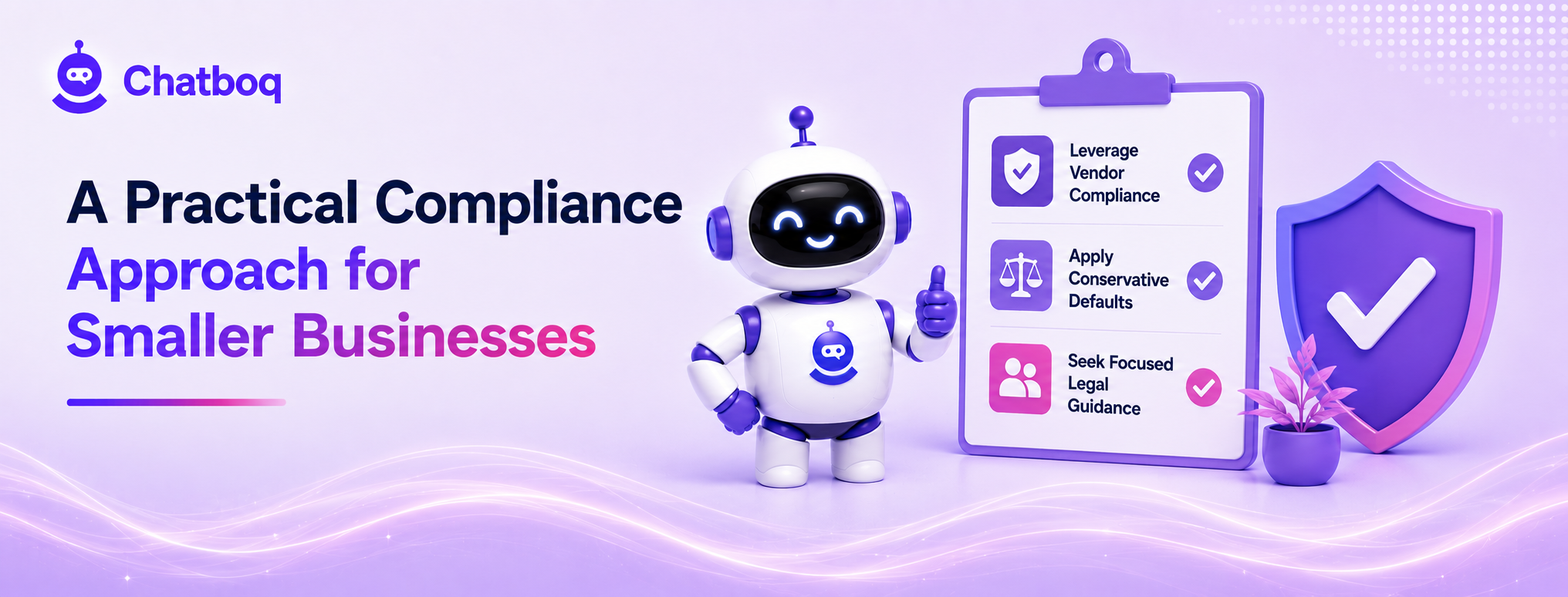
Practical steps include genuinely knowing which regulations apply to the specific markets a business serves, building disclosure and human escalation in from day one rather than retrofitting it later, documenting decision logic for any consequential action, choosing vendors genuinely investing in their own compliance posture, and monitoring regulatory developments on an ongoing, continuing basis.
Step 1: Know which regulations apply to your markets
Understanding genuinely which regulations apply based on where a business's customers are actually located is the essential first step, since obligations can vary considerably by jurisdiction served.
Step 2: Build in disclosure and human escalation from day one
Designing disclosure and a genuine human escalation path in from the very start, rather than retrofitting these elements later, is considerably more efficient and reliably compliant than adding them after the fact.
Step 3: Document decision logic for consequential actions
Maintaining genuine, thorough documentation of how a chatbot's decision logic works for any consequential action supports both regulatory compliance and internal accountability if a decision is later questioned.
Step 4: Choose vendors that are genuinely investing in compliance
Selecting a vendor genuinely investing real resources in its own compliance posture, rather than treating regulation as an afterthought, reduces a business's own compliance burden and risk when relying on that vendor's technology.
Step 5: Monitor regulatory developments on an ongoing basis
Given how quickly this regulatory landscape continues to evolve, committing to genuinely ongoing monitoring, rather than a one-time compliance check, keeps a business's practices current as requirements continue to develop.

 ChatGPT
 Perplexity
 Claude



Leave a Comment
Your email address will not be published. Required fields are marked *
By submitting, you agree to receive helpful messages from Chatboq about your request. We do not sell data.