
Cost per ticket made sense under assumptions that were reasonable when it became standard.
Roughly uniform work
When most contacts were similar in length and difficulty, dividing cost by count produced a meaningful unit.
The assumption of comparability is what made the arithmetic informative rather than arbitrary.
One channel
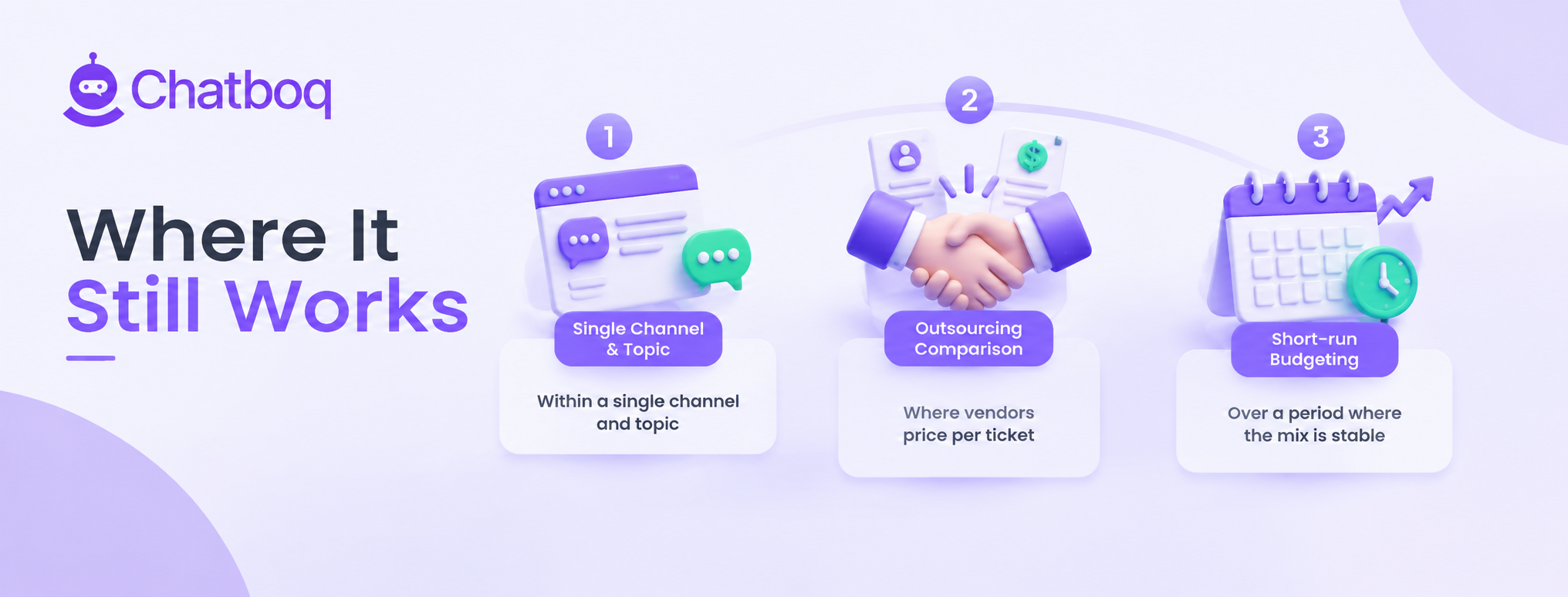
A single-channel operation had one cost structure, which meant one figure described the whole thing.
Multi-channel operations blend structures with very different economics into one number.
Capacity planning
Forecast volume multiplied by cost per ticket gave a budget, which was the primary use and worked adequately.
This use survives partially and requires the mix to be stable.
Outsourcing comparison
Per ticket pricing made vendor comparison straightforward, which is why the metric persists in sourcing contexts.
This remains its strongest surviving application.
 ChatGPT
 Perplexity
 Claude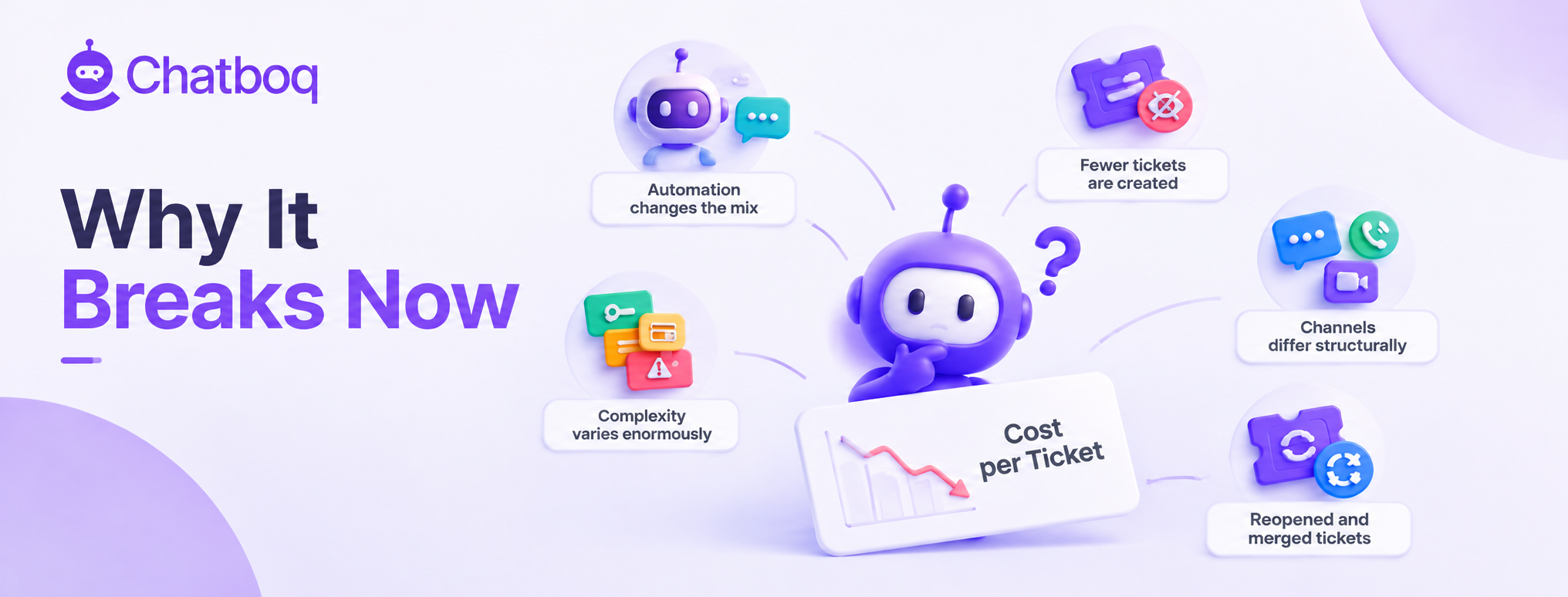





Leave a Comment
Your email address will not be published. Required fields are marked *
By submitting, you agree to receive helpful messages from Chatboq about your request. We do not sell data.