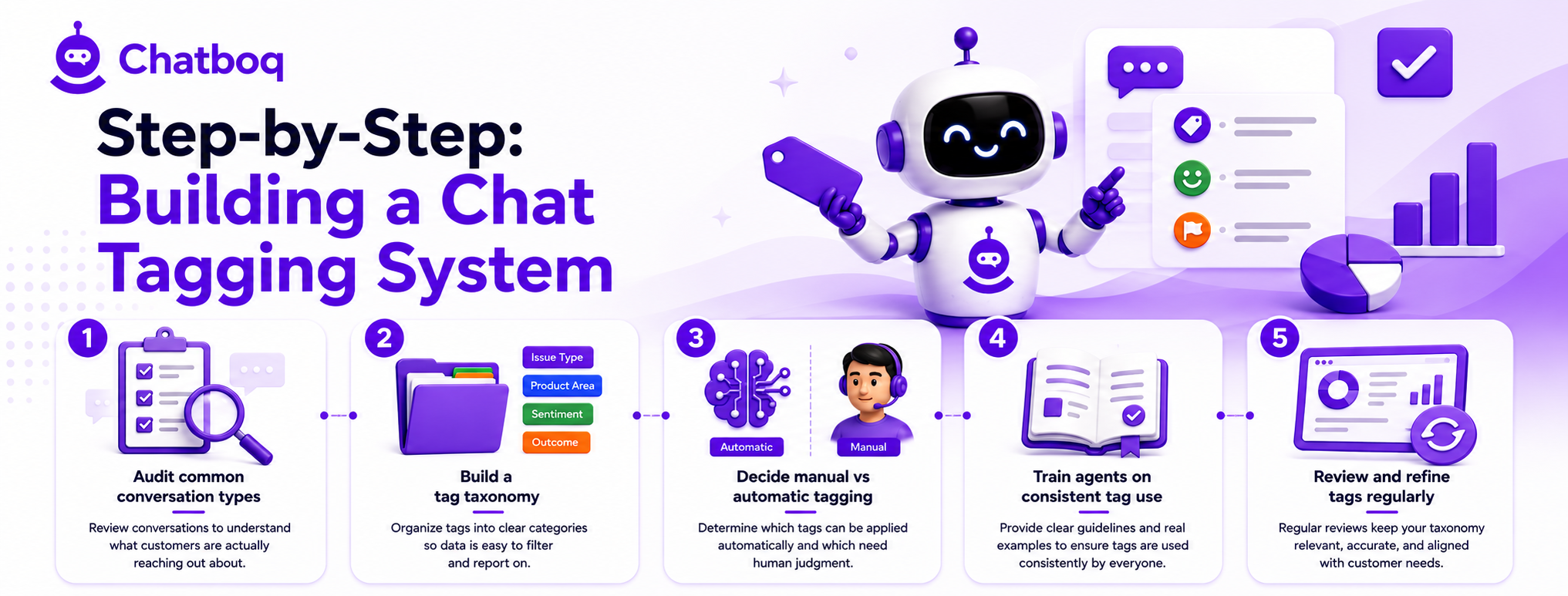
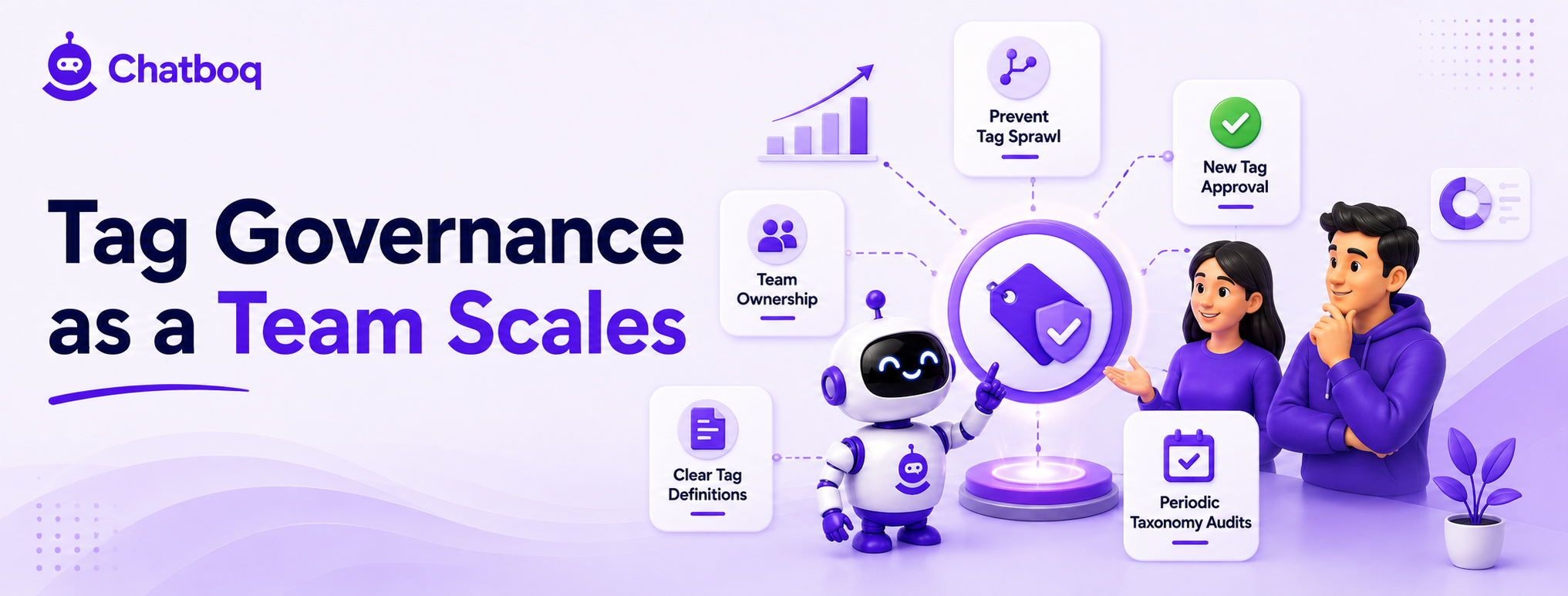
Building a tagging system that actually holds up over time involves auditing common conversation types first, building a genuinely well-structured taxonomy from that audit, deciding where manual versus automatic tagging makes sense, training the team on consistent usage, and reviewing the whole system periodically to catch drift.
Step 1: Audit common conversation types
Reviewing a representative sample of recent conversations before building any tag list ensures the resulting taxonomy reflects what customers are actually contacting support about, rather than a theoretical structure built purely from internal assumptions.
Step 2: Build a tag taxonomy
Organizing tags into clear categories, issue type, product area, sentiment, outcome, rather than one long, undifferentiated list, makes the resulting data considerably easier to filter and report on later.
Step 3: Decide manual vs automatic tagging
Deciding which tags can be reliably applied automatically based on conversation content, and which genuinely require human judgment, shapes how much of the tagging burden falls on agents versus how much the system can handle on its own.
Step 4: Train agents on consistent tag use
A brief, clear reference guide showing exactly when each tag applies, ideally with real examples, prevents the kind of inconsistent, individually-interpreted tagging that quietly undermines the reliability of the resulting reports.
Step 5: Review and refine tags regularly
Periodically reviewing which tags are actually being used, which have gone stale, and which new categories have emerged keeps the taxonomy genuinely reflective of current conversation patterns rather than frozen at whatever it looked like when first built.


 ChatGPT
 Perplexity
 Claude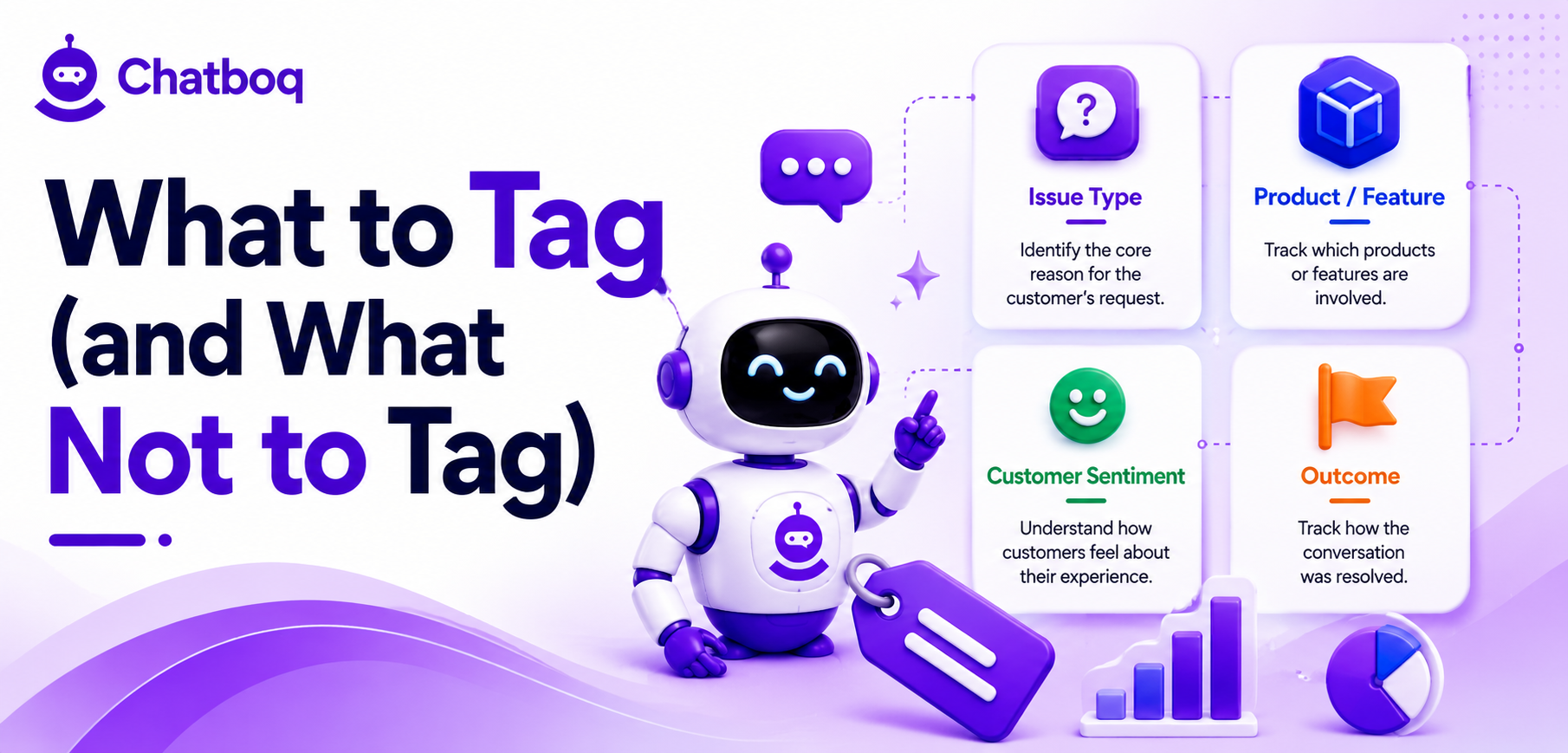





Leave a Comment
Your email address will not be published. Required fields are marked *
By submitting, you agree to receive helpful messages from Chatboq about your request. We do not sell data.