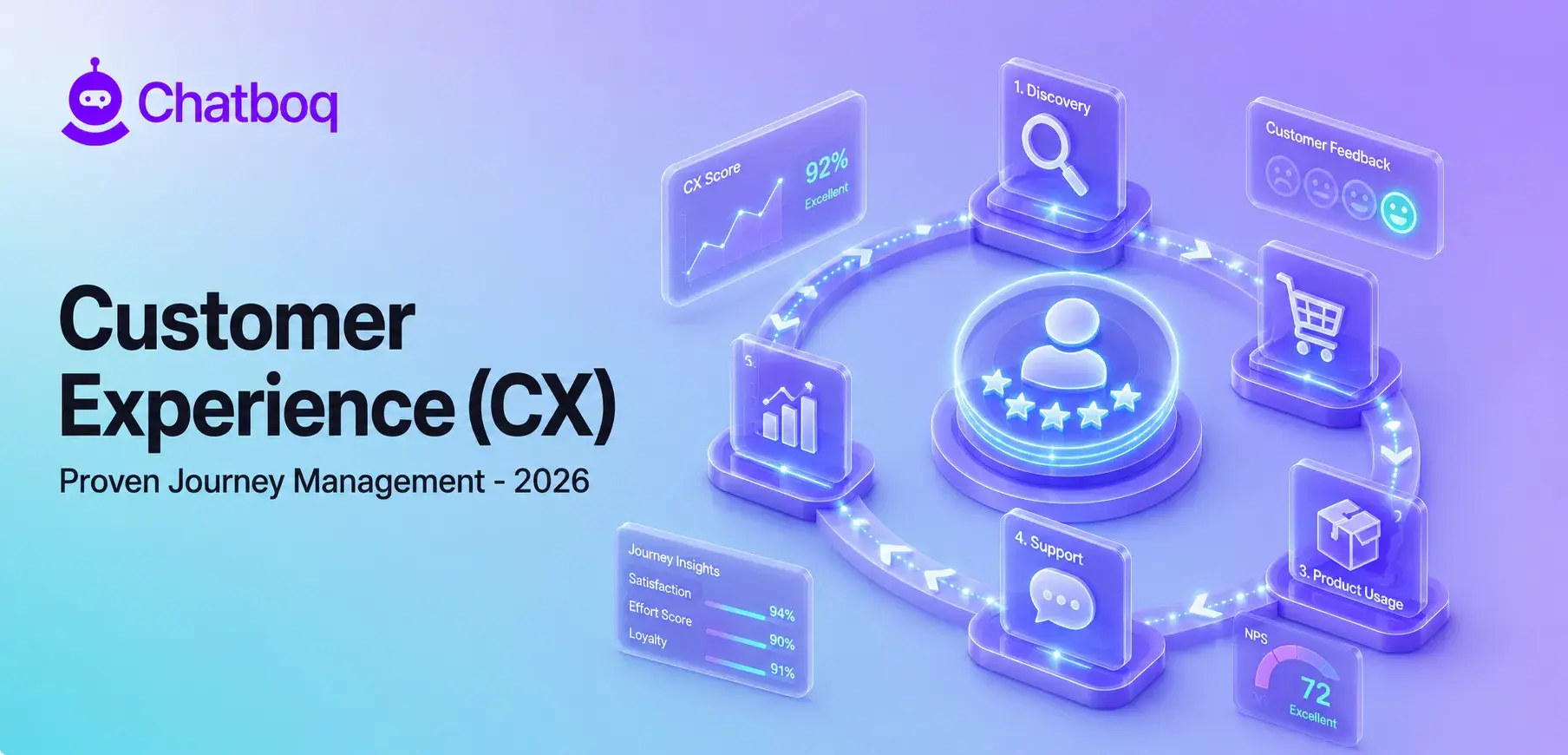
Businesses improve customer experience by reducing friction across the customer journey, improving support response and resolution speed, personalizing interactions with available customer data, deploying automation for predictable request types, and collecting and acting on customer feedback continuously.
Simplify Customer Journeys
Journey simplification removes steps, channels, and decision points that require unnecessary customer effort. A checkout process requiring account creation before purchase adds a step that reduces conversion. A support process requiring customers to navigate three menus before reaching a relevant agent adds friction that reduces CSAT.
Simplification requires identifying the highest-effort stages in the current journey through CES data and removing or streamlining each friction point. Journey simplification does not require rebuilding the entire CX system. Targeted improvements to the two or three highest-effort touchpoints produce disproportionate satisfaction improvements because high-effort interactions carry the greatest churn risk.
Improve Response and Resolution Time
Response time is the most consistently cited driver of customer satisfaction in support interactions across industries. A customer who submits a support request and waits 48 hours for a first response forms a negative CX impression that persists regardless of the quality of the eventual resolution.
First response time targets vary by channel: live chat requires responses within 60 seconds, email within 4 to 8 hours, and phone within 2 minutes of queue entry. Resolution time, measured from first contact to full resolution, determines CES. Issues resolved in a single interaction produce lower effort scores than issues requiring multiple contacts over multiple days. Businesses that reduce average resolution time from 3 days to 1 day improve CSAT scores by an average of 12 to 18 percentage points, according to Zendesk's Customer Experience Trends Report 2023.
Personalize Interactions
Personalization improves CX by reducing the effort customers invest in context-setting and by delivering communication that is relevant to their specific situation. A support agent who opens a conversation with the customer's name, account tier, last interaction date, and current open tickets eliminates the need for the customer to re-establish context.
A marketing email triggered by the customer's specific product usage behavior (feature adoption milestone, approaching plan limit) is more relevant than a generic campaign message. CRM systems store the interaction history, behavioral data, and preference data required to deliver personalized interactions at scale. Personalization fails when CRM data is incomplete, siloed across departments, or not accessible to the agent or system handling the interaction.
Use Automation and Chatbots
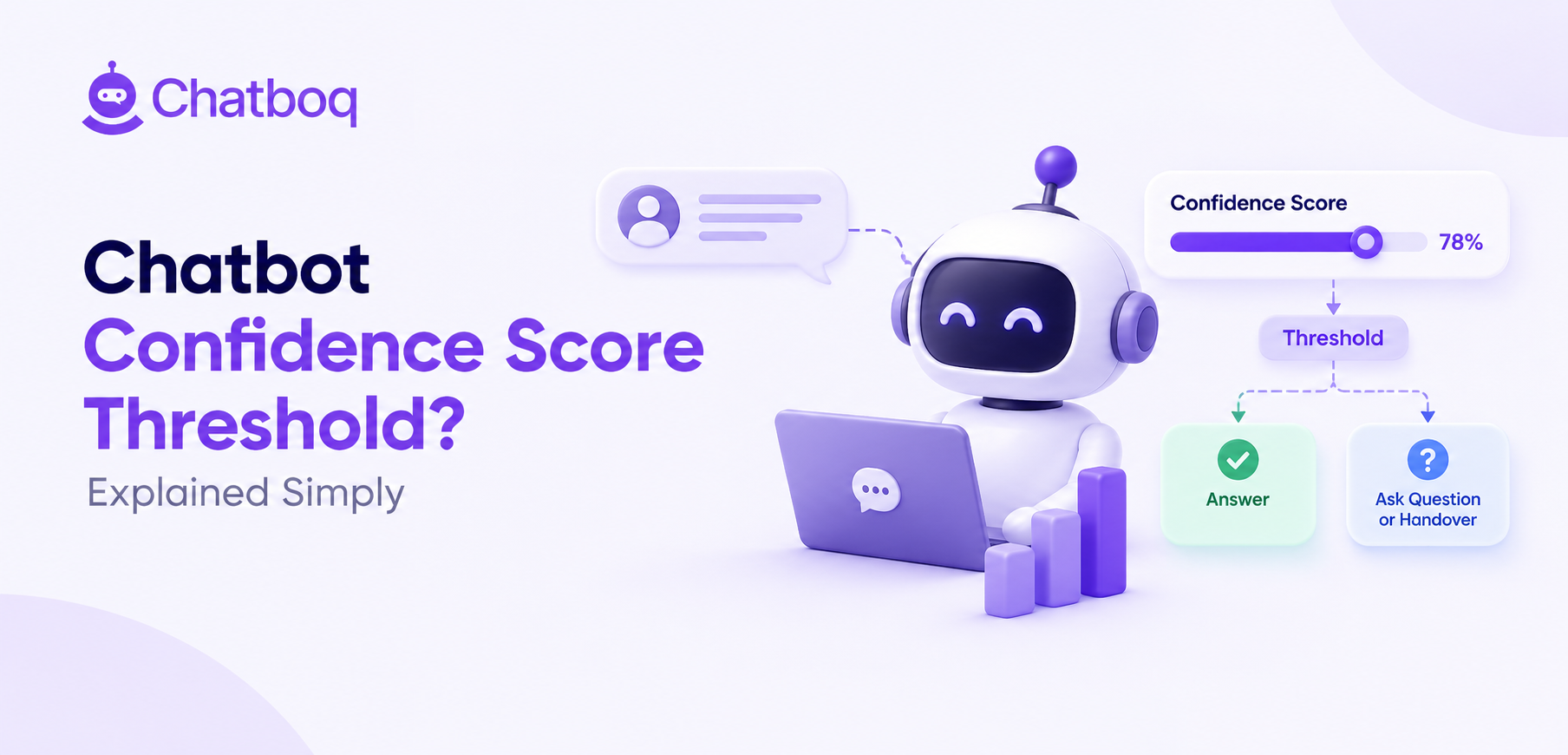
Automation reduces CX friction for predictable, high-volume request types by providing instant responses without queue wait times. AI chatbots handle account inquiries, order status checks, basic troubleshooting, and information requests at any hour without requiring human agent availability.
Automation improves CX when it resolves the customer's issue without requiring a transfer to a human agent. Automation reduces CX when it fails to recognize complex queries and routes customers through multiple chatbot menus before connecting to a human. The CX benefit of automation depends on the accuracy of the automation's scope: deploying chatbots for query types they cannot reliably handle produces higher effort scores than routing those queries directly to human agents.
Continuously Collect and Act on Feedback
Feedback collection requires a systematic process: deploy CSAT surveys after each support interaction, NPS surveys quarterly, and CES surveys after high-effort touchpoints such as onboarding, contract renewal, and billing changes. Feedback data identifies the specific touchpoints where satisfaction is lowest.
Acting on feedback requires assigning ownership of each CX improvement to a specific team, setting a timeline for implementation, and re-measuring the touchpoint after the change to confirm improvement. Businesses that collect feedback without a defined action process accumulate data without producing CX improvement. Customers who complete feedback surveys and see no visible change in subsequent interactions reduce survey participation rates over time, degrading the quality of future feedback data.

 ChatGPT
 Perplexity
 Claude




Leave a Comment
Your email address will not be published. Required fields are marked *
By submitting, you agree to receive helpful messages from Chatboq about your request. We do not sell data.