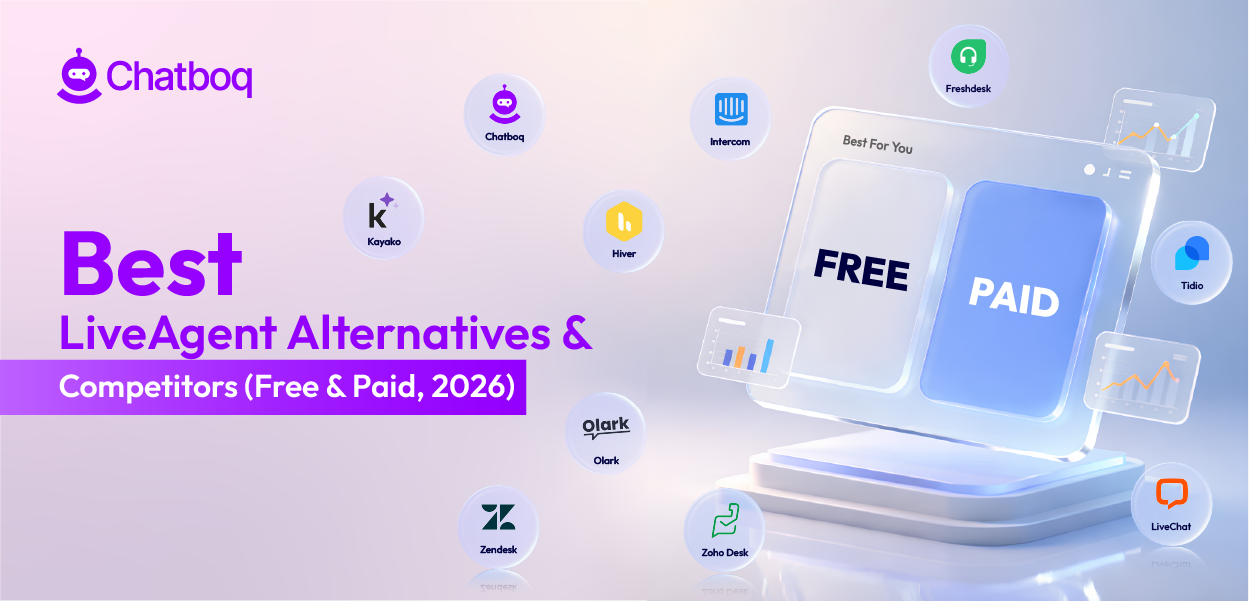
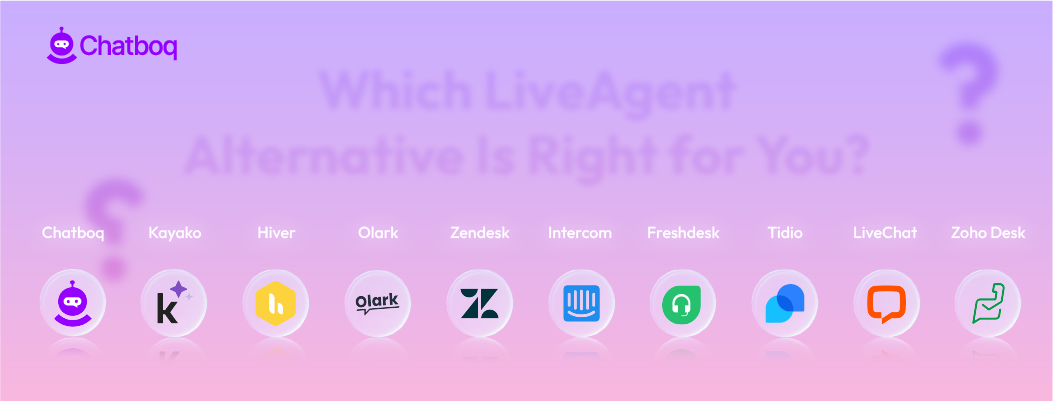
Below are the 10 best LiveAgent alternatives in 2026. Each platform solves a different operational need. Some focus on AI automation and workflow control. Others prioritize CRM integration, shared inbox collaboration, live chat performance, or affordable pricing for growing support teams.
1. Chatboq - All-in-One AI Chatbot & Live Chat Platform Alternative to LiveAgent
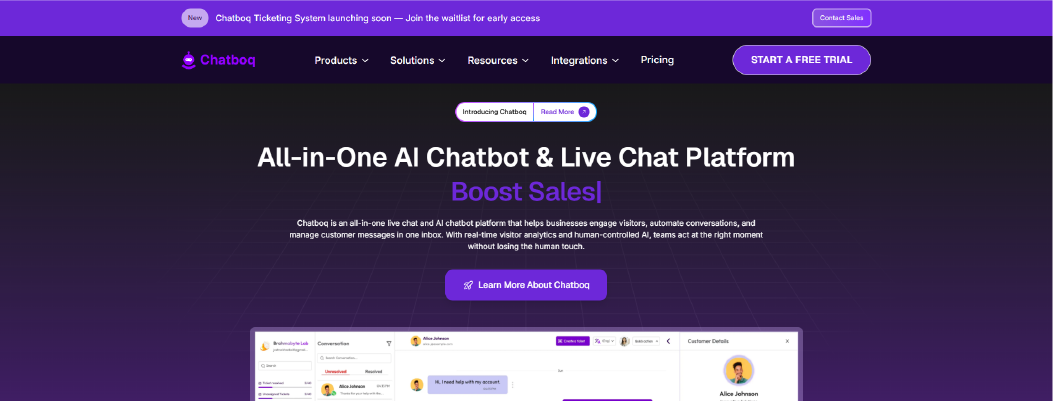
Chatboq is an all-in-one AI chatbot and live chat platform built for teams that need structured ticket management, real-time messaging, and controlled workflow automation inside a single workspace. It combines live chat, shared inbox management, AI reply assistance, SLA governance, and multi-channel integrations without relying on browser extensions for core functionality.
Chatboq helps teams reduce repeat questions while keeping routing, escalation, and SLA control in one place. It reduces repetitive queries through AI agents while keeping human agents in control of escalations, routing, and SLA policies. For teams evaluating LiveAgent alternatives, Chatboq positions itself as an automation-first support system rather than only a ticketing layer.
Why It’s a Strong LiveAgent Alternative
Compared to LiveAgent’s rule-based automation model, Chatboq offers a more structured workflow system built around AI automation and SLA control. LiveAgent manages tickets across channels effectively, but advanced routing and CRM sync can require layered configuration as teams grow.
Chatboq reduces that complexity by combining real-time message sync with AI reply assistance and structured ticket workflows. It supports SLA policies, priority logic, and automatic escalation when tickets approach resolution limits.
For teams scaling support operations, Chatboq provides clearer workflow control, stronger governance, and AI training based on FAQs, documents, and past conversations. It works best when you need AI-assisted replies plus structured ticket workflows, not just multichannel ticket intake.
Chatboq Core Strengths
-
AI-powered help desk software
-
AI-trained reply assistant with knowledge training
-
Live chat and shared inbox with real-time message sync
-
Structured workflow automation with SLA enforcemen
-
Ticket management with Kanban view and merge support
-
Agent assignment with role-based permissions
-
Custom roles and workspace-level access control
-
Visitor tracking with IP and country view
-
Multi-channel messaging integrations (Messenger, WhatsApp, Slack, Telegram, Discord, Instagram)
-
CRM integrations including Zoho CRM and Pipedrive
-
Email-to-ticket creation and email templating
Where It Differs from LiveAgent
LiveAgent is primarily a help desk and ticketing system.
Chatboq adds automation and orchestration on top of support.
LiveAgent focuses on handling conversations across channels.
Chatboq adds structured workflow control on top of those conversations.
LiveAgent relies primarily on automation rules.
Chatboq layers AI automation and knowledge training on top of structured workflows.
LiveAgent tracks tickets.
Chatboq tracks tickets with structured SLA enforcement, warning thresholds, and automatic priority updates.
LiveAgent supports multi-agent collaboration across channels.
Chatboq extends this with custom roles, workspace-level separation, and detailed ticket history tracking.
LiveAgent centers support around ticket handling.
Chatboq places more emphasis on preventing escalation through automation and SLA alerts.
Limitations
-
Not built for internal team messaging
-
Requires basic workflow planning before setup
-
More structured than simple live chat tools
-
Teams must define SLA rules and routing logic during implementation
Best For
-
Ecommerce support teams managing live chat and ticket workflows
-
DTC brands scaling beyond basic automation rules
-
SaaS companies requiring SLA tracking and CRM sync
-
Teams that need predictable billing and structured automation
Pricing Snapshot
If your team needs AI-assisted replies, SLA tracking, and structured workflows in one workspace, Chatboq is a practical LiveAgent alternative.
2. Kayako - Unified Customer Conversation Platform Alternative to LiveAgent
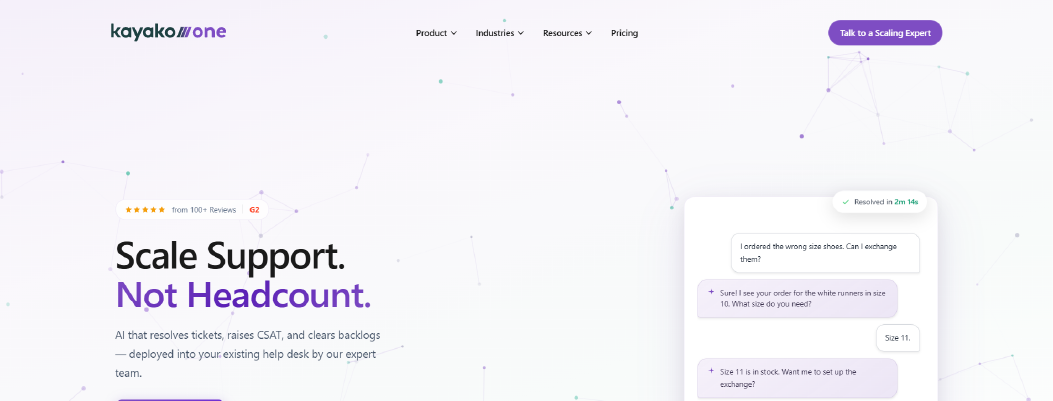
Kayako is a customer support platform designed to unify conversations across email, live chat, and social channels into one shared timeline. It focuses on giving agents full conversation history in a single view so they understand context before replying.
Why It’s a Strong LiveAgent Alternative
Compared to LiveAgent’s ticket-first structure, Kayako takes a conversation-first approach. LiveAgent organizes work around tickets and routing rules, while Kayako centers support around a unified customer timeline.
Instead of separating email, chat, and social messages into isolated threads, Kayako connects them into one continuous conversation view. This reduces context switching and helps agents understand the full customer history before replying.
For teams dealing with fragmented conversations or repeated responses across channels, Kayako provides clearer visibility and a more connected support experience.
Kayako Core Strengths
-
Shared inbox with unified conversation history
-
Cross-channel messaging in one workspace
-
Built-in knowledge base and help center
-
Internal collaboration notes
-
Automation rules for ticket routing
-
SLA support for response tracking
Kayako helps agents see the full customer conversation history before replying, even when messages come from different channels. It reduces confusion when customers switch channels.
Where It Differs from LiveAgent
LiveAgent structures work around tickets.
Kayako structures work around conversations.
LiveAgent emphasizes automation layers and rule logic.
Kayako emphasizes conversation continuity and agent visibility.
LiveAgent supports complex SLA hierarchies.
Kayako focuses more on conversation flow and shared timeline clarity.
LiveAgent includes broad feature coverage across channels.
Kayako prioritizes unified conversation history over deep automation layering.
For teams that value visibility over workflow complexity, Kayako can feel simpler to operate.
Limitations
-
Automation depth is lighter compared to AI-focused platforms
-
Reporting customization is moderate
-
Advanced CRM integration options are limited compared to enterprise tools
-
May not suit teams needing heavy AI automation
Best For
-
Teams prioritizing conversation history visibility
-
SMBs needing shared inbox collaboration
-
Support teams handling multi-channel customer journeys
-
Businesses wanting simpler context management
Pricing Snapshot
For teams seeking a LiveAgent alternative that simplifies conversation visibility rather than expanding automation layers, Kayako provides a context-focused support platform.
Read more: Discover the best Kayako Alternative and choose the right one for your business.
3. Hiver - Gmail-Based Shared Inbox Alternative to LiveAgent
Hiver is a help desk platform that turns Gmail into a shared inbox for customer support. Instead of moving teams into a separate ticketing system, Hiver works inside Gmail and adds ticket tracking, assignment, and collaboration features.
Why It’s a Strong LiveAgent Alternative
Compared to LiveAgent’s standalone help desk model, Hiver takes a Gmail-native approach. LiveAgent requires agents to work inside a separate support platform, while Hiver turns Gmail into a structured shared inbox.
This reduces tool switching and simplifies onboarding. Agents continue using a familiar interface while gaining ticket assignment, SLA tracking, and internal collaboration features.
For teams whose support workflow is primarily email-based, Hiver lowers operational complexity and adds structure without introducing a full multi-channel ticket system.
Hiver Core Strengths
-
Gmail-native shared inbox
-
Ticket assignment and status tracking
-
Internal team notes
-
Basic analytics dashboard
-
Role-based access control
-
Integrations with common business tools
Hiver keeps support work inside Gmail, which reduces tool switching for email-heavy teams. It improves email-based support without adding heavy system layers.
Where It Differs from LiveAgent
LiveAgent runs as a standalone help desk platform.
Hiver embeds ticket management directly inside Gmail.
LiveAgent supports live chat, call center tools, and omnichannel routing.
Hiver focuses mainly on email management.
LiveAgent offers broader automation workflows.
Hiver provides lighter automation suitable for structured email handling.
LiveAgent is better suited for multi-channel support environments.
Hiver works best for teams centered on Gmail-based communication.
For organizations that want minimal disruption and already rely on Gmail, Hiver can feel more natural.
Limitations
-
Limited native live chat functionality
-
Automation depth is basic compared to AI-driven platforms
-
Reporting customization is moderate
-
Less suited for complex ecommerce support workflows
Best For
-
Teams running support primarily through Gmail
-
Small to mid-sized businesses
-
Organizations seeking low learning curve tools
-
Teams prioritizing shared inbox simplicity
Pricing Snapshot
-
Free forever
-
Growth - $25 /user/month
-
Pro - $65 /user/month
-
Elite - $105 /user/month
If your support work lives in Gmail, Hiver is a LiveAgent alternative that adds assignment, SLA reminders, and shared inbox structure without switching tools.
Discover the best Hiver Alternatives available on the market.
4. Olark - Live Chat–Focused Alternative to LiveAgent
Olark is a live chat software platform designed for teams that want simple, real-time website messaging. It focuses on helping businesses respond to visitors quickly without adding a full ticketing system layer.
Why It’s a Strong LiveAgent Alternative
Compared to LiveAgent’s structured ticket and SLA model, Olark offers a more streamlined approach centered on website live chat. It removes the need to configure layered ticket workflows or advanced routing logic before going live.
Olark focuses on real-time visitor conversations. Setup is simple, and teams can begin responding without building complex automation structures. This makes onboarding faster for small support teams.
For businesses comparing LiveAgent alternatives, Olark provides a lighter solution built around direct chat engagement rather than full help desk orchestration.
Olark Core Strengths
-
Website chat widget customization
-
Automated greetings and triggers
-
Basic chat routing rules
-
Chat analytics dashboard
-
CRM integrations with common tools
-
Simple setup and onboarding
Olark works well when your priority is fast website chat replies without building a full ticket system first.
Where It Differs from LiveAgent
LiveAgent is a full help desk platform with ticketing, SLA management, and omnichannel support.
Olark is primarily live chat software.
LiveAgent supports structured ticket workflows.
Olark centers on direct chat conversations.
LiveAgent offers broader automation and reporting depth.
Olark provides lighter automation suitable for real-time engagement.
LiveAgent works well for multi-channel support operations.
Olark works best for website chat-first teams.
For organizations that need simple visitor messaging without heavy ticket configuration, Olark can reduce operational overhead.
Limitations
-
No advanced ticket management system
-
Limited SLA enforcement features
-
Automation depth is basic
-
Not designed for large enterprise support environments
Best For
-
Small businesses focused on website chat
-
Teams needing simple real-time visitor engagement
-
Companies with low-to-moderate ticket volume
-
Businesses prioritizing fast setup over advanced workflow control
Pricing Snapshot
For teams seeking a LiveAgent alternative focused purely on live chat rather than full ticket management, Olark offers a lightweight and straightforward solution.
Check out the best Olark Alternatives in the market.
5. Zendesk - Enterprise-Grade Help Desk Alternative to LiveAgent
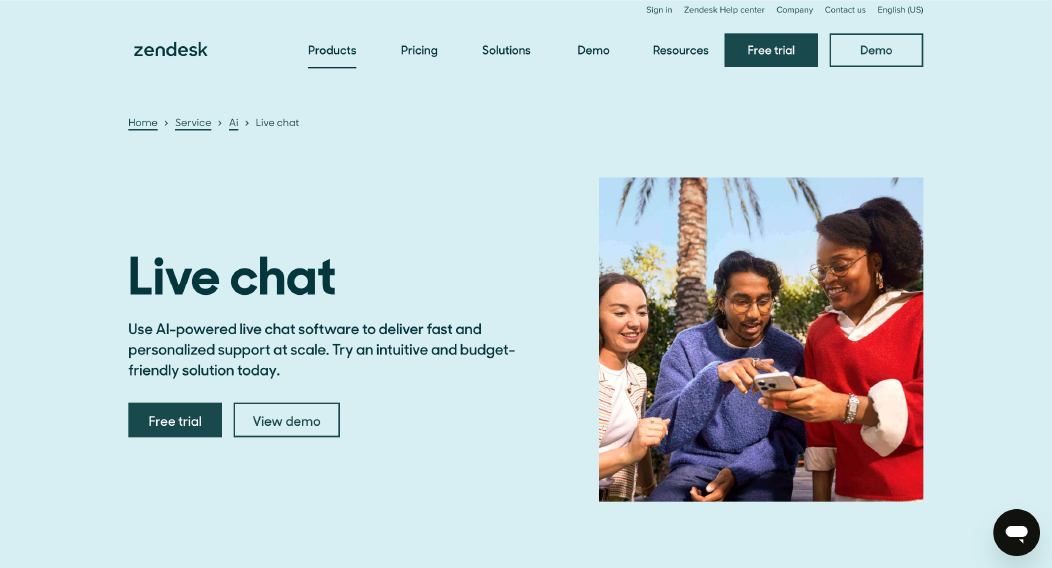
Zendesk is a full-scale customer support platform designed for teams that need structured workflows, advanced automation, and enterprise-grade reporting. It combines ticket management, live chat, voice, and messaging channels inside a unified agent workspace.
Why It’s a Strong LiveAgent Alternative
Compared to LiveAgent’s mid-market ticketing model, Zendesk provides a more scalable help desk structure. LiveAgent supports multi-channel routing and automation rules, but Zendesk expands automation control, reporting depth, and workflow customization.
Zendesk supports omnichannel support across email, chat, voice, and messaging within one system. It enables structured ticket routing, SLA enforcement, role-based permissions, and advanced analytics dashboards.
For growing teams handling large ticket volumes, Zendesk offers stronger operational control and long-term scalability.
Zendesk Core Strengths
Zendesk is often used for SLA enforcement, advanced routing, and detailed reporting when support volume grows.
Where It Differs from LiveAgent
LiveAgent is commonly adopted by small to mid-sized teams.
Zendesk is typically selected when enterprise governance and scale become priorities.
LiveAgent provides automation rules.
Zendesk provides deeper workflow automation and customization layers.
LiveAgent includes reporting.
Zendesk delivers more granular analytics and performance tracking.
LiveAgent is often chosen for cost-conscious scaling.
Zendesk is chosen for governance, customization, and enterprise-level control.
Limitations
-
Higher pricing compared to many affordable LiveAgent competitors
-
Setup can require structured planning
-
Feature depth may feel heavy for small teams
Best For
-
Mid-size to enterprise support teams
-
Organizations requiring advanced SLA governance
-
Businesses needing deep reporting and analytics
-
Teams managing high ticket volume across multiple channels
Pricing Snapshot
-
Free 14-day trial
-
Support Team - $25 per agent/month
-
Suite Team - $69 per agent/month
-
Suite Professional - $149 per agent/month
-
Suite Enterprise - $219 per agent/month
For teams seeking a LiveAgent alternative focused on enterprise-grade automation and reporting depth, Zendesk provides a scalable and structured support platform.
Check out the best Zendesk alternatives available on the market today.
6. Intercom - AI-Driven Customer Messaging Alternative to LiveAgent
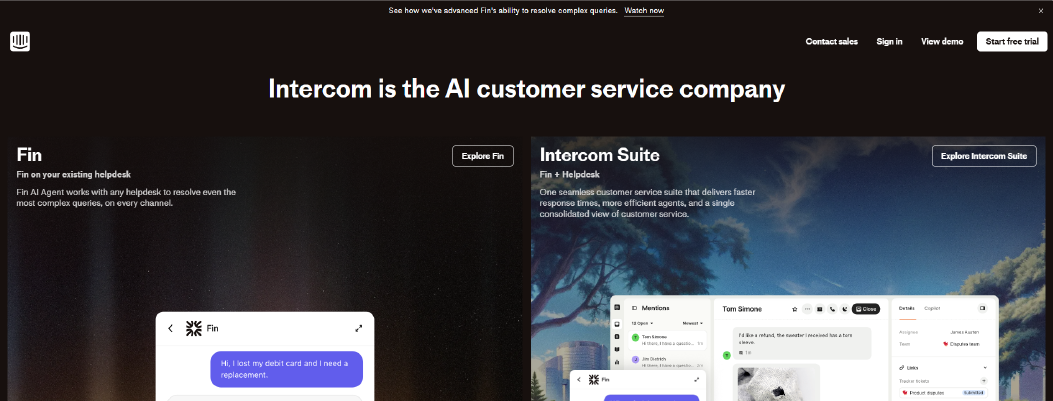
Intercom is a customer messaging platform built around AI agents, live chat, and in-app support. It focuses on proactive communication and automated resolution rather than traditional ticket-first workflows.
Why It’s a Strong LiveAgent Alternative
Compared to LiveAgent’s ticket-based structure, Intercom centers on conversational support powered by AI agents. LiveAgent manages tickets across channels, while Intercom aims to resolve questions before a ticket is created.
Intercom uses AI agents to handle common queries, guide users inside apps, and automate replies. It supports workflow automation, conversation routing, and CRM-style customer data tracking within the same platform.
For SaaS companies and product teams, this reduces manual workload and shortens response times.
Intercom Core Strengths
Intercom focuses on reducing ticket volume through automation and guided messaging.
Where It Differs from LiveAgent
LiveAgent is structured around tickets and SLA enforcement.
Intercom is structured around conversations and AI automation.
LiveAgent supports traditional help desk workflows.
Intercom emphasizes AI-driven engagement and in-app guidance.
LiveAgent works well for multi-channel service desks.
Intercom works well for SaaS and digital product support environments.
Intercom uses AI agents as a core feature.
LiveAgent relies more on rule-based automation.
Limitations
-
Pricing can increase with usage and contacts
-
May be complex for teams needing simple ticket workflows
-
Less focused on call center functionality
Best For
Pricing Snapshot
For teams seeking a LiveAgent alternative with stronger AI agents and proactive messaging, Intercom provides an automation-centered support platform.
Check out the top Intercom alternatives and select one that best suits your business.
7. Freshdesk - Scalable Help Desk Alternative to LiveAgent
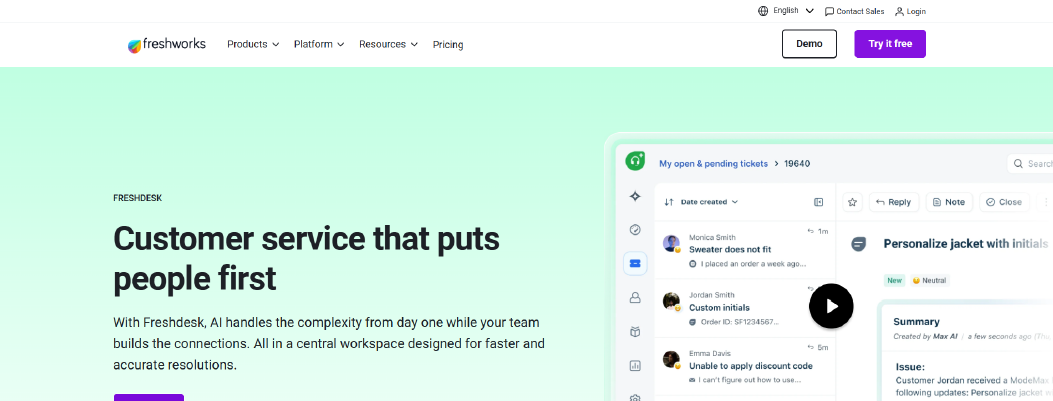
Freshdesk is a cloud-based help desk platform built for teams that need structured ticket management, automation, and multichannel support without enterprise-level complexity. It combines email, chat, phone, and social messaging into one support workspace.
Why It’s a Strong LiveAgent Alternative
Compared to LiveAgent’s layered configuration model, Freshdesk offers a more streamlined setup with tier-based packaging. It supports multichannel ticketing, automation workflows, and built-in reporting inside one unified platform.
Freshdesk includes automation rules for ticket routing, assignment, and status updates. It also provides SLA management, canned responses, and workflow automation that reduce repetitive tasks.
For SMB teams comparing LiveAgent competitors, Freshdesk delivers a balance between structured ticket control and easier onboarding.
Freshdesk Core Strengths
-
Multichannel ticket management
-
Automation rules for routing and assignment
-
Built-in knowledge base
-
Analytics dashboard with performance reports
-
CRM integrations within the Freshworks ecosystem
-
Marketplace integrations with third-party tools
Freshdesk uses tier-based plans, so teams can start with core ticketing and add automation features as volume grows.
Where It Differs from LiveAgent
LiveAgent provides broad help desk features across channels.
Freshdesk packages features into clearer tier levels.
LiveAgent emphasizes detailed customization and rule depth.
Freshdesk simplifies workflow automation for faster onboarding.
LiveAgent is often selected for cost flexibility.
Freshdesk balances pricing with predictable feature tiers.
Freshdesk is typically easier for new teams to configure without advanced setup planning.
Limitations
-
Advanced automation may require higher-tier plans
-
CRM depth is stronger within the Freshworks ecosystem
-
Enterprise-level customization is more limited compared to Zendesk
Best For
-
Small to mid-sized support teams
-
Growing businesses needing structured ticket workflows
-
SMBs wanting balanced automation without heavy configuration
-
Teams seeking predictable tier-based pricing
Pricing Snapshot
For businesses seeking an affordable LiveAgent alternative with structured automation and manageable setup, Freshdesk provides a scalable and balanced help desk solution.
Read More : Discover the best Freshdesk Alternatives available in the market.
8. Tidio - Chatbot-Driven Support Alternative to LiveAgent
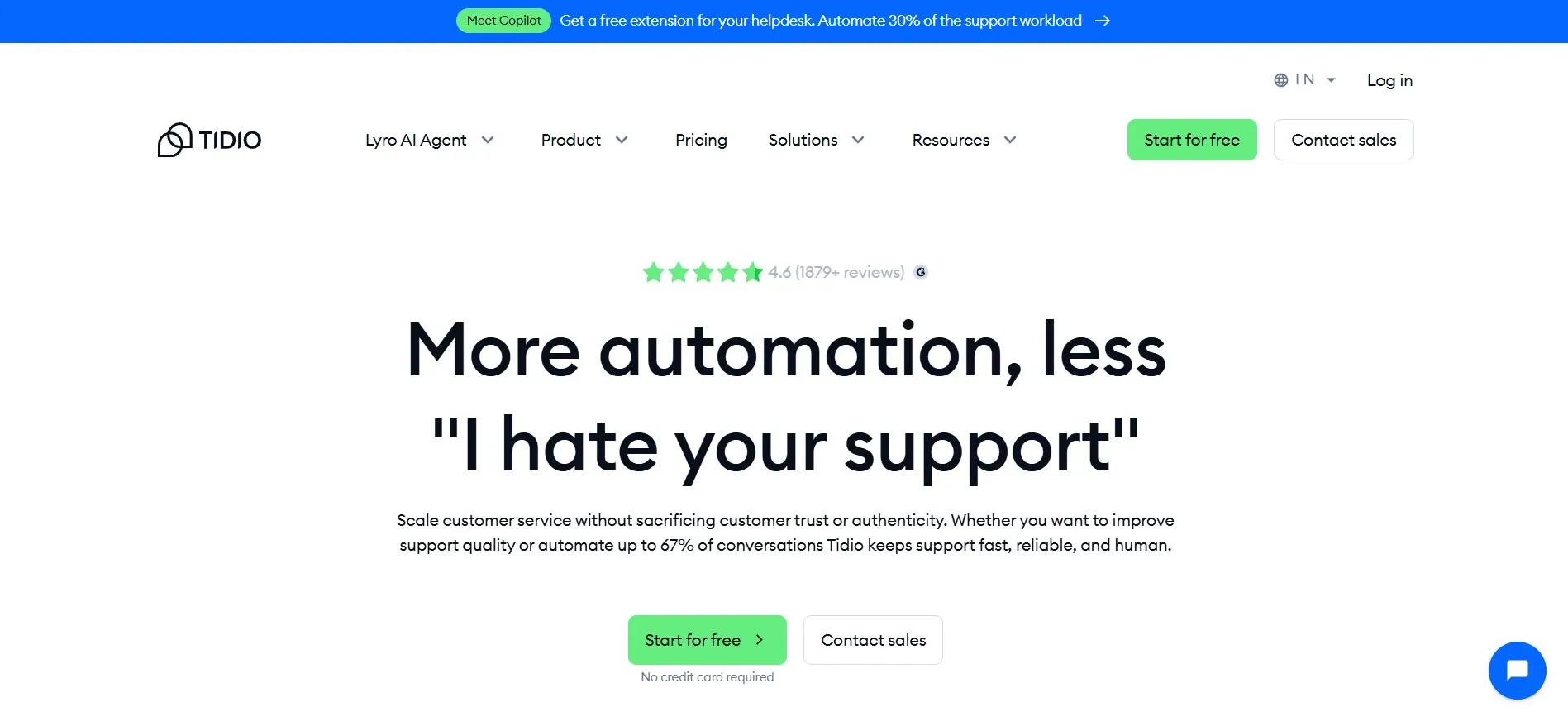
Tidio is a live chat and chatbot platform built for small and growing businesses. It combines website chat, AI chatbot automation, and basic ticket management in one dashboard.
Why It’s a Strong LiveAgent Alternative
Compared to LiveAgent’s structured help desk model, Tidio focuses on chatbot-led conversations. LiveAgent organizes support around tickets and routing rules. Tidio aims to resolve common questions through AI chatbot flows before a ticket is created.
Tidio supports real-time live chat and automated responses triggered by visitor behavior. It reduces manual replies by handling predictable queries such as order tracking, product questions, and simple support requests.
For small teams that want automation without complex configuration, Tidio provides a simpler starting point.
Tidio Core Strengths
-
AI chatbot for automated replies
-
Website live chat widget
-
Automation flows with visual builder
-
Email and messaging channel support
-
Analytics dashboard for conversation tracking
Tidio focuses on reducing workload through chatbot automation.
Where It Differs from LiveAgent
LiveAgent operates as a full help desk platform with structured ticket hierarchies.
Tidio operates as a chatbot-first messaging tool.
LiveAgent emphasizes SLA management and multi-channel ticket routing.
Tidio emphasizes automated chat resolution and quick deployment.
LiveAgent supports advanced reporting and workflow depth.
Tidio provides lighter reporting suited for small teams.
For businesses that prioritize chatbot automation over full service desk control, Tidio offers a more direct setup.
Limitations
-
Limited advanced SLA governance
-
Reporting depth is moderate
-
Not ideal for enterprise support environments
-
Automation logic may be basic for complex workflows
Best For
-
Small businesses and SMBs
-
Ecommerce stores needing chatbot automation
-
Teams with moderate ticket volume
-
Businesses seeking affordable LiveAgent competitors
Pricing Snapshot
For teams seeking a LiveAgent alternative with better chatbot automation and lower entry cost, Tidio provides a lightweight support platform designed for growth-stage businesses.
Read more: Discover the best Tidio Alternatives and choose the right one for your business.
9. LiveChat - Real-Time Website Chat Alternative to LiveAgent
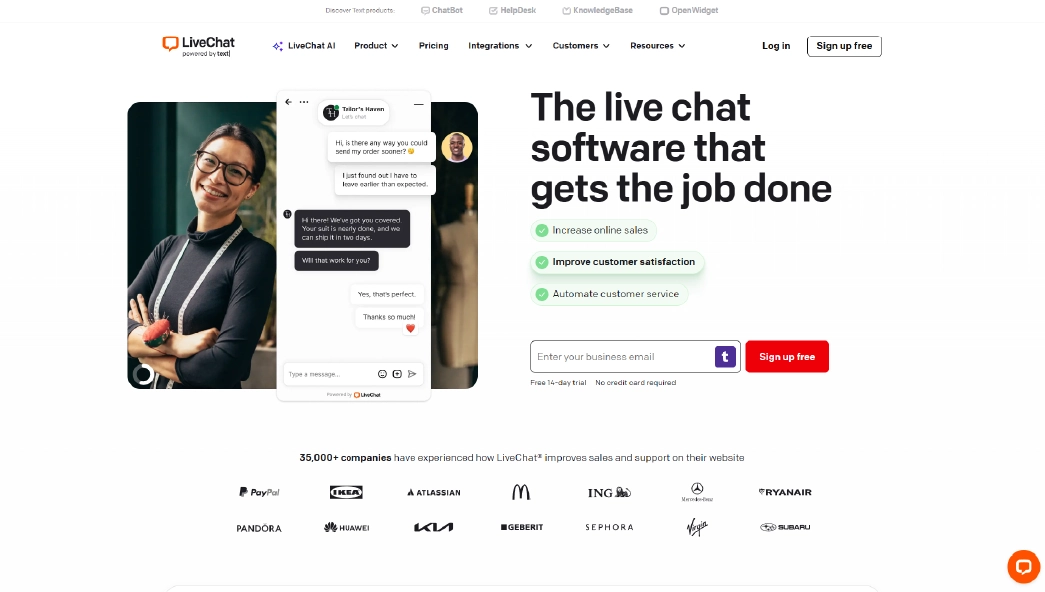
LiveChat is a live chat software platform focused on real-time website messaging and sales conversations. It is designed for teams that prioritize fast customer interaction and direct engagement.
Why It’s a Strong LiveAgent Alternative
Compared to LiveAgent’s structured help desk system, LiveChat focuses primarily on real-time chat conversations. LiveAgent manages tickets across channels with layered automation. LiveChat centers on immediate visitor engagement and conversation handling.
LiveChat allows teams to deploy a website chat widget quickly and begin responding without building complex ticket hierarchies. It supports chat routing, canned responses, and agent assignment within a streamlined interface.
For companies that rely heavily on website-driven support and sales, LiveChat simplifies execution and reduces setup overhead.
LiveChat Core Strengths
-
Real-time website live chat
-
Chat routing and agent assignment
-
Basic reporting and analytics
-
CRM and ecommerce integrations
-
Chat widget customization
LiveChat focuses on speed and clarity rather than layered ticket orchestration.
Where It Differs from LiveAgent
LiveAgent operates as a full help desk platform with ticket management and SLA governance.
LiveChat is primarily live chat software.
LiveAgent supports advanced ticket workflows and multi-channel support.
LiveChat emphasizes direct website conversations.
LiveAgent includes deeper reporting and automation structures.
LiveChat provides lighter automation suited for chat-first teams.
For organizations that do not require structured ticket hierarchies, LiveChat reduces operational complexity.
Limitations
-
Limited built-in ticket management depth
-
SLA enforcement features are basic
-
Automation capabilities are lighter than AI-driven platforms
-
Less suited for complex enterprise support environments
Best For
-
Businesses focused on website chat
-
Ecommerce brands managing pre-sales and support conversations
-
Teams prioritizing fast response time
-
SMB to mid-sized companies
Pricing Snapshot
-
Starter - $19/month
-
Team - $49/month
-
Business - $79/month
-
Enterprise - Custom
For teams seeking a LiveAgent alternative centered on live chat performance rather than full help desk automation, LiveChat provides a focused and streamlined solution.
Read more: Discover the best LiveChat alternatives and get the best real-time website messaging and sales conversations.
10. Zoho Desk - CRM-Integrated Help Desk Alternative to LiveAgent
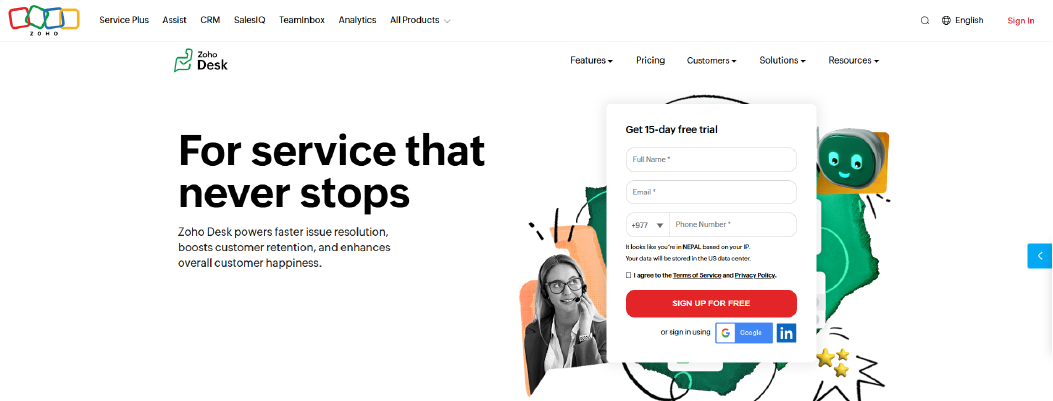
Zoho Desk is a help desk platform built around ticket management, automation, and CRM alignment. It is part of the Zoho ecosystem, which allows support teams to connect customer service with sales and marketing data.
Why It’s a Strong LiveAgent Alternative
Compared to LiveAgent’s standalone help desk structure, Zoho Desk offers tighter CRM integration. LiveAgent manages tickets across channels effectively, but Zoho Desk connects support activity directly with CRM records inside the Zoho ecosystem.
Zoho Desk supports multichannel ticketing, workflow automation, SLA tracking, and role-based access control. It also enables structured routing rules and automated ticket assignment.
For teams that need visibility between sales and support, Zoho Desk reduces data silos and improves CRM sync.
Zoho Desk Core Strengths
-
Built-in CRM integration within Zoho ecosystem
-
Workflow automation and routing rules
-
Knowledge base and self-service portal
-
Role-based permissions and team controls
-
Reporting and analytics dashboard
-
Integration marketplace and APIs
Zoho Desk focuses on structured ticket handling with CRM-connected workflows.
Where It Differs from LiveAgent
LiveAgent operates as a standalone help desk platform.
Zoho Desk integrates directly with Zoho CRM and related tools.
LiveAgent emphasizes broad channel coverage and ticket control.
Zoho Desk emphasizes CRM-aligned support execution.
LiveAgent offers flexible pricing for mid-market teams.
Zoho Desk is often more attractive for businesses already using Zoho products.
For organizations managing both sales and support inside one ecosystem, Zoho Desk offers stronger alignment.
Limitations
-
Best experience when using other Zoho products
-
Setup may require CRM configuration
-
Advanced features may require higher-tier plans
Best For
-
Businesses using Zoho CRM
-
Ecommerce and SMB teams needing CRM-connected support
-
Companies requiring structured SLA tracking
-
Mid-sized teams seeking integrated workflows
Pricing Snapshot
-
Free trial period
-
Express - $9/user/month
-
Standard - $20/user/month
-
Professional - $35/user/month
-
Enterprise - $50/user/month
If you already use Zoho CRM, Zoho Desk is a LiveAgent alternative that keeps tickets linked to CRM records and reduces manual data sync work.
Check out the best Zohodesk Alternatives available on the market today.
Top LiveAgent Competitors in 2026 (Compared Side-by-Side)
Below is a focused comparison of leading LiveAgent alternatives based on operational factors that affect long-term scalability.
|
Tool
|
Setup Complexity
|
Custom Workflow Control
|
Native Ecommerce Integrations
|
AI Training Control
|
Knowledge Base Integration
|
Reporting Depth
|
Seat-Based Billing Impact
|
|
Chatboq
|
Very Low
|
Strong (SLA, priority, routing rules)
|
Yes (CRM + ecommerce tools)
|
Yes (documents + inbox training)
|
Yes
|
Moderate-Strong
|
Plan-based (not per-agent inflation)
|
|
Kayako
|
Moderate
|
Moderate
|
Limited
|
Low
|
Built-in
|
Moderate
|
Per-agent scaling
|
|
Hiver
|
Low
|
Basic
|
Limited
|
Low
|
External tools
|
Basic
|
Per-user pricing
|
|
Olark
|
Low
|
Basic
|
Moderate
|
Low
|
Limited
|
Basic
|
Per-agent pricing
|
|
Zendesk
|
High
|
High
|
Strong
|
Moderate–High
|
Built-in
|
Advanced
|
Per-agent tiered
|
|
Intercom
|
High
|
High
|
Moderate
|
High
|
Built-in
|
Strong
|
Per-seat + usage-based
|
|
Freshdesk
|
Moderate
|
Moderate
|
Moderate
|
Moderate
|
Built-in
|
Moderate–Strong
|
Per-agent tiered
|
|
Tidio
|
Low
|
Basic–Moderate
|
Strong
|
Moderate
|
Limited
|
Basic
|
Tiered + usage-based
|
|
LiveChat
|
Low
|
Basic
|
Strong
|
Low
|
Limited
|
Moderate
|
Per-agent monthly
|
|
Zoho Desk
|
Moderate
|
High
|
Moderate
|
Moderate
|
Built-in
|
Strong
|
Per-agent tiered
|
This comparison focuses on workflow control, automation maturity, ecommerce alignment, reporting depth, and billing impact to help you evaluate the right LiveAgent alternative for your support operations.

 ChatGPT
 Perplexity
 Claude




Leave a Comment
Your email address will not be published. Required fields are marked *
By submitting, you agree to receive helpful messages from Chatboq about your request. We do not sell data.