Below, you’ll find detailed reviews of each Hiver alternative listed above.
Each tool follows the same structure so you can compare workflow control, reporting, integrations, and pricing without guesswork.
1. Chatboq - All-in-One AI Chatbot & Live Chat Platform
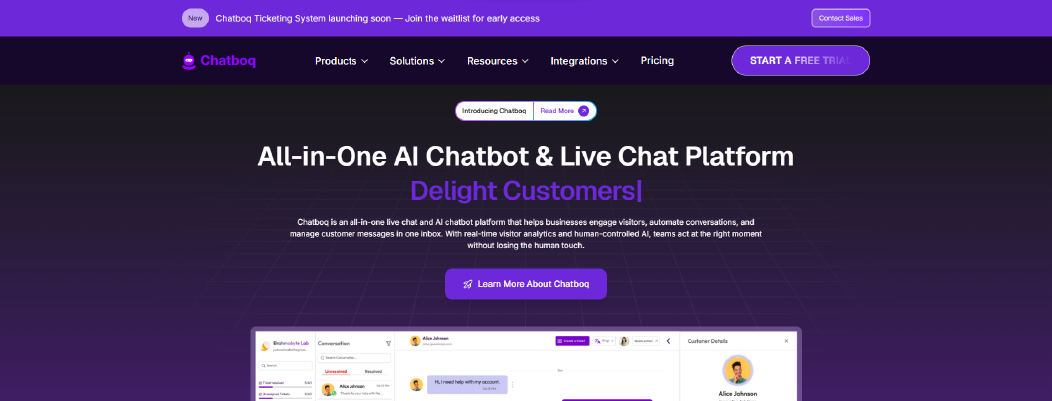
Chatboq is an all-in-one AI chatbot and live chat platform that keeps customer conversations organized and easy to manage. It combines structured ticket handling, SLA tracking, AI reply assistance, and messaging across channels into one shared workspace. Teams can manage live chat, email-based tickets, and multichannel conversations without relying only on a Gmail-based shared inbox.
Chatboq is built for teams that need structured workflows and SLA control without enterprise-level complexity. Core ticket statuses and SLA templates are available as defaults. Most teams can start with the defaults and adjust roles, priorities, and routing rules over time.
Why It’s a Strong Hiver Alternative
Chatboq addresses the areas teams often evaluate when comparing Hiver alternatives, including workflow automation depth, reporting clarity, AI assistance, and multichannel capability.
Hiver is widely used for email collaboration inside Gmail. It works well for assignment and internal notes. However, user feedback frequently highlights slow loading with long threads, limited AI functionality, tagging constraints, and reporting gaps as teams scale.
Chatboq adds structure where Gmail-based shared inbox tools can feel limited. It integrates live chat, ticket lifecycle management, SLA enforcement, AI knowledge training, and trigger-based campaigns inside one system. This reduces manual tracking and improves response consistency.
Chatboq Core Strengths
-
AI-powered helpdesk software
-
AI-trained reply assistant based on internal knowledge
-
Live chat and shared inbox collaboration
-
Workflow automation with trigger conditions
-
Organization-specific priorities, statuses, and SLAs
-
Ticket merge, parent–child relationships, and full history tracking
-
Kanban view for ticket visibility
-
Role-based permissions and workspace isolation
-
Visitor tracking and segmentation
-
Multichannel messaging integrations
-
CRM integration support
-
Plan-based billing structure
Why is Chatboq better than Hiver
Chatboq integrates SLA enforcement, AI knowledge training, trigger campaigns, workspace isolation, and structured ticket hierarchy inside one system. It is not limited to a Gmail-based shared inbox.
Hiver focuses on email collaboration inside Gmail. It supports assignment, tagging, and internal notes. However, user feedback often highlights slow loading in long threads, limited AI capabilities, restricted tagging control, and lighter reporting.
Chatboq extends beyond email delegation. It provides structured ticket lifecycle control, SLA tracking with resolution alerts, AI-assisted replies trained on your data, and multichannel messaging inside one workspace. This supports teams that need more control than a Gmail overlay can provide.
Limitations
-
Not positioned as a legacy ITSM platform for heavy internal infrastructure operations
-
Enterprise ecosystem integrations may be narrower than large CRM suites
-
AI structured reasoning for highly complex analytical workflows is still evolving
Best For
-
Ecommerce customer support teams
-
Shopify merchants
-
SMB support operations
-
SaaS teams needing SLA enforcement
-
Teams seeking AI helpdesk software with structured workflow automation
Pricing Snapshot
-
Plan-based subscription model
-
Workspace-level billing control
-
Card and invoice management
-
Not strictly per-agent pricing
-
Scales by organization and usage structure
2. Zendesk - Enterprise Ticketing and Customer Service Platform
Zendesk is a cloud-based customer service platform that provides ticketing, help desk software, and multichannel support. It centralizes email, chat, phone, and social messaging into one ticketing system. Teams use Zendesk to manage customer conversations with structured workflows and reporting.
Zendesk is widely used by mid-sized and enterprise teams that need process control, SLA tracking, and advanced analytics. It supports both external customer support and internal service operations.
Why It’s a Strong Hiver Alternative
Zendesk is a strong Hiver alternative because it replaces Gmail-based shared inbox collaboration with a structured ticketing system. Hiver stays inside Gmail and is best for email-first collaboration. Zendesk operates as a standalone help desk platform with defined ticket lifecycle control.
Teams that move from Hiver often need centralized ticket tracking instead of managing long email threads. They also require SLA management with measurable response and resolution targets. Zendesk provides automation rules, triggers, and reporting dashboards that allow teams to monitor performance across the full ticket lifecycle.
For customer support, ITSM, HR, and finance teams handling higher volume workflows, Zendesk adds structured process control beyond basic email collaboration.
Zendesk Core Strengths
-
Full-featured ticketing system
-
Multichannel support (email, chat, voice, social)
-
Knowledge base integration
-
Advanced analytics and reporting dashboards
-
Workflow triggers and macros
-
CRM integrations through built-in connectors and app marketplace options
Why is Zendesk better than Hiver
Hiver keeps collaboration inside Gmail. Zendesk moves support into a dedicated ticketing system with full lifecycle tracking, SLAs, and reporting.
Zendesk provides structured ticket lifecycle control from open to resolved. It includes SLA enforcement, automation triggers, reporting dashboards, and multichannel routing. These features support teams that need more control than a Gmail-based shared inbox can provide.
For customer support, ITSM, HR, and operations teams handling higher ticket volumes, Zendesk offers deeper process visibility and performance measurement.
Limitations
-
Per-agent pricing can increase as teams scale
-
Setup and configuration require more effort than Gmail-based tools
-
May feel complex for small teams with simple email workflows
Best For
-
Mid-sized to enterprise customer support teams
-
Organizations requiring SLA tracking and reporting depth
-
Teams handling multichannel customer conversations
-
Companies needing structured help desk workflows
Pricing Snapshot
-
Per-agent monthly pricing (tiered plans)
-
Add-on costs for advanced features
-
Scales by seat and feature level
Check out the best Zendesk alternatives available on the market today.
3. Front - Collaborative Inbox for Multichannel Teams
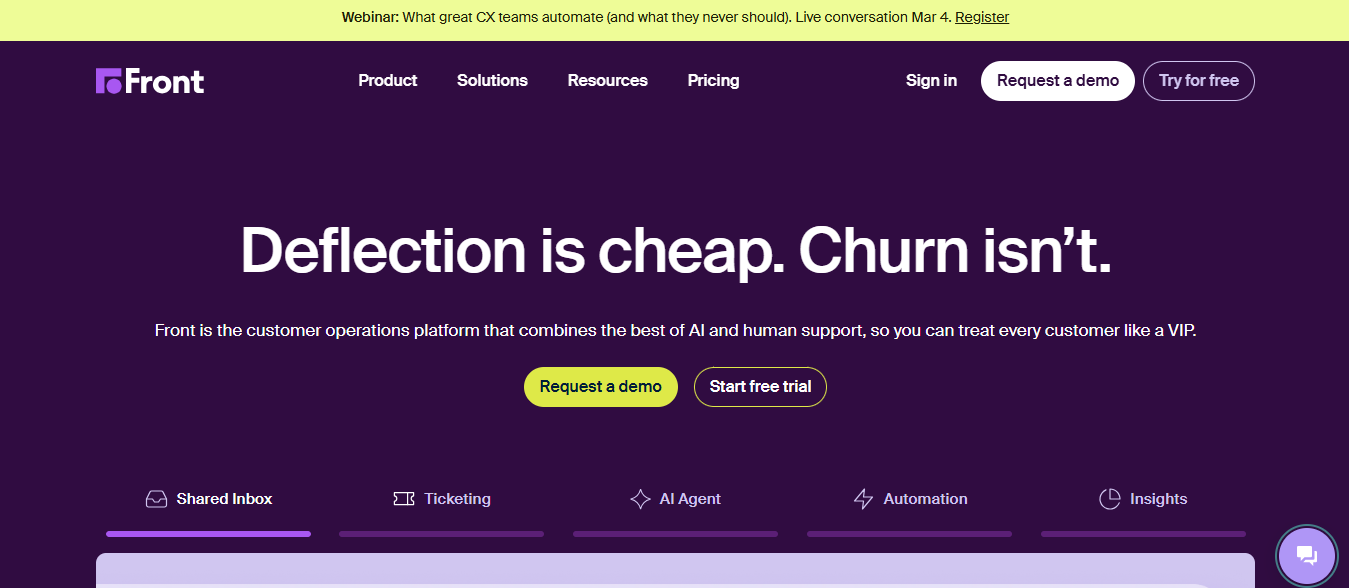
Front is a shared inbox platform built to help teams manage email and other communication channels in one place. It connects email, SMS, live chat, and social messaging into a single team inbox. Front focuses on internal collaboration, clear ownership, and workflow visibility without leaving the conversation view.
Front is commonly used by support, operations, finance, and account management teams that handle customer conversations across multiple channels. It keeps messages organized while adding structure beyond standard email tools.
Why It’s a Strong Hiver Alternative
Front is a strong Hiver alternative because it extends shared inbox collaboration beyond Gmail. Hiver operates directly inside Gmail for email delegation and tagging. Front runs as its own platform and centralizes email, chat, and other channels into one inbox.
Teams moving from Hiver often need better visibility across channels, stronger routing control, and clearer workload distribution. Front supports shared inboxes with rules, assignment logic, and collision detection to prevent duplicate replies. It also adds analytics that show response times and team performance.
For teams that have outgrown Gmail-based collaboration but do not want full enterprise help desk complexity, Front provides structured multichannel inbox management.
Front Core Strengths
-
Unified inbox for email, SMS, live chat, and social messaging
-
Inbox rules and automated routing logic
-
Conversation assignment and workload distribution
-
Analytics dashboards for response time and performance tracking
-
CRM and collaboration tool integrations
-
Auto-assignment rules for routing conversations to the right owner
-
Multichannel inbox management inside one workspace
Why is Front better than Hiver
Hiver focuses on email collaboration inside Gmail. It works well for managing shared mailboxes with tagging and internal notes. Front goes beyond Gmail by supporting multichannel inbox routing inside one workspace.
Front improves internal collaboration through shared drafts and collision detection. It also provides more advanced inbox rules and analytics than a Gmail overlay can offer. This helps teams reduce duplicate responses and improve visibility into response times.
For teams managing email plus additional communication channels, Front provides more operational flexibility than Hiver.
Limitations
-
Per-seat pricing can increase as teams scale
-
May require more configuration than simple Gmail-based tools
-
Advanced automation may still require structured setup effort
Best For
-
Support and operations teams handling multichannel conversations
-
Account management and client-facing teams
-
SMB to mid-sized teams scaling beyond Gmail-only workflows
-
Remote teams needing shared inbox tools with internal collaboration features
Pricing Snapshot
-
Front uses per-seat pricing with tiered plans.
-
Advanced features and integrations are tied to higher plans.
-
Pricing scales based on number of users and selected features.
Read more: Check the top Front alternatives and choose the best ecommerce helpdesk solution for Shopify support.
4. Freshdesk - AI-Powered Help Desk and Ticketing Platform
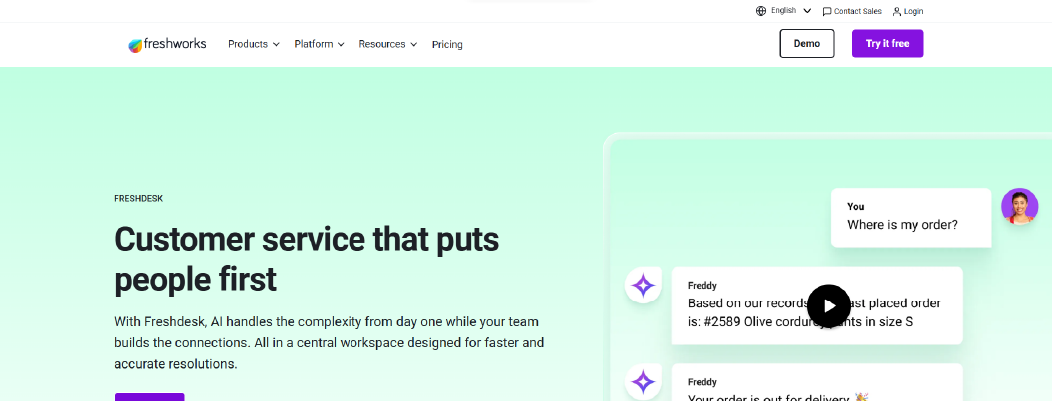
Freshdesk is a cloud-based help desk software built to manage customer support tickets across email, chat, phone, and social channels. It centralizes customer conversations into a structured ticketing system with automation and reporting. Freshdesk is part of the Freshworks product suite and is widely used by SMB and mid-sized teams.
Freshdesk is designed for support teams that need process control, SLA tracking, and scalable ticket management beyond a Gmail-based shared inbox.
Why It’s a Strong Hiver Alternative
Freshdesk is a strong Hiver alternative because it replaces email-based shared inbox collaboration with a structured help desk system. Hiver is mainly built for Gmail-based shared inbox workflows. Freshdesk operates independently and provides full ticket lifecycle management.
Teams moving from Hiver often need defined SLAs, automation rules, and performance tracking. Freshdesk supports this with ticket statuses, priorities, workflow automations, and reporting dashboards. It also supports multichannel support, which extends beyond email collaboration.
For customer support, ITSM, and operations teams handling increasing ticket volume, Freshdesk adds structured workflow control beyond Gmail overlays.
Freshdesk Core Strengths
-
Full ticketing system with defined ticket lifecycle
-
SLA policies with response and resolution targets
-
Workflow automation and rule-based routing
-
Knowledge base integration for self-service
-
Multichannel support (email, chat, phone, social)
-
Reporting dashboards and analytics
-
CRM integrations and marketplace apps
Why is Freshdesk better than Hiver
Hiver works best when email delegation is the main workflow. Freshdesk is better when you need ticket structure, SLA tracking, and automation across channels.
Freshdesk provides structured ticket management with SLA enforcement, automation rules, and reporting dashboards. It allows teams to track response time, resolution time, and workload distribution in a measurable way. It also supports multiple communication channels, not just email.
For teams that need visibility into ticket performance and structured escalation control, Freshdesk offers more operational depth than Hiver.
Limitations
-
Per-agent pricing can increase as teams scale
-
Advanced automation and AI features may require higher-tier plans
-
Setup and configuration require more effort than Gmail-based shared inbox tools
Best For
-
SMB customer support teams
-
Growing support operations needing SLA tracking
-
Teams moving from email-based collaboration to structured ticketing
-
Organizations requiring multichannel help desk workflows
Pricing Snapshot
-
Per-agent monthly pricing model
-
Tiered plans (feature-based levels)
-
Advanced AI and automation available in higher tiers
-
Pricing scales based on number of agents
-
Add-ons may apply depending on feature selection
Read More : Review these leading Freshdesk alternatives to select the platform that aligns with your goals.
5. Help Scout - Email-Based Help Desk with Knowledge Base
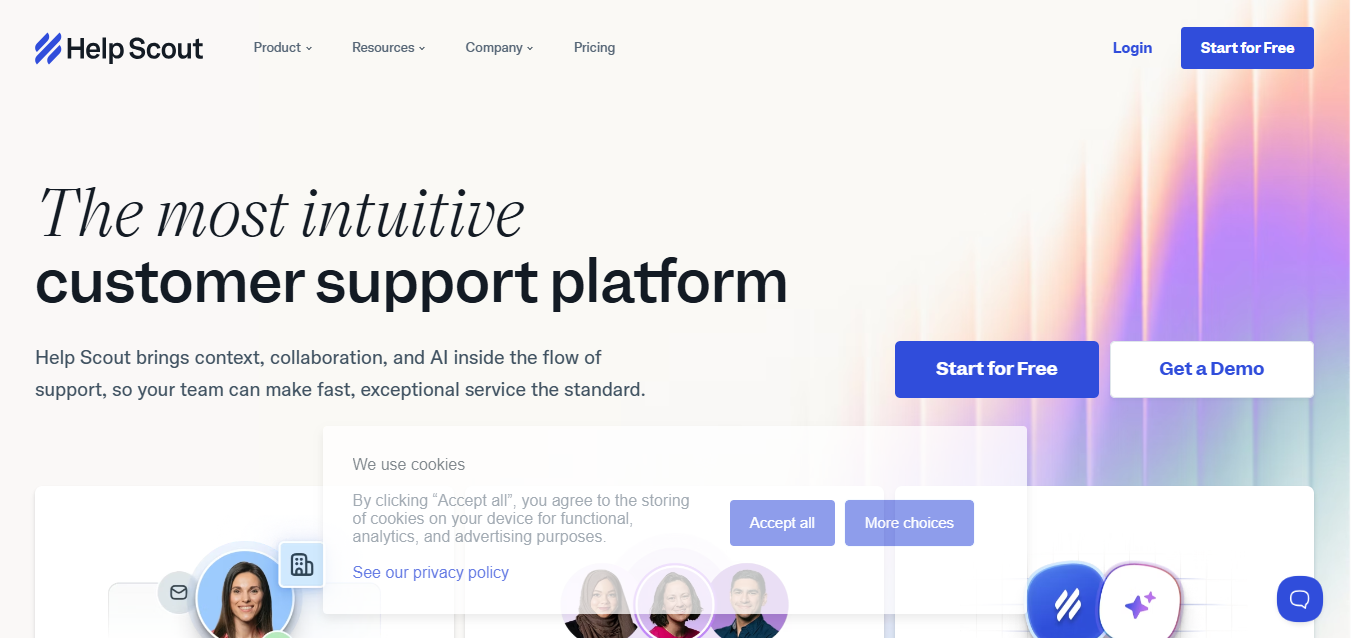
Help Scout is a customer support platform built around email-based ticket management. It combines a shared inbox, help desk tools, live chat (Beacon), and a knowledge base in one system. Help Scout is designed to feel like email but operate as a structured ticketing system.
Help Scout is commonly used by small to mid-sized support teams that want organized customer conversations without heavy configuration.
Why It’s a Strong Hiver Alternative
Help Scout is a strong Hiver alternative because it replaces Gmail-based shared inbox workflows with a dedicated help desk platform. Hiver works inside Gmail and focuses on assignment, tagging, and internal notes. Help Scout operates independently and adds structured ticket lifecycle management with built-in reporting.
Teams that move from Hiver often need clearer ticket tracking, internal collaboration visibility, and performance measurement. Help Scout provides conversation assignment, collision detection, saved replies, and reporting dashboards inside a system built for customer support.
For teams that want a clean interface similar to email but with help desk structure, Help Scout provides a natural transition from Hiver.
Help Scout Core Strengths
-
Shared inbox designed for support teams
-
Knowledge base for self-service support
-
Beacon live chat widget for website conversations
-
Reporting dashboards for response time and team performance
-
CRM and integration support
-
Customer profiles with conversation history
Why is Help Scout better than Hiver
Hiver runs inside Gmail and is mainly used for email delegation and internal notes. Help Scout adds help desk structure on top of email so teams can track status, workload, and performance more clearly. Help Scout operates as a help desk platform with structured ticket control and built-in knowledge base tools.
Help Scout provides clearer ticket lifecycle tracking and support-specific analytics. It also integrates live chat through Beacon, which extends collaboration beyond email threads. For teams that need structured customer support workflows rather than email-only management, Help Scout offers more operational depth than Hiver.
Limitations
-
Per-user pricing increases as teams grow
-
Advanced customization options are lighter than large enterprise platforms
-
Not designed for complex internal ITSM workflows
Best For
-
Small to mid-sized customer support teams
-
Teams moving from Gmail-based shared inbox tools
-
SaaS and ecommerce businesses needing knowledge base support
-
Organizations prioritizing simple, structured email collaboration
Pricing Snapshot
-
Per-user monthly pricing
-
Tiered plans based on feature access
-
Advanced reporting and workflows available in higher tiers
-
Pricing scales with team size
6. Gmelius - Shared Inbox and Collaboration Inside Google Workspace
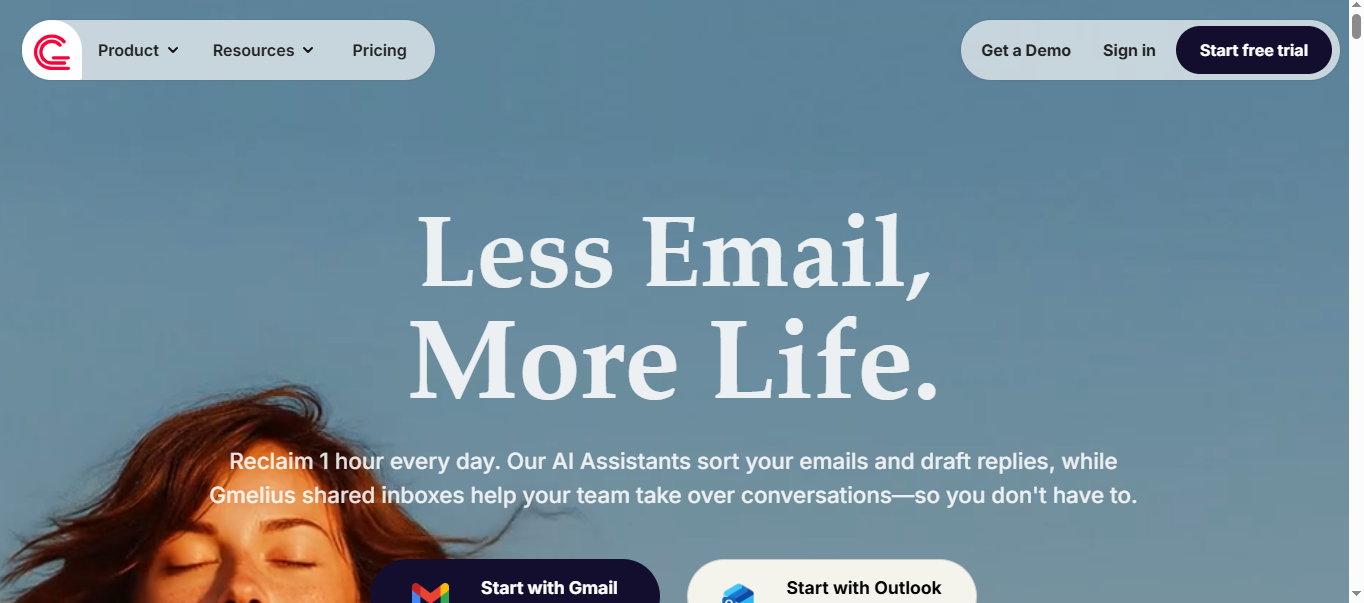
Gmelius is a shared inbox and collaboration platform built directly for Google Workspace. It works inside Gmail and turns regular inboxes into team inboxes with assignment, automation, and workflow boards. Gmelius focuses on keeping email collaboration inside the Google environment.
Gmelius is often used by small to mid-sized teams that want structured email delegation without leaving Gmail.
Why It’s a Strong Hiver Alternative
Gmelius is a strong Hiver alternative because both tools operate inside Gmail. If you are searching for a Hiver alternative for Gmail, Gmelius offers a similar environment with added workflow structure.
Hiver focuses on shared mailbox management, tagging, and internal notes. Gmelius expands on this by adding Kanban boards, automation rules, and shared drafts directly inside Gmail. It keeps the team inbox model while adding more structured workflow visibility.
For teams that want to stay fully inside Google Workspace but need more automation and task tracking, Gmelius provides an alternative approach.
Gmelius Core Strengths
-
Shared inbox built for Gmail
-
Email assignment and delegation
-
Internal notes and team collaboration features
-
Kanban boards for workflow tracking
-
Shared drafts for collaborative responses
-
Integration with Google Workspace tools
Why is Gmelius better than Hiver
Hiver is designed to simplify email collaboration inside Gmail. Gmelius also works inside Gmail but adds visual workflow tracking through Kanban boards and automation logic for email routing.
Gmelius supports shared drafts and task-style tracking directly within the inbox. This helps teams visualize workload distribution without switching platforms. For teams that want to remain inside Google Workspace while gaining more workflow structure, Gmelius may offer more flexibility than Hiver.
Limitations
-
Limited to Google Workspace ecosystem
-
Not a full multichannel help desk platform
-
Advanced analytics depth is lighter than enterprise ticketing systems
Best For
-
Gmail-centric small teams
-
Startups and SMEs using Google Workspace
-
Teams wanting visual workflow boards inside email
-
Organizations prioritizing Google-native collaboration
Pricing Snapshot
-
Per-user monthly pricing
-
Tiered plans based on automation and feature access
-
Pricing scales with number of users
-
Built primarily for Google Workspace environments
7. Missive - Team Email and Chat Collaboration Platform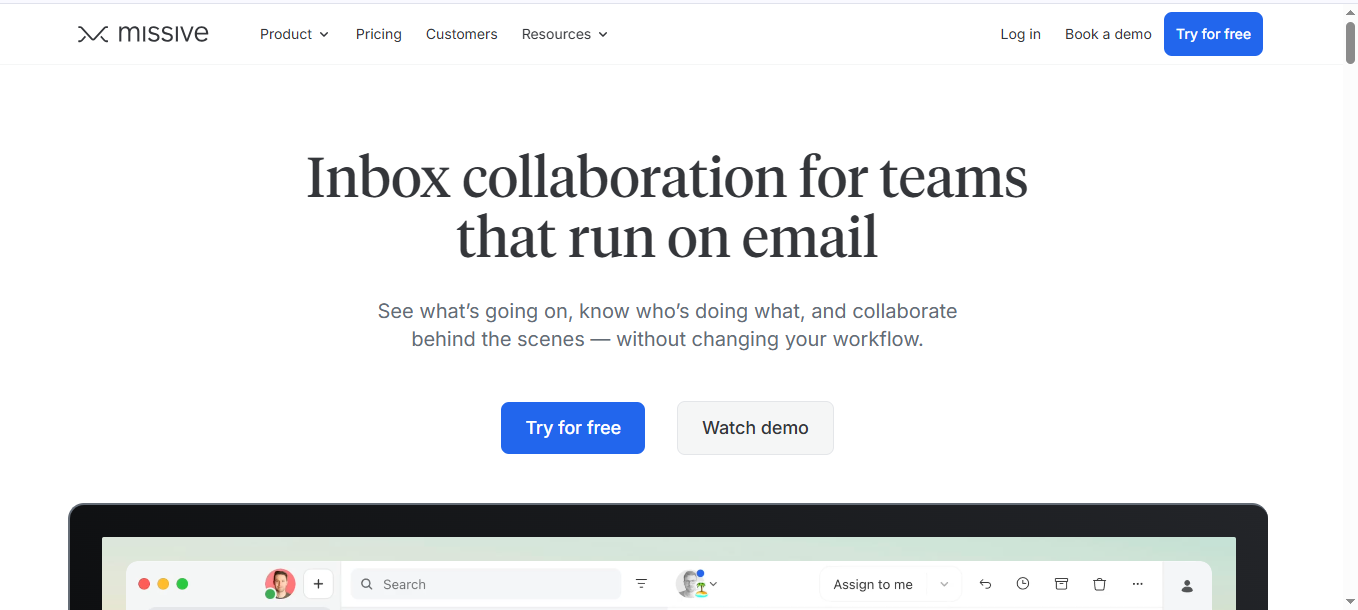
Missive is a team communication platform that combines email, internal chat, and task collaboration in one app. It connects Gmail, Outlook, and other email providers into a shared inbox environment. Missive is designed for teams that want to manage email and internal discussions together.
Missive is often used by remote teams, agencies, and operations groups that need shared inbox tools for remote teams with built-in chat.
Why It’s a Strong Hiver Alternative
Missive is a strong Hiver alternative because it expands shared inbox collaboration beyond Gmail. Hiver works inside Gmail and focuses on email delegation and internal notes. Missive connects multiple email providers and adds built-in team chat alongside email threads.
Teams moving from Hiver may want deeper internal collaboration around each conversation. Missive allows team members to chat internally within the same thread before replying. It also supports shared drafts and conversation assignments.
For teams that require closer coordination around customer conversations, Missive adds a communication layer beyond basic shared mailbox management.
Missive Core Strengths
-
Shared inbox connected to Gmail, Outlook, and other providers
-
Built-in team chat alongside email threads
-
Shared drafts for collaborative replies
-
Internal comments inside conversations
-
Multichannel support including SMS and WhatsApp
-
Integrations with productivity tools
Why is Missive better than Hiver
Hiver focuses on managing shared mailboxes inside Gmail. Missive operates as a standalone collaboration platform that combines email and internal team chat in one interface.
Missive allows teams to discuss replies internally before sending them. It also supports multiple email providers, not only Gmail. For teams handling client communication that requires internal review and coordination, Missive provides more built-in collaboration than Hiver.
Limitations
-
Per-user pricing increases as teams grow
-
Not a traditional ticketing system with SLA enforcement
-
Reporting depth is lighter than dedicated help desk platforms
Best For
-
Remote teams managing shared inboxes
-
Agencies and client-facing teams
-
Organizations using both Gmail and Outlook
-
Teams needing internal chat around email conversations
Pricing Snapshot
-
Per-user monthly pricing
-
Tiered plans based on features
-
Pricing scales with team size
-
Advanced features tied to higher plans
8. Drag - Kanban-Style Shared Inbox Inside Gmail
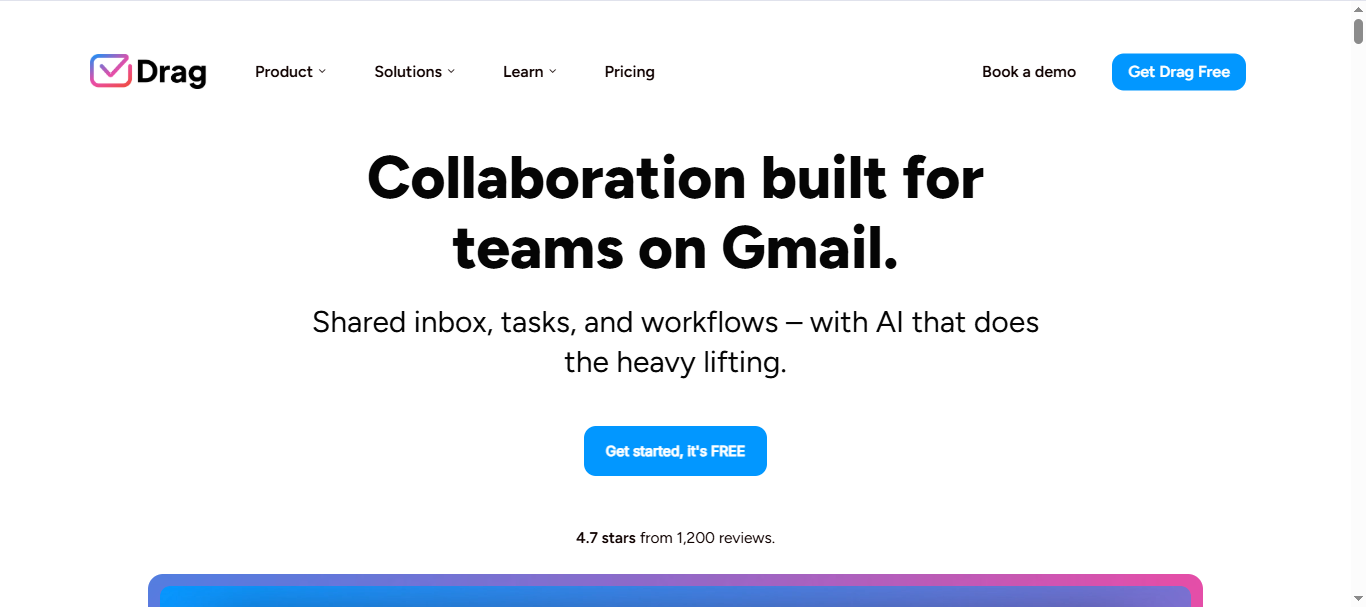
Drag is a shared inbox tool that works directly inside Gmail. It converts email into a visual board using a Kanban-style layout. Teams can move conversations across columns to track status and workload.
Drag is built for teams that want structured email delegation without leaving Gmail. It focuses on turning a Gmail inbox into a simple help desk workflow.
Why It’s a Strong Hiver Alternative
Drag is a strong Hiver alternative because both tools operate inside Gmail. If you are looking for a Hiver alternative for Gmail, Drag offers a similar environment but with visual workflow tracking.
Hiver centers on assignment, tagging, and internal notes within Gmail. Drag adds Kanban boards so teams can see conversations in columns such as Open, In Progress, and Closed. This improves visibility for teams that prefer a board-style workflow.
For small teams managing shared inboxes and email collaboration inside Google Workspace, Drag provides a structured yet familiar experience.
Drag Core Strengths
-
Shared inbox built directly inside Gmail
-
Email assignment and delegation
-
Internal notes and collaboration features
-
Automation rules for routing emails
-
Reporting features for tracking team performance
-
Google Workspace integration
Why is Drag better than Hiver
Hiver focuses on shared mailbox management inside Gmail with tagging and internal notes. Drag provides a visual Kanban workflow inside the same Gmail environment.
Drag allows teams to move conversations across columns, which helps track ticket status visually. For teams that prefer board-based organization instead of label-based tagging, Drag offers a clearer workload view.
However, both tools remain primarily email-focused rather than full multichannel help desk systems.
Limitations
-
Limited to Gmail ecosystem
-
Not a full multichannel ticketing platform
-
Advanced SLA and reporting capabilities are lighter than dedicated help desk systems
Best For
-
Gmail-centric small teams
-
Startups managing shared inbox workflows
-
Teams preferring Kanban-style organization
-
Organizations needing simple email collaboration tools
Pricing Snapshot
-
Per-user monthly pricing
-
Tiered plans based on features
-
Pricing scales with number of users
-
Built primarily for Google Workspace users
9. Intercom - Conversational Support and Customer Messaging Platform
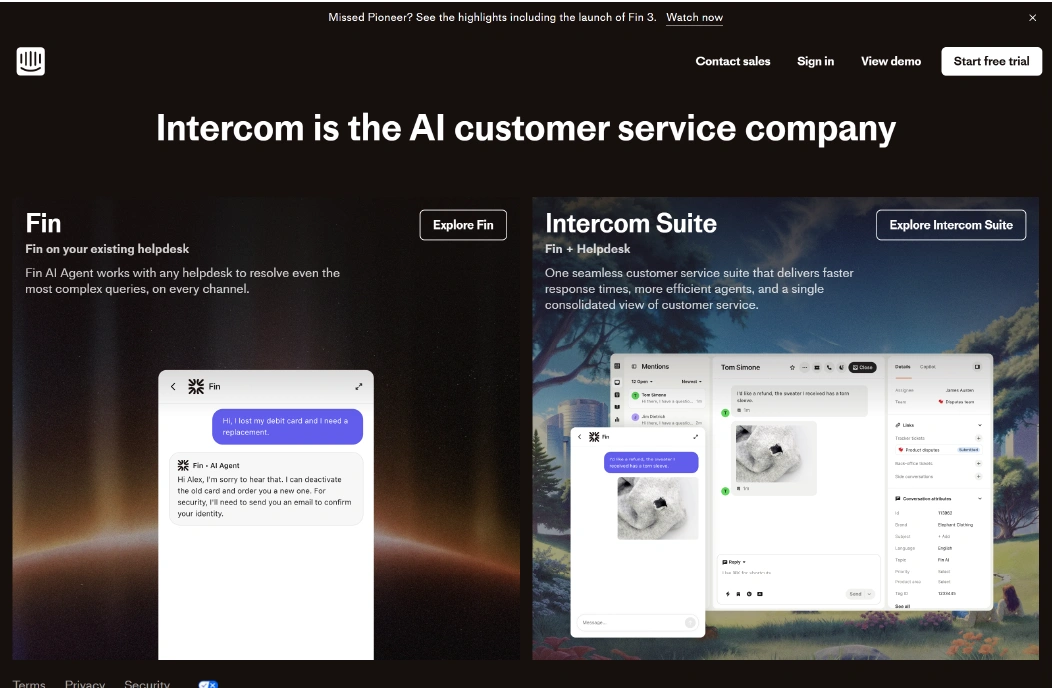
Intercom is a customer messaging platform that combines live chat, AI automation, help desk ticketing, and outbound messaging. It centralizes website chat, email, and in-app messages into one system. Intercom is widely used by SaaS companies and product-led teams.
Intercom is built around conversational support. It focuses on real-time engagement, AI assistance, and customer lifecycle messaging.
Why It’s a Strong Hiver Alternative
Intercom is a strong Hiver alternative because it replaces Gmail-based shared inbox collaboration with a multichannel messaging system. Hiver works inside Gmail for email delegation and internal notes. Intercom operates as a standalone platform that connects live chat, email, and in-app communication.
Teams that move from Hiver often need more than shared mailbox management. They may require real-time chat, AI-driven support automation, and customer segmentation. Intercom provides automation flows, conversation routing, and customer context inside one platform.
For SaaS and product teams handling both support and user engagement, Intercom offers broader messaging control than a Gmail-based tool.
Intercom Core Strengths
-
Live chat and in-app messaging
-
AI-powered automation and chatbots
-
Help center and knowledge base tools
-
Workflow automation and routing rules
-
Product tours and outbound messaging
-
CRM and integration ecosystem
-
Reporting dashboards and analytics
Why is Intercom better than Hiver
Hiver focuses on email collaboration inside Gmail. Intercom focuses on conversational customer engagement across multiple channels.
Intercom provides real-time messaging, automation flows, and customer targeting. It also supports proactive messaging based on user behavior. For teams that need both support and engagement tools in one system, Intercom offers broader functionality than Hiver.
However, Intercom is structured around conversational workflows rather than traditional email delegation.
Limitations
-
Pricing can increase quickly with contacts and usage
-
More complex setup compared to Gmail-based tools
-
May be heavier than needed for email-only teams
Best For
-
SaaS and product-led companies
-
Teams needing live chat and automation
-
Organizations focused on customer engagement and support
-
Mid-sized to enterprise teams
Pricing Snapshot
-
Per-seat pricing combined with usage-based elements
-
Tiered plans depending on features
-
Costs scale with contacts and message volume
-
Advanced automation tied to higher plans
Read more: Discover the best Intercome alternatives and compare features to choose the right helpdesk for your team.
10. Zoho Desk - Context-Aware Help Desk Platform
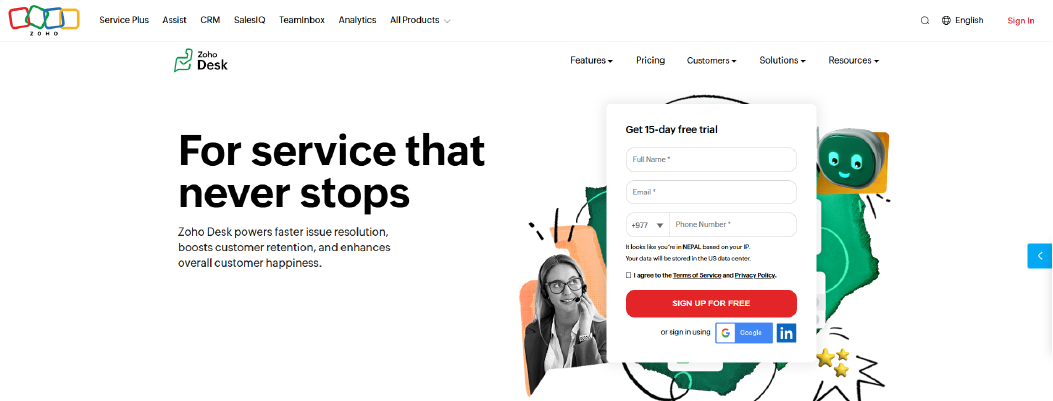
Zoho Desk is a cloud-based help desk software built to manage customer support tickets across email, chat, phone, and social channels. It centralizes customer conversations into a structured ticketing system with automation and reporting. Zoho Desk is part of the Zoho ecosystem and integrates closely with other Zoho products.
Zoho Desk is commonly used by SMB and mid-sized teams that need organized ticket lifecycle control with measurable SLAs.
Why It’s a Strong Hiver Alternative
Zoho Desk is a strong Hiver alternative because it replaces Gmail-based shared inbox collaboration with a structured help desk system. Hiver works inside Gmail and focuses on assignment, tagging, and internal notes. Zoho Desk operates independently and manages tickets through defined statuses, priorities, and SLA policies.
Teams moving from Hiver often need clearer visibility into ticket performance and workload distribution. Zoho Desk provides automation rules, workflow customization, and reporting dashboards that allow teams to track response time and resolution metrics.
For teams handling higher ticket volume across departments such as customer support, HR, or ITSM, Zoho Desk adds structured control beyond email threads.
Zoho Desk Core Strengths
-
Full-featured ticketing system
-
Workflow automation and assignment rules
-
Multichannel support (email, chat, phone, social)
-
Knowledge base integration
-
Integration with Zoho CRM and other Zoho applications
-
Context-aware support features inside the Zoho ecosystem
Why is Zoho Desk better than Hiver
Hiver focuses on shared mailbox management inside Gmail. It is built for email delegation and collaboration within Google Workspace. Zoho Desk is built as a dedicated help desk platform with structured ticket lifecycle control.
Zoho Desk provides defined SLA tracking, workflow customization, and reporting depth. It also supports multichannel support and deeper CRM integration within the Zoho ecosystem. For teams that require measurable performance tracking and structured ticket workflows, Zoho Desk offers more operational structure than Hiver.
Limitations
-
Setup may require more configuration than Gmail-based tools
-
Per-agent pricing increases with team growth
-
Advanced features tied to higher-tier plans
Best For
-
SMB to mid-sized customer support teams
-
Organizations using the Zoho ecosystem
-
Teams requiring SLA enforcement and ticket analytics
-
Departments beyond support, such as HR and IT operations
Pricing Snapshot
-
Per-agent monthly pricing
-
Tiered plans based on feature access
-
Advanced automation and AI features in higher tiers
-
Pricing scales with number of agents
Compare the best Zohodesk alternatives to find the ideal communication tool for your business.
Hiver Competitors Compared Side-by-Side
Below is a structured comparison focused on collaboration control, workflow depth, and scalability. This is designed for decision clarity, not feature overload.
|
Tool
|
Setup Complexity
|
Gmail Dependency
|
AI Collaboration Level
|
Custom Workflow Control
|
Reporting Depth
|
Multi-Channel Support
|
Seat-Based Billing Impact
|
|
Chatboq
|
Low (pre-configured SLAs, roles, guided setup)
|
Independent
|
Advanced (knowledge-trained AI replies)
|
High (roles, SLAs, triggers, workspace control)
|
Strong (SLA + performance dashboards)
|
Yes (chat + messaging integrations)
|
Low impact (plan-based, not strictly per-agent)
|
|
Zendesk
|
High (enterprise configuration)
|
Independent
|
Moderate-Advanced (AI + automation)
|
High (triggers, macros, SLAs)
|
Advanced (deep dashboards)
|
Yes (email, chat, voice, social)
|
Per-agent tiered
|
|
Front
|
Moderate
|
Independent
|
Moderate (automation rules)
|
Moderate-High (routing rules)
|
Moderate
|
Yes (email, SMS, chat, social)
|
Per-seat
|
|
Freshdesk
|
Moderate
|
Independent
|
Moderate–Advanced (AI features)
|
High (automation + SLAs)
|
Strong
|
Yes (email, chat, phone, social)
|
Per-agent tiered
|
|
Help Scout
|
Low-Moderate
|
Independent
|
Basic-Moderate (automation + AI assist)
|
Moderate
|
Moderate
|
Yes (email + chat)
|
Per-user
|
|
Gmelius
|
Low
|
Gmail-based
|
Basic (rules automation)
|
Moderate (boards + routing)
|
Basic-Moderate
|
Email-focused
|
Per-user
|
|
Missive
|
Low-Moderate
|
Independent (connects Gmail/Outlook)
|
Basic-Moderate
|
Moderate (rules + tasks)
|
Basic-Moderate
|
Yes (email + chat + SMS)
|
Per-user
|
|
Drag
|
Low
|
Gmail-based
|
Basic
|
Moderate (Kanban boards)
|
Basic
|
Email-focused
|
Per-user
|
|
Intercom
|
Moderate-High
|
Independent
|
Advanced (AI + automation flows)
|
High (workflow + targeting)
|
Strong
|
Yes (chat, email, in-app)
|
Per-seat + usage
|
|
Zoho Desk
|
Moderate
|
Independent
|
Moderate (AI features)
|
High (custom workflows + SLAs)
|
Strong
|
Yes (email, chat, phone, social)
|
Per-agent tiered
|


 ChatGPT
 Perplexity
 Claude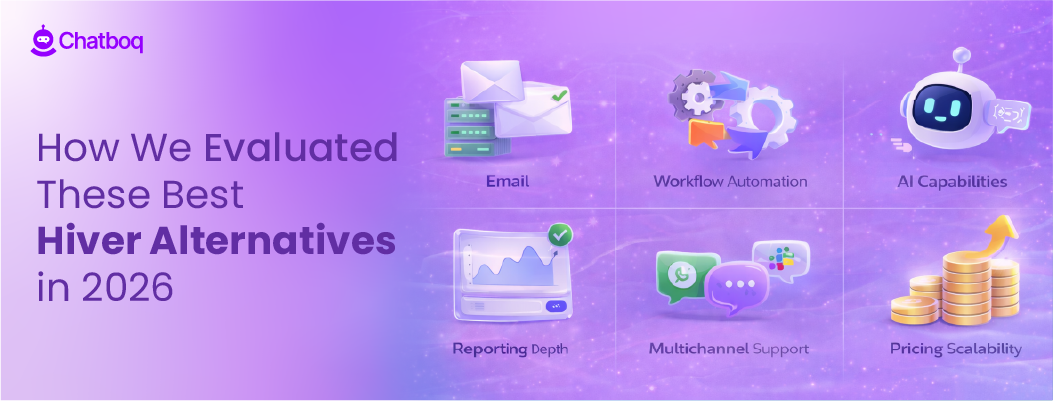

.webp)





Leave a Comment
Your email address will not be published. Required fields are marked *
By submitting, you agree to receive helpful messages from Chatboq about your request. We do not sell data.