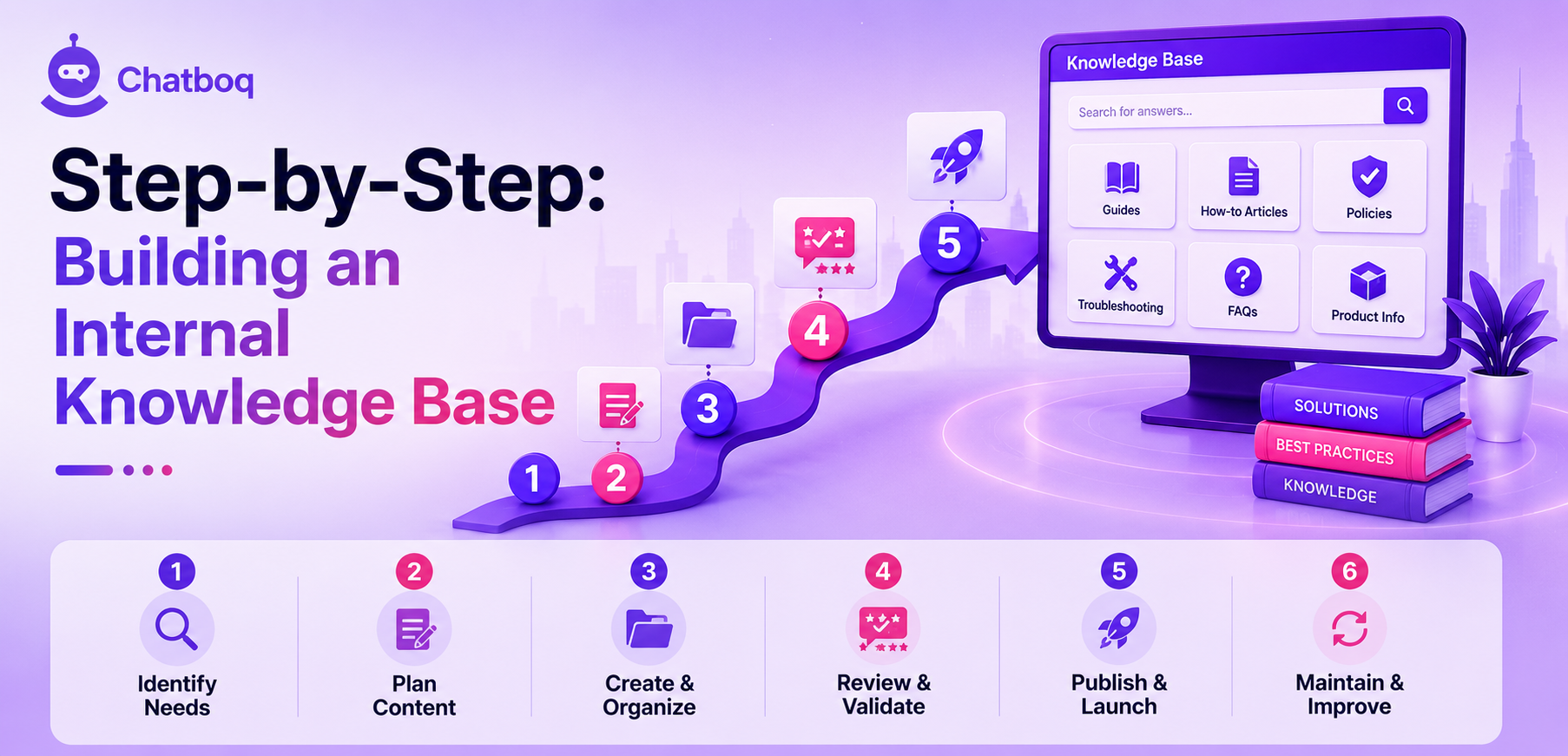
Building this well involves auditing what knowledge currently only lives in people's heads, organizing content by how agents actually search rather than an internal org chart, writing for scanning rather than sequential reading, assigning clear ownership for each section, building a genuine feedback loop for flagging outdated content, and integrating the knowledge base directly into the agent's actual daily workflow.
Step 1: Audit what knowledge currently lives only in people's heads
Systematically interviewing the team's most experienced members to surface undocumented tribal knowledge gives a concrete, evidence-based starting point for what the knowledge base genuinely needs to cover first.
Step 2: Organize by how agents actually search, not org chart
Structuring content around how an agent would naturally search for it mid-conversation, rather than mirroring an internal department or reporting structure, makes the knowledge base considerably faster and more intuitive to actually use.
Step 3: Write for scanning, not reading start to finish
Clear headings, short paragraphs, and a scannable structure respect how the knowledge base is actually going to be used in practice, quickly consulted mid-conversation rather than read cover to cover in one sitting.
Step 4: Assign ownership for each section
Giving each major section a clearly assigned owner responsible for its accuracy prevents the common failure mode where content technically exists but nobody feels genuinely responsible for keeping it current.
Step 5: Build a feedback loop for outdated content
A simple, low-friction way for any agent to flag an article that seems outdated or inaccurate, right at the point of use, catches content drift far faster than relying purely on scheduled, periodic reviews alone.
Step 6: Integrate it into the agent's actual workflow
Making the knowledge base easily searchable directly within the tools agents already use during a live conversation, rather than a separate destination they have to remember to visit, dramatically increases how consistently it actually gets used.

 ChatGPT
 Perplexity
 Claude

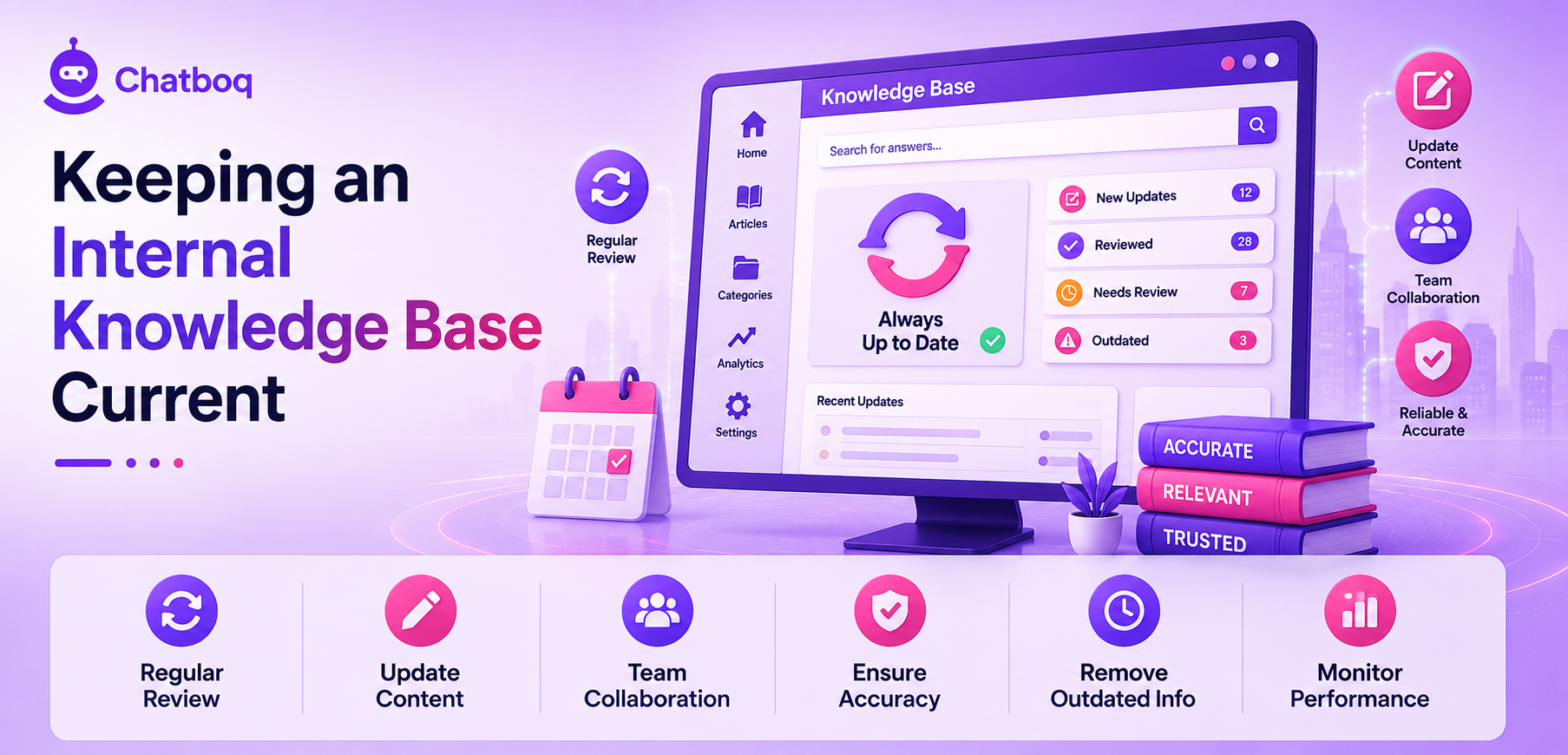
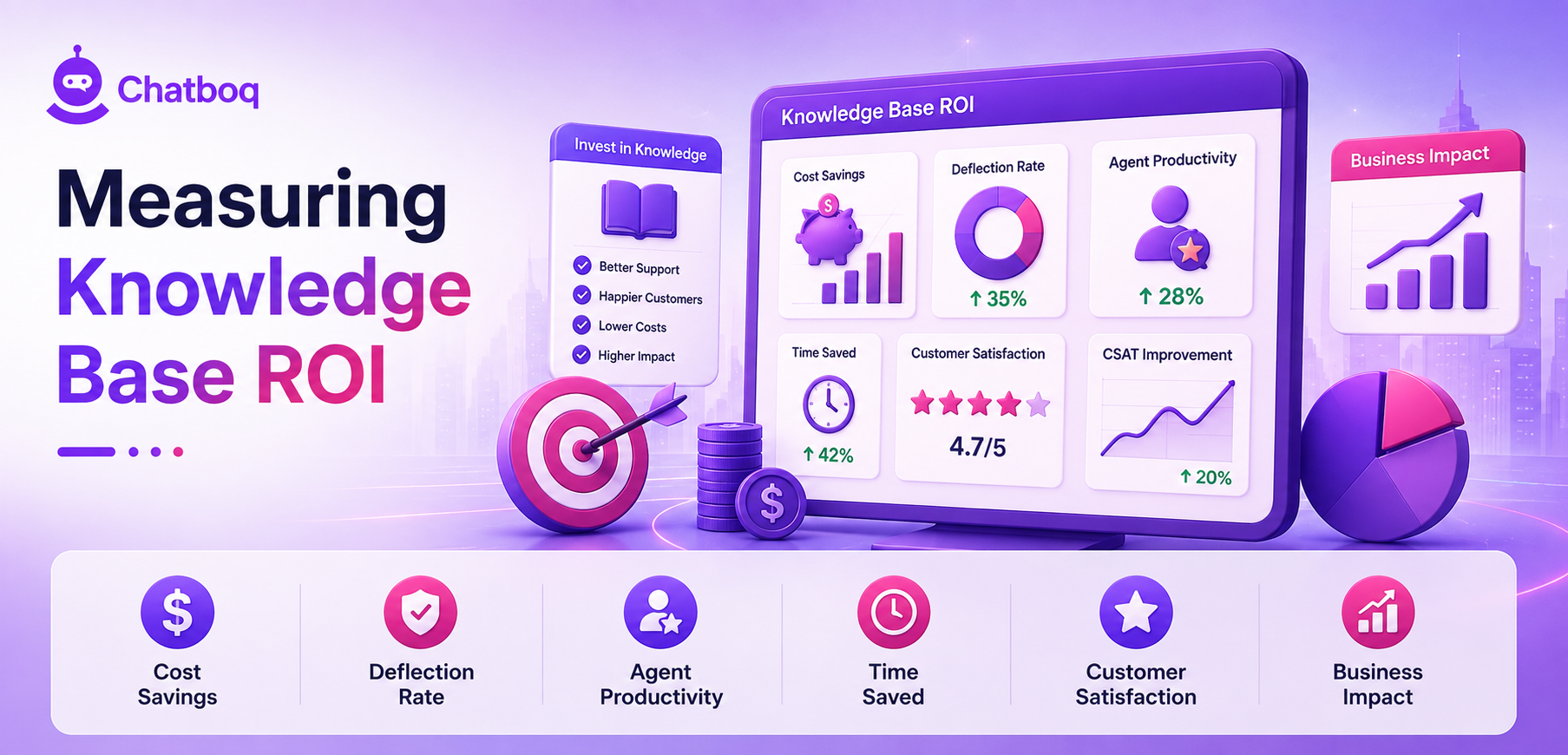 Demonstrating a knowledge base's genuine return on investment involves estimating time saved per search compared to the alternative of asking a colleague or guessing, correlating actual knowledge base usage with resolution time and quality, and using that evidence to build a persuasive case for continued investment to leadership.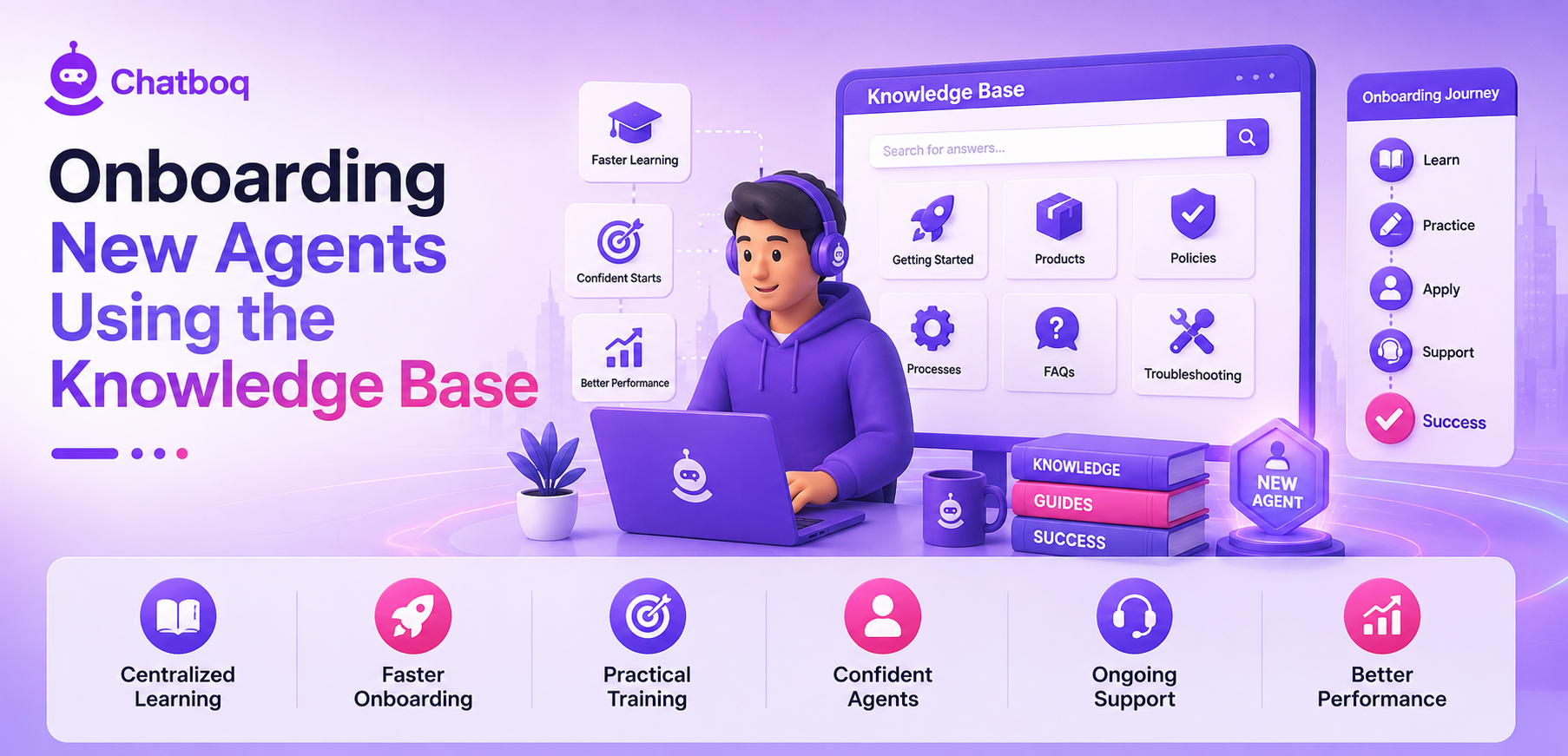


Leave a Comment
Your email address will not be published. Required fields are marked *
By submitting, you agree to receive helpful messages from Chatboq about your request. We do not sell data.