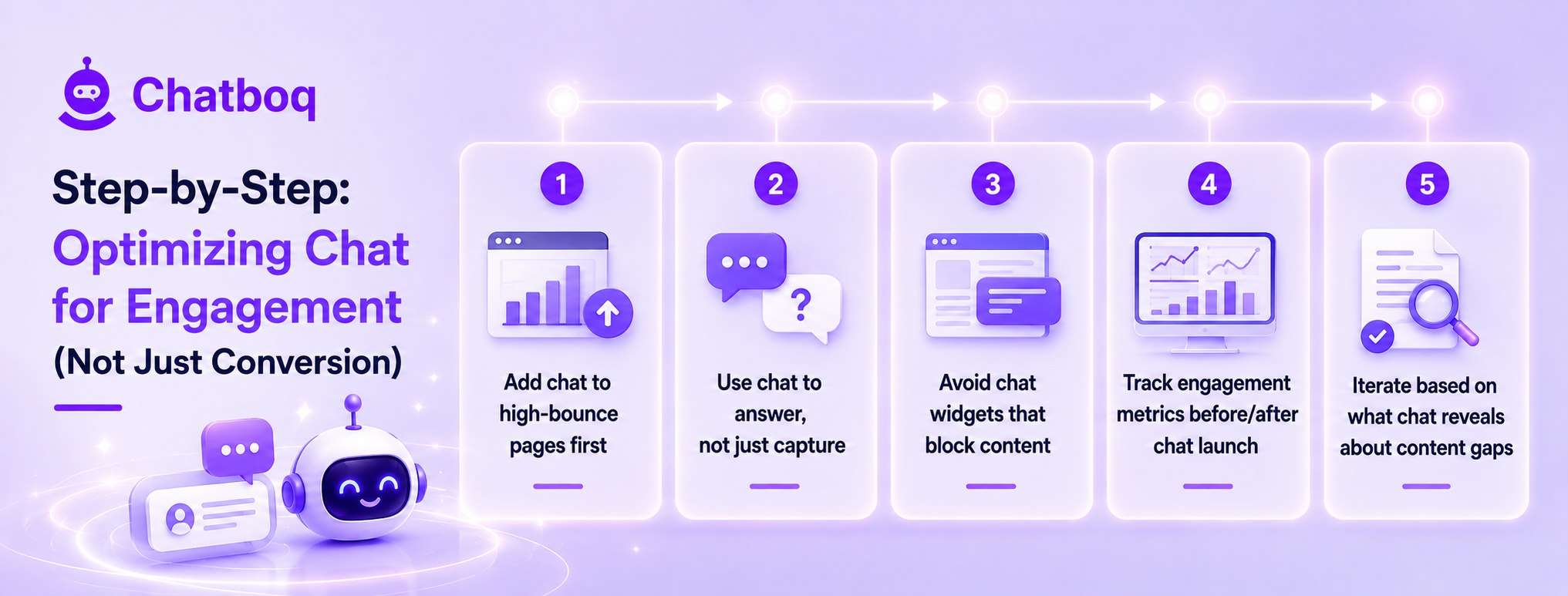
Optimizing chat with genuine engagement in mind, not purely conversion, involves adding chat first to the pages with the highest existing bounce rate, using chat to genuinely answer questions rather than only capture leads, avoiding widget implementations that interfere with content, tracking engagement metrics before and after launch, and iterating based on what chat itself reveals about underlying content gaps.
Step 1: Add chat to high-bounce pages first
Prioritizing chat deployment on pages already showing high bounce rates targets the pages where chat's potential engagement improvement is likely to be most meaningful and most measurable.
Step 2: Use chat to answer, not just capture
Configuring chat to genuinely help visitors find answers, not purely to capture contact information, keeps the interaction focused on real engagement value rather than treating the visitor purely as a lead to be extracted.
Step 3: Avoid chat widgets that block content
A widget that covers important content or interferes with mobile usability can hurt engagement and page experience metrics more than it helps, making thoughtful placement and sizing a genuine technical consideration, not just a cosmetic one.
Step 4: Track engagement metrics before/after chat launch
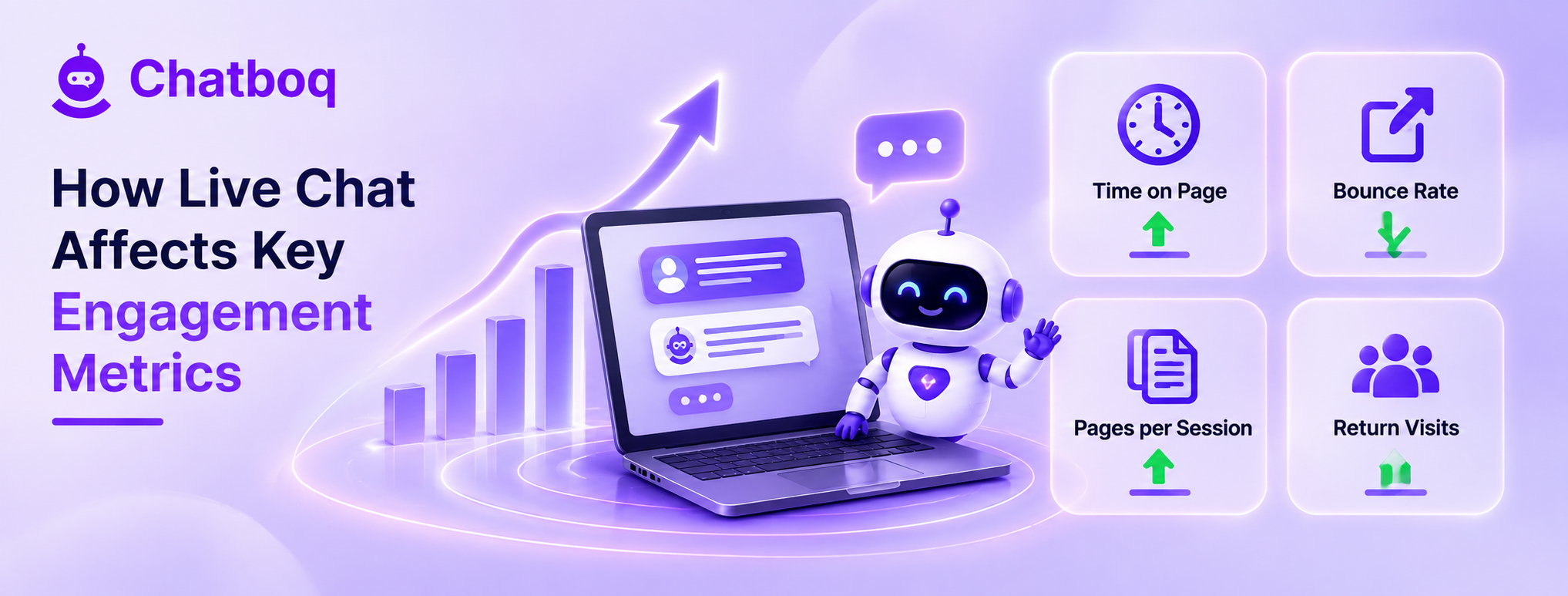
Establishing a clear baseline for time on page, bounce rate, and related metrics before launching chat, then tracking the same metrics afterward, is the only reliable way to actually confirm chat is producing the engagement benefit it's meant to.
Step 5: Iterate based on what chat reveals about content gaps
Using the recurring questions and confusion surfaced through chat to directly improve the underlying page content addresses engagement at its root rather than only through the chat interaction layered on top of it.

 ChatGPT
 Perplexity
 Claude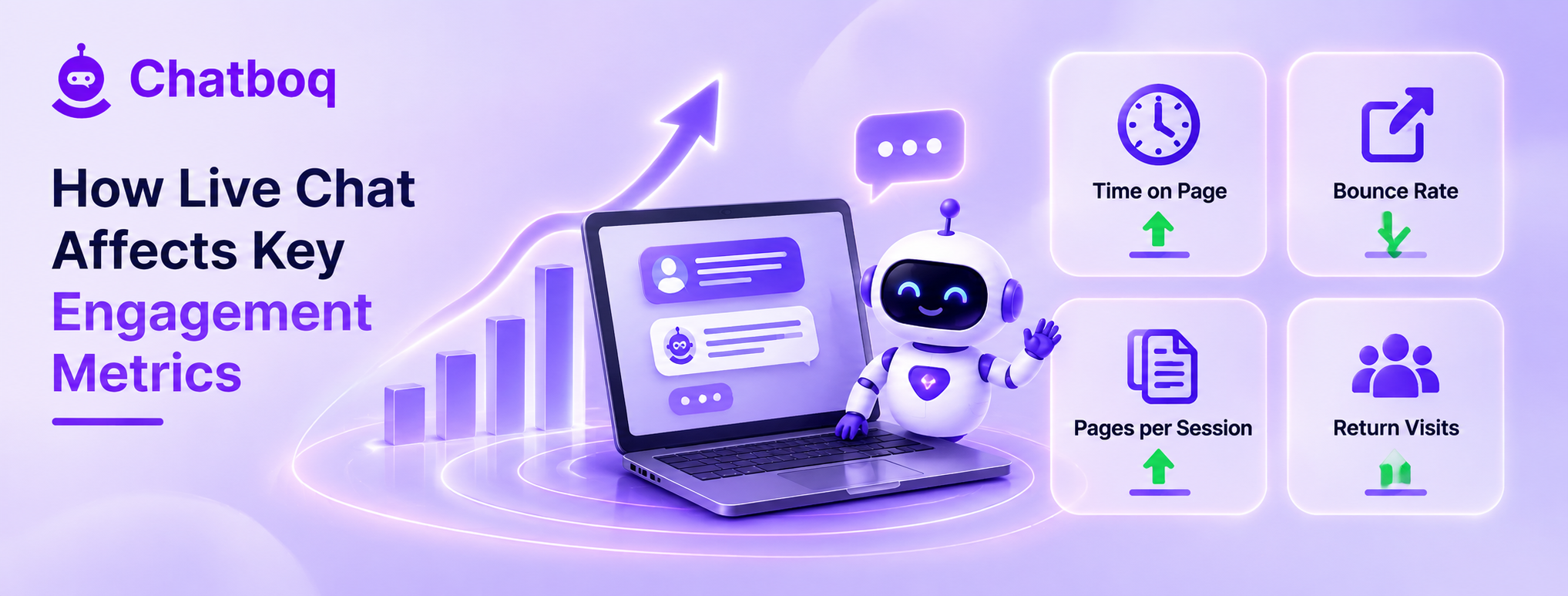



Leave a Comment
Your email address will not be published. Required fields are marked *
By submitting, you agree to receive helpful messages from Chatboq about your request. We do not sell data.