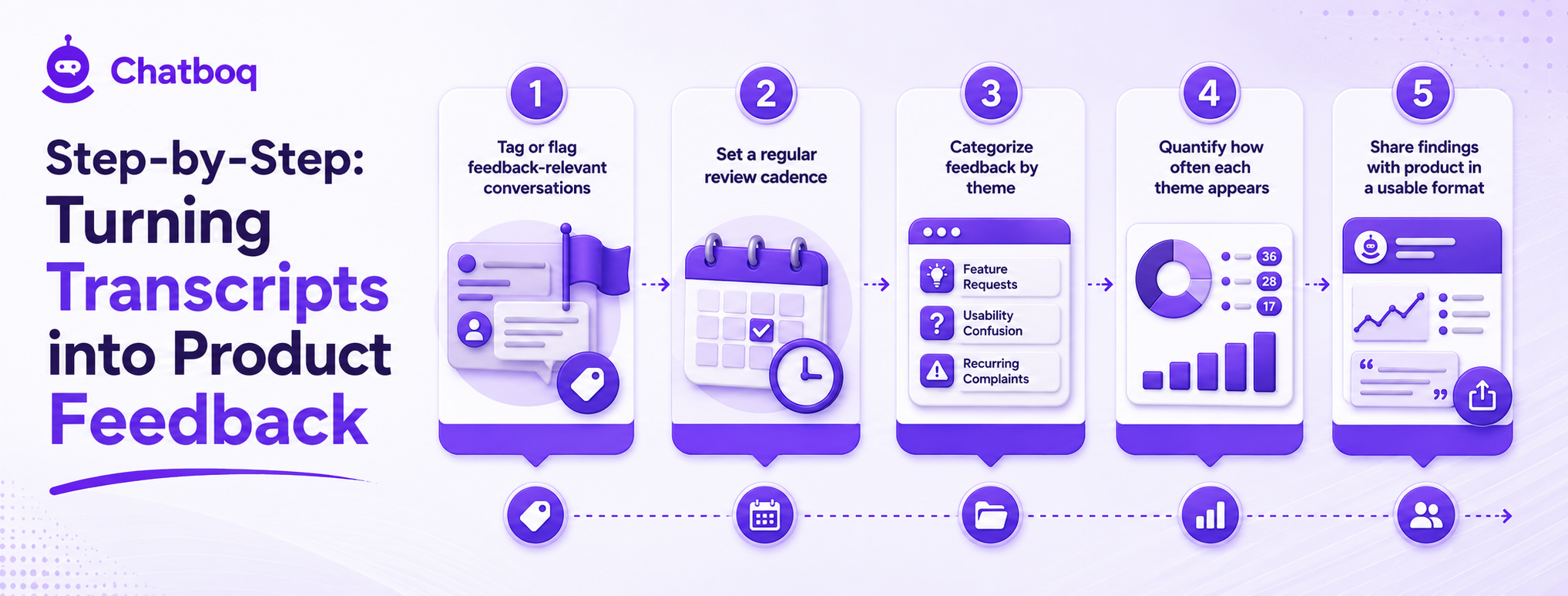
Turning raw transcripts into genuinely usable product feedback involves flagging feedback-relevant conversations as they happen, setting a regular cadence for reviewing them, categorizing what's found by theme, quantifying how often each theme actually appears, and sharing the resulting findings with product in a format they can genuinely act on.
Step 1: Tag or flag feedback-relevant conversations
Giving agents a simple, low-friction way to flag a conversation containing genuine product feedback, at the moment it happens, is far more reliable than expecting anyone to later remember and retrieve it from an unsorted, undifferentiated archive of past conversations.
Step 2: Set a regular review cadence
Committing to a regular, predictable cadence for reviewing flagged conversations, weekly or biweekly, keeps feedback from piling up into an overwhelming backlog that never actually gets processed and turned into something useful.
Step 3: Categorize feedback by theme
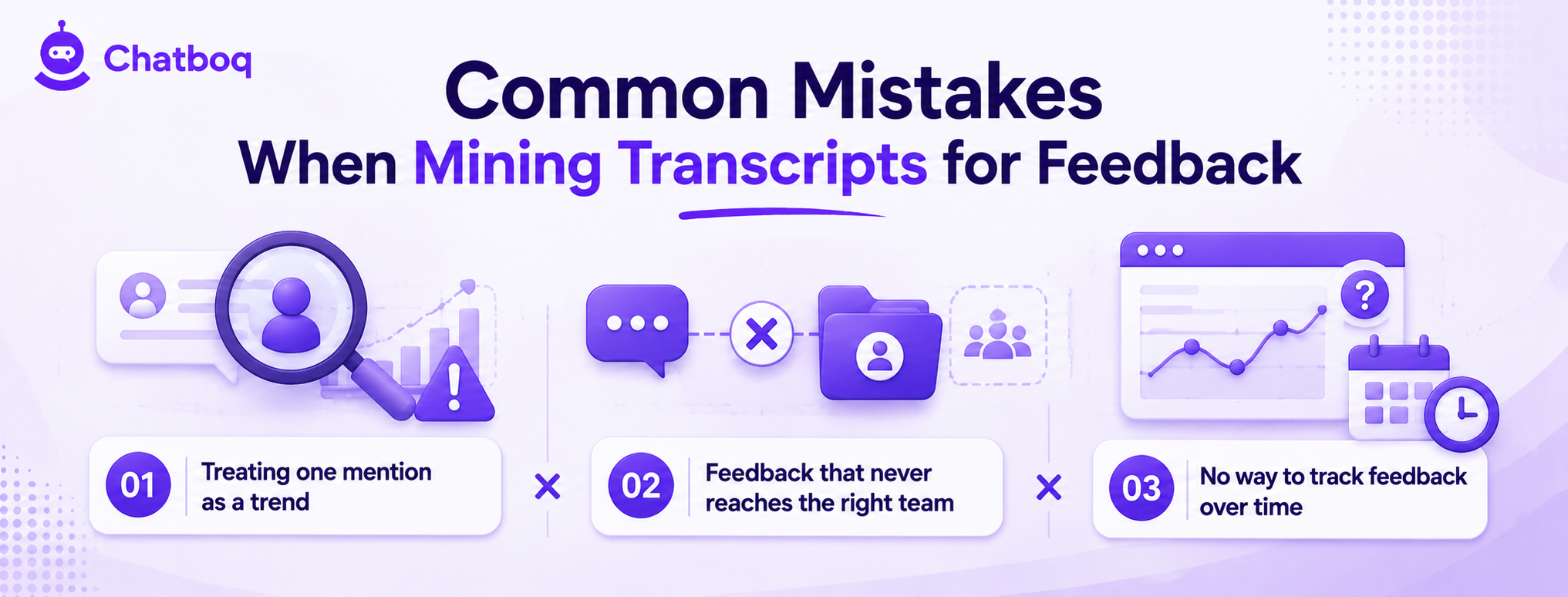
Sorting flagged feedback into clear, consistent themes, feature requests, usability confusion, recurring complaints, makes the resulting body of feedback considerably easier for a product team to scan and prioritize than an unsorted list of individual comments.
Step 4: Quantify how often each theme appears
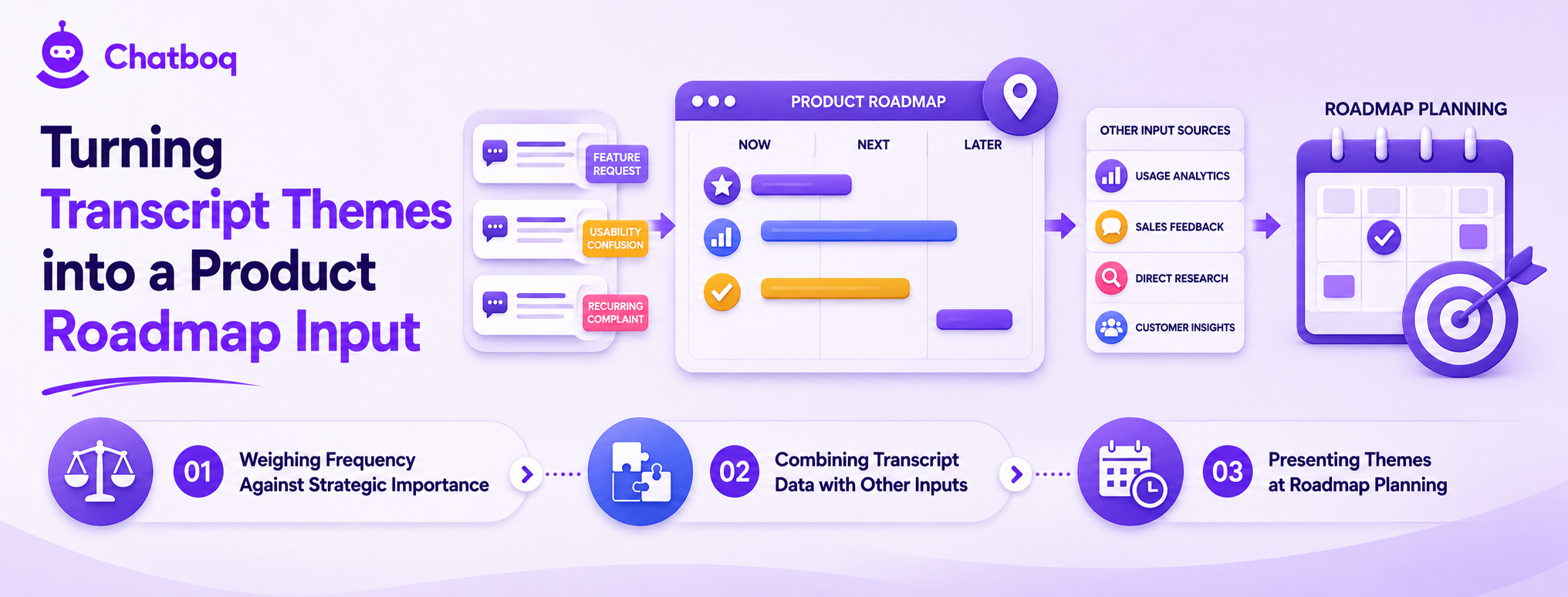
Attaching a rough frequency count to each theme, how many distinct conversations mentioned this specific issue, gives product a genuine sense of relative demand rather than treating every individual piece of feedback as equally significant regardless of how common or rare it actually is.
Step 5: Share findings with product in a usable format
Presenting a concise, themed summary with representative examples and frequency counts, rather than a raw dump of individual transcripts, respects the product team's time and dramatically increases the likelihood the feedback actually gets acted on.

 ChatGPT
 Perplexity
 Claude



Leave a Comment
Your email address will not be published. Required fields are marked *
By submitting, you agree to receive helpful messages from Chatboq about your request. We do not sell data.