
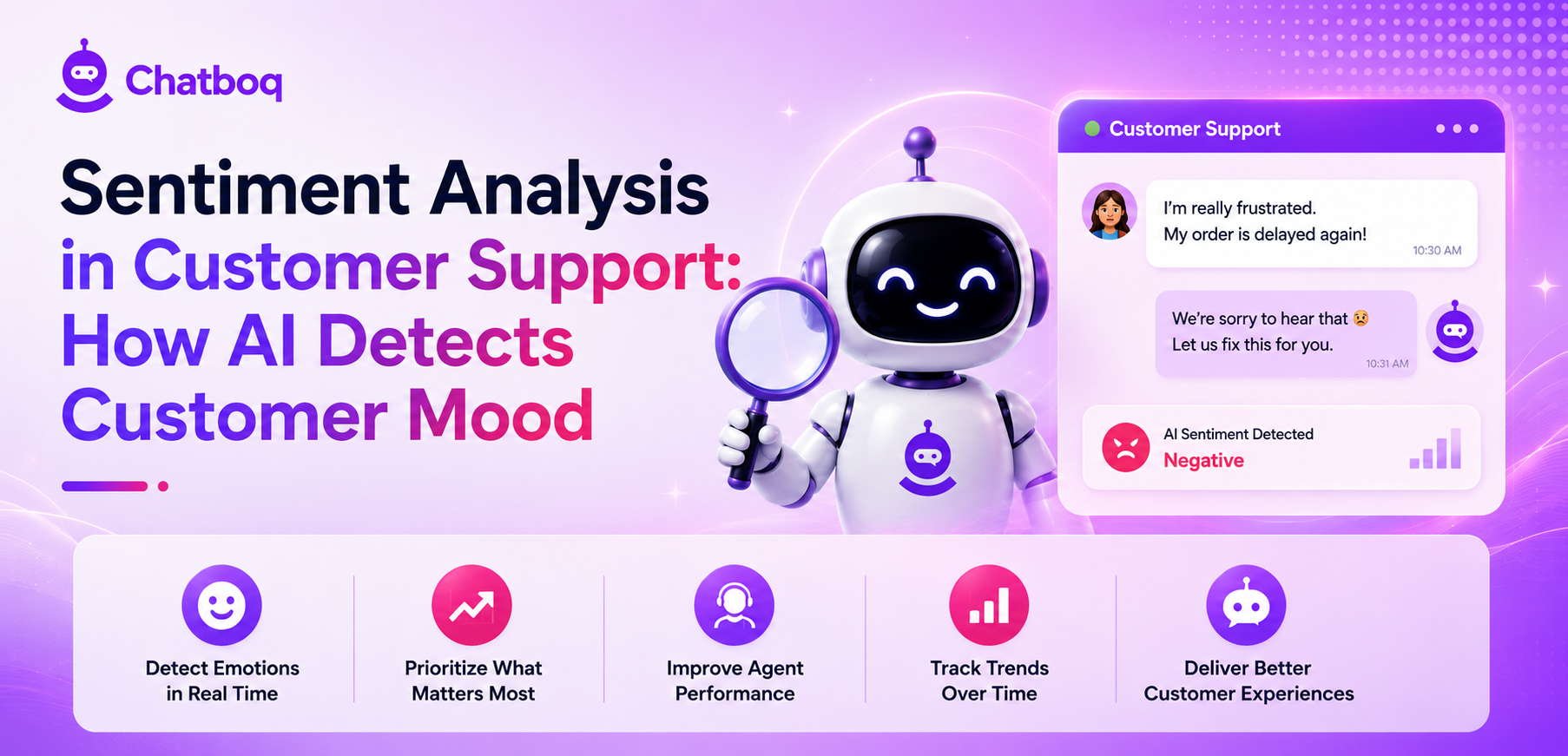
Sentiment analysis is the use of natural language processing to estimate the emotional tone of a piece of text or speech, most commonly classifying it as positive, negative, or neutral, though more advanced systems detect specific emotions, urgency, and shifts in tone over the course of a conversation.
Simple definition
At its simplest, sentiment analysis reads a customer's message and estimates whether they sound satisfied, frustrated, or somewhere in between, without a human having to read and judge every single conversation manually.
Sentiment analysis vs emotion detection vs intent recognition
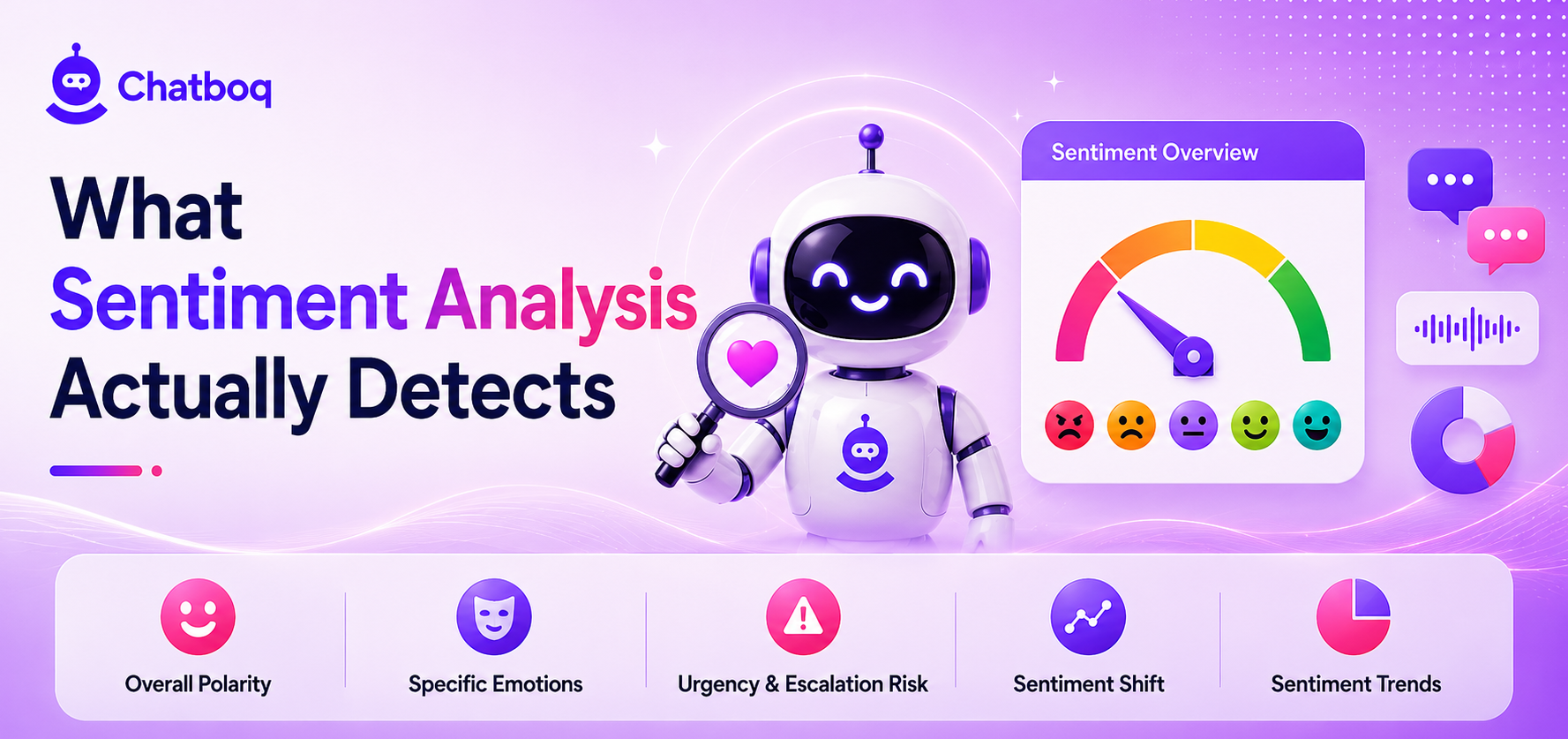
Sentiment analysis estimates overall emotional tone. Emotion detection goes further, attempting to identify a specific emotion like frustration, confusion, or delight rather than a single polarity score. Intent recognition is a related but distinct task that identifies what the customer actually wants, which is separate from how they feel about wanting it.
Why "positive, negative, neutral" is only the starting point
A basic three-category score treats a mildly annoyed customer the same as a genuinely furious one, both register as "negative," which is why more useful systems add intensity and specific emotion categories rather than stopping at a single polarity label.
Why sentiment analysis has become standard in support tooling
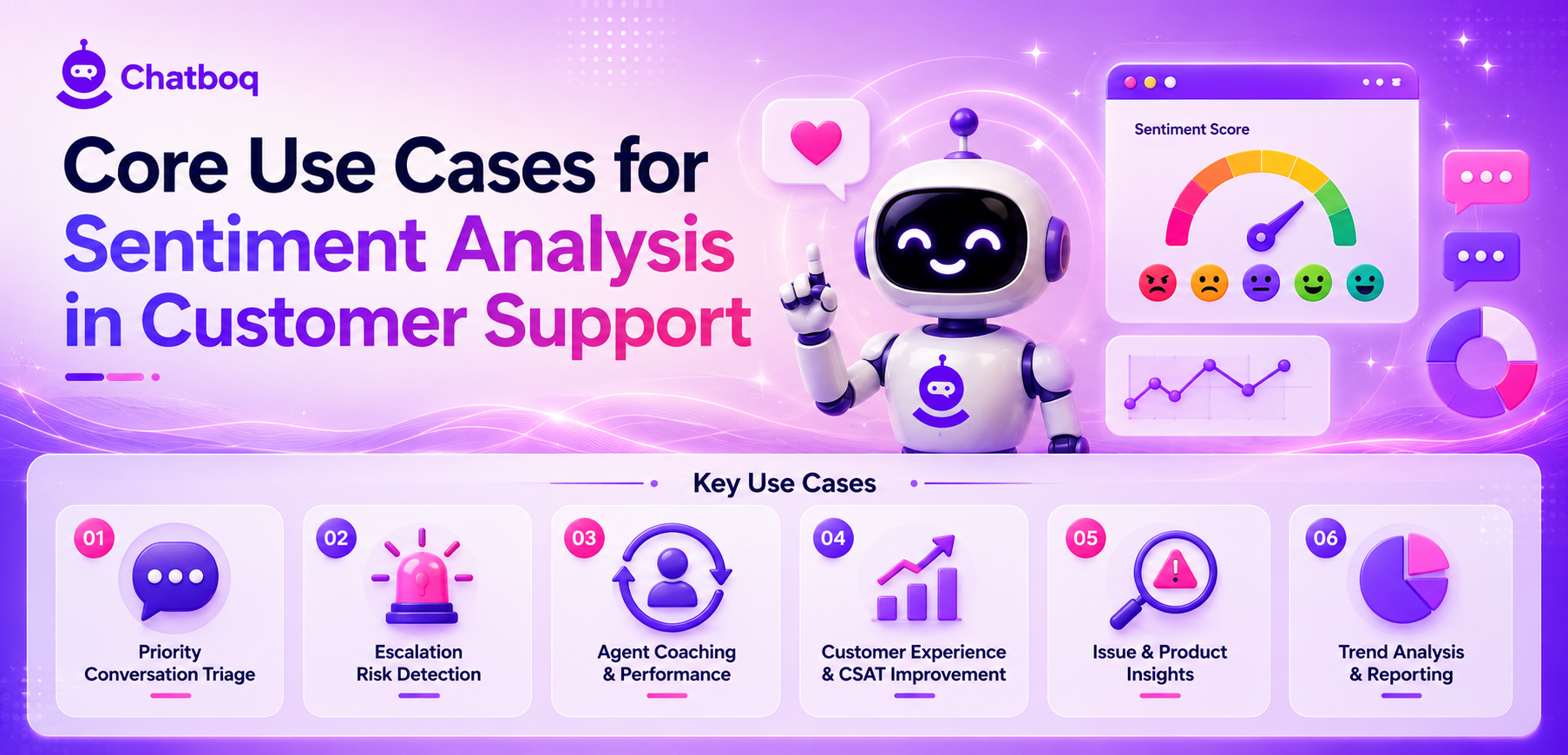
As support volume has grown and more of it runs through chat and chatbots rather than phone calls, sentiment analysis has become one of the more practical ways to flag which conversations need human attention without requiring someone to monitor every single one live.
 ChatGPT
 Perplexity
 Claude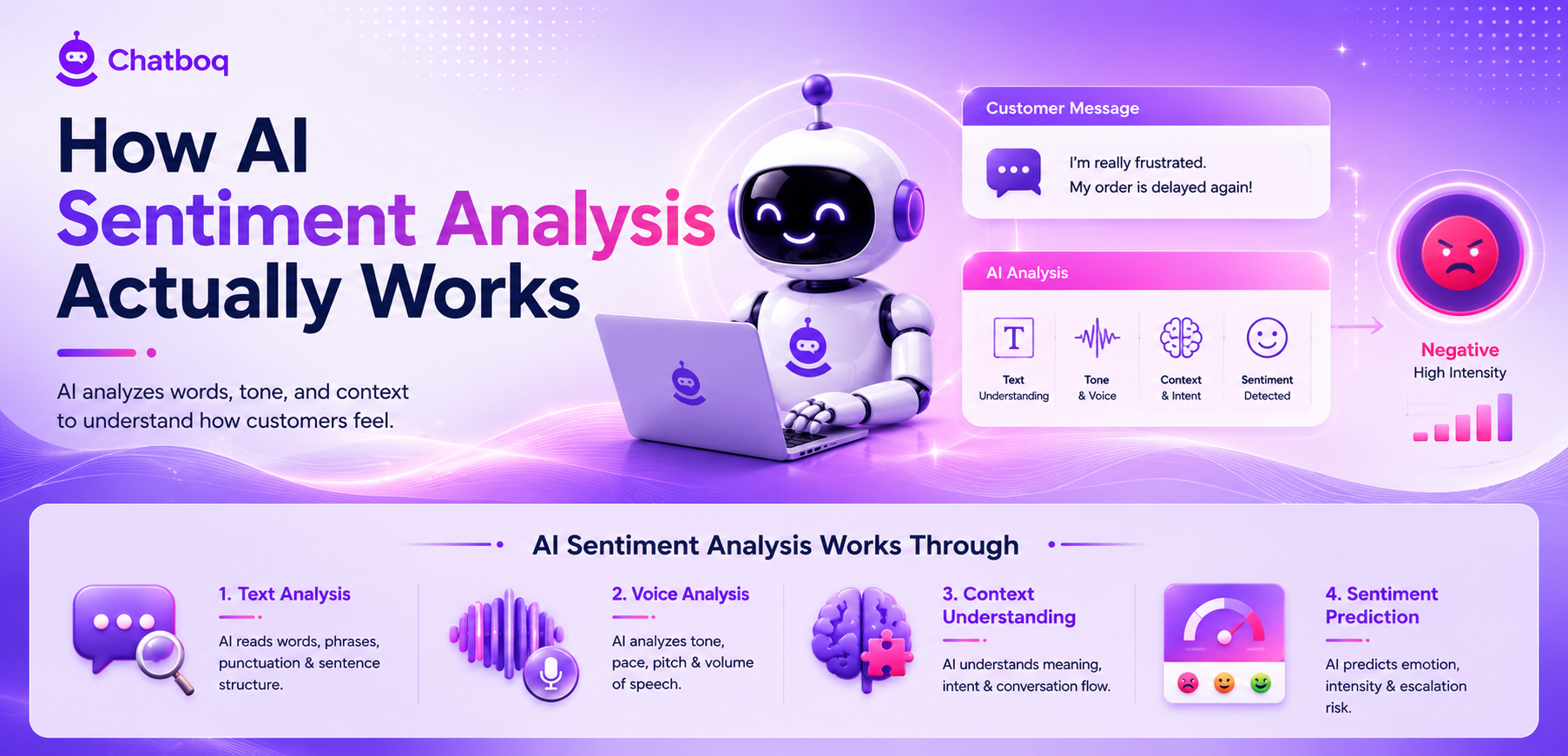





Leave a Comment
Your email address will not be published. Required fields are marked *
By submitting, you agree to receive helpful messages from Chatboq about your request. We do not sell data.