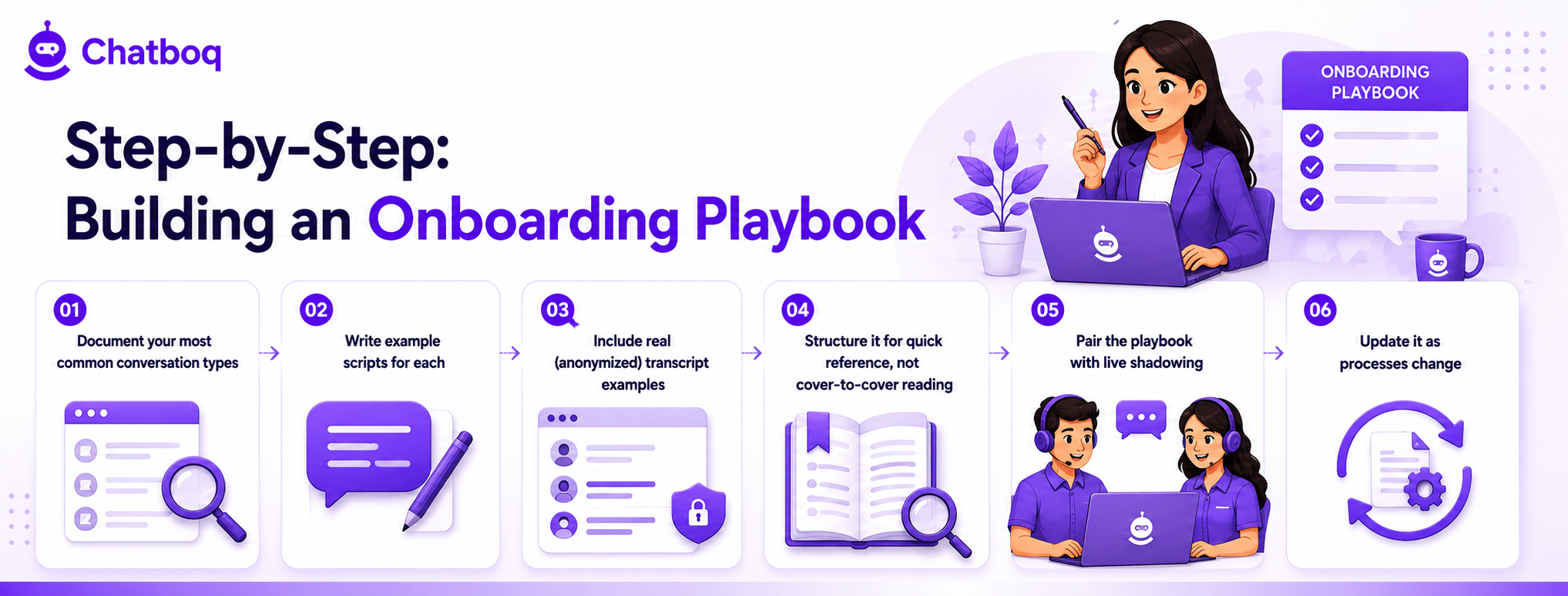
Building a genuinely useful playbook involves documenting the most common conversation types, writing example scripts for each one, including real anonymized transcript examples alongside the scripted guidance, structuring the whole document for quick reference rather than sequential reading, pairing it with live shadowing, and committing to updating it as processes change.
Step 1: Document your most common conversation types
Reviewing real historical chat volume to identify the specific conversation types a new agent will actually encounter most often ensures the playbook's content reflects genuine, evidence-based priority rather than a theoretical guess at what might come up.
Step 2: Write example scripts for each
For each common scenario, drafting a clear example of a strong response, applying the same natural-language writing principles that make any customer-facing script effective, gives new agents a genuinely useful starting template to adapt in their own voice.
Step 3: Include real (anonymized) transcript examples
Pairing scripted guidance with actual, anonymized examples of how a real conversation of that type unfolded gives new agents a considerably more concrete, realistic sense of what to expect than an idealized, hypothetical script alone can provide.
Step 4: Structure it for quick reference, not cover-to-cover reading
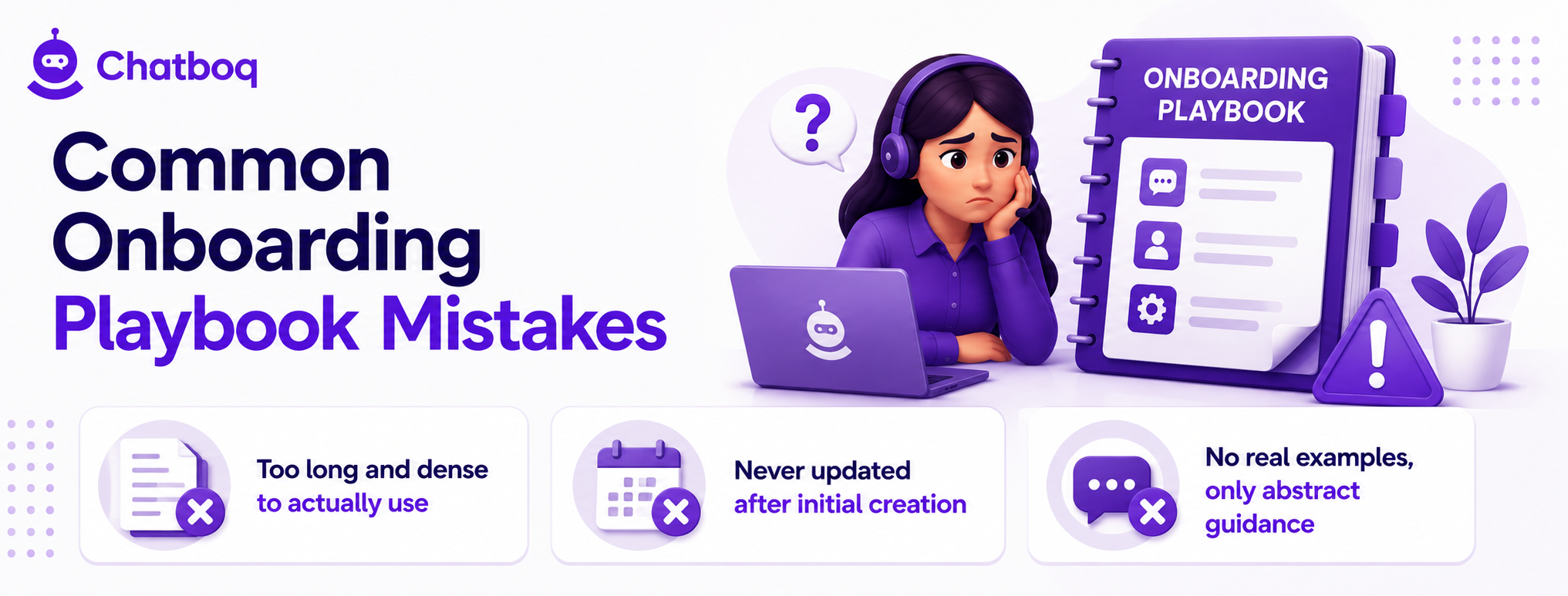
Organizing the playbook with clear headings, a searchable structure, and short, scannable sections respects how it's actually going to be used in practice, quickly consulted mid-conversation, rather than assuming an agent will read it start to finish and retain everything from a single pass.
Step 5: Pair the playbook with live shadowing
Combining the written playbook with genuine live shadowing of experienced agents reinforces the material in a way that reading alone can't fully replicate, giving a new agent both a written reference and a real, observed model of how it's actually applied.
Step 6: Update it as processes change
Assigning clear ownership for keeping the playbook current as policies, tools, and common conversation types evolve prevents it from quietly becoming an outdated, unreliable reference that new agents can no longer fully trust.

 ChatGPT
 Perplexity
 Claude




Leave a Comment
Your email address will not be published. Required fields are marked *
By submitting, you agree to receive helpful messages from Chatboq about your request. We do not sell data.