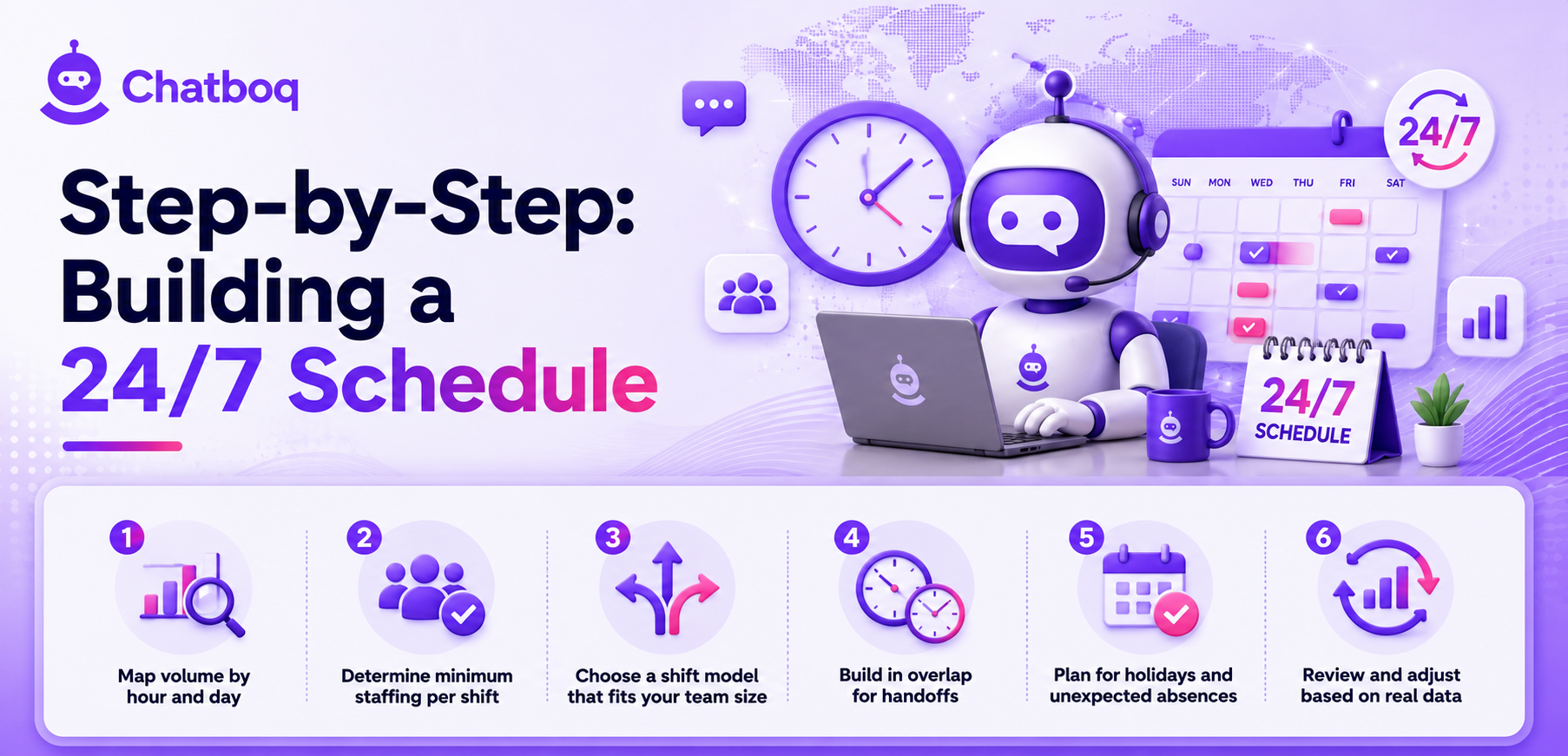
Building this well involves mapping actual volume by hour and day, determining realistic minimum staffing for each shift, choosing a shift model that genuinely fits the team's current size, building in deliberate overlap for handoffs, planning explicitly for holidays and unexpected absences, and reviewing the whole schedule against real data on an ongoing basis.
Step 1: Map volume by hour and day
Pulling historical volume data broken down by hour and day of week reveals the actual shape of demand, which almost never distributes evenly and instead usually shows clear, predictable peaks and quiet periods.
Step 2: Determine minimum staffing per shift
Setting a realistic minimum staffing level for each shift, based on the actual mapped volume for that specific window, prevents both wasteful overstaffing during quiet hours and dangerous understaffing during genuine peaks.
Step 3: Choose a shift model that fits your team size
Smaller teams often need to lean more heavily on rotation or hybrid AI coverage, while larger teams have more flexibility to adopt a genuine follow-the-sun model without overburdening any individual agent.
Step 4: Build in overlap for handoffs
A brief but deliberate overlap window at every shift boundary ensures active situations transfer smoothly rather than falling into a gap right at the transition between one shift and the next.
Step 5: Plan for holidays and unexpected absences
Building in some staffing buffer and a clear backup plan for holidays and unplanned absences prevents a single sick day from creating an actual, unplanned coverage gap.
Step 6: Review and adjust based on real data
Regularly reviewing how the actual schedule performed against real volume and outcomes, and adjusting accordingly, keeps the schedule genuinely matched to current reality rather than frozen at whatever assumptions were true when it was first built.

 ChatGPT
 Perplexity
 Claude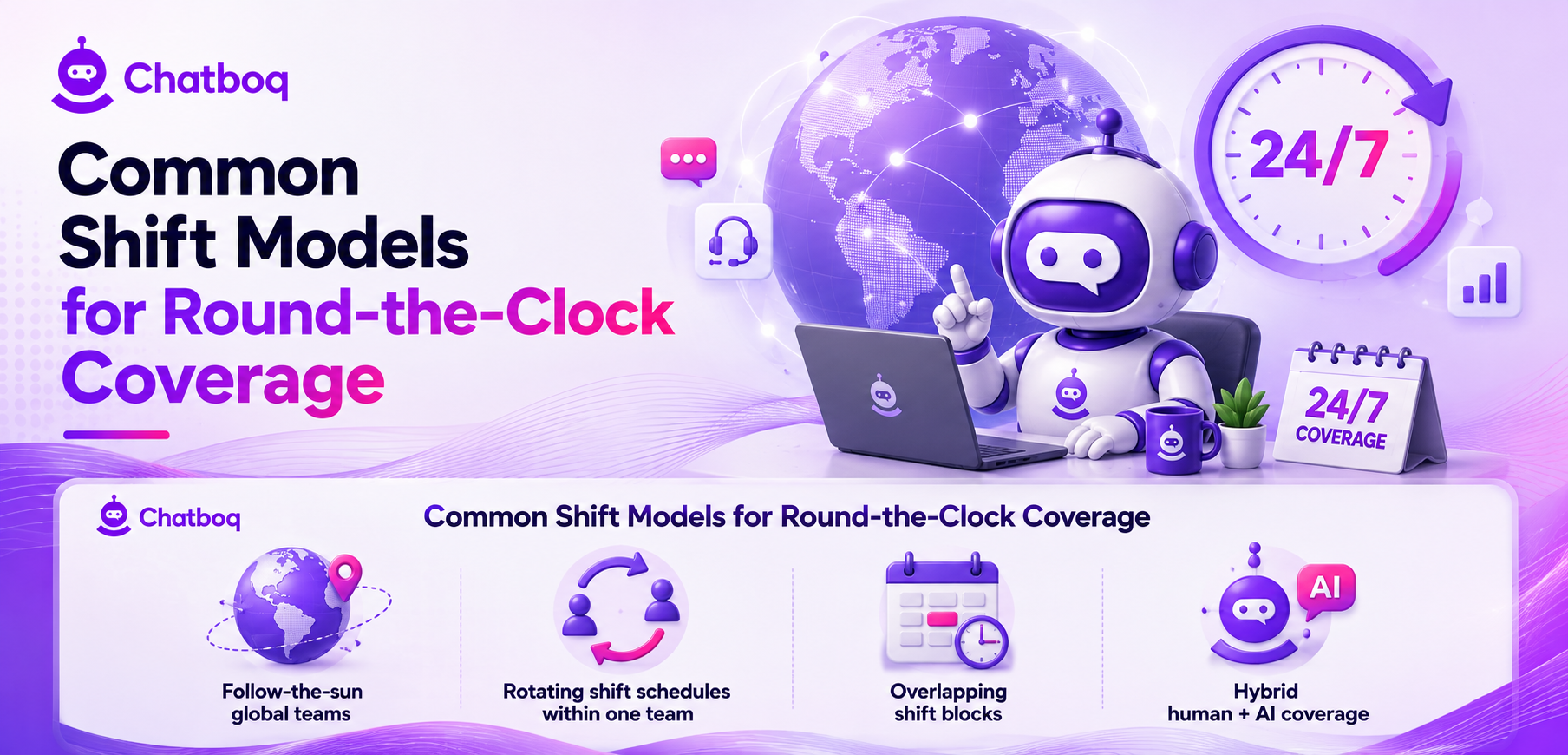



Leave a Comment
Your email address will not be published. Required fields are marked *
By submitting, you agree to receive helpful messages from Chatboq about your request. We do not sell data.