
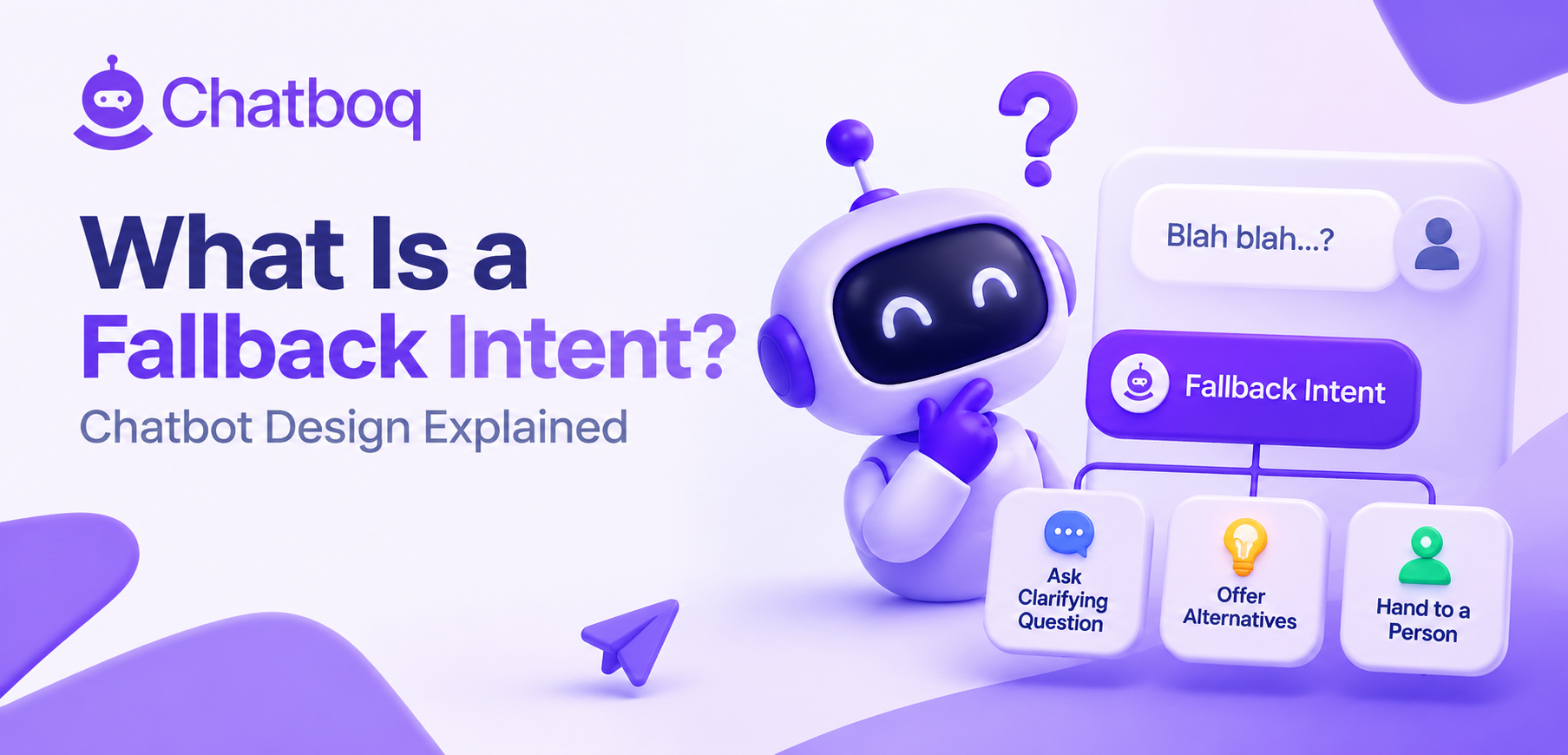
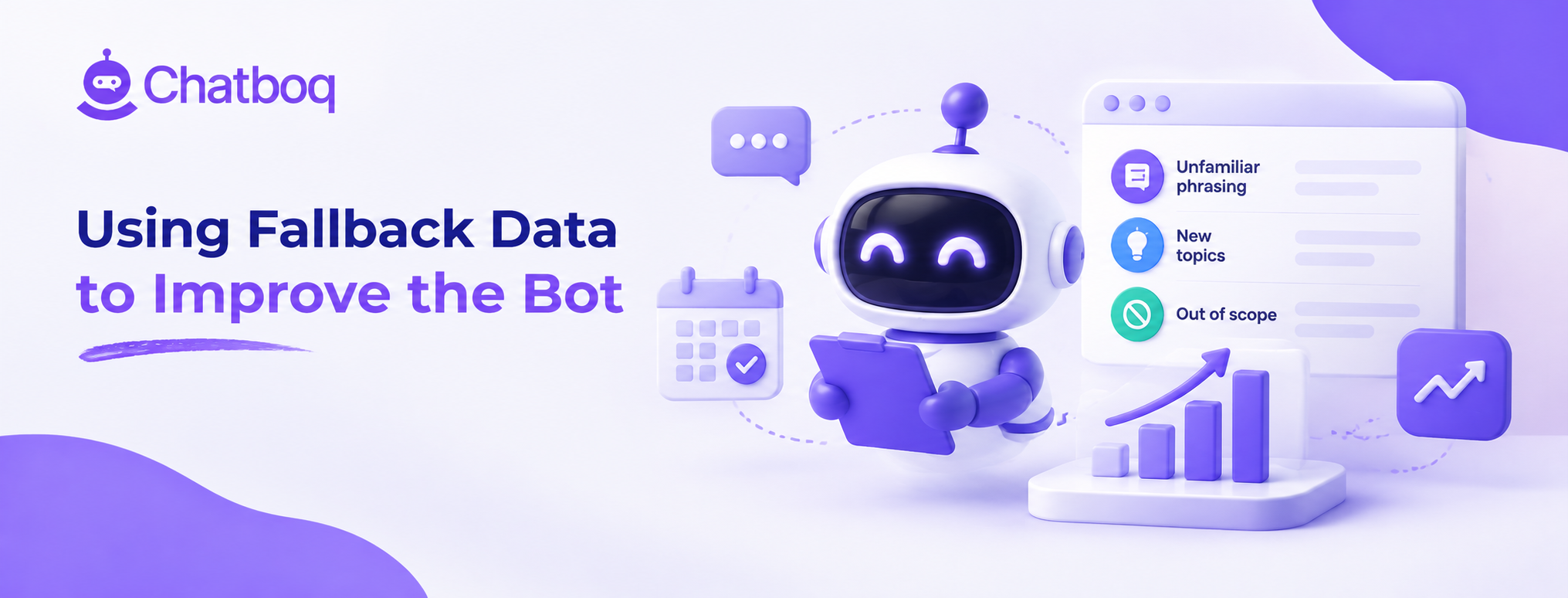
A fallback fires when no known intent scores above the confidence threshold, which can mean the message was ambiguous, phrased unusually, or about something the bot was never built to handle.
Below the confidence threshold
The most common trigger is a message where the highest scoring intent still falls short of the threshold set for answering, which is the system correctly declining to guess.
This is fallback working as designed, and a system that never falls back has usually had its threshold lowered to the point where it answers confidently regardless of accuracy.
Genuinely out of scope
Some messages fall back because the user asked about something outside the bot's remit entirely, which is a scope question rather than a training question.
These should not be trained into the model, since expanding coverage to catch every stray topic degrades accuracy across the intents that actually matter.
Phrasing the model has not seen
A recognisable request expressed in unfamiliar language will fall back even though a human would understand it immediately, which is a training coverage gap.
These are the most valuable fallbacks to review, because each one represents a real customer phrasing that can be added directly to an existing intent.
Multi-part messages the model cannot split
A message containing two separate requests distributes probability across intents and frequently falls below threshold even though each half would have matched confidently on its own.
Handling these by acknowledging both requests and addressing them in sequence works considerably better than treating the whole message as unrecognised.
 ChatGPT
 Perplexity
 Claude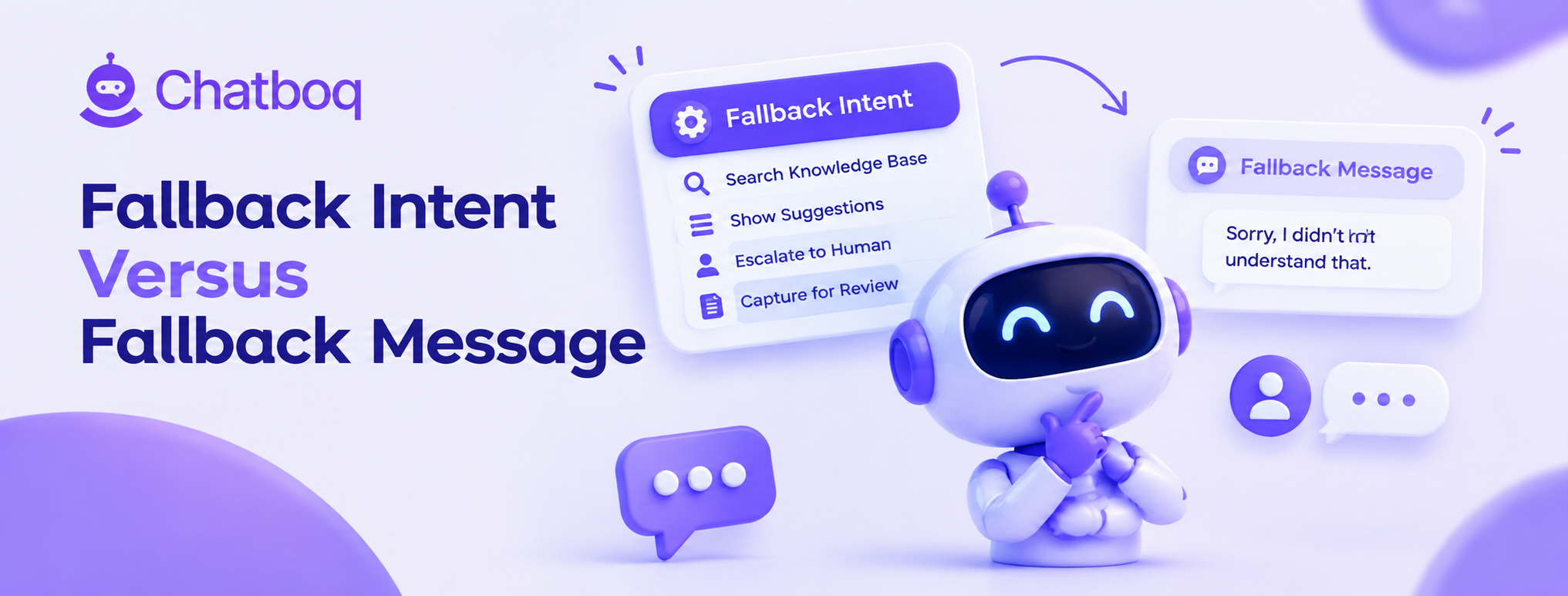




Leave a Comment
Your email address will not be published. Required fields are marked *
By submitting, you agree to receive helpful messages from Chatboq about your request. We do not sell data.