
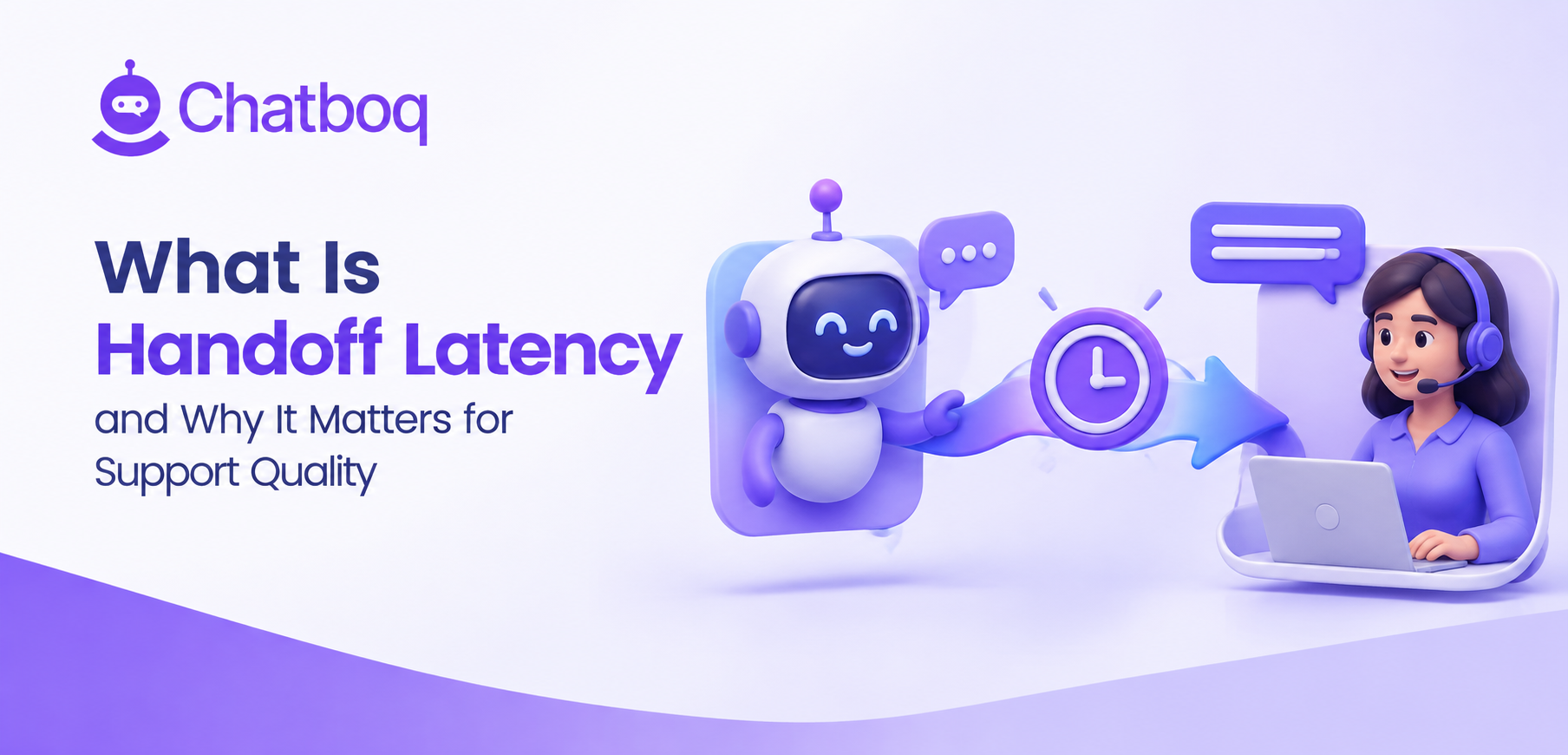
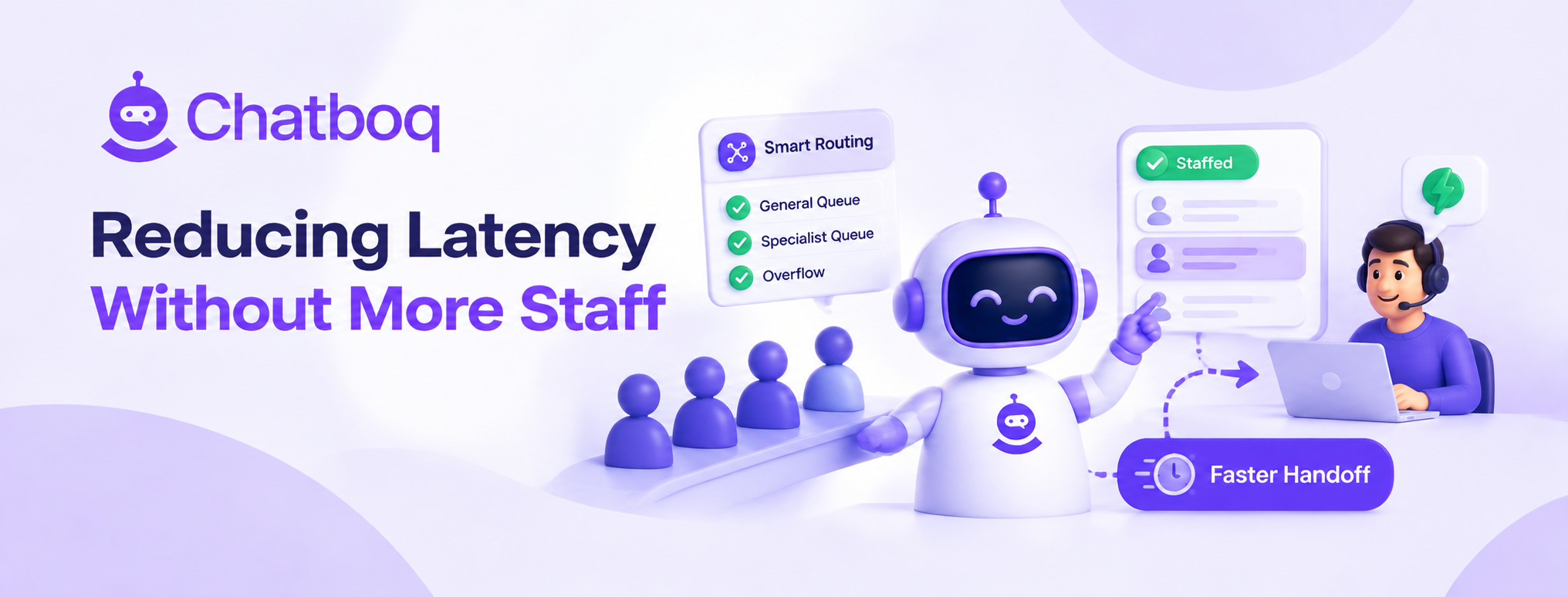
It runs from the escalation trigger to the first genuine agent message, covering routing, queueing, assignment and the agent reading the context.
The stages inside the measurement
Routing decides which queue the conversation enters, queueing depends on current load, assignment depends on agent availability, and the agent then needs a moment to read the history.
Each stage is separately optimisable, and measuring the total without the breakdown makes it difficult to know which one is responsible for a poor figure.
Why it is separate from first response
First response measures how quickly a customer hears anything at all, which automation frequently satisfies within seconds even when the eventual human reply takes far longer.
Reporting only first response therefore conceals handoff delay entirely, which is why organisations with excellent first response figures still receive complaints about waiting.
What the customer experiences
From the customer's perspective the handoff is invisible, and all they see is a conversation that stops responding after they asked for a person.
That silence is what drives abandonment, which means the perceived latency depends as much on communication as on the actual elapsed time.
Time the agent spends reading context
Even an instant technical transfer adds effective latency while the agent reads what happened, which is why a long unsummarised transcript slows the handoff in practice.
Measuring from transfer to the agent's first message, rather than to assignment, captures this and reflects what the customer actually experiences.
 ChatGPT
 Perplexity
 Claude




Leave a Comment
Your email address will not be published. Required fields are marked *
By submitting, you agree to receive helpful messages from Chatboq about your request. We do not sell data.