
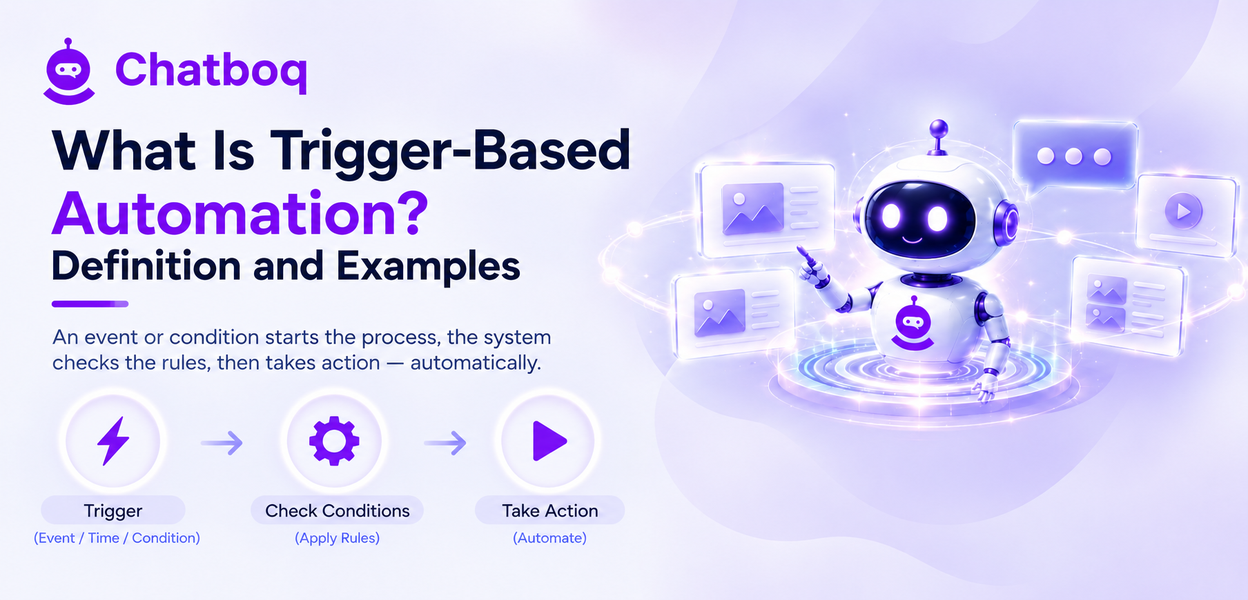
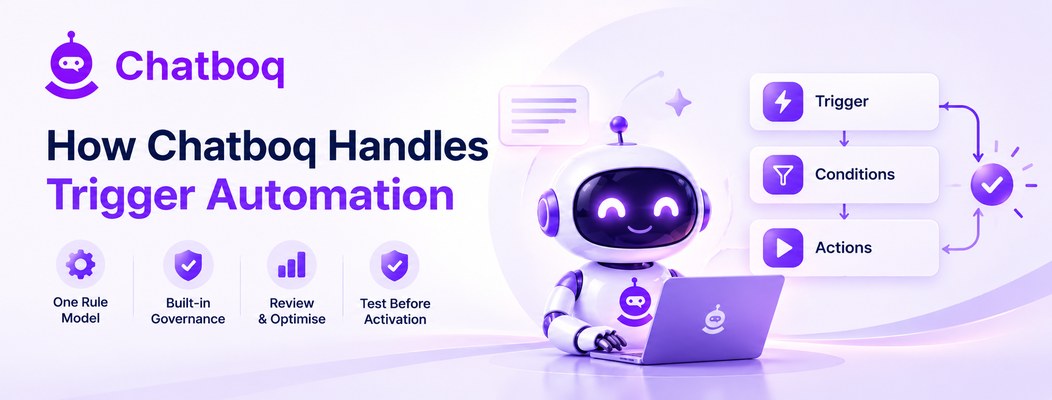
Every rule has a trigger that starts it, conditions that decide whether it applies, and actions it performs when it does.
The trigger
The trigger is the event that causes the system to evaluate the rule, whether that is a message arriving, a status changing, a threshold being crossed or a time elapsing.
Choosing the right trigger is what determines whether an automation fires at a useful moment or slightly too early to be helpful.
The conditions
Conditions narrow a trigger to the cases where the action is appropriate, such as only for a particular customer tier, channel, topic or time of day.
Rules with too few conditions fire in situations nobody anticipated, which is the most common cause of automation embarrassing a business.
The actions
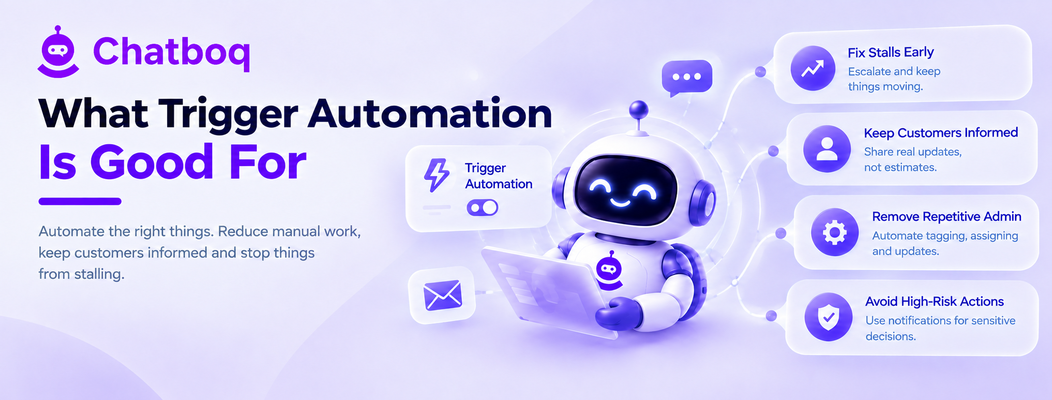
Actions range from sending a message to assigning a conversation, changing priority, creating a task, updating a record or calling an external system.
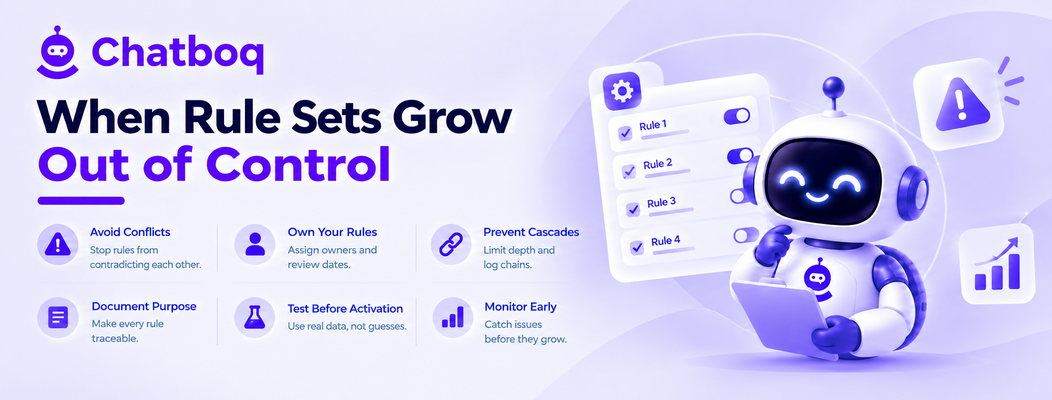
A single rule performing several actions is convenient and harder to debug, which is a reasonable trade-off only when the actions genuinely belong together.
The exceptions
Explicit exceptions preventing a rule from firing are as important as the conditions permitting it, particularly for anything customer-facing.
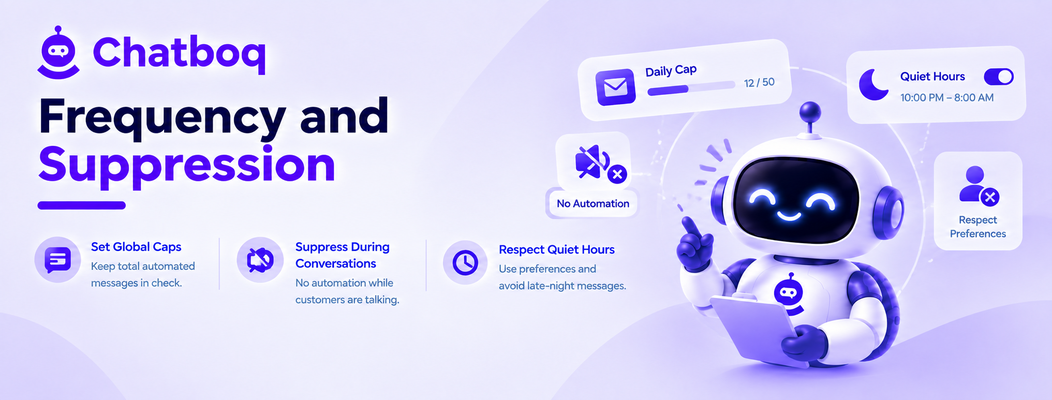
Suppressing automated messages during an active complaint, for example, prevents the tone-deaf sequence that follows a customer expressing frustration.
 ChatGPT
 Perplexity
 Claude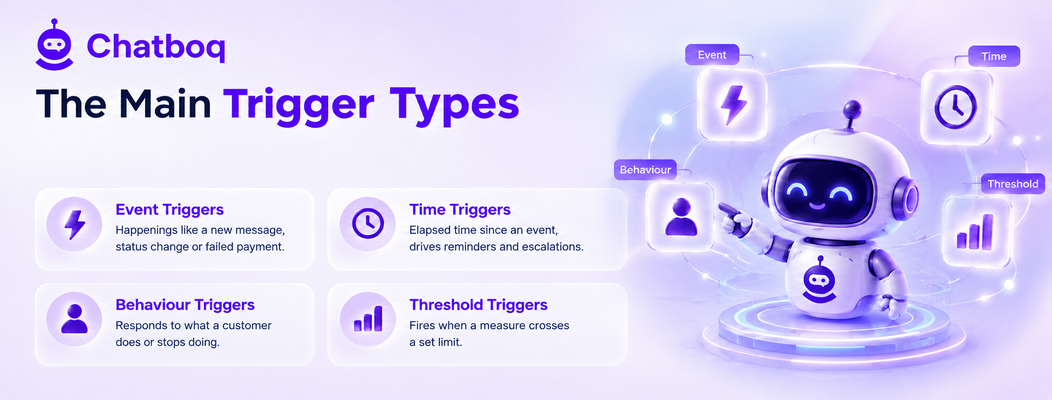






Leave a Comment
Your email address will not be published. Required fields are marked *
By submitting, you agree to receive helpful messages from Chatboq about your request. We do not sell data.