
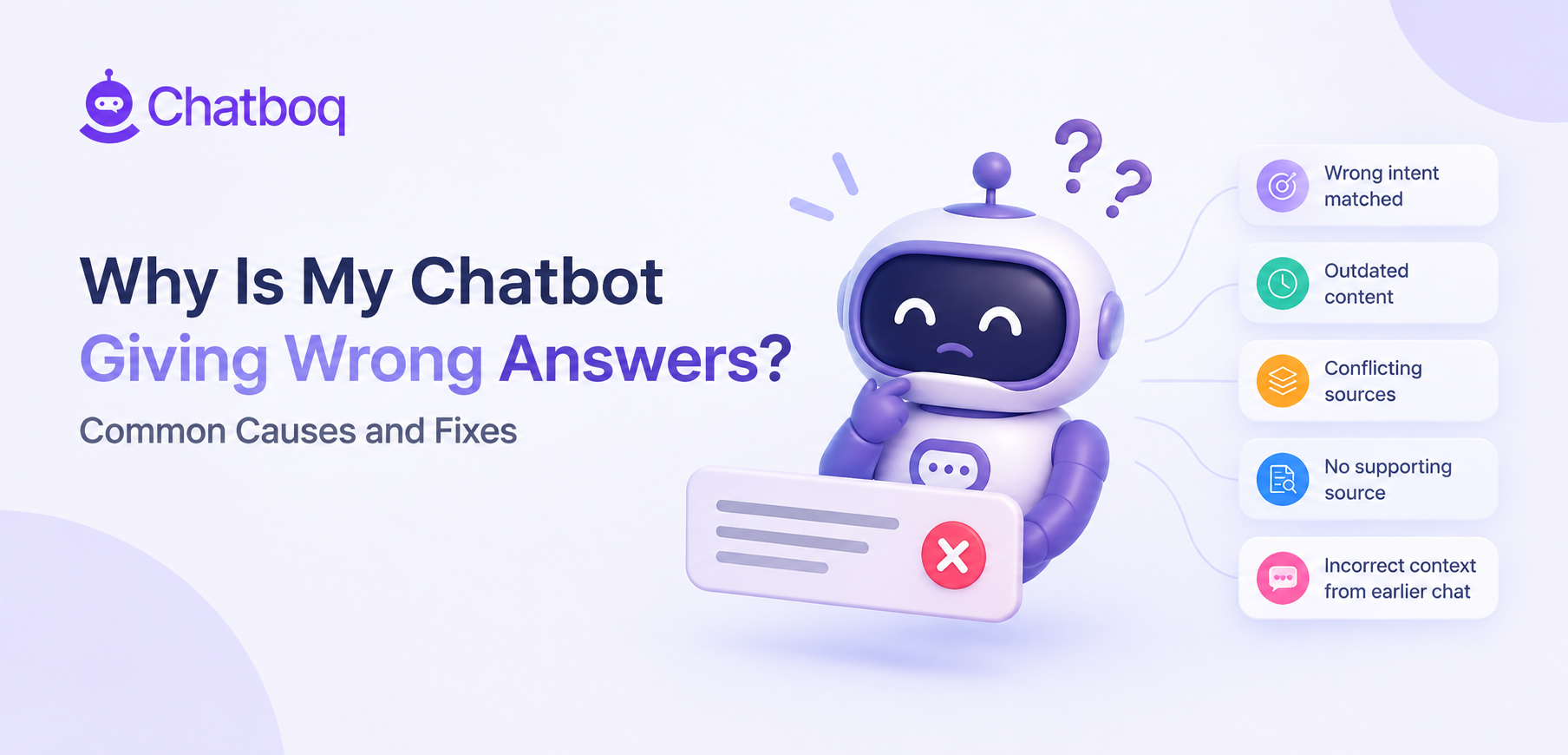
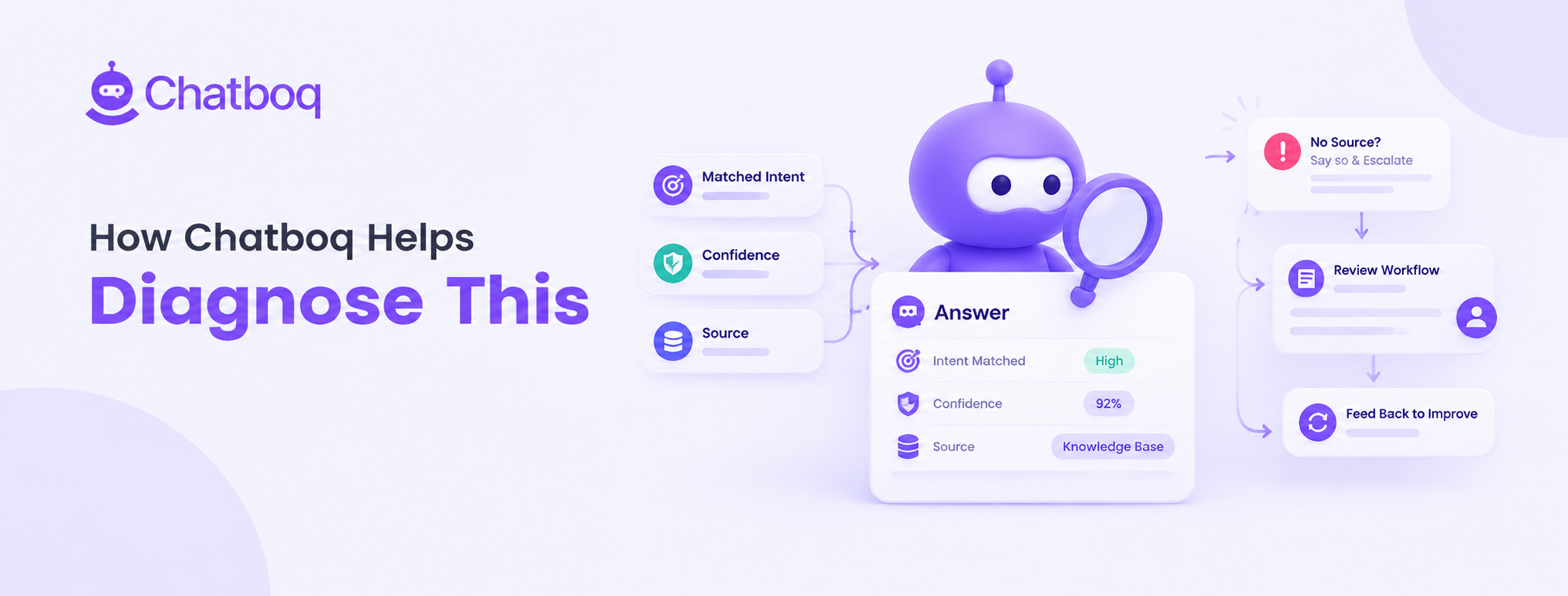
Start from a specific wrong answer and check, in order, which intent matched, what source was used, what the confidence was and what context was in play.
Reproduce it first
Sending the same message and seeing whether the wrong answer recurs distinguishes a systematic problem from a one-off, which is the first thing worth knowing.
If it does not reproduce, the cause is usually context from the original conversation rather than anything about the message itself.
Check what the system understood
Looking at which intent matched, and with what confidence, immediately separates misclassification from a content problem.
An intent that is clearly wrong points at training and thresholds, while a correct intent with a wrong answer points at the content behind it.
Check the source
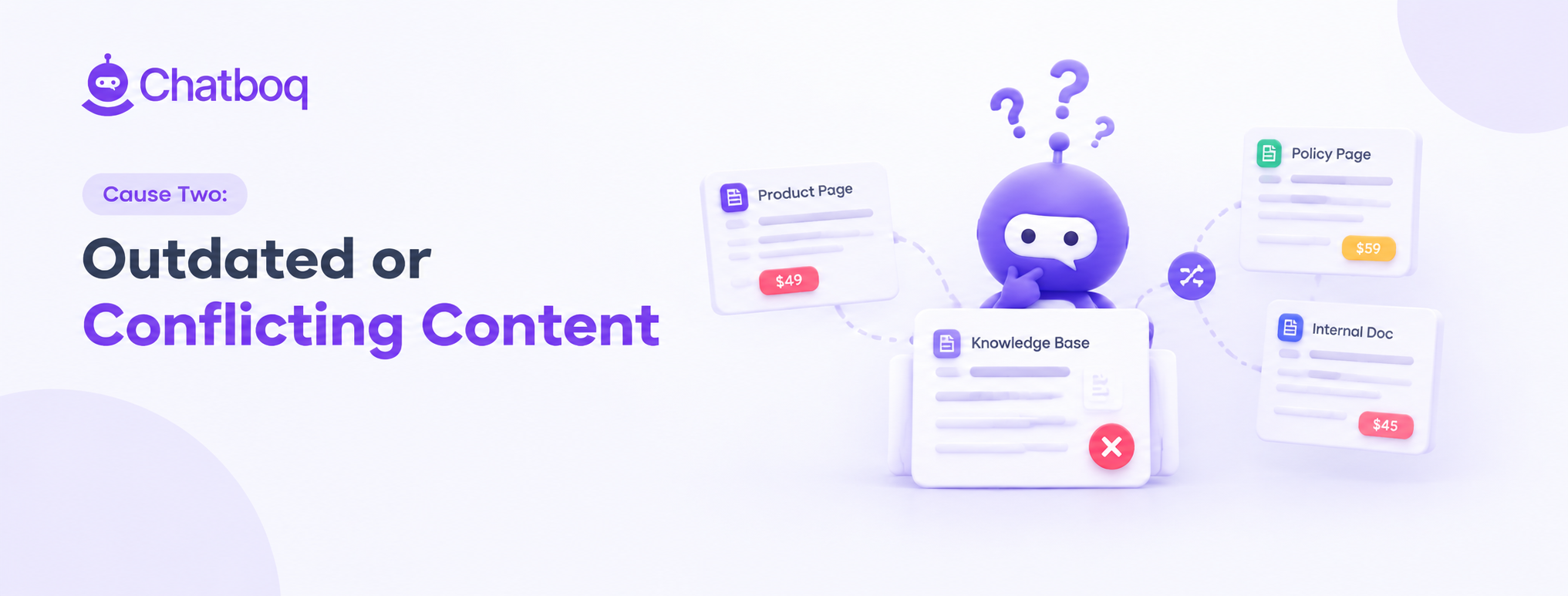
Identifying which article or record produced the answer tells you whether the content is wrong, out of date or simply the wrong source for this question.
An answer with no identifiable source is generated rather than retrieved, which is a different problem entirely.
Check the conversation history
Where a message alone produces the correct answer but the original conversation did not, context carried from an earlier topic is the likely cause.
This is the cause most often missed, because the message in isolation looks like it was handled correctly.
Checking whether it is widespread
A single wrong answer and a pattern affecting many conversations warrant different responses, and grouping similar conversations establishes which you have.
A pattern usually points at content or intent design, while an isolated case is more often context or a marginal classification.
 ChatGPT
 Perplexity
 Claude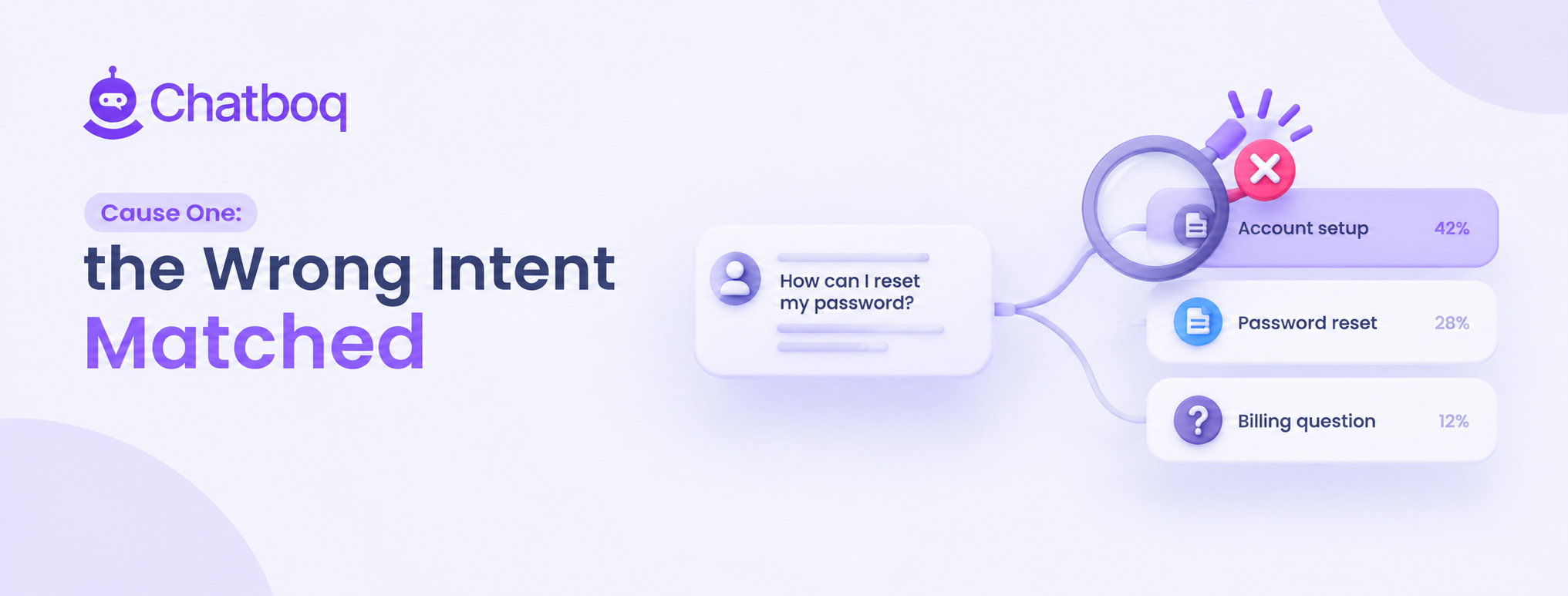




Leave a Comment
Your email address will not be published. Required fields are marked *
By submitting, you agree to receive helpful messages from Chatboq about your request. We do not sell data.