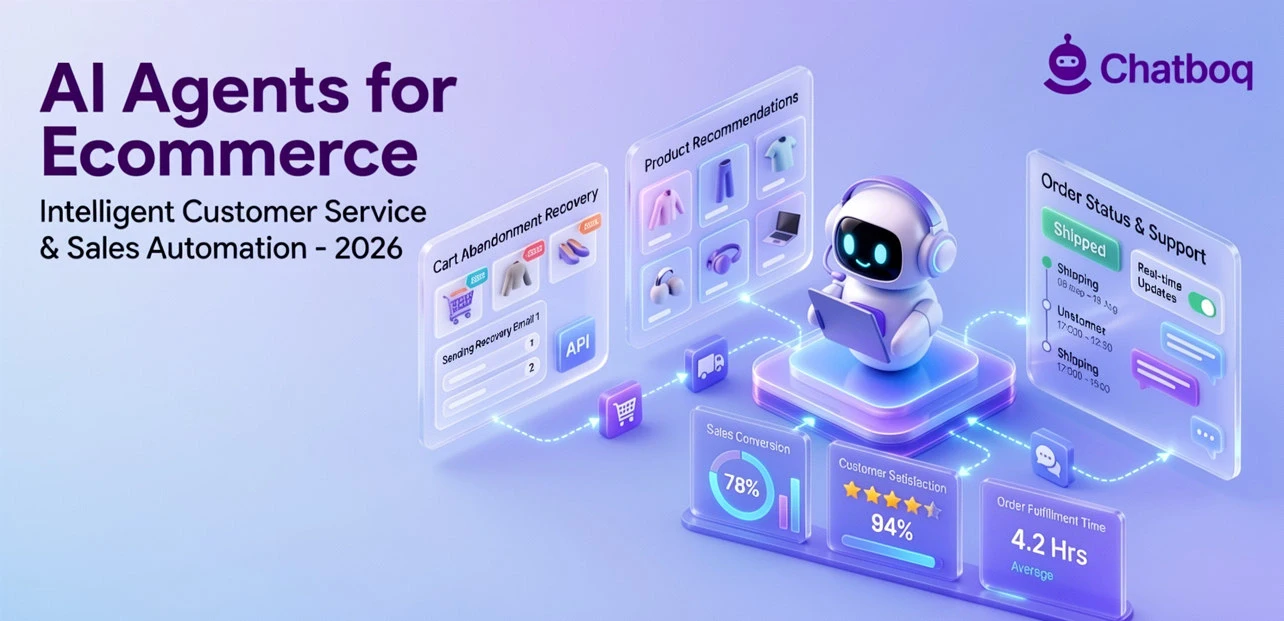
AI agents in ecommerce deliver high impact across discovery, pricing, cart recovery, inventory forecasting, fraud detection, support automation, marketing personalization, and emerging agent-to-agent commerce by enabling real-time decisions, contextual intelligence, and cross-system execution that improve efficiency and revenue outcomes.
AI Shopping Assistants for Product Discovery and Guided Selling
AI shopping assistants let customers express needs in natural language and return curated product recommendations with real time availability and delivery details. A query like “gift for a new runner, budget $80, delivered by Friday” is filtered for relevance, price, stock, and shipping constraints.
Guided selling reduces search to cart time by 30 to 60 percent for users with clear intent but limited product knowledge.
Dynamic Pricing Optimization Based on Demand and Behavior
Dynamic pricing agents adjust prices in real time based on inventory, competitor pricing, demand signals, customer segment value, and margin constraints. When stock is low and demand is high, prices increase within defined limits.
The same agent may offer targeted discounts to price sensitive users while keeping standard pricing for others. These systems require strict business rules to define safe operating boundaries for autonomous pricing decisions.
Intelligent Cart Abandonment Recovery Systems
Cart abandonment recovery agents detect abandonment events, classify reasons using behavioral signals like exit point and checkout progress, and choose interventions based on segment, cart value, and behavior patterns.
First time visitors and high LTV returning customers receive different recovery actions even for similar carts. Segment aware agents typically achieve 15 to 25 percent recovery rates compared to 5 to 10 percent for generic email flows.
Inventory Forecasting and Automated Replenishment Decisions
Inventory intelligence agents analyze sales velocity, seasonal patterns, supplier lead times, and demand signals to forecast inventory requirements and trigger replenishment orders before stockout thresholds are reached. Automated replenishment decisions within defined quantity and budget boundaries reduce the manual purchasing workload for ecommerce operations teams and prevent the revenue loss from stockouts on high-velocity products.
Fraud Detection and Payment Risk Intelligence
Fraud detection agents analyze transaction patterns, device fingerprints, behavioral biometrics, and customer history in real time to score payment risk before checkout completion. High-risk transactions trigger additional verification requirements or human review rather than automatic approval. Fraud agents that learn from confirmed fraud patterns update their risk scoring models continuously, improving detection accuracy as new fraud patterns emerge faster than manually updated rule sets can adapt.
Customer Support Automation with Contextual Memory
Support automation agents resolve customer inquiries by accessing full interaction history, order records, and account status before generating responses. Contextual memory reduces repetitive explanations and improves resolution consistency across sessions.
Chatboq’s AI driven support agents maintain conversation context and integrate with ecommerce data to handle order, account, and product queries within defined scope without human intervention.
Personalized Marketing Automation Across Channels
Marketing intelligence agents orchestrate personalized communication across email, SMS, push notifications, and on site messaging based on behavioral signals and lifecycle stage. Unlike rule based automation, they select channel, timing, content, and offers dynamically for each customer using real time data.
Platforms like Klaviyo and Omnisend provide the underlying infrastructure that AI agents use to execute ecommerce personalization workflows.
Agent-to-Agent Commerce and Autonomous Transaction Workflows
Agent to agent commerce is an emerging model where consumer AI agents interact directly with ecommerce AI agents to complete transactions without human involvement. A consumer agent can detect replenishment needs, compare prices and delivery options across platforms, select the best option, and execute the purchase autonomously.
This model is still early in 2026 but represents the direction of agentic commerce as trust systems and regulatory frameworks evolve for autonomous transactions.

 ChatGPT
 Perplexity
 Claude


Leave a Comment
Your email address will not be published. Required fields are marked *
By submitting, you agree to receive helpful messages from Chatboq about your request. We do not sell data.