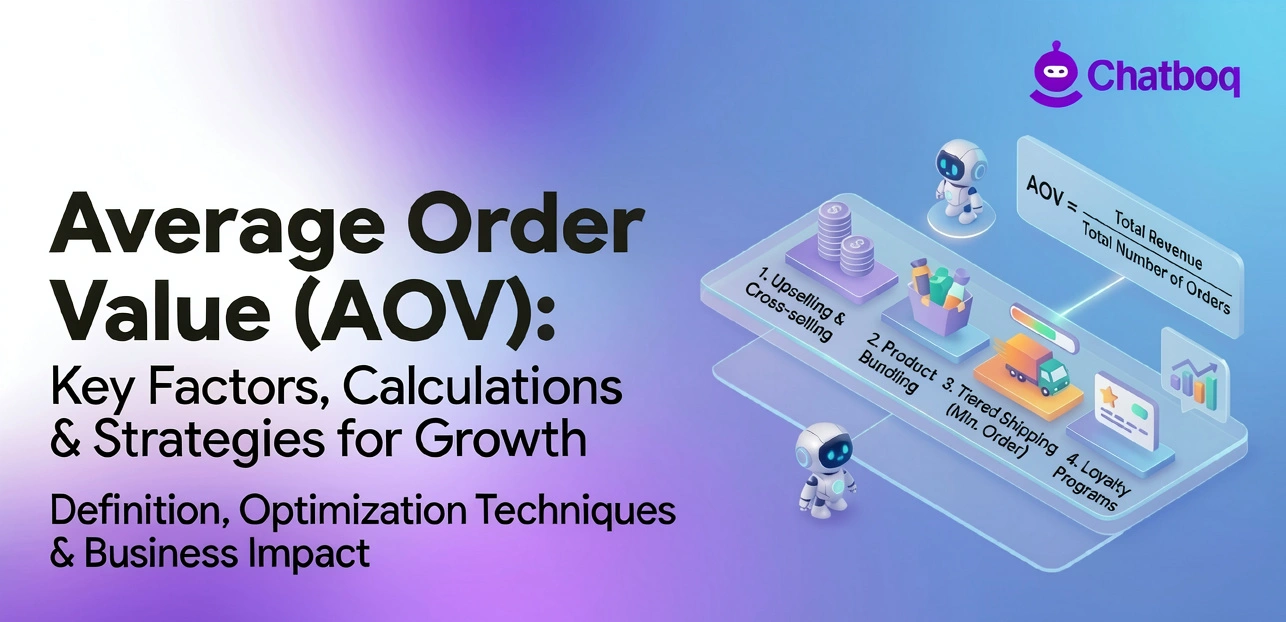
The most effective AOV strategies add value to the customer's purchase rather than pressuring them to spend more. Upselling, cross-selling, bundling, thresholds, and personalized suggestions all increase AOV when they match the customer's purchase intent.
1. Upselling higher-value products
Upselling presents a higher-priced or premium version of the item a customer is already considering. It works when the upgrade delivers clear additional value at a price difference the customer finds reasonable. Upselling fails when the premium option is not meaningfully better or when the price gap is too large to justify.
2. Cross-selling complementary items
Cross-selling recommends related products that complement the item in the customer's cart. A customer buying a camera may also see recommendations for accessories like memory cards, cases, or lenses. Cross-sells raise revenue per transaction by surfacing needs the customer may not have thought to address in this session.
Cross-sells convert best when the recommended item is clearly relevant and lower in price than the main item. A cross-sell that costs more than the primary purchase often does not convert because it shifts the customer's attention to a new decision rather than completing the current one.
3. Offering product bundles
Product bundling groups complementary items into a single SKU at a combined price that is lower than buying each item separately. Bundles increase AOV by moving multiple items in one transaction. They reduce customer decision fatigue by pre-selecting a useful combination.
Bundle pricing must be transparent. If the customer cannot see what they are saving, the bundle does not feel like value. Show the individual prices alongside the bundle price to make the benefit clear.
4. Free shipping thresholds
Free shipping thresholds set a minimum order value at which shipping becomes free. A threshold of $75 when the average order is $60 encourages customers to add $15 in items rather than pay for shipping. This is one of the most consistently effective AOV tactics in ecommerce because it aligns the customer's interest with the store's.
Set the threshold slightly above your current AOV, not far above it. A threshold set too high discourages customers from trying to reach it. A threshold 15 to 20 percent above current AOV is typically the most effective range.
5. Volume discounts
Volume discounts reduce the per-unit price when customers buy more units. Buy two, get 10 percent off. Buy three, get 20 percent off. This structure increases both AOV and average cart size by incentivizing customers to buy more than they originally planned.
Volume discounts work well for consumables, replenishment products, and gift purchases. They are less effective for one-time purchases where the customer has no use for additional units.
6. Personalized recommendations
Personalized product recommendations use purchase history and behavioral tracking to suggest items that are relevant to the specific customer. A returning customer who has bought running shoes sees recommendations for running socks and hydration products, not generic bestsellers.
Personalization engines in platforms like Klaviyo and Shopify use browsing and purchase data to generate these recommendations automatically. Personalized product recommendations outperform generic ones because they match the customer's demonstrated interests rather than average purchase patterns.
7. Limited-time offers
Limited-time offers create purchase urgency by attaching a time constraint to a discount or bundle. A customer who was considering a purchase at a later date may complete it sooner when an offer expires. This can increase AOV when the offer is tied to a minimum spend or includes a bundle incentive.
Limited-time offers that are too frequent reduce their effectiveness. Customers learn to wait for the next offer rather than acting on the current one. Reserve time-limited promotions for genuine peak periods or specific product launches.
8. Loyalty and rewards programs
Loyalty programs raise average cart size by giving customers a reason to consolidate purchases with your store and reach reward thresholds in a single transaction. Customers close to a loyalty reward threshold often increase cart value to unlock the next reward tier in a single order.
Loyalty programs improve both AOV and order frequency over time. They are most effective when the reward is attainable within a reasonable number of transactions and when the program structure is simple enough for customers to understand without effort.
9. Optimizing checkout experience
Checkout flow optimization removes friction and surfaces last-mile opportunities to increase the order value. Order summary pages that include relevant add-on suggestions, progress indicators toward a free shipping threshold, and one-click add options all give customers an easy path to a higher cart value.
A checkout experience that is slow, confusing, or requires too many steps increases cart abandonment. Cart abandonment reduces conversion rate and prevents any AOV optimization from working. Fix checkout friction before layering AOV tactics on top of a broken flow.
10. AI-driven product suggestions
AI-powered recommendations and ecommerce automation systems analyze purchase patterns, browsing behavior, and session context to surface the most relevant products at the moment most likely to convert. These systems adapt in real time based on what the customer has viewed and added to their cart.
AI shopping assistants on platforms like Shopify and Amazon extend conversational commerce capabilities by allowing customers to describe what they need and receive tailored product suggestions in real time. AI-driven product suggestions improve AOV most when they are integrated into the product page, cart, and checkout rather than displayed only in one location.

 ChatGPT
 Perplexity
 Claude


Leave a Comment
Your email address will not be published. Required fields are marked *
By submitting, you agree to receive helpful messages from Chatboq about your request. We do not sell data.